

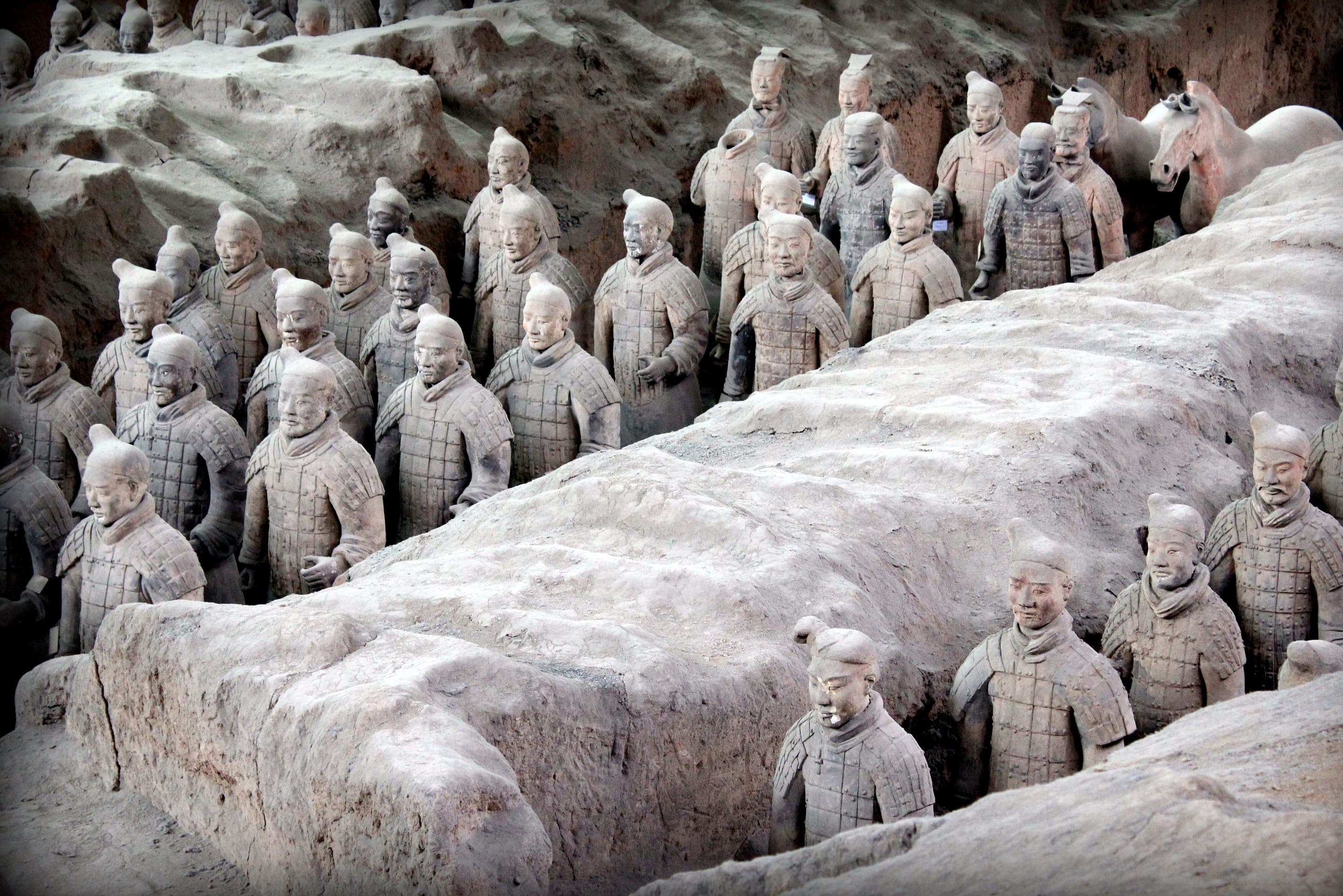
8,000 soldiers,buried in 210 BC,found again in 1974.
Forty kilometres east of Xi'an. China's most famous archaeological site, and still half under earth.
The Terracotta Army is the burial guard of China's first emperor, Qin Shi Huang, who unified the country in 221 BC. He had about 8,000 life-sized soldiers, archers and chariots made and buried in formation around his tomb to protect him in the afterlife. A farmer drilling a well struck the first head in March 1974. Around 2,000 figures have been excavated since; the rest are still under the yellow earth. The site sits forty kilometres east of Xi'an and takes a half-day. The single thing that decides whether you have a good visit or a queued one is timing: get inside at 08:30 when it opens, before the tour coaches arrive at 09:15, and you walk the front rank of Pit One with no one between you and the railing.
The army,
the way we arrange it.
Early access
Pit One, almost alone.
The museum opens at 08:30. Tour coaches arrive from 09:15. In that window you walk the front rank of Pit One, about 6,000 figures in battle formation, with the parapet to yourself. Tickets are timed-entry, released through the official portal seven days ahead. The portal requires a Chinese phone number, which blocks most overseas travellers. We book your slot against your passport before you fly.
Pits 2 and 3
The colour, and the command post.
Pit 2 holds about 1,300 figures: cavalry, charioteers, and the kneeling archers. A small number still carry the original paint. The lacquer under the pigment oxidises within minutes once exposed to air, which is why most warriors today are bare clay. Pit 3 is the command post, only 68 senior officers, the smallest and quietest pit. Your guide explains what is excavated, what is reburied to protect it, and what stays untouched.
Bronze chariots and the sealed tomb
The mound he is still under.
The site museum holds two half-scale bronze chariots, cast and assembled with such precision that the linkages and yokes still articulate. They are the finest ancient bronzework in China. Twenty minutes east is Qin Shi Huang's actual burial mound, fifty-one metres of compacted earth. Soil tests since the 1980s have returned mercury levels consistent with the historian Sima Qian's first-century BC description of rivers of mercury inside the chamber. China keeps the tomb sealed until non-invasive excavation techniques exist. After the site, lunch at a Shaanxi family restaurant we have used for six years.
Questions worth
answering early.
Three hours is the right answer for most travellers, and the way the site rewards them. The museum hall first, where the conserved figures stand at body-distance, roughly forty minutes. Pit One next, the famous one, about forty-five minutes. Pit Three's command post twenty minutes. Pit Two, the cavalry and kneeling archers where a few figures still carry the original pigment, about thirty-five minutes. The bronze chariot gallery before you leave, twenty minutes; almost no coach tour fits it in. Less than three hours is checking a box; more than four asks the body more than the mind needs.
The rest of
Shaanxi, all within reach.
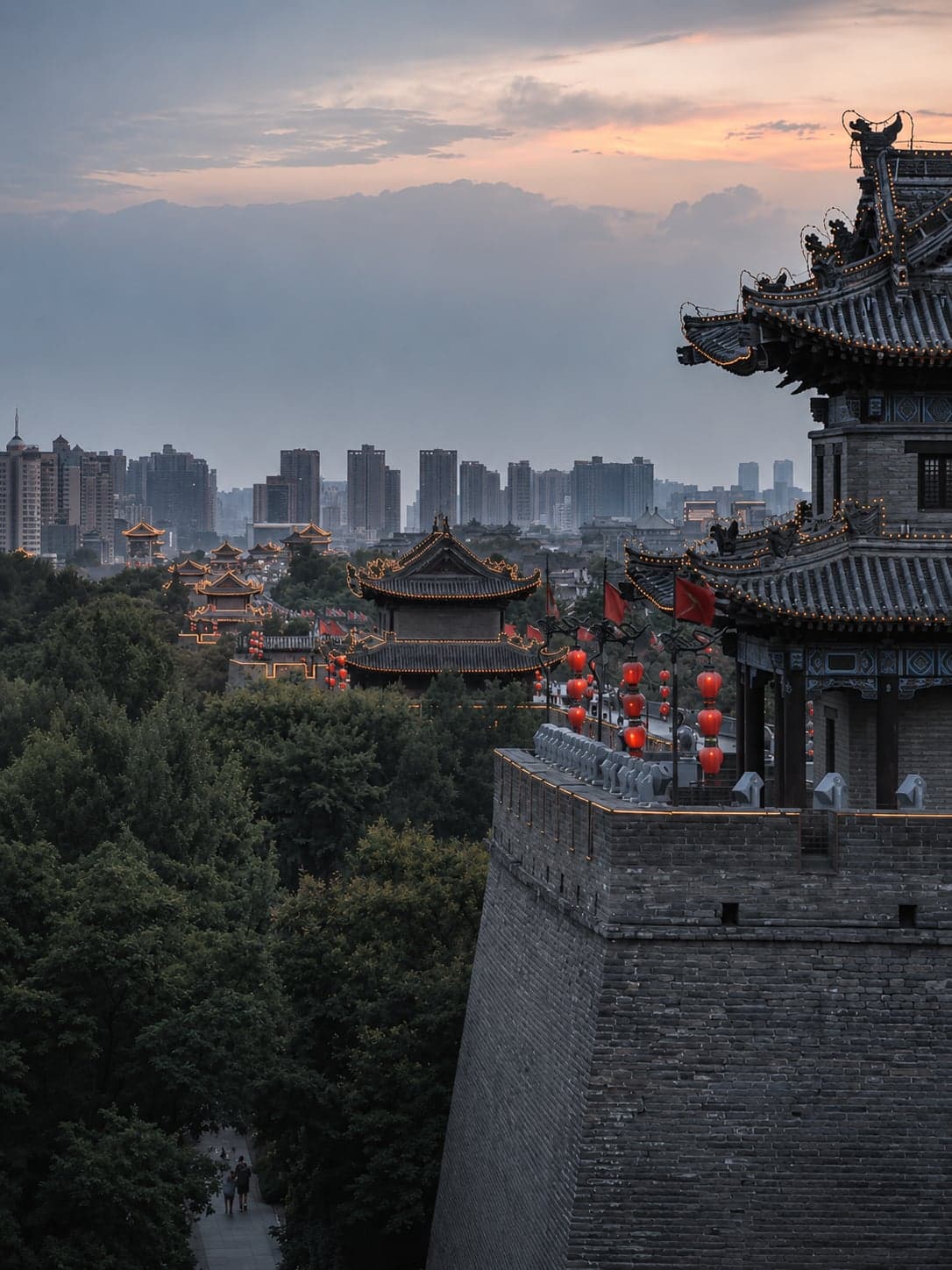
Xi'an's City Wall
Back in Xi'an by mid-afternoon. The fourteen-kilometre Ming wall, we'd send you up at dusk.
Read this experience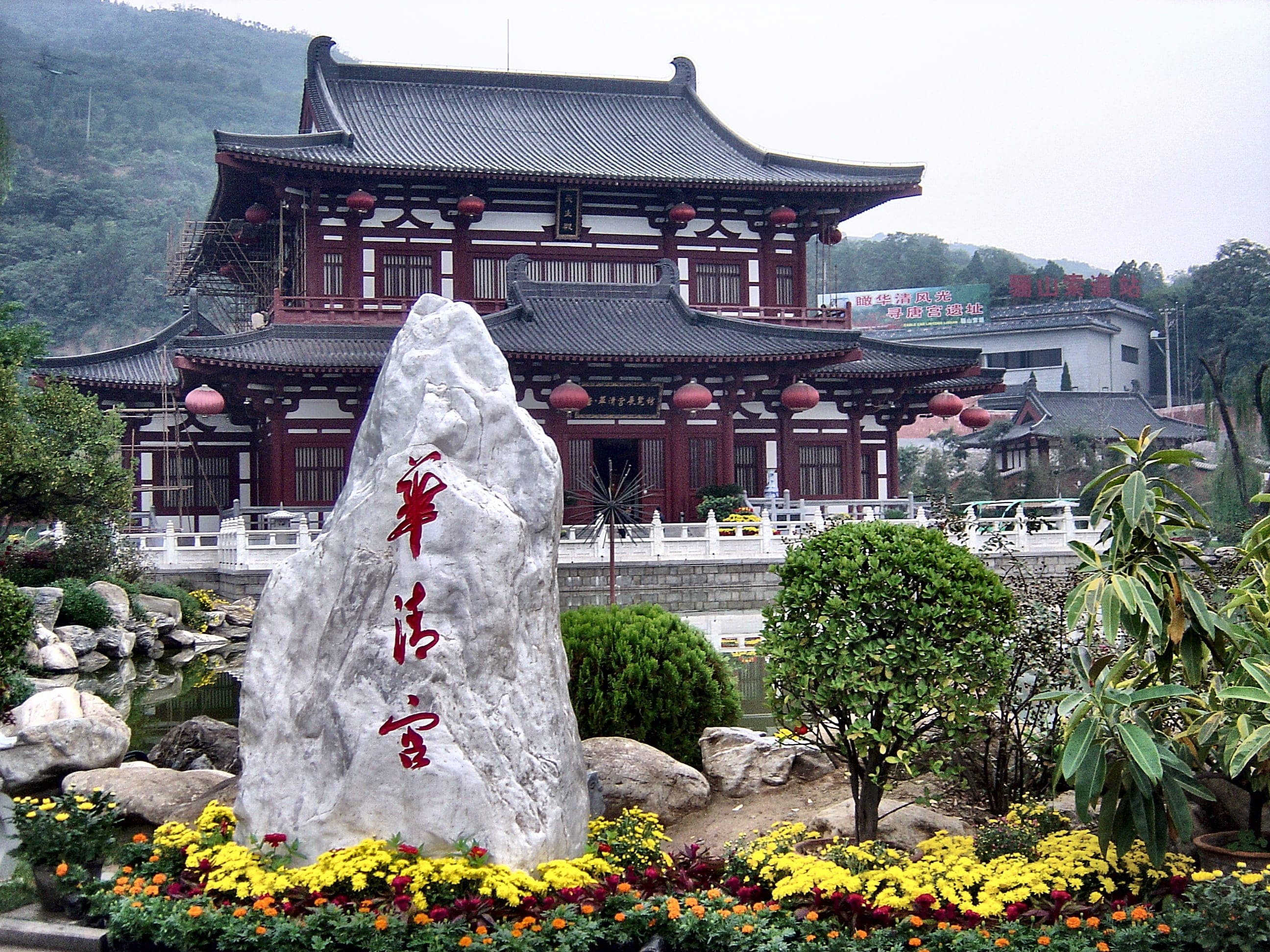
Huaqing Palace
Twenty minutes west of the warriors. The Tang imperial hot springs, same half-day, both sites.
Read this experience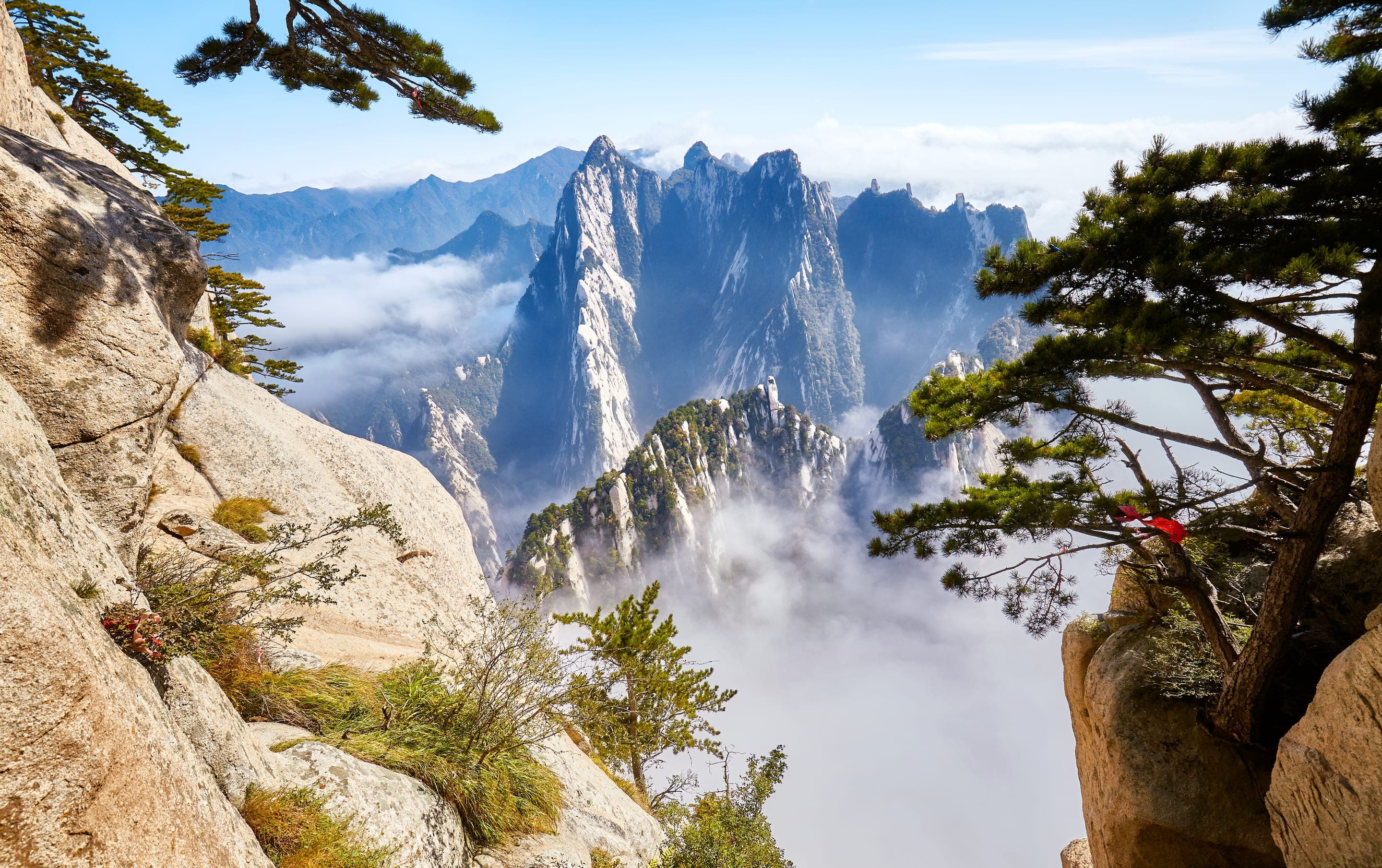
Huashan
Ninety minutes east of Xi'an. One of the five sacred mountains. A different rhythm, but the same Shaanxi stay.
Read this experience

Jack Guo
Senior Travel Specialist
Jack has spent ten years working with the guides, drivers and hoteliers across China. He'll be your contact from first enquiry to final airport pickup.
Add The Terracotta Warriors to your trip
Five quick questions. We'll send you a draft that includes The Terracotta Warriors, with the price, within one business day. No deposit. No hard-sell.