
Lhasa
the heart of Tibetan Buddhism, 3,700 metres above the world
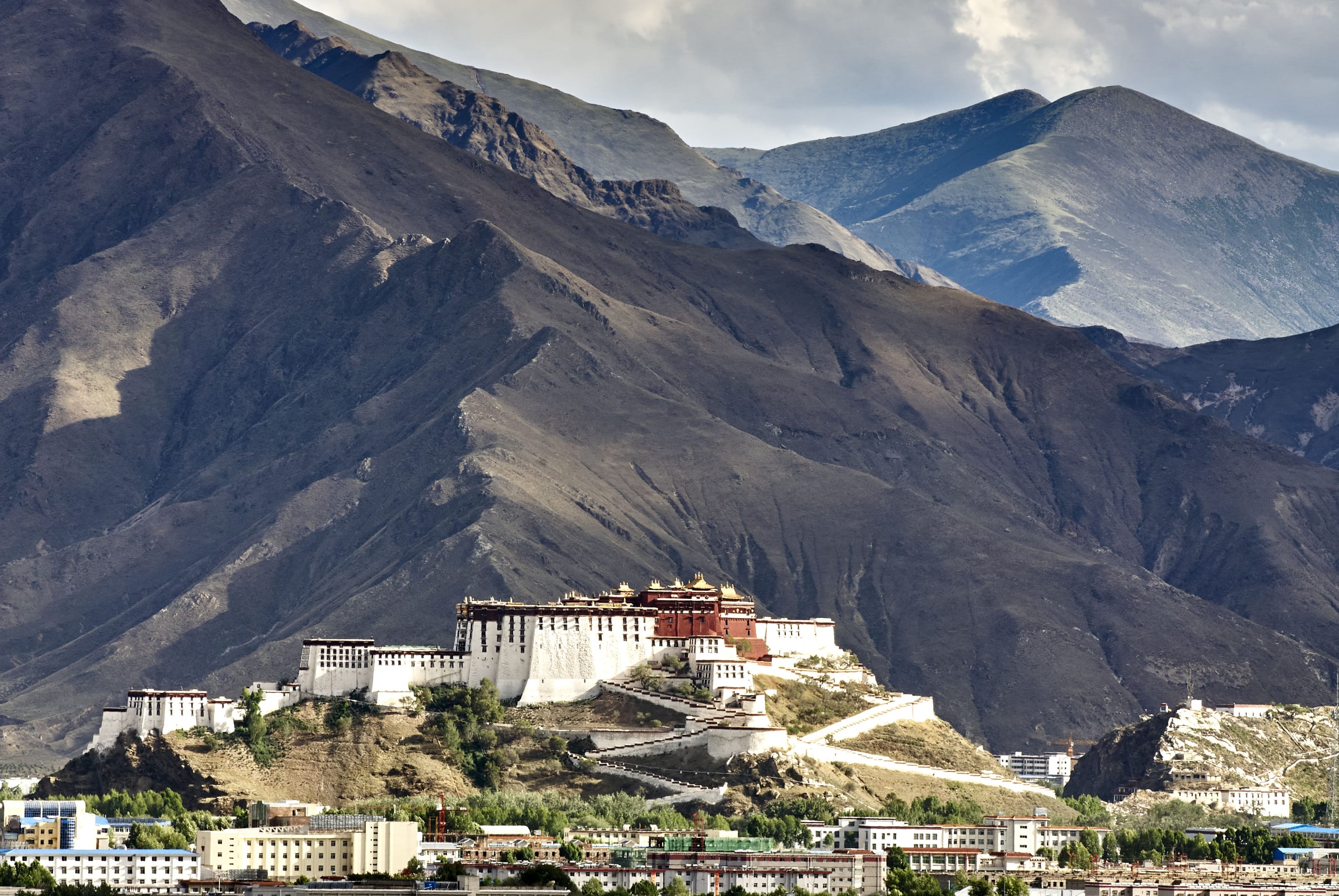
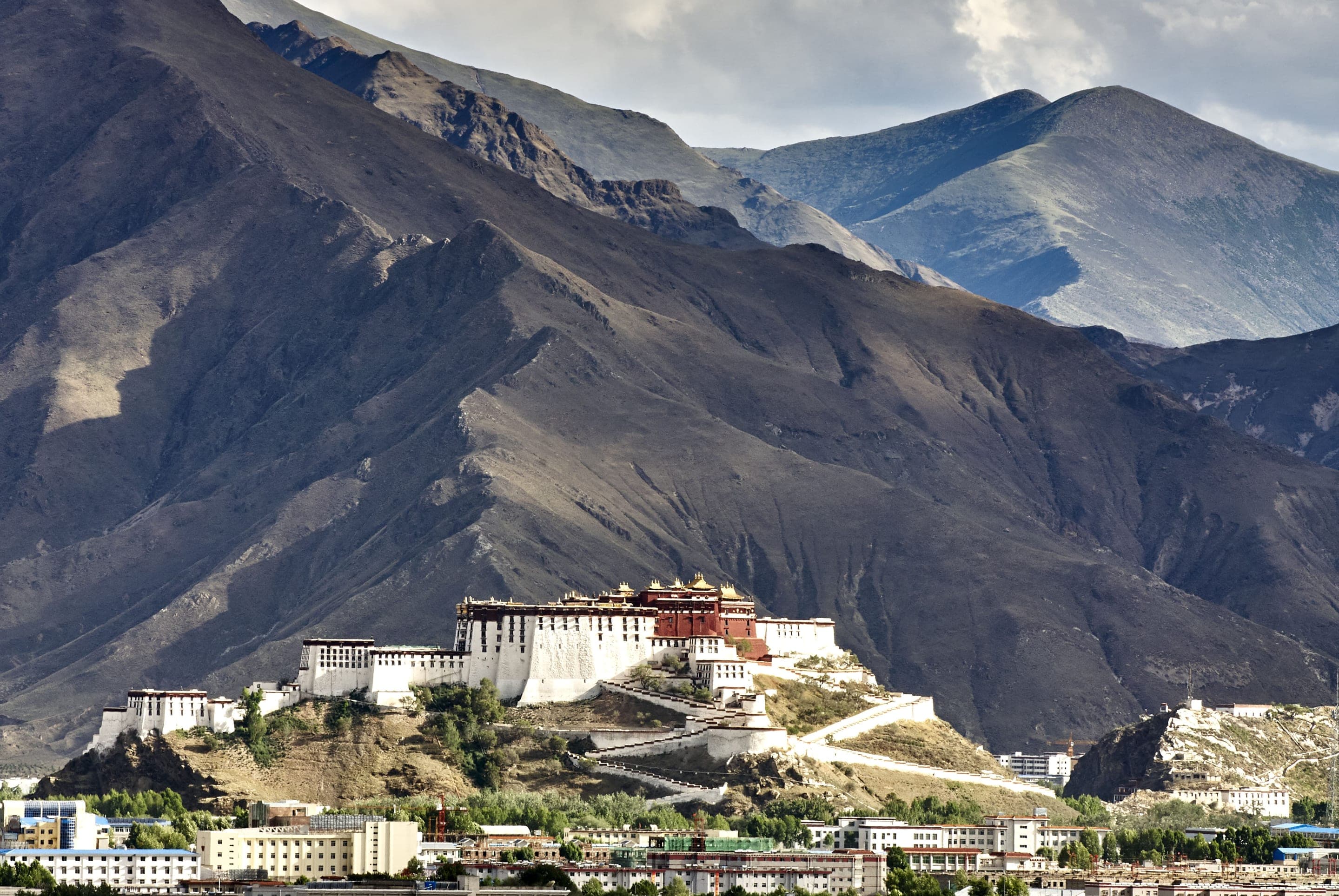
Lhasa is the heart of Tibetan Buddhism. The Potala rises from Red Mountain at 3,700 metres, the Dalai Lama's winter palace since the 7th century. Pilgrims circle the Jokhang along the Barkhor; sacred lakes and the road to Everest open beyond.
Why people
come to Lhasa.
What to see

Potala Palace(winter palace of the Dalai Lama)
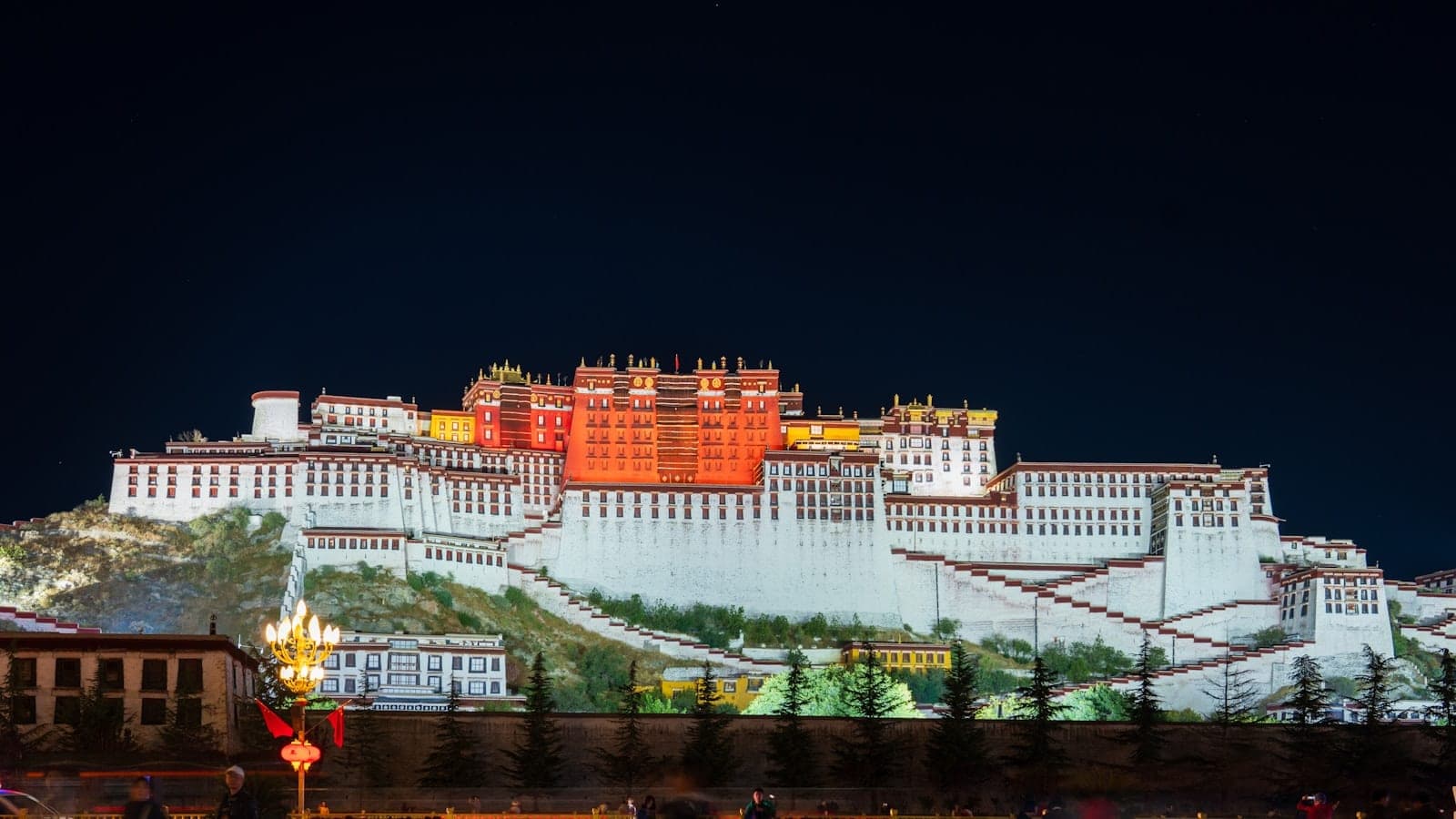
The first sight of the Potala stops you.
It rises from Red Mountain at 3,700 metres, the Dalai Lama's winter palace since the 7th century, white and red walls stacked thirteen storeys above the old town. Inside, chapels and the funerary stupas of past Dalai Lamas open as you climb. Butter lamps everywhere.
We arrange the interior visit against the permit slot and confirm the site's current photography rules at the entry. Arriving at the square at first light, before the queue forms, gives you the palace at its quietest hour. The Tibet Travel Permit is organised through the licensed Lhasa-side agency we work with.

Jokhang Temple(the spiritual heart of Tibetan Buddhism)
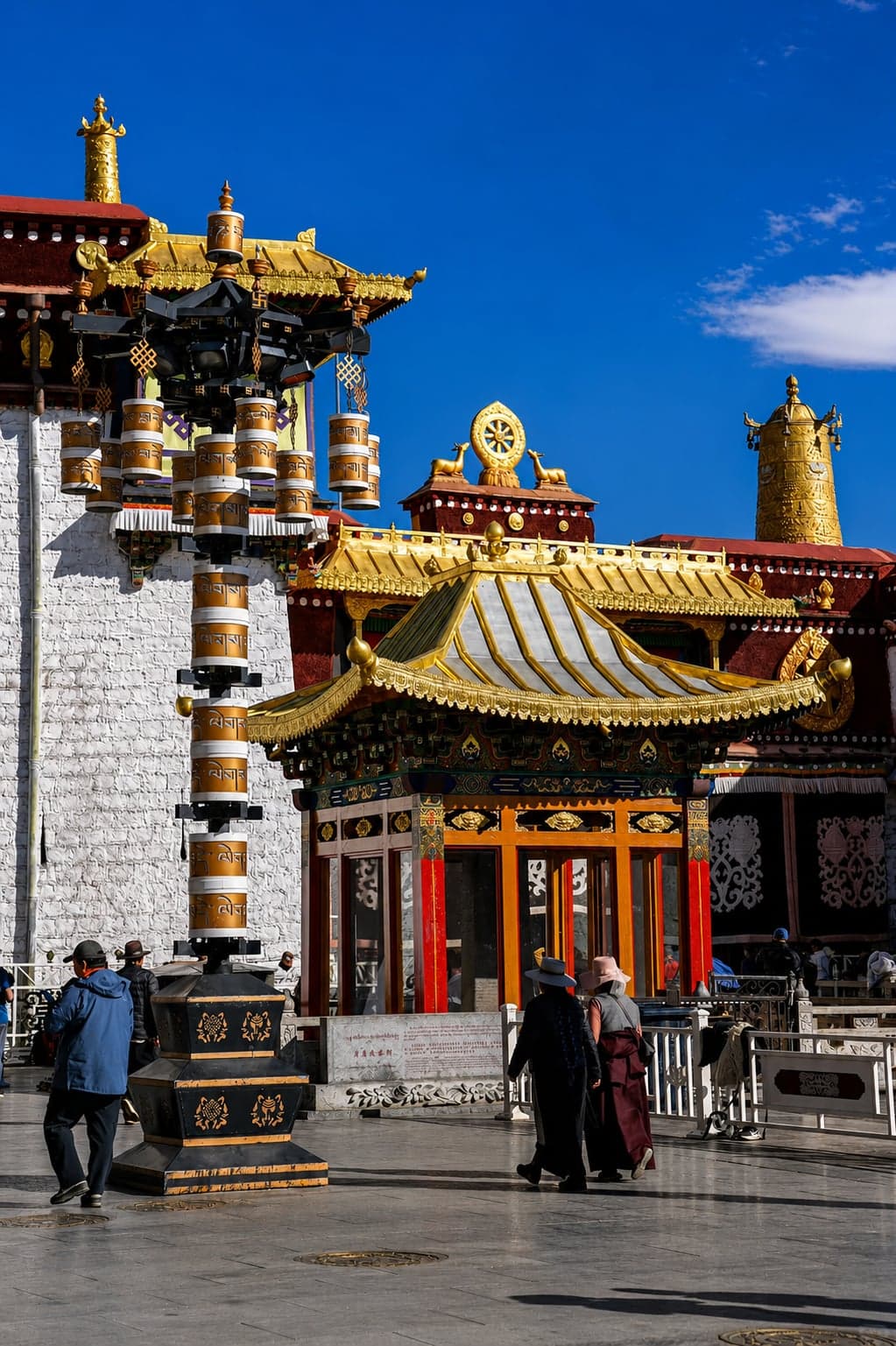
The Jokhang is the spiritual heart of Tibetan Buddhism, founded in the 7th century to house the Jowo Shakyamuni statue Princess Wencheng carried from Tang China.
Pilgrims fill the inner halls at every hour of the day. Butter lamps burn along the chapels, and the gilded roof catches the late-afternoon light above the Barkhor square below.
We time the inner-hall visit for the late morning slot, when the first pilgrim wave has thinned but the chapels still hold the day's incense and chanting. Your guide names the chapels by their lineage, so the iconography reads as story rather than confusion.

Barkhor Street(the pilgrim circuit around the Jokhang)
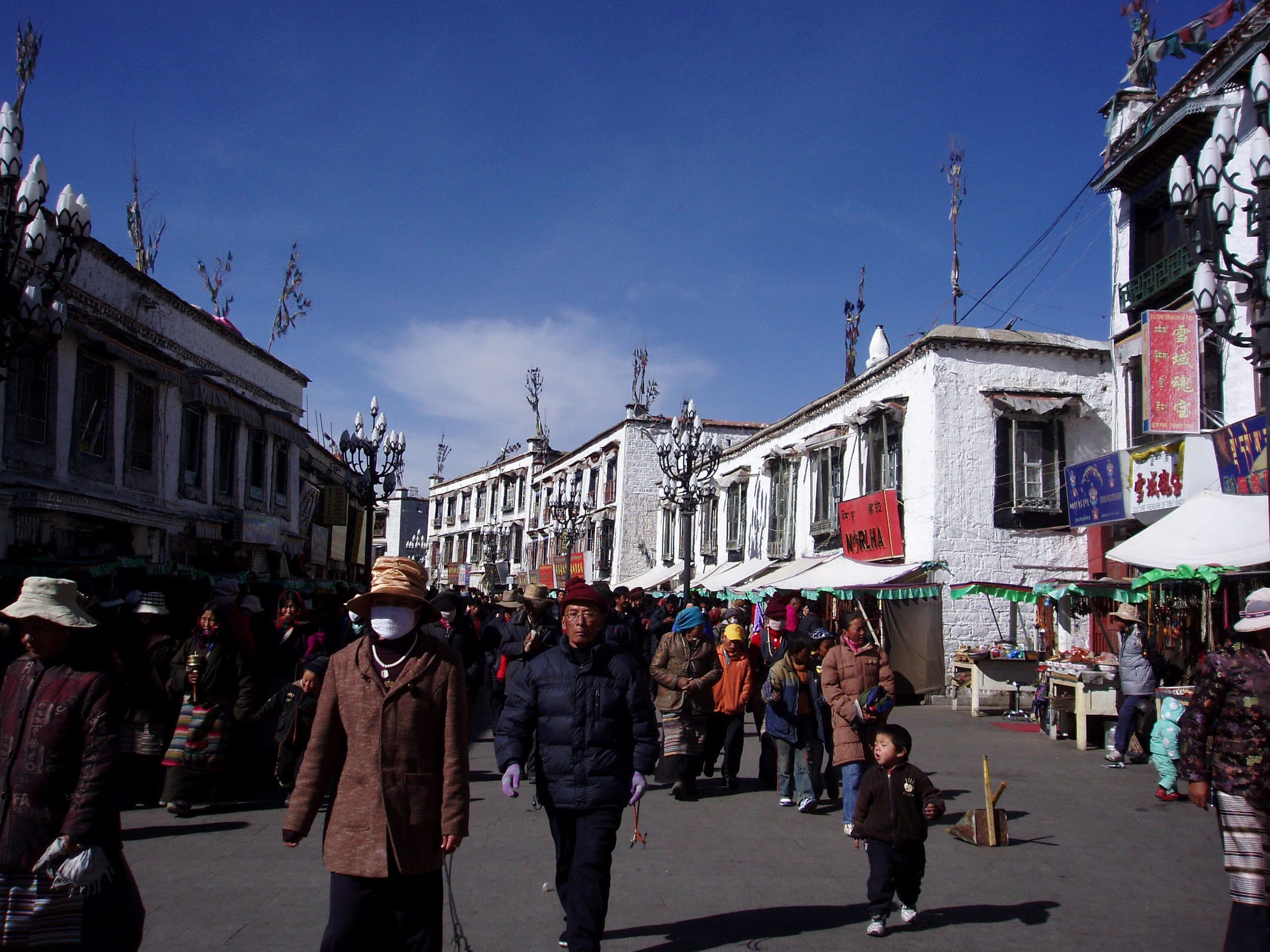
The Barkhor is the pilgrim circuit around the Jokhang, a clockwise path through the old town that locals have walked for more than a thousand years.
Pilgrims carry prayer wheels and beads; a few cover the route by full-body prostration. The path passes Tibetan teahouses, traders' stalls, and the long whitewashed walls of the Jokhang itself.
We walk the Barkhor in the late afternoon, when gold light settles on the walls and the day's pilgrims are at their busiest. The pace is slow and clockwise, in step with the local circumambulators rather than against them. The point is not to be looked at. The point is to be walking among.

Chakpori Hill(Yaowangshan, the Potala viewpoint)
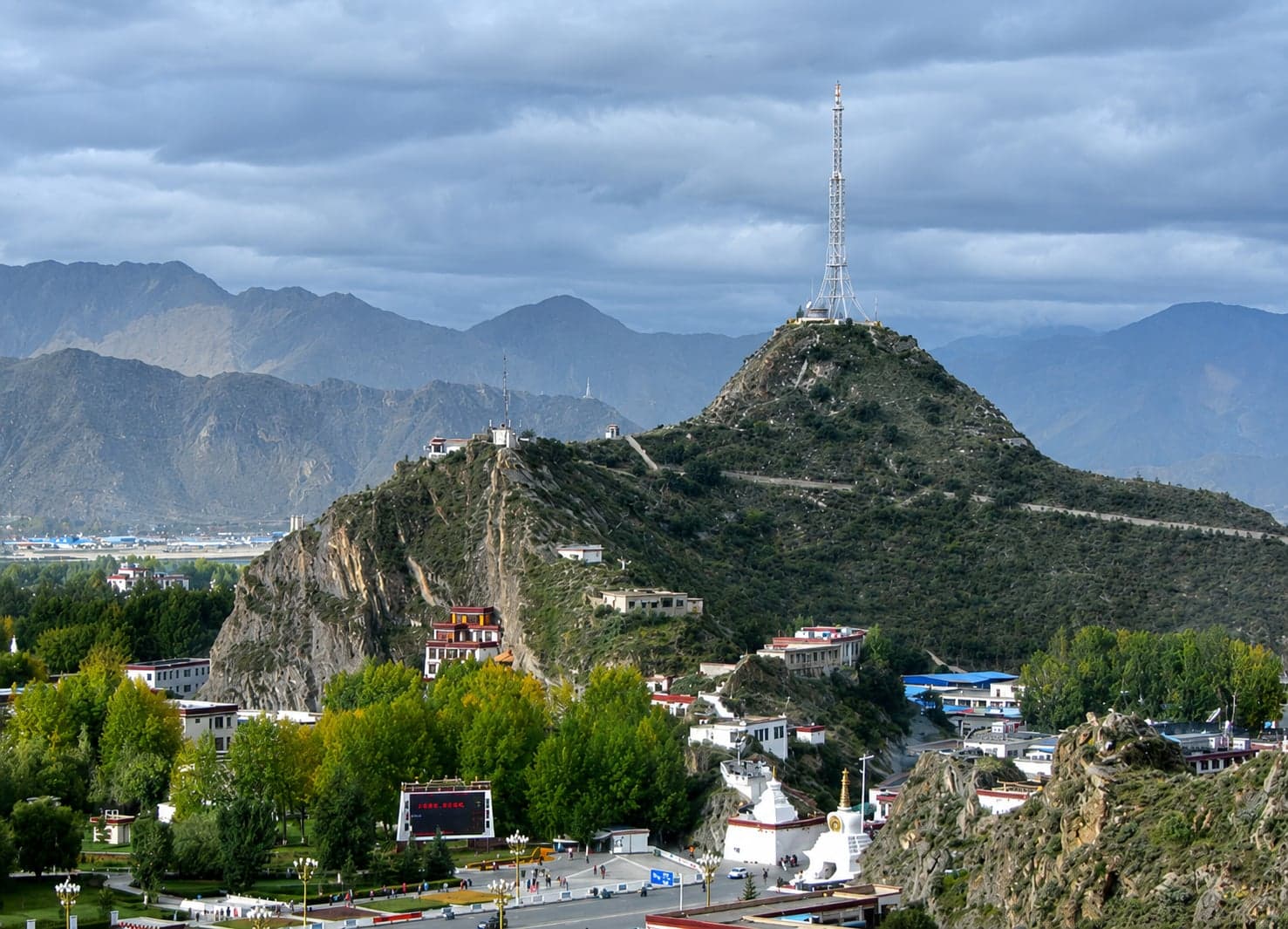
Chakpori, Yaowangshan in Mandarin, is the small hill facing the Potala across Lhasa's old western road.
Tibet's first medical college stood here until 1959. The viewpoint at the top frames the Potala at the exact angle printed on the 50-yuan note. Walking down, the rock face shows centuries of carved Buddha images and prayer offerings.
We pace the climb for first light, when the Potala catches the sun before the city wakes and the viewpoint is empty. The walk back through the rock-carving lane is unhurried, your guide reading the lineages of the painted Buddhas as you pass.

Tashilhunpo Monastery(seat of the Panchen Lama, Shigatse)
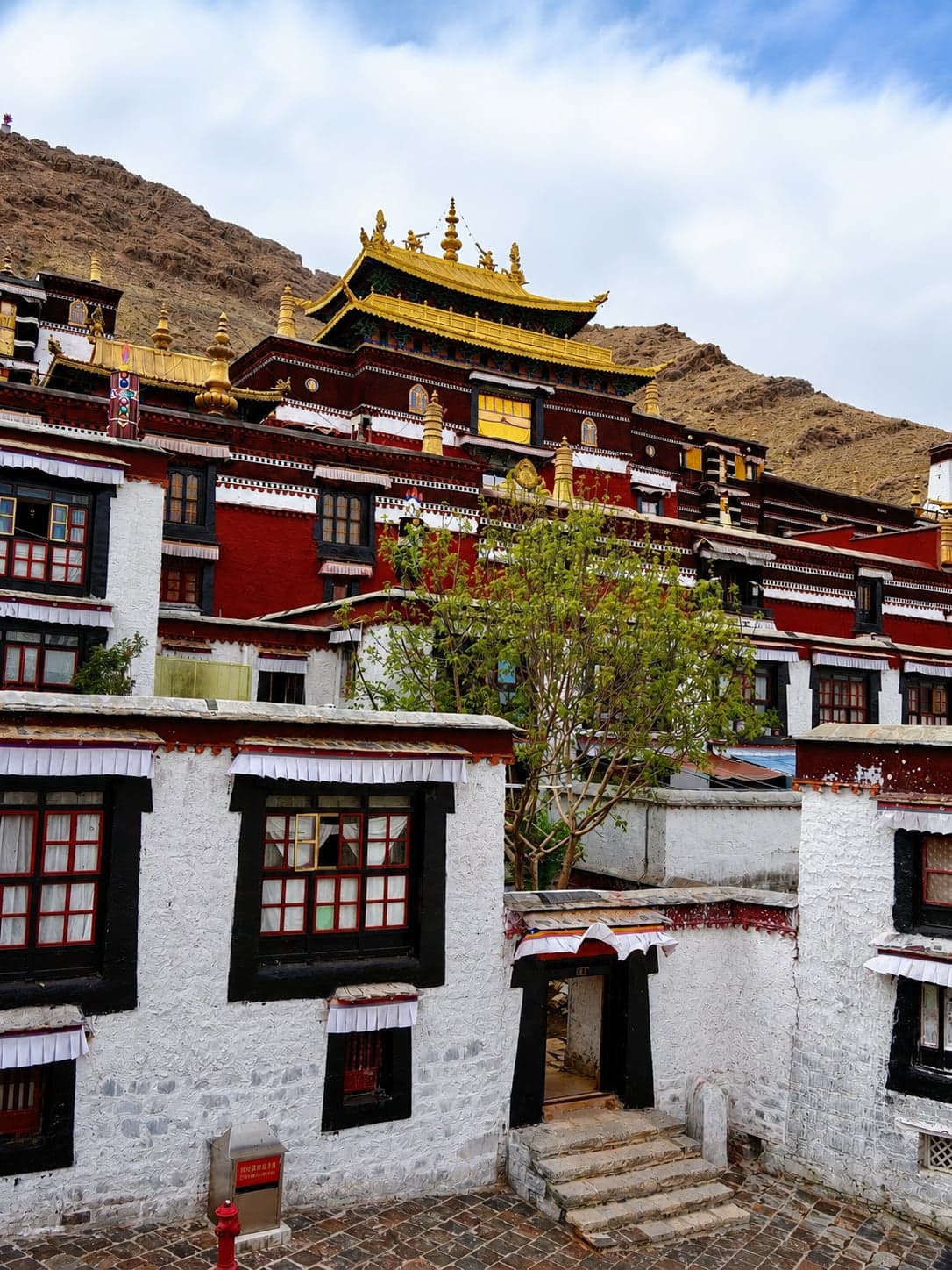
From the Shigatse road, Tashilhunpo's gold roofs catch the afternoon sun before the town comes into view.
The seat of the Panchen Lama since 1447, the monastery climbs the hillside in tiers of whitewashed assembly halls and gold-roofed chapels. Inside, a 26-metre gilded Maitreya Buddha fills the hall to the rafters, the largest of its kind anywhere.
We pair Tashilhunpo with the Shigatse leg only when the route already runs west toward Everest or the Friendship Highway; a standalone day trip is too long on plateau roads. Late morning lands you inside as chanting carries from the upper assembly hall.

Yamdrok Lake(one of Tibet's three sacred lakes)
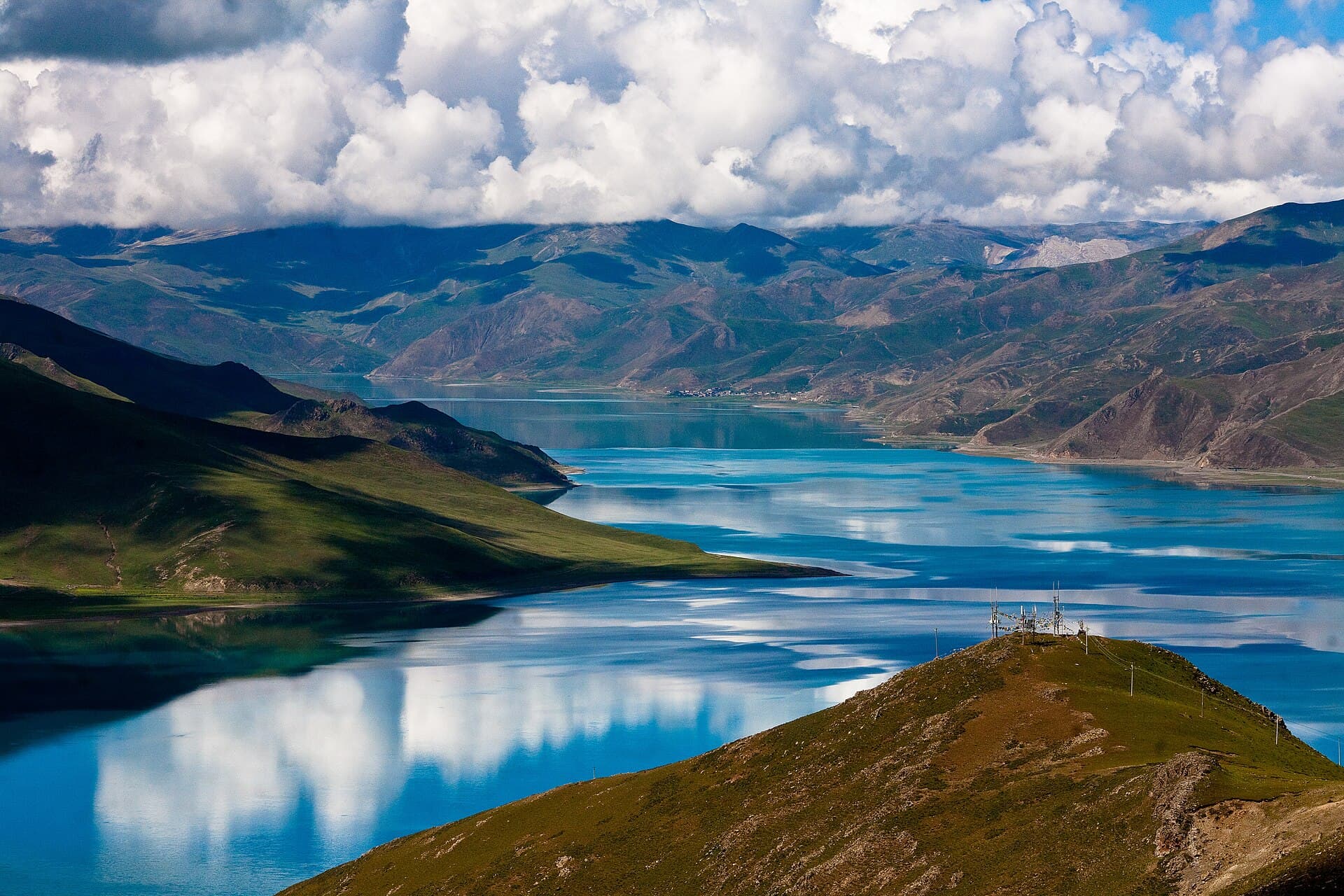
Yamdrok is one of Tibet's three great sacred lakes, a deep turquoise crescent held in the mountains a hundred kilometres south of Lhasa.
The Kamba La pass road climbs through bare ridges and the lake opens beneath you, with the snowcapped Noijin Kangsang range across the far shore. Tibetan families bring decorated yaks to the viewpoint.
We leave Lhasa early to catch first light on the water and bring the return inside daylight hours on the plateau roads. Pass conditions shift fast. If the weather closes the road, we redirect to a quieter day inside Lhasa rather than push a pass that should not be pushed.

Karola Glacier(roadside ice wall between Yamdrok and Gyantse)
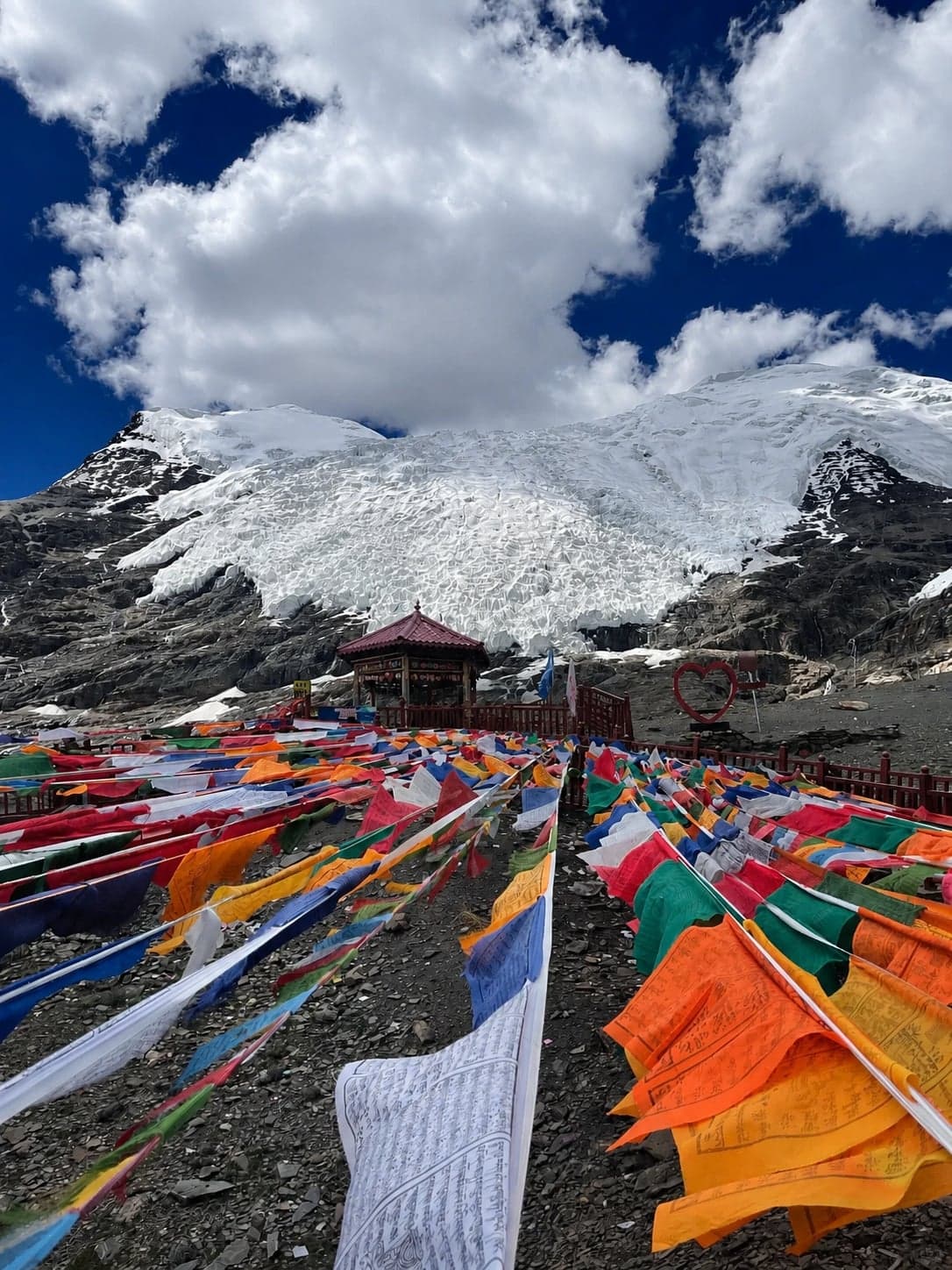
You round a switchback and Karola is suddenly there: a wall of blue-white ice hanging above the road at 5,560 metres, between Yamdrok Lake and the town of Gyantse.
The lower tongue falls within a few hundred metres of the highway, close enough to walk to from the roadside chortens. Yak herders camp at the verge most months, prayer ribbons strung between the mounds.
We schedule Karola as a stop on the Yamdrok-to-Shigatse run rather than a destination of its own. The roadside walk is brief but the altitude is real, so your guide watches the pace and the car stays close for anyone who would rather sit.

Namtso Lake(the Heavenly Lake, north of Lhasa)
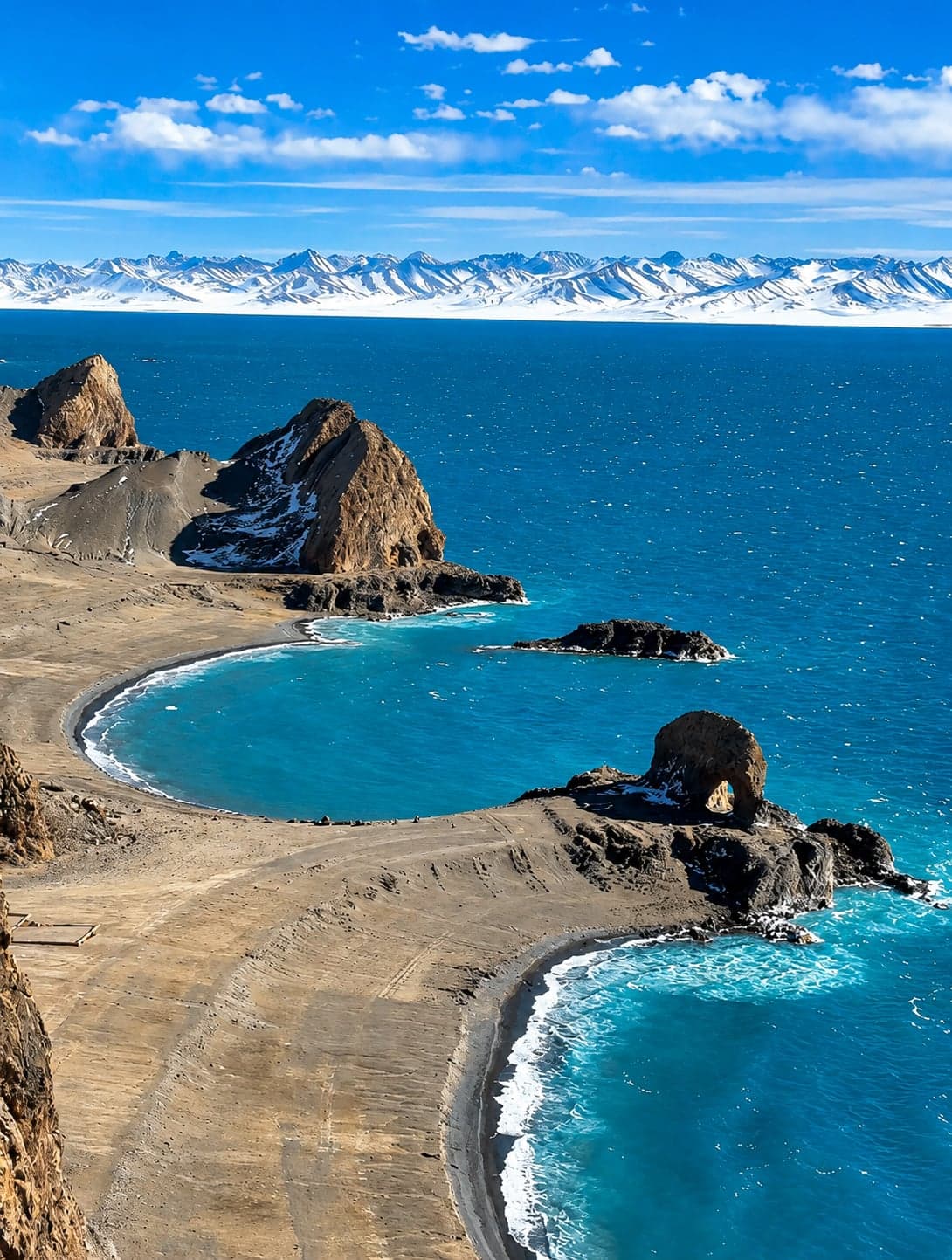
The road climbs the Lakenla pass at 5,190 metres and the world drops away.
Namtso, the Heavenly Lake, lies below in a sheet of deep blue at 4,718 metres on the northern Tibetan plateau, the Nyenchen Tanglha range white across the far shore. Pilgrim cairns and prayer flags ring the southern shore at Tashi Dor.
We add Namtso only after a full settling week in Lhasa, since the lake sits a thousand metres higher than the city. The day starts early and runs long. An overnight at the shore is possible in the warmer months when the basic guesthouses open.

Everest Base Camp(the Rongbuk side, 5,200 metres)
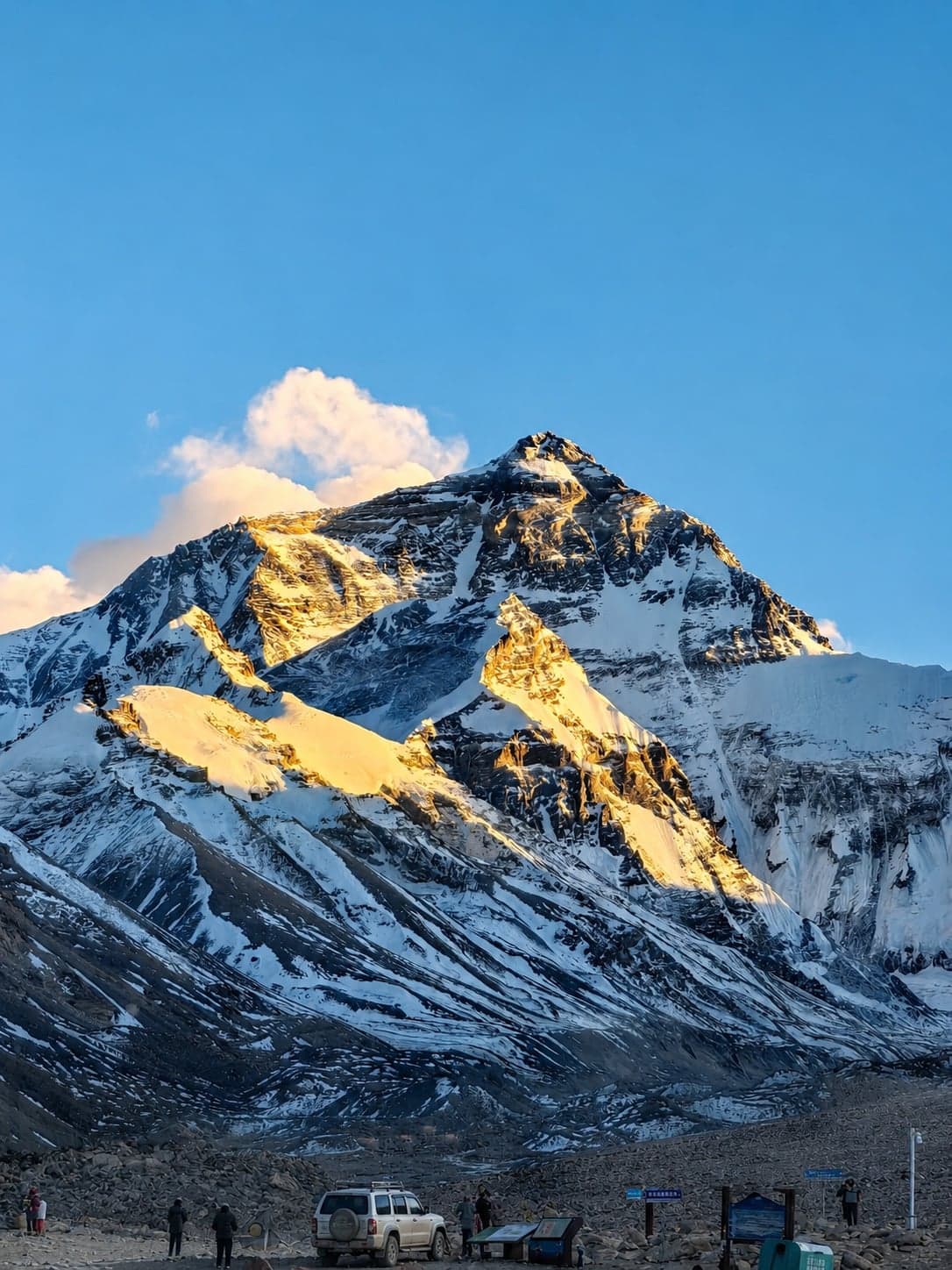
The first sight of the north face stops you.
Everest's Rongbuk-side Base Camp at 5,200 metres is the closest you can reach by road. The peak fills the valley head, ice-white against a sky thinned to dark blue. Rongbuk Monastery, the highest in the world, sits below. Clearest before mid-morning, before cloud settles across the Khumbu Icefall.
We run this as a four-day extension from Shigatse via Tingri, with two nights' acclimatisation built in before the camp itself. The Everest permit and the Tibet Travel Permit are organised together with the licensed Lhasa-side agency. Tent-camp conditions are basic.
What to eat

Tibetan momos(steamed dumplings, the canonical plate)
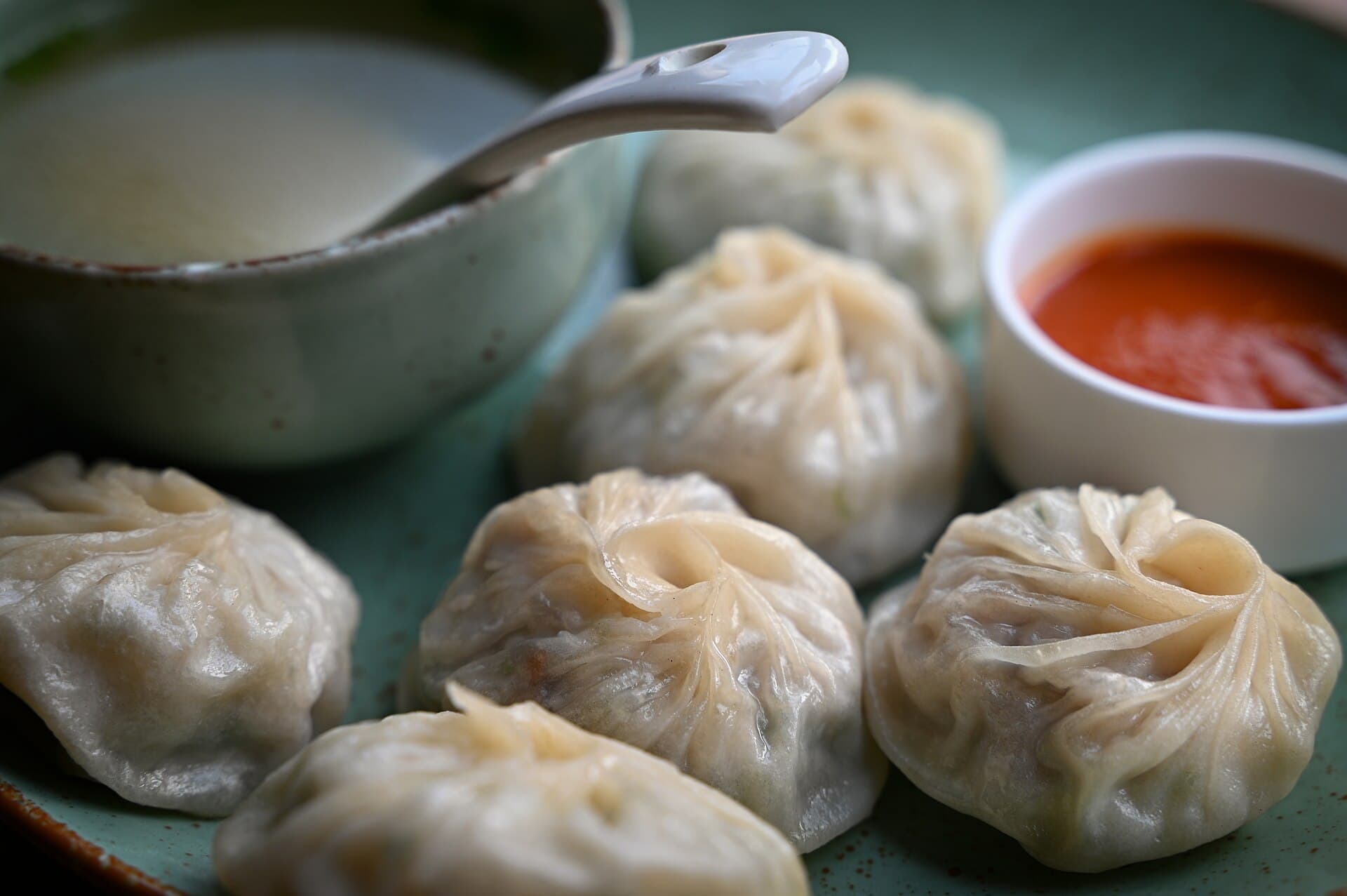
Momos are Tibet's defining dumpling, hand-folded around a thin wheat skin and a savoury filling of yak, mutton, or vegetables.
The Lhasa version is steamed in a tall bamboo stack until the skins turn translucent and just chewy. You bite through the skin and the broth inside floods your mouth, savoury and warm, balanced by a chilli-and-vinegar dip on the side.
We choose a kitchen where the dumplings are folded that morning and the bamboo steamers go in small batches through the afternoon. Yak momos arrive first; mutton or vegetable follow only if you want them. The dip proportions matter, so your guide explains the local ratio first.

Sangjila Lhasa hotpot(Tibetan yak-broth, copper pot at the centre)
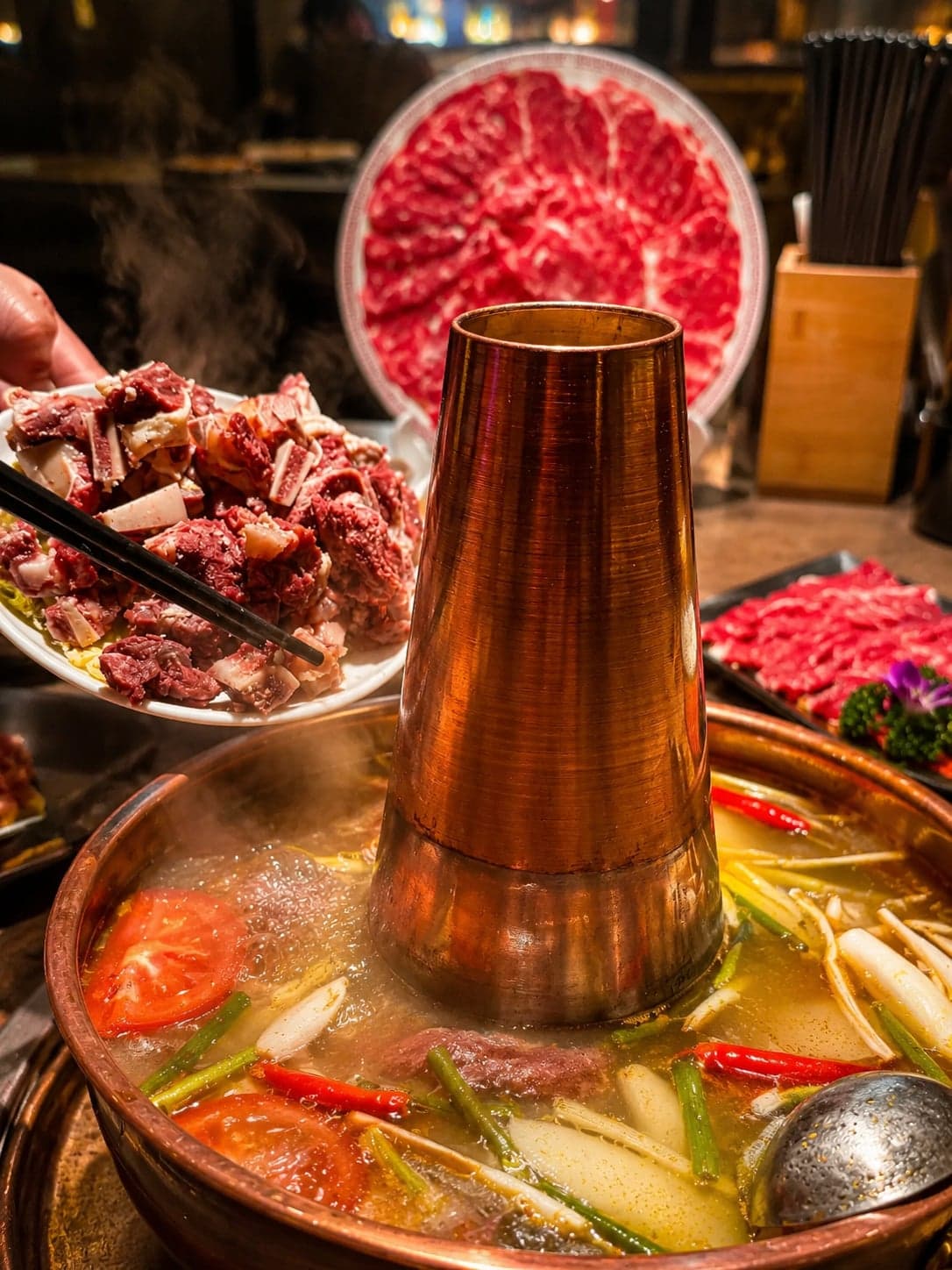
Lhasa hotpot at Sangjila Lhasa is the plateau version of the dish: a clear yak-bone broth simmered with Tibetan herbs, Himalayan rock salt, and a handful of red dates, set over a charcoal pot at the centre of the table.
You drop in paper-thin yak shoulder, hand-cut potato, and yak-milk yoghurt dumplings. The broth turns sweet and savoury as the meat goes through it.
We book a central table at the Sangjila Lhasa house, copper pot and hand-sliced yak ordered ahead. Your guide names the dipping condiments by their plateau use before the first round goes in. The meal sits well after a half-day at altitude, warming and unhurried.

Sweet tea(cha ngarmo, the all-day Lhasa drink)
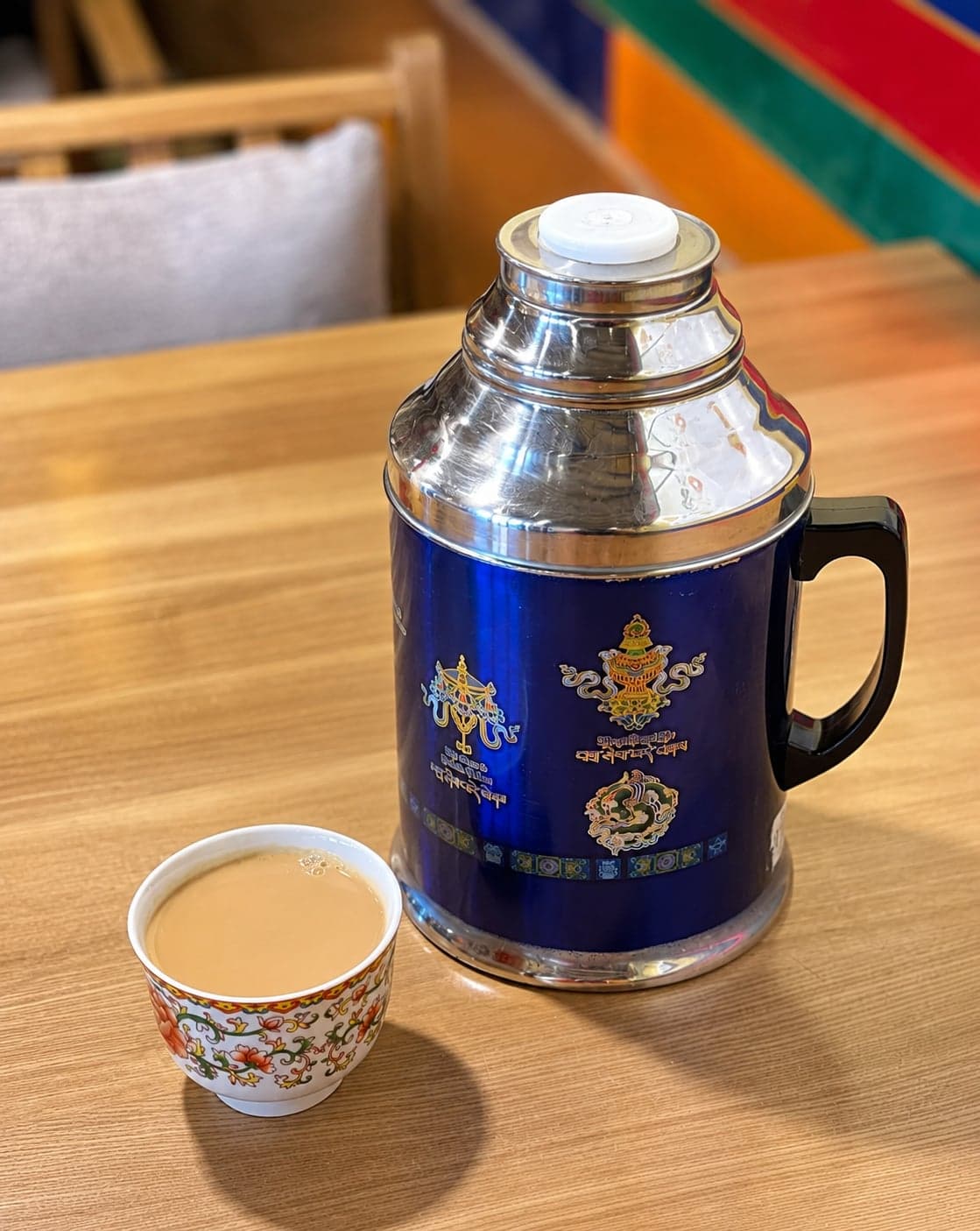
Sweet tea, cha ngarmo, is what Lhasa drinks all day in the teahouses around the Barkhor.
Black tea is brewed strong and finished with whole milk and sugar, then poured into glass tumblers and refilled from steel thermoses. The taste is creamy and just sweet enough, lighter than chai and far easier on the plateau body than butter tea. A glass costs a few yuan; a long conversation comes free.
We choose a teahouse the local guide knows well, the kind locals fill at lunch with momos and a deck of cards. The thermos arrives at your low table without being asked. Sweet tea is the everyday Lhasa drink most travellers never get pointed toward.
Shows and experiences

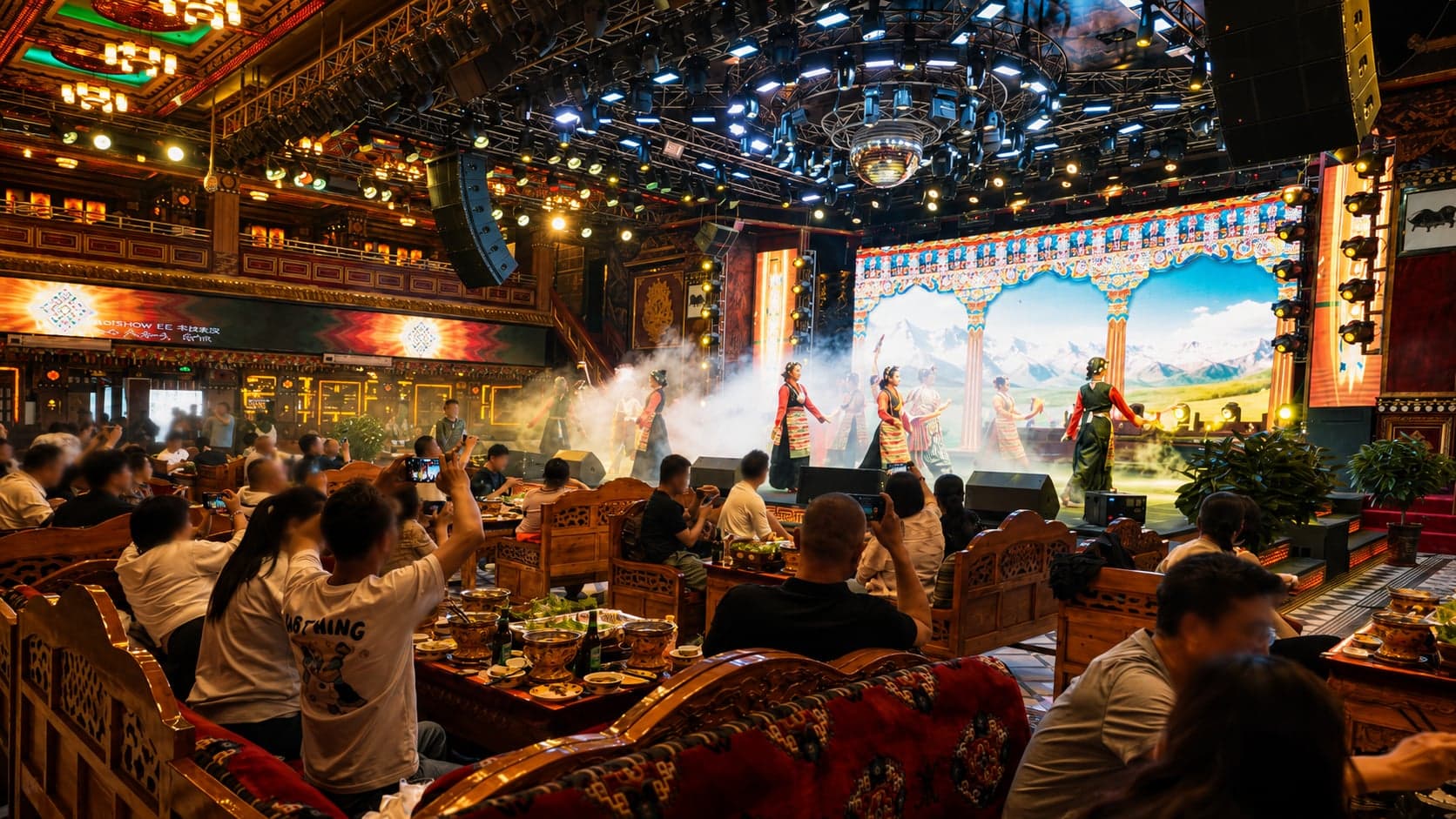
Shambhala Praise and the Golden Horse Banquet(Tibetan hotpot dinner and evening performance)
Shambhala Praise pairs a Tibetan hotpot dinner with an evening of immersive song and dance staged around the diners.
A copper pot at the centre of the table simmers yak broth and plateau cuts through the meal. Singers cross the floor in Khampa robes, dancers circle the tables, and the closing horse number gives the night its name.
We book a central table where the performance passes closest. Dietary notes go to the kitchen in writing before you arrive, so the hotpot and side dishes are set up to your companions ahead of time. The evening sits well after a half-day at altitude, warming and unhurried.

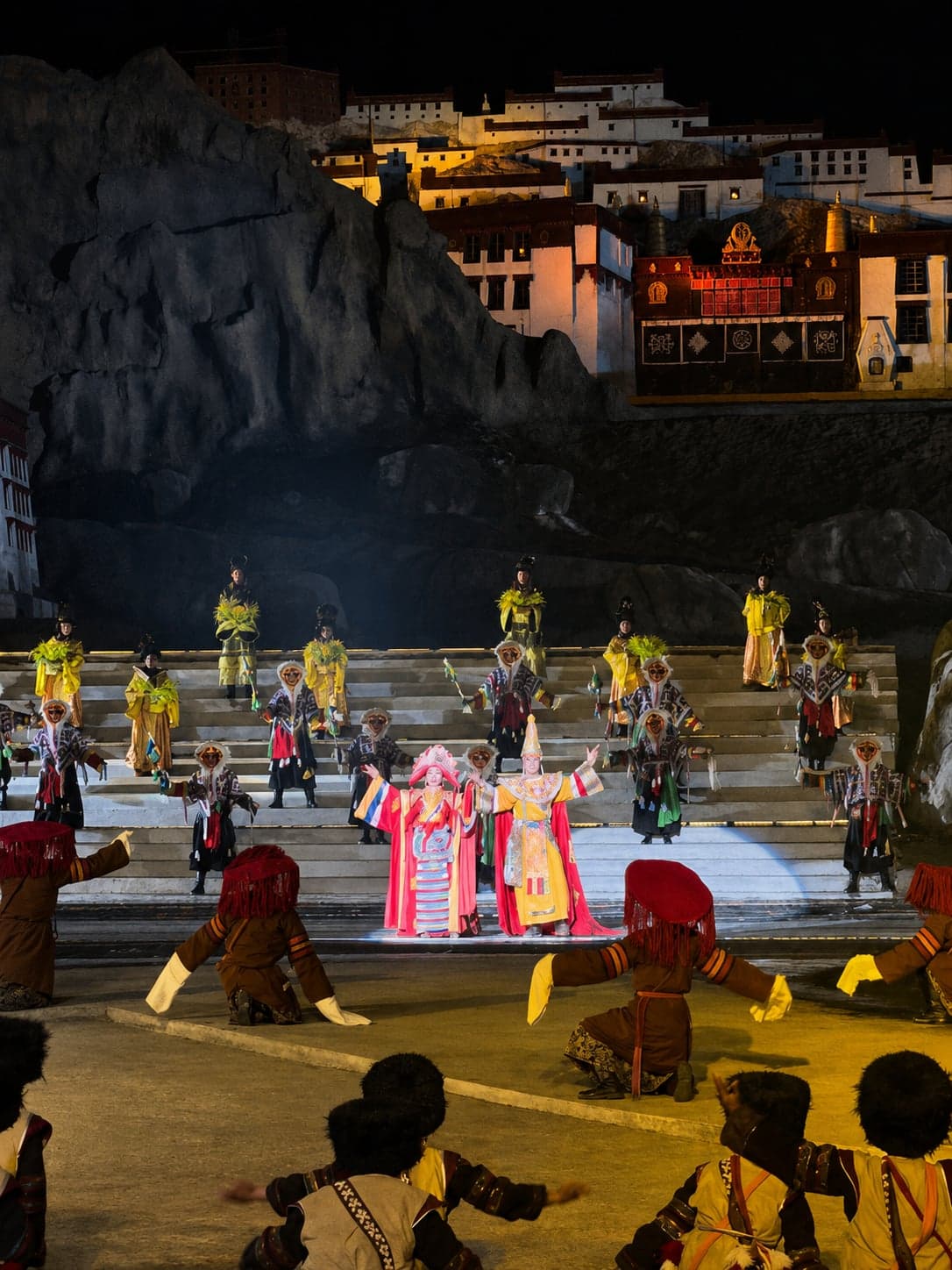
Princess Wencheng outdoor epic(Lhasa's signature seasonal stage show)
Princess Wencheng is Lhasa's signature outdoor epic, staged each season in a purpose-built theatre across the Lhasa River, in the Cijuelin valley below Baoping Mountain.
The 90-minute production retells the Tang princess's journey from Chang'an to marry Songtsen Gampo in the 7th century. A cast of more than eight hundred. The southern mountain skyline behind the stage is the set.
We book the upper-middle rows, where the full sightline takes in the chariot scenes and the closing mountain tableau. The season runs late March through early November; we cross-check the dates before placing it in the day. A driver waits at the venue exit for a calm return.

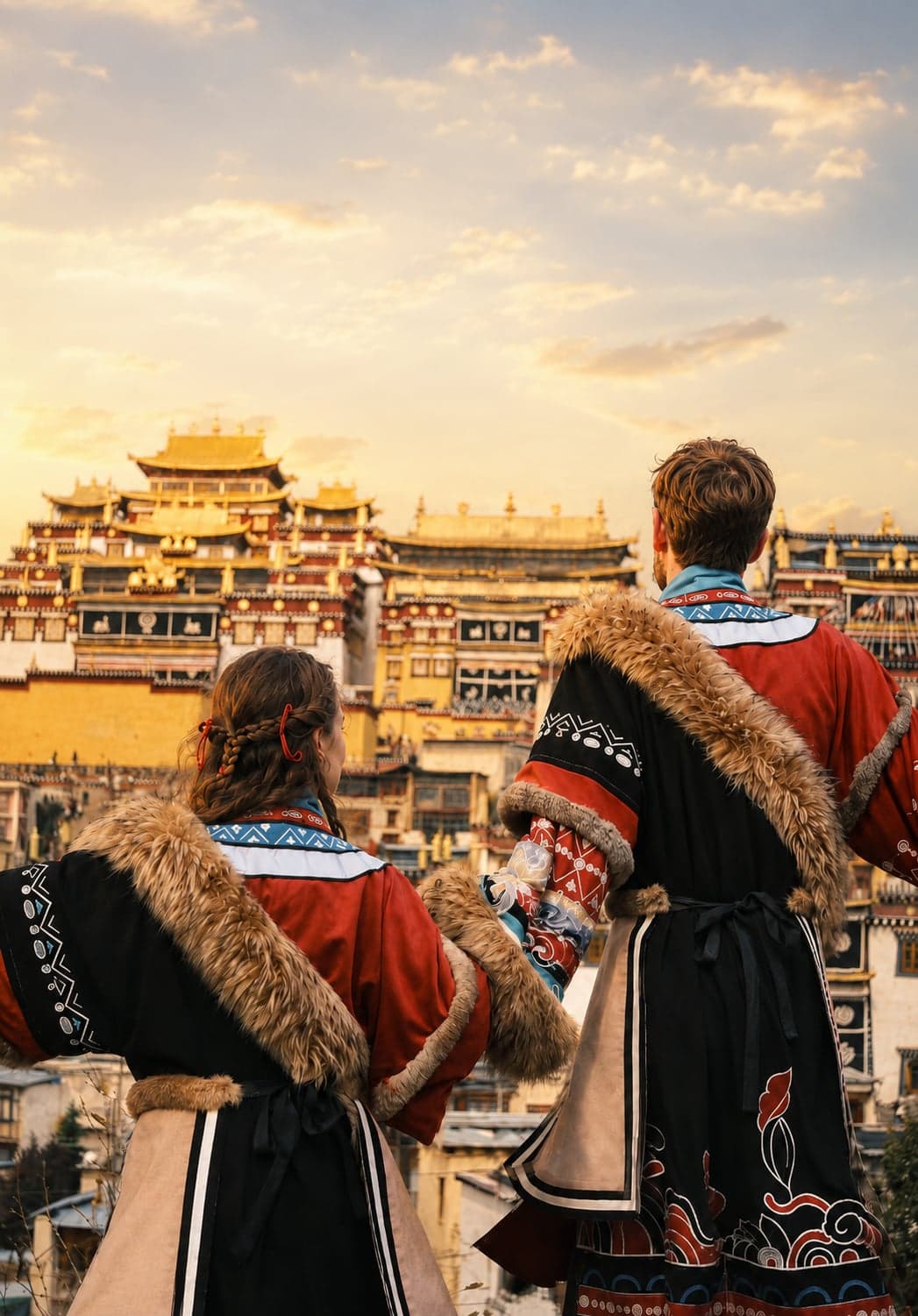
Tibetan dress portrait sitting(Lhasa styling and golden-hour shoot)
Lhasa styling studios fit you into Tibetan dress: silk over-robes for women, brocade chuba for men, turquoise and coral headpieces, and the long earrings and chest pieces worn at festival.
A house photographer then walks you to the Potala viewpoint or the Barkhor walls and shoots through golden hour. The dressing alone takes an hour.
We book the studio your stylist knows, with the wardrobe sized to your party ahead of time. The shoot timing pairs with sunset at the Potala viewpoint, so the route is one calm afternoon rather than three rushed stops. Final edits arrive the next morning.
What five days
might look like.
- Day 01
Slow arrival, dusk on the Barkhor.
Most travellers arrive from an intermediate-altitude stop in Shangri-La or Xining, so check-in is calm and the afternoon is paced for the body. Begin with tea on the hotel terrace and the altitude protocols from your guide: drink water, skip alcohol, and leave the first shower for twelve hours. A short walk to the Jokhang Temple square follows. As the light turns gold, walk the Barkhor slowly and clockwise, among the local pilgrims at their daily ritual.
- Hotel terrace, tea and altitude protocols
- Jokhang Temple square at late afternoon
- The Barkhor pilgrimage circuit at gold-light hour
- Early dinner in old-town Lhasa
- Day 02
The palace and the temple.
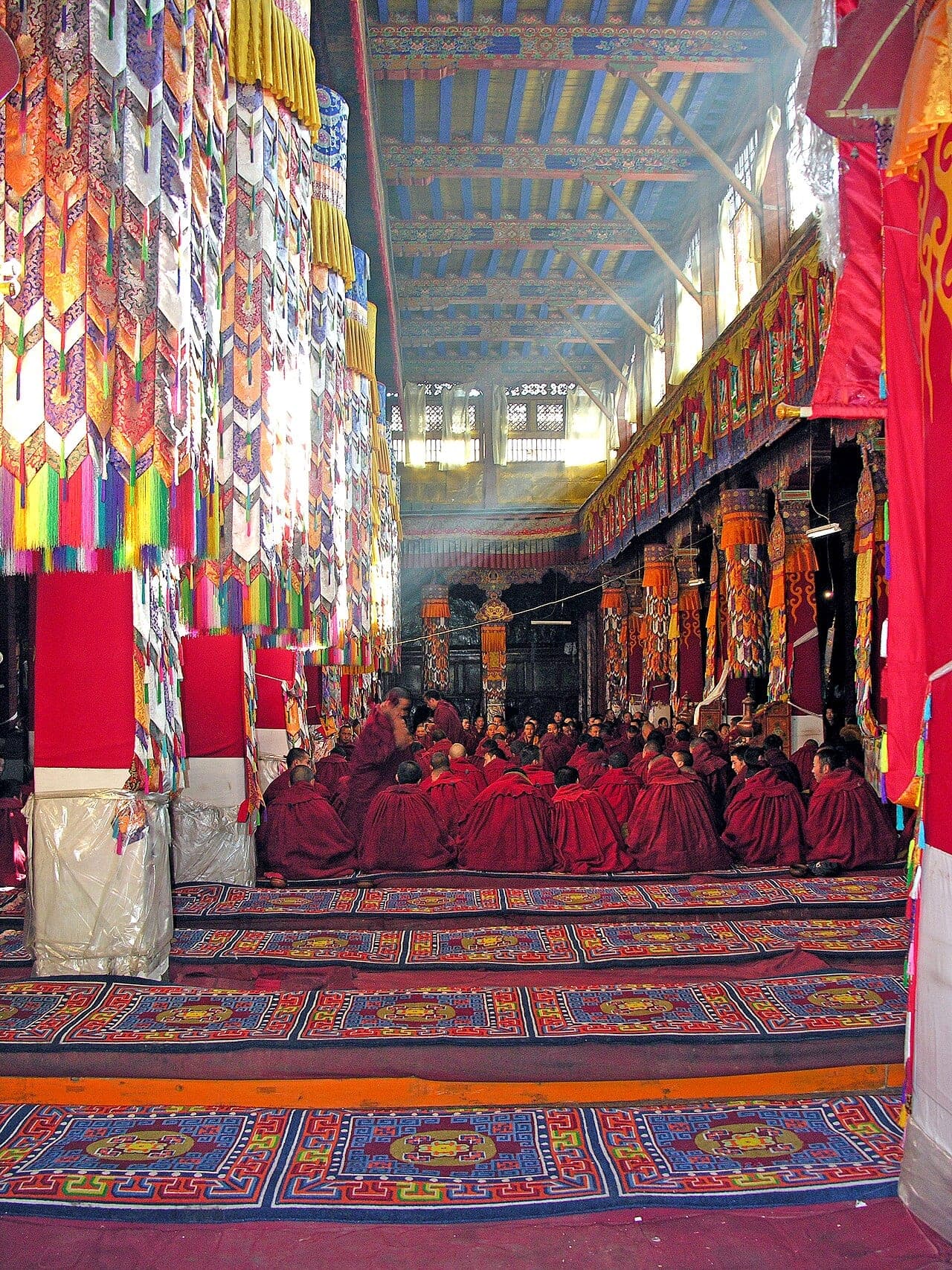
Begin the morning at the Potala Palace interior, timed to the permit slot, climbing through the White Palace and Red Palace courtyards with the city falling away below. Return for an unhurried lunch in the old town, then continue to the Jokhang Temple in the afternoon, where pilgrims fill the inner halls at any hour of the day. The pace is deliberate, with afternoon tea built into the day so the altitude has a chance to settle.
- Potala Palace interior (permit slot)
- White Palace and Red Palace courtyards
- Lunch in old-town Lhasa
- Jokhang Temple inner halls
- Afternoon tea in the old quarter
- Day 03
Two great Gelug monasteries.
Drive west of the city to Drepung in the morning, walking the hillside courtyards before the day-trip groups arrive and stopping in at the assembly halls during morning practice. Return for lunch in Lhasa, then continue to Sera Monastery, where the late-afternoon monk debates in the courtyard remain one of the most evocative scenes in Tibetan Buddhism. The drive back crosses the plateau as the light begins to soften.
- Drepung Monastery hillside courtyards
- Morning assembly at the prayer halls
- Lunch back in central Lhasa
- Sera Monastery monk debates
- Plateau drive at dusk
- Day 04
Summer palace, slower pace.
Spend the morning at Norbulingka, the former summer palace of the Dalai Lama. The gardens lie about two kilometres west of the Potala, inscribed alongside it on the UNESCO list. The afternoon is yours to wander the old town at your own pace, returning to a favourite tea house or stopping at the Tibet Museum nearby. The day is paced as a buffer for weather, altitude, or one more visit your guide can suggest.
- Norbulingka summer palace and gardens
- Tibet Museum (optional)
- Free afternoon in the old town
- Tea-house rest
- Day 05
The turquoise lake, weather permitting.
Drive south over the Kamba La pass to Yamdrok Lake, one of Tibet's three great sacred lakes. The road climbs high before the lake comes into view in deep turquoise below. The day is weather-dependent, with high passes occasionally closing on short notice. If conditions don't hold, your guide redirects the day inside Lhasa with a return to Sera, a slower morning at Norbulingka, or an unhurried tea-house afternoon.
- Kamba La pass viewpoint
- Yamdrok Lake (weather dependent)
- Plateau drive back to Lhasa
- Sera or Norbulingka (weather alternative)
- Early dinner before departure
Best time
April to May; September to October
Days needed
5 nights; 8 with Yamdrok or Shigatse
Where it sits
After Chengdu or Shangri-La; before a sea-level return
Questions worth
answering early.
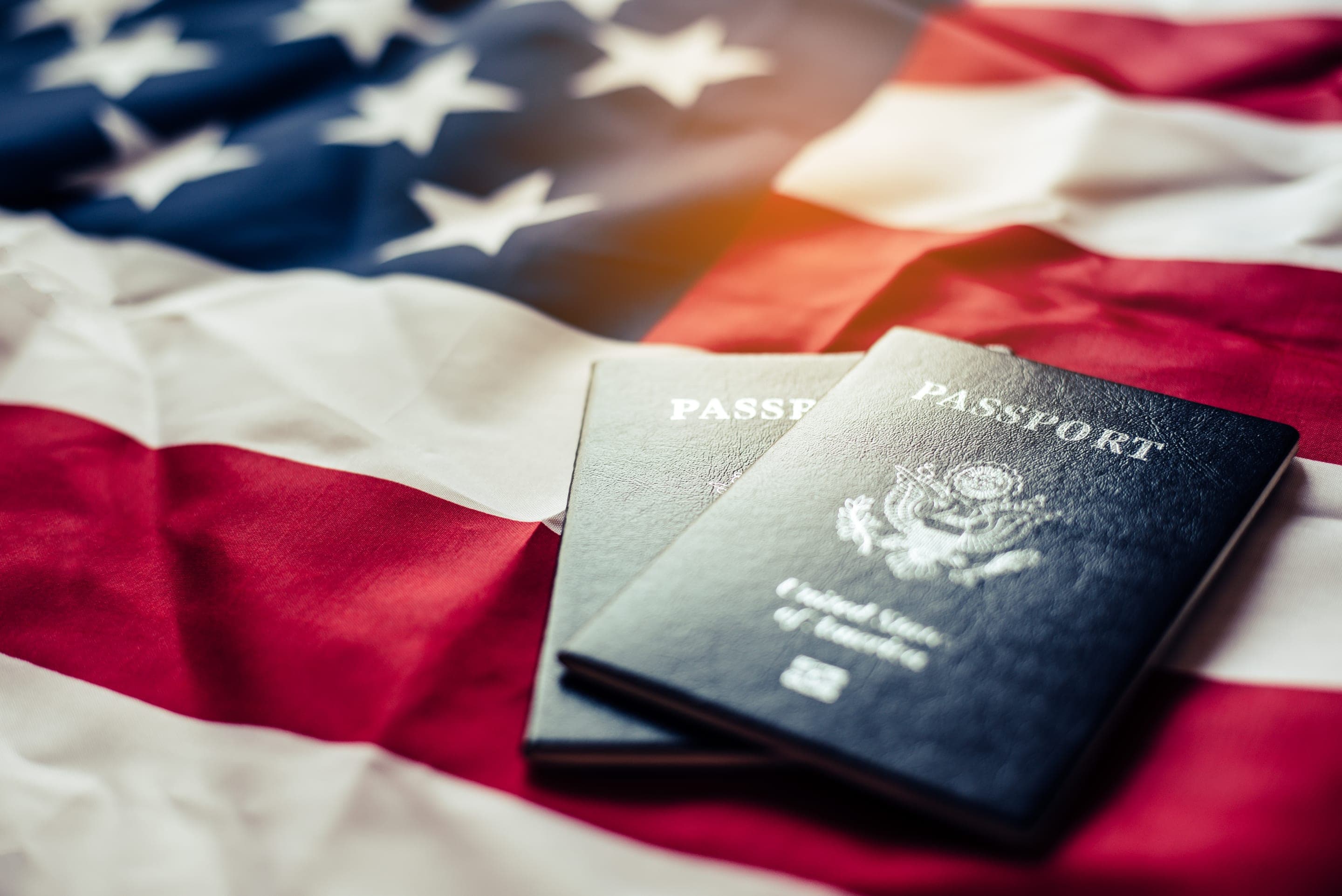
Yes. The Tibet Travel Permit is separate from your mainland China entry. Ordinary Australian, British and New Zealand passports enter mainland China visa-free for up to thirty days, confirmed through 31 December 2026. The visa-free scheme does not cover Tibet. United States and Canadian passports need a tourist visa for mainland China, and a Tibet Travel Permit on top. Tell us your nationality before we quote. We organise the Tibet Travel Permit through a licensed Lhasa-side agency once your dates are set. Where needed, we manage the tourist-visa application end-to-end as part of your booking.
Hand us the dream,
We carry it through.
From your first enquiry to your last airport pickup, our specialists design your trip and stay in contact every step of the way. The guides, drivers and hotels you'll meet are part of our trusted network we've worked with for years, briefed to the same standards.
- Dedicated specialists, start to finish
- Guides briefed to our standards
- Fully transparent, no hidden costs
- No deposit until you confirm
Stretch the trip. Stitch in another.

Lijiang
The intermediate-altitude leg. Two nights in northwest Yunnan or onward to Shangri-La before the climb to Lhasa.
Read this destination
Chengdu
Two to two and three-quarter hours by air east. The soft landing after the plateau, sea-level oxygen and tea-house pace.
Read this destination
Kunming
The lower plateau start when the route comes from the south. Two nights here before Lijiang and the climb north.
Read this destination
Useful before
you enquire.

China tourist visa for US travellers
American passports still need a tourist visa for China under current rules. How the L-visa works, what we handle as part of your booking, and what is on you.
Read this guide
When to visit China, month by month
Tibet has a tighter working window than most of the country. The plateau, the monasteries and the permit calendar all shape the answer.
Read this guide
Health, safety and accessibility
Altitude protocols, food safety, road days and medical planning, written plainly before the route is shaped.
Read this guide
Payments and connectivity in China
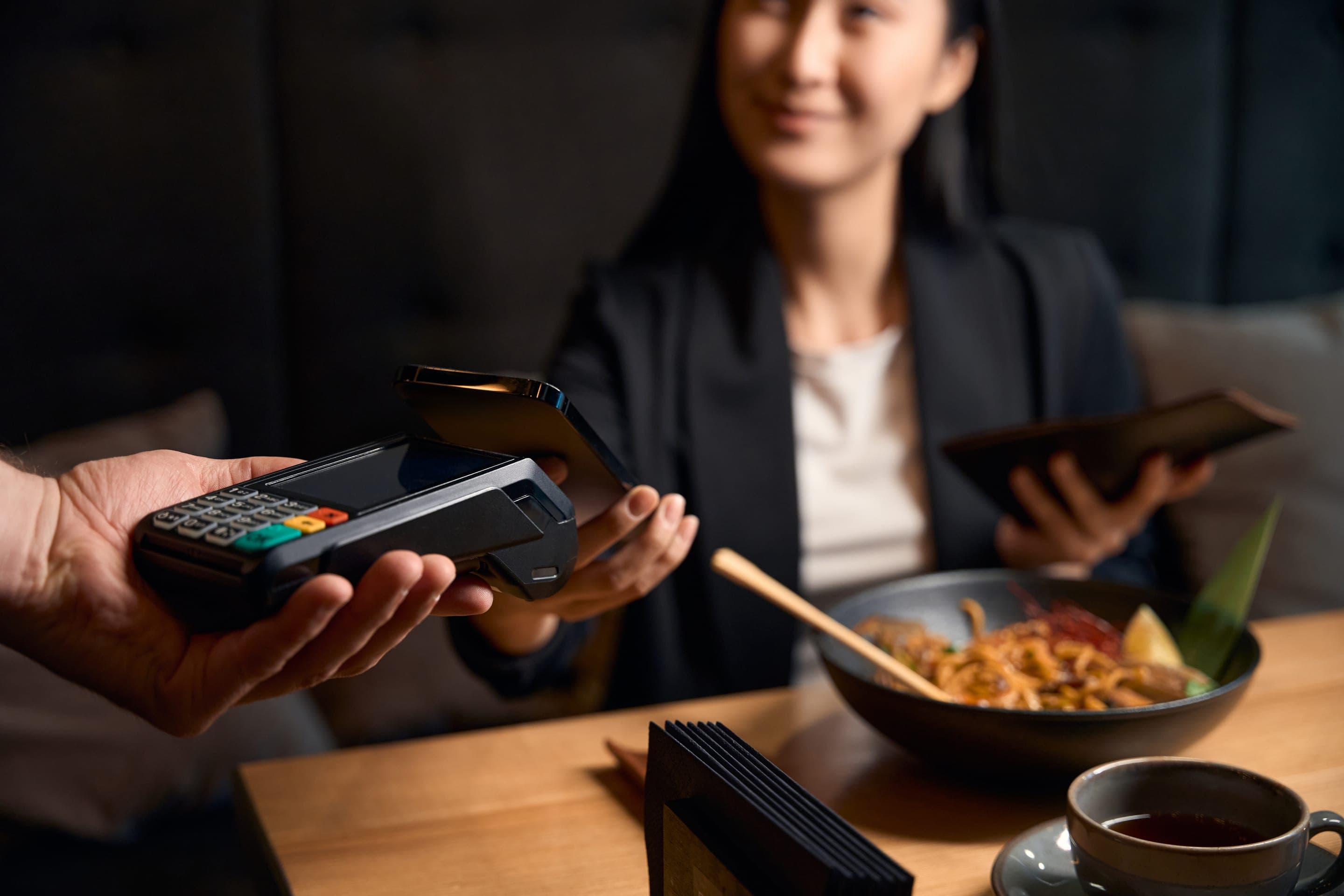
Set up Alipay or WeChat Pay before you fly. Cards work widely after binding, but limits and small merchants need planning.
Read this guide
How our pricing works
What sits inside the figure on your quote, and what sits outside it. The structure, written out.
Read this guide

Jack Guo
Senior Travel Specialist
Jack has spent ten years working with the guides, drivers and hoteliers across China. He'll be your contact from first enquiry to final airport pickup.
Tell us about your Lhasa trip
Five quick questions. We'll send you a Lhasa-anchored draft with the price within one business day. No deposit. No hard-sell.