




Dianchi Lake seen from Western Hills (Xishan) above Kunming, the city spreading along the far shore
Destination · China

Kunming

China's Eternal Spring, the gateway to Yunnan's ethnic mosaic

Kunming is China's Eternal Spring, where winter rarely freezes and summer rarely boils. East of the city, the limestone pinnacles of Shilin stand on the edge of the Yi homeland. Yunnan holds 25 of China's 56 officially recognised ethnic groups.

Signature moments

Why people
come to Kunming.

01

What to see

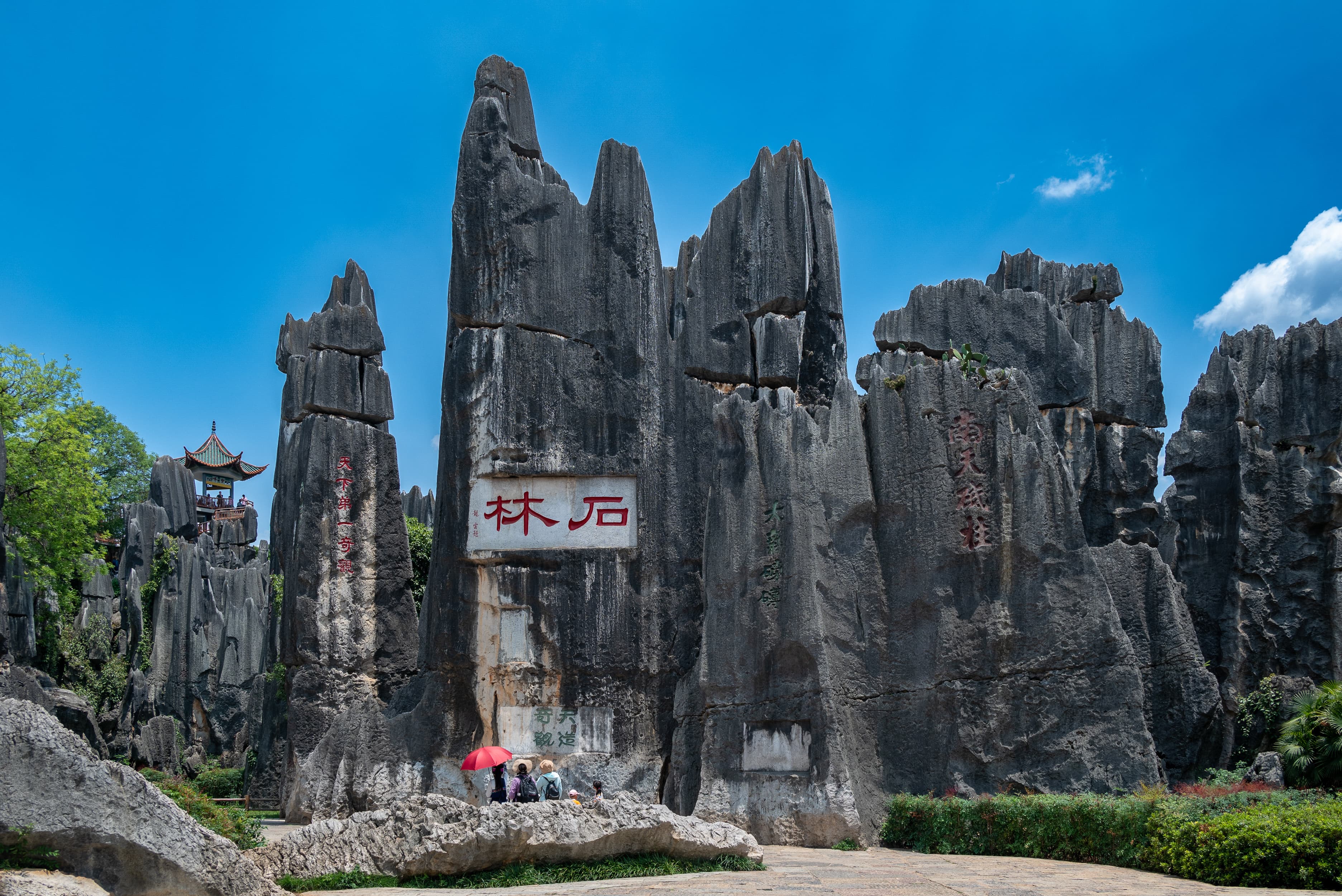
Grey limestone pinnacles of Shilin Stone Forest, a small pavilion visible atop a far peak above the karst field, Yunnan

Shilin Stone Forest(the pinnacle karst east of Kunming)

Grey limestone pinnacles rise from an ancient seabed in dense clusters, ninety kilometres east of Kunming in the Yi Autonomous County of Shilin.

The inner trails wind between the tallest formations. The site sits inside the Sani Yi homeland, whose embroidered dress is still hand-made in the workshops along the approach road.

We leave Kunming before first light to put you at the gate as it opens, ahead of the day-trip convoys. The inner pinnacle paths come first, in their quietest hour, with the morning shadows still long across the rock.

Siberian black-headed gulls in flight over Dianchi Lake near the ferry pier in Kunming, Xishan on the far shore

Dianchi Lake(Yunnan's largest plateau water)

Dianchi is the lake the city grew next to, 300 square kilometres on Kunming's south-west edge, with Xishan rising on the far shore.

From November to March, tens of thousands of Siberian black-headed gulls overwinter on the water, returning each year since the mid-1980s. The Haigeng promenade holds the quiet morning walk.

Between November and March, your guide carries the locally approved gull feed and times the visit to the cleanest morning light, so the birds come close enough to read against the lake. Outside the season, the same dawn walk sets up the Xishan crossing for the next morning.

The Dragon Gate pavilion and cliff-cut walkway of Xishan above Kunming, hand-carved into the limestone face of the Western Hills

Xishan Scenic Area(Western Hills above Dianchi)

Xishan rises above Dianchi Lake on Kunming's south-west edge, with Dragon Gate, the cliff-cut Taoist sanctuary, at the top.

Qing-era craftsmen carved the shrines, grottoes and stone gateway directly into the limestone over several decades, working with hand picks from the cliff face. The view from the gate frames the whole of Dianchi and the city beyond.

We book the Haigeng cable-car slot for mid-morning, after the dawn locals descend and before the day's coach hour begins. A guide who reads Taoist iconography walks the cliff shrines, naming the schools that carved each panel. The panorama point is held back to the clearer afternoon air.

The Warring States Ox-Tiger Bronze Table from Jiangchuan Lijiashan on display in the Dian Kingdom galleries of the Yunnan Provincial Museum, Kunming

Yunnan Provincial Museum(the Dian Kingdom bronzes)

The Yunnan Provincial Museum holds the principal public collection of Dian Kingdom bronzes, pre-Han artefacts from a south-Yunnan civilisation that ran on its own before imperial expansion reached the plateau.

The headline piece is the Warring States Ox-Tiger Bronze Table from Jiangchuan Lijiashan. The upper galleries trace the province's 25 ethnic homelands.

We book the reservation under your passport in the days before you arrive, walking the Dian bronze galleries before the school groups land. A specialist reads the Ox-Tiger Table at the case, then opens the ethnographic floors. On the Monday closure, we substitute Yuantong Temple and the Cuihu silver workshops.

A turquoise lake set against snow-capped peaks, placeholder for the Yunnan Ethnic Village on the north shore of Dianchi Lake in Kunming

Yunnan Ethnic Village(the 25-homeland ethnographic park on Dianchi)

Yunnan Ethnic Village stands on the north shore of Dianchi, rebuilding 25 of the province's ethnic homelands one village at a time: Bai courtyards, Dai bamboo houses, Yi roundhouses, Tibetan stone towers, Naxi tile roofs.

The park opened in 1992 and remains the easiest read on Yunnan's ethnic geography without leaving the city.

We brief the village order before you arrive, leading with Bai, Dai, Yi and Naxi before the smaller homelands. A specialist reads each village's roof line, dress and ritual at the gate, so the walk lands as map rather than carousel. The afternoon performance schedule is checked the day before.

A Kunming city park lake with pedal boats and the urban skyline behind, placeholder for the Guandu Ancient Town quarter south-east of the city

Guandu Ancient Town(the Yuan-Ming quarter south-east of the city)

Guandu was a Dian-lake market town under the Tang and a fortified quarter under the Yuan and Ming.

The four stone arches, the 1458 Jingang Vajra pagoda in front of the Miaozhan Temple, and the lanes around the central platform still hold tea houses, small kitchens and weekend opera.

We walk Guandu in the late morning, before the local lunch hour fills the platform stalls. A guide who reads Yunnan pagoda lineage walks the Jingang pagoda and the Miaozhan grounds, naming the schools that left their mark. A tea-house round closes the visit.

An arched stone bridge over a willow-lined canal beside timber shop-houses with snow-capped peaks behind, placeholder for Wenming Street in Kunming Old Street

Kunming Old Street(Wenming Street)

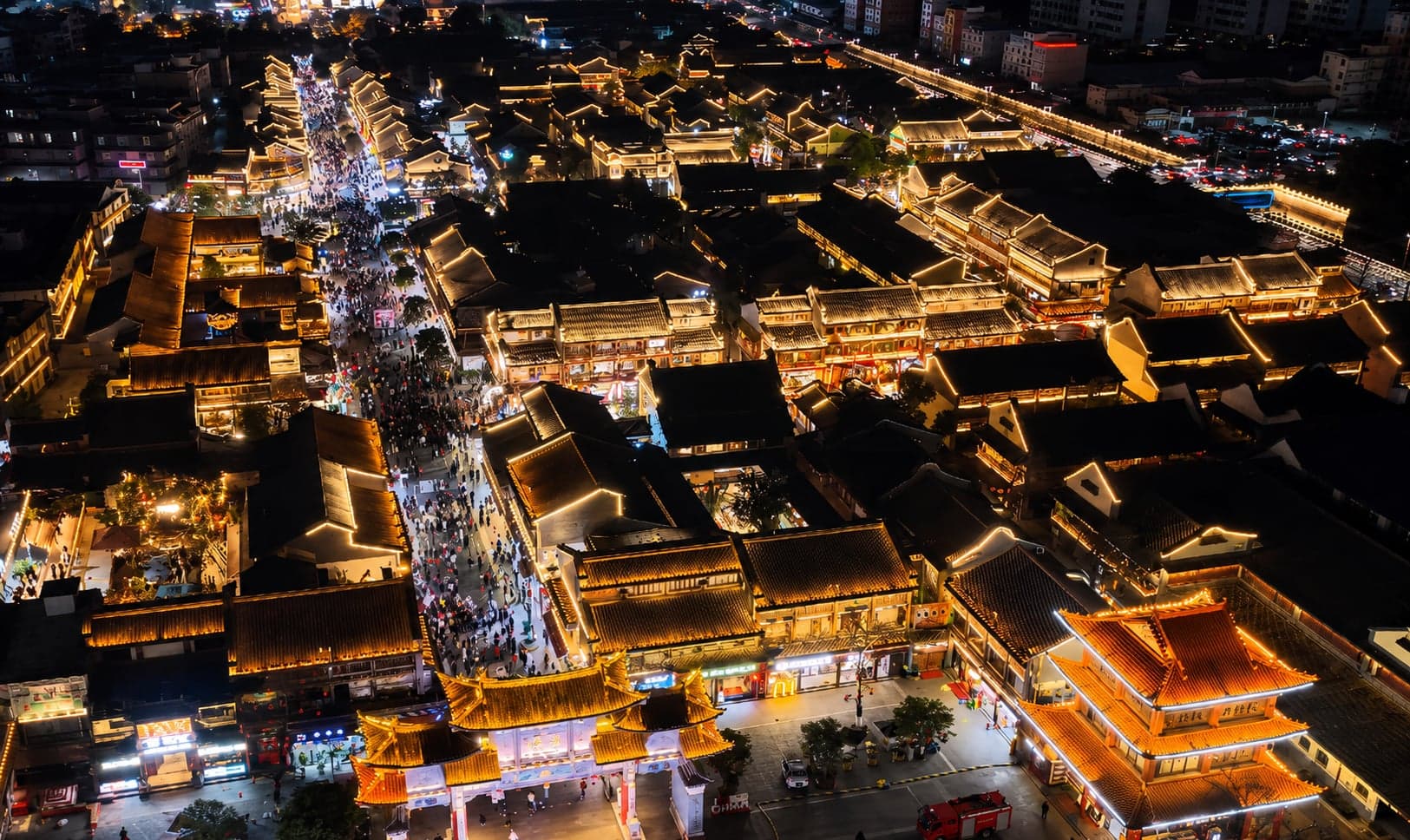
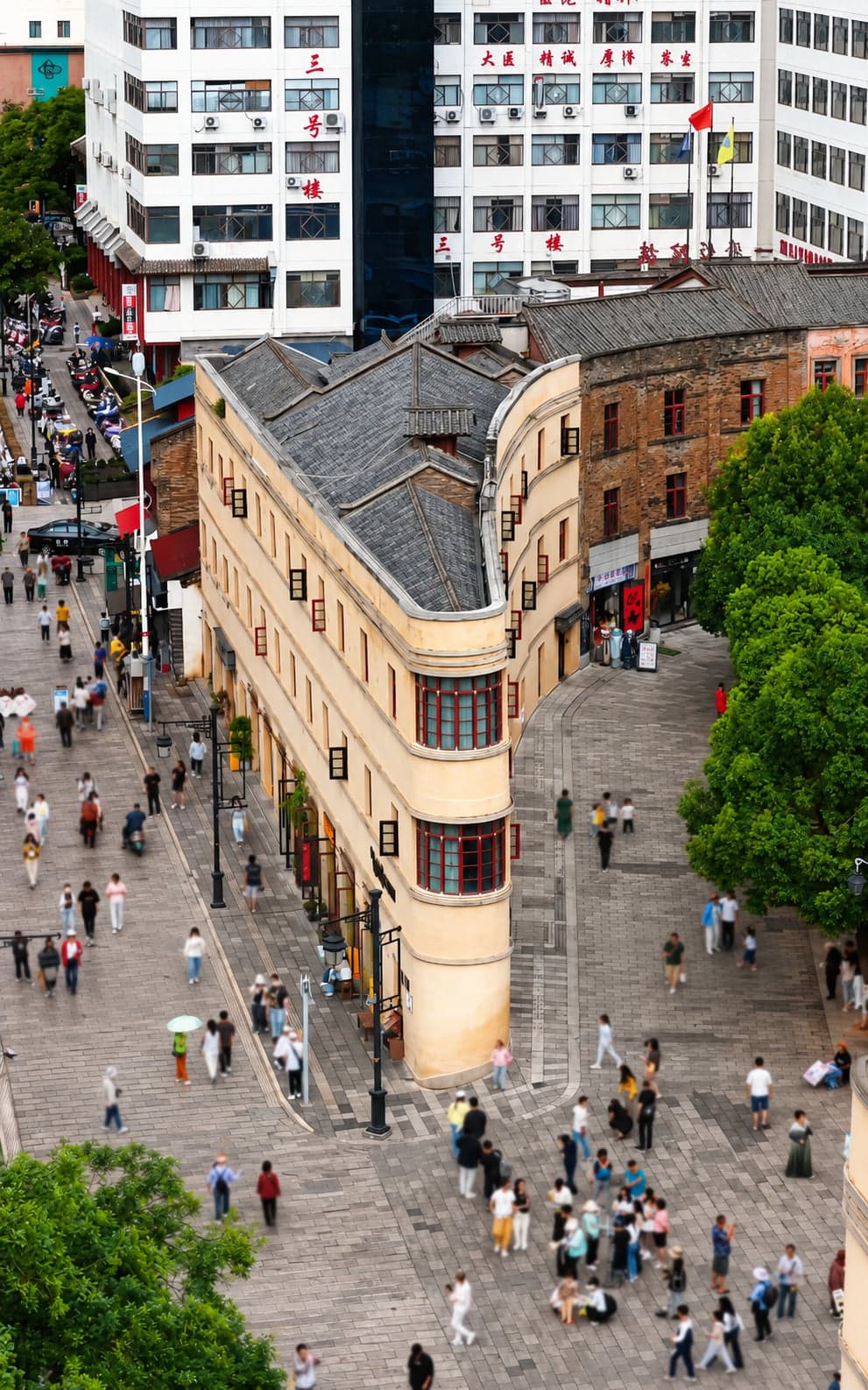
Kunming Old Street runs north from the Confucius Temple gate through Wenming Street, the surviving old quarter at the city's centre.

The lane plan dates to the Ming and Qing; the two-storey timber shop-houses are largely late Qing and Republican, still holding antique stalls, opera tea-houses and small Yunnan kitchens.

We walk the lane in late afternoon, when the lanterns warm and the dinner kitchens fire up. Your guide opens the doors to the antique houses still in private use, with the opera tea-house around the corner for a half hour of Yunnan opera before dinner.

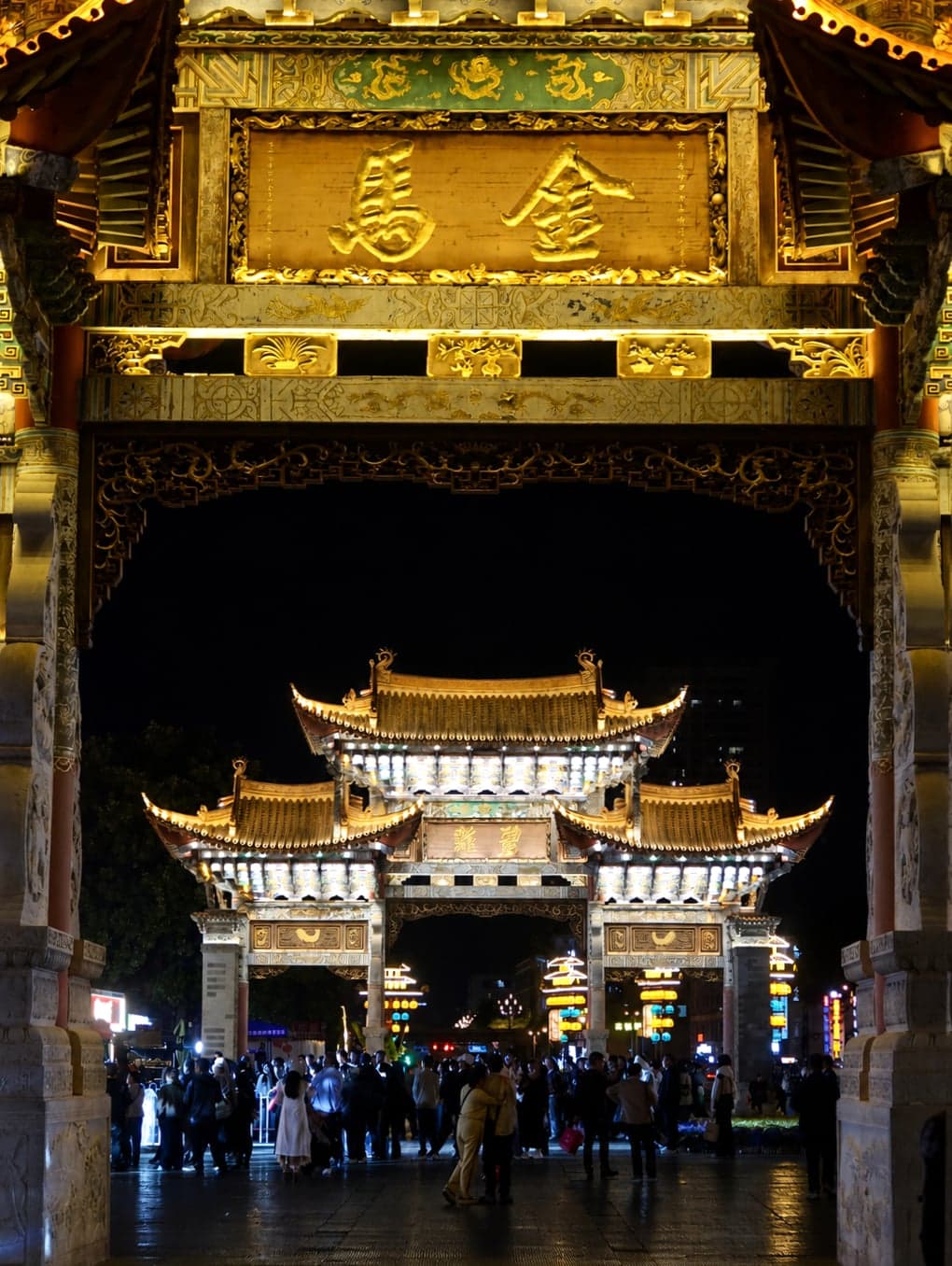
The twin Ming-style Jinma and Biji wooden archways at blue hour on Jinbi Road, Kunming

Jinma Biji Archway(the gold-horse and jade-rooster gates)

The Jinma Biji archways are Kunming's signature emblem: twin Ming-style wooden gateways named for the gold horse and jade rooster of Yunnan myth, standing on Jinbi Road.

The original pair went up in the Ming Xuande period; the current pair was raised in 1999. The gates open onto the pedestrian quarter and the night-market lanes.

We time the archway visit for the blue hour, when the gates light up and the surrounding lanes ease into the evening crowd. A pavement tea stop is held a short walk south, with the night-market food street within easy reach after.

Boardwalks and reedbeds at Laoyuhe Wetland Park on the south shore of Dianchi, Kunming

Laoyuhe Wetland Park(Dianchi south-shore reedbeds and tulip fields)

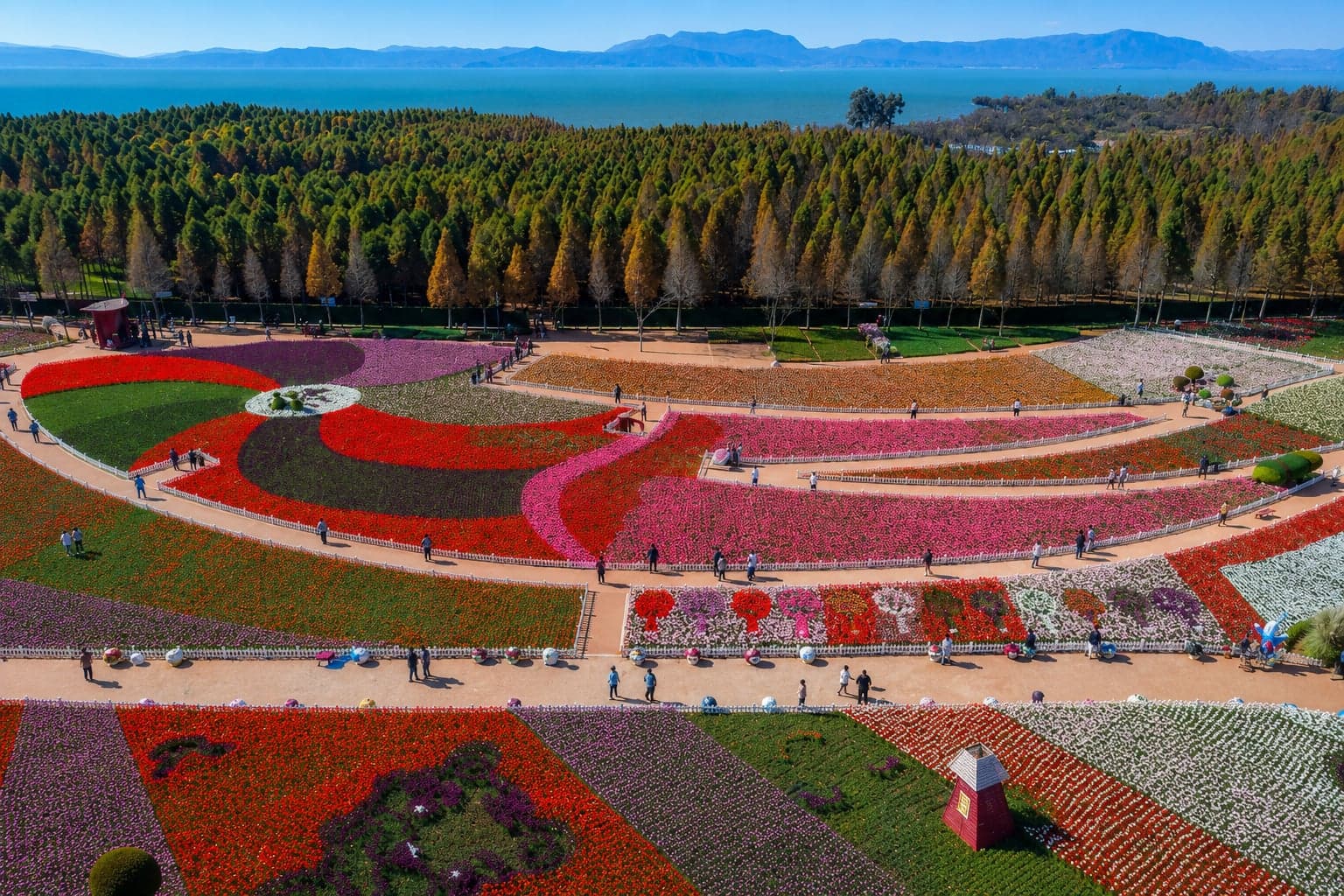
Laoyuhe Wetland Park sits on the south shore of Dianchi in Chenggong, a wetland of reedbeds, boardwalks and seasonal flower fields built into the lake's rehabilitation belt.

From mid-February into mid-March, the tulip beds carry hundreds of thousands of blooms, with willows along the water and Xishan visible across the lake to the north-west.

Tulip season runs short, roughly mid-February to mid-March, with the bloom moving by the weather. We open this card only when the park's bloom report is current. The boardwalk loop is walked before the weekend afternoon crowd; lunch settles at a Dianchi-shore kitchen on the way back.

02

What to eat

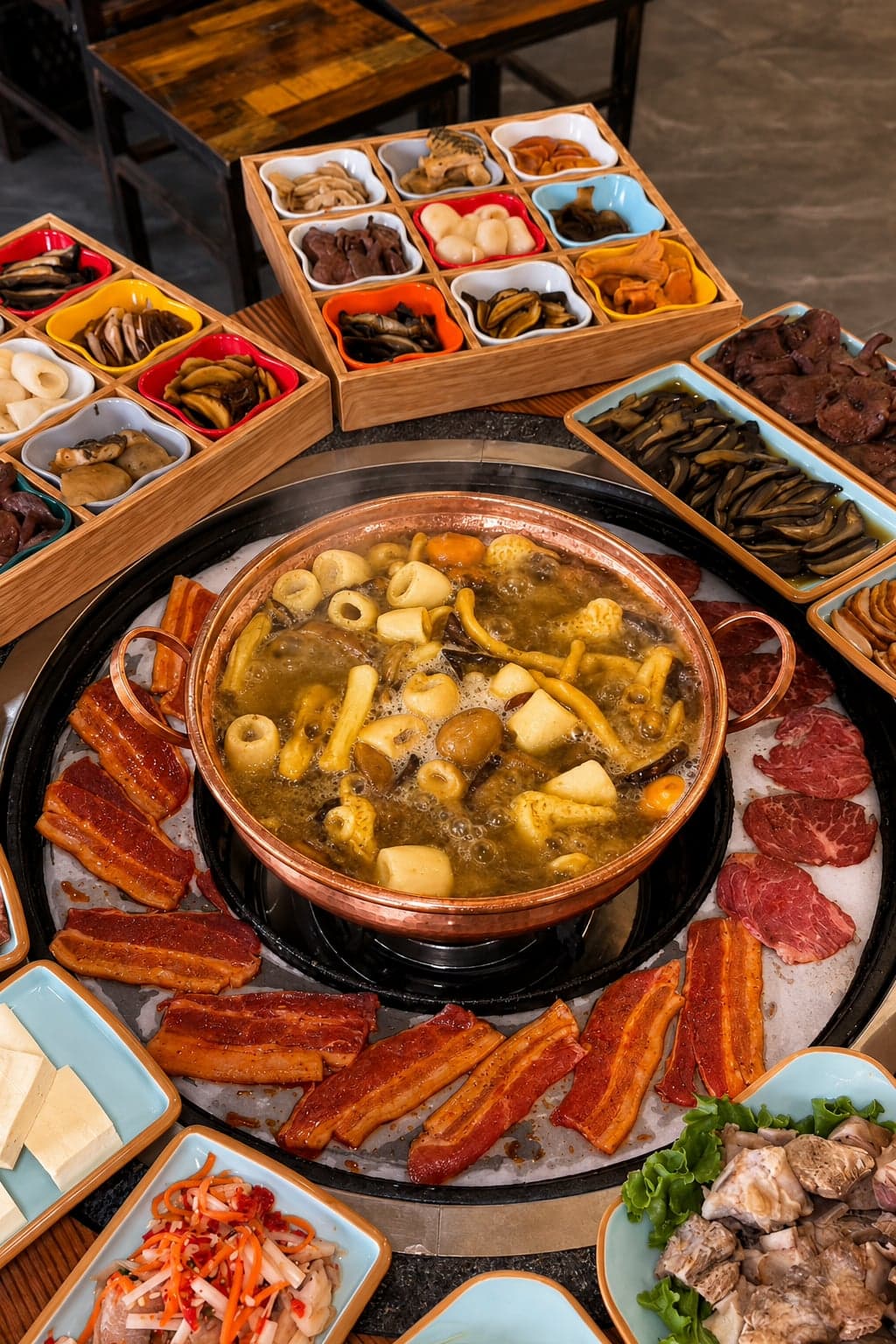
Yunnan wild mushroom hotpot, a brass pot of clear chicken-bone broth beside a tray of sliced mushroom varieties in compartments

Wild mushroom hotpot(yesheng jun huoguo)

Yunnan is the wild-mushroom heart of China.

From July to September the plateau's summer rains bring porcini, chanterelle, jizong, jianshouqing and a dozen other named species into the markets within hours of being picked. A clear chicken-and-bone broth simmered for hours hits the table first, then the sliced mushrooms go in. The flavour is forest and umami, not the chilli of Sichuan hotpot.

We only open this card between July and September, when the mushrooms reach the table within hours of the morning market. Your guide briefs which species need which cook time, and the kitchen is told before the meal begins. Jianshouqing in particular must be cooked through; underdone, it can be hallucinogenic.

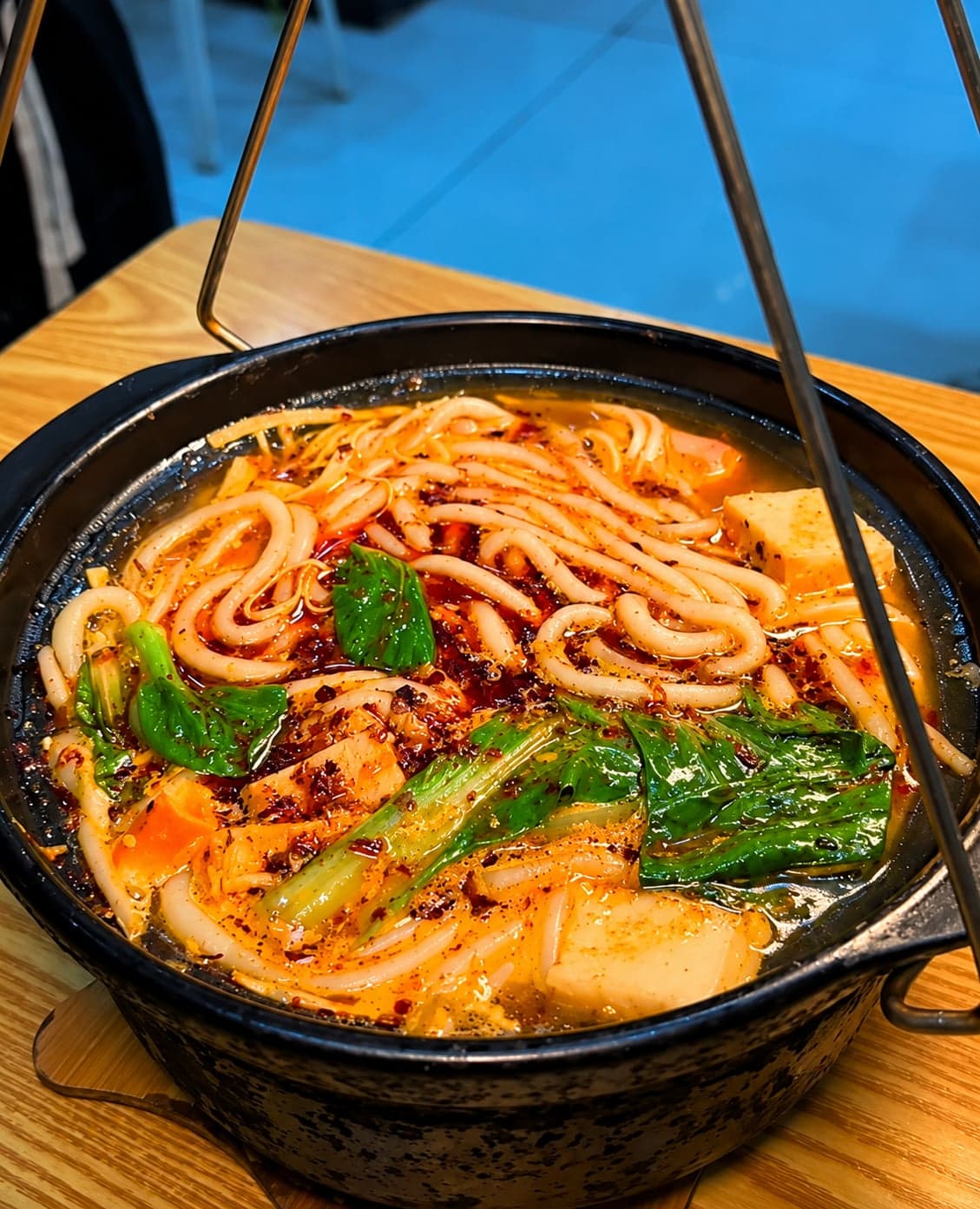
Kunming crossing-bridge noodles, a deep blue-and-white broth bowl ringed by side plates of sliced meats, quail egg, chrysanthemum leaves and rice noodles for table assembly

Crossing-bridge noodles(guoqiao mixian)

Crossing-bridge noodles are Yunnan's iconic bowl, from Mengzi where a scholar's wife once carried hot chicken broth across a long bridge in a clay pot sealed with a layer of oil.

At the table, a deep bowl of near-boiling broth lands first; sliced raw chicken, pork, river shrimp, quail egg, chrysanthemum leaves and rice noodles go in by order, cooked entirely by the broth's held heat.

We book a Kunming counter we have worked with for years. Your guide briefs the assembly order before the broth arrives, so each ingredient lands in the right second: the quail-egg yolk still soft, the chicken cooked through, the noodles tender rather than swollen. Vegetarian assembly is possible if flagged before the day.

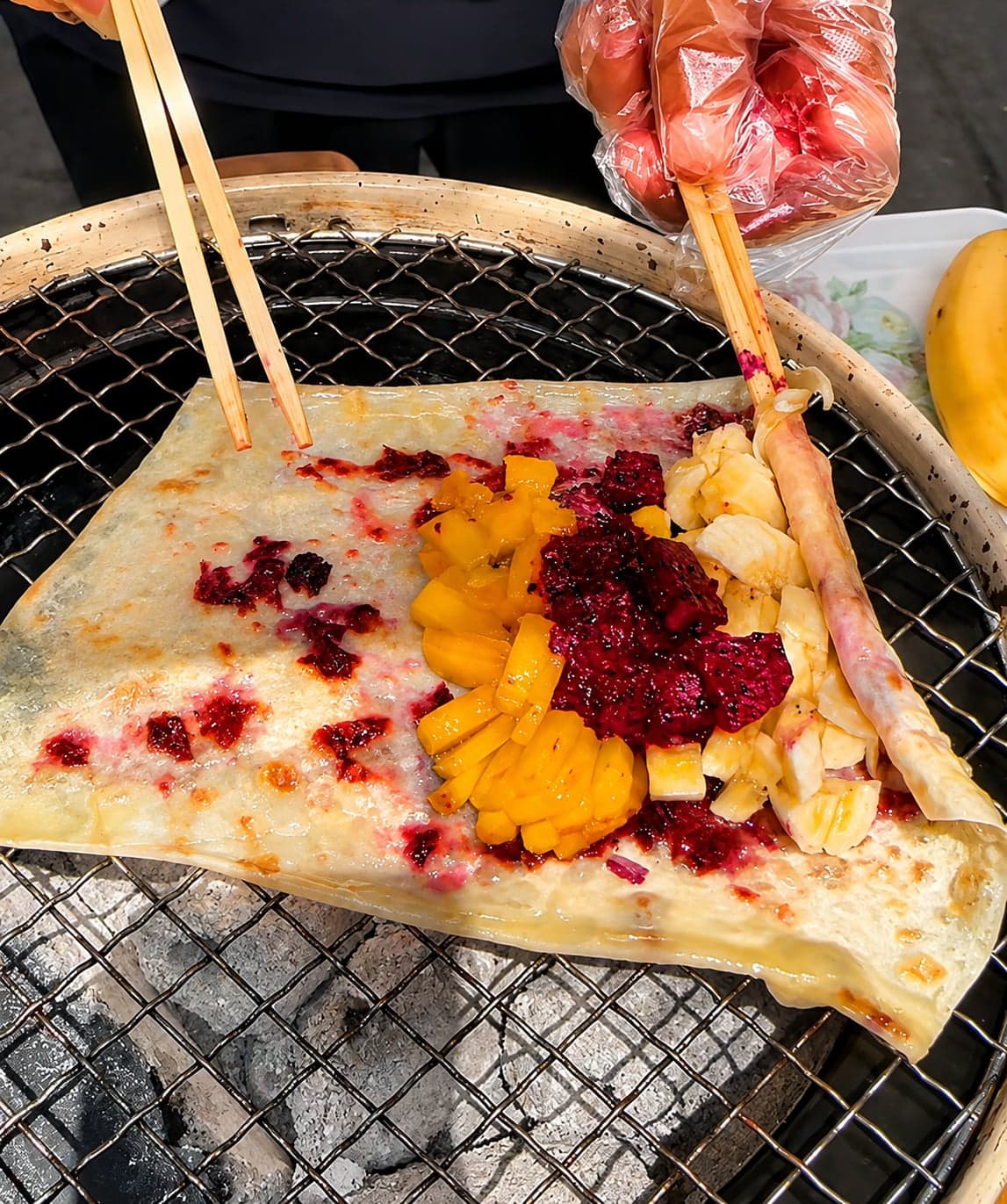
Yunnan rose-jam pastry rounds on a white plate, placeholder for Bai grilled rushan on a charcoal skewer with a rose-jam dip

Grilled rushan(kao rushan)

Rushan is Yunnan's signature dairy fan, thin sheets of stretched cow's-milk cheese from the Bai homeland around Dali.

The grilled version arrives on a skewer over charcoal, blistered at the edges and just soft in the middle, dipped in rose-jam syrup or dusted with sugar. The flavour is milky, faintly tangy, sweet at the finish.

We pick a Kunming counter that still grills rushan to order over charcoal, not the pre-warmed cabinet version. A short brief at the table covers the dip choice, so the first piece arrives blistered and soft, and the second piece arrives by the time you finish the first.

03

Shows and experiences

An old-town lane at dusk with alpenglow on a snow peak behind, placeholder for the Yi Torch Festival pine-torch parade in Shilin county

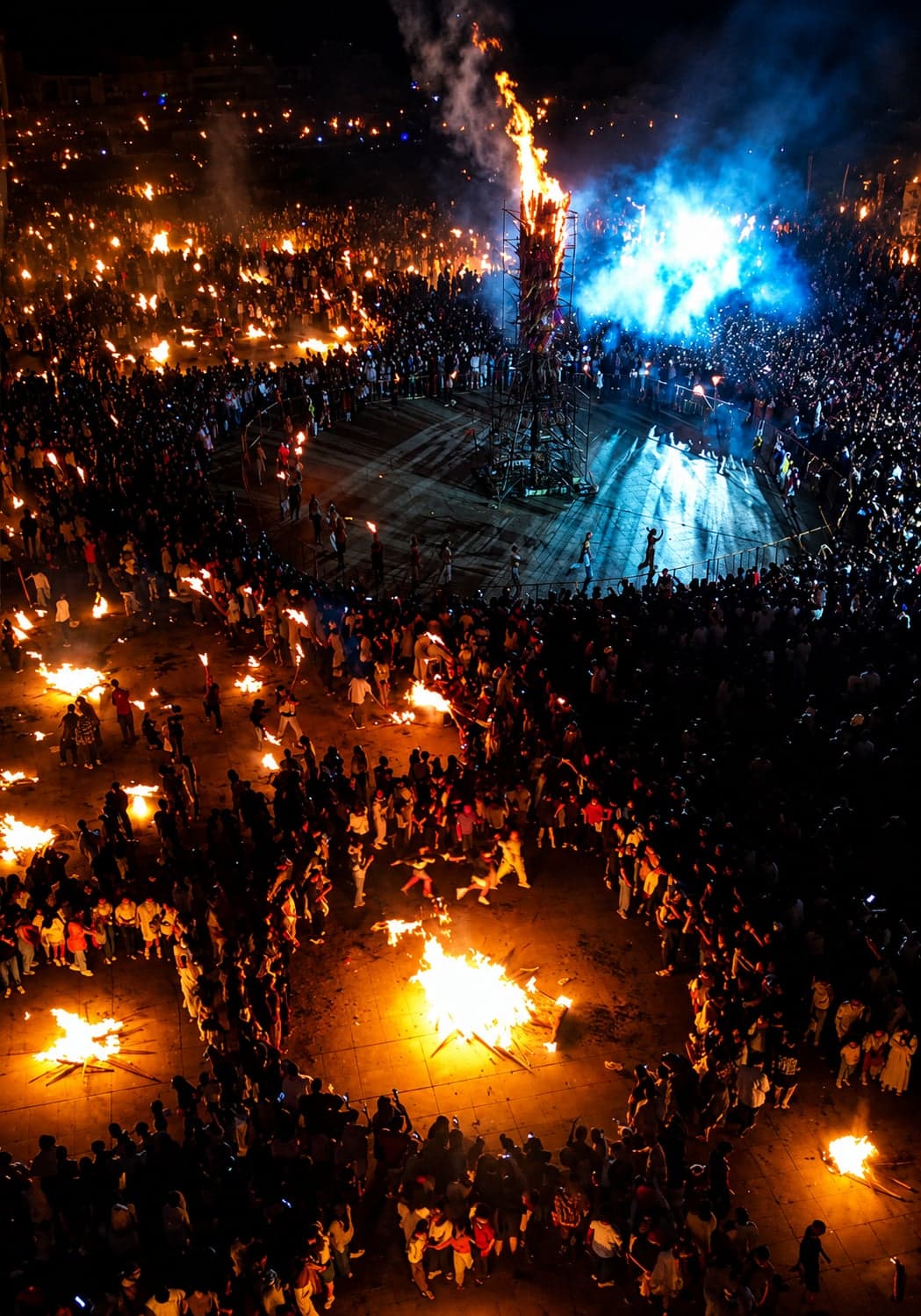
Torch Festival(Huoba Jie)

The Torch Festival is the major Yi festival of the year, held on the 24th day of the sixth lunar month, usually late July or early August.

In the Yi homelands around Shilin, families light pine torches at dusk and end the night around bonfires with wrestling, archery and the ring dance.

We only open this card in festival week. A village partner east of Kunming holds your evening, with a guide who has worked Yi festivals for years and a kitchen that opens to the table after the parade. The car waits at the village edge for a calm return.

Performers in ethnic dress ranged across the red-rock Impression Lijiang stage with snow peaks behind, placeholder for the Dai Water Splashing Festival at the Yunnan Ethnic Village

Water Splashing Festival(Po Shui Jie)

Water Splashing is the Dai new year, three days around 13-15 April when southern Yunnan turns into open-air ritual.

The splash is a blessing: the wetter you leave, the more luck the year carries. Yunnan Ethnic Village stages it each April with dragon boats on the inner lake and the splash through the afternoon.

We treat this as a half-day card on the staged Kunming side, with the Ethnic Village ticket booked and a change of clothes carried for the splash hour. Strong appetites can carry on to Xishuangbanna for the real-village version; we plan that as its own three-day leg, not a side trip.

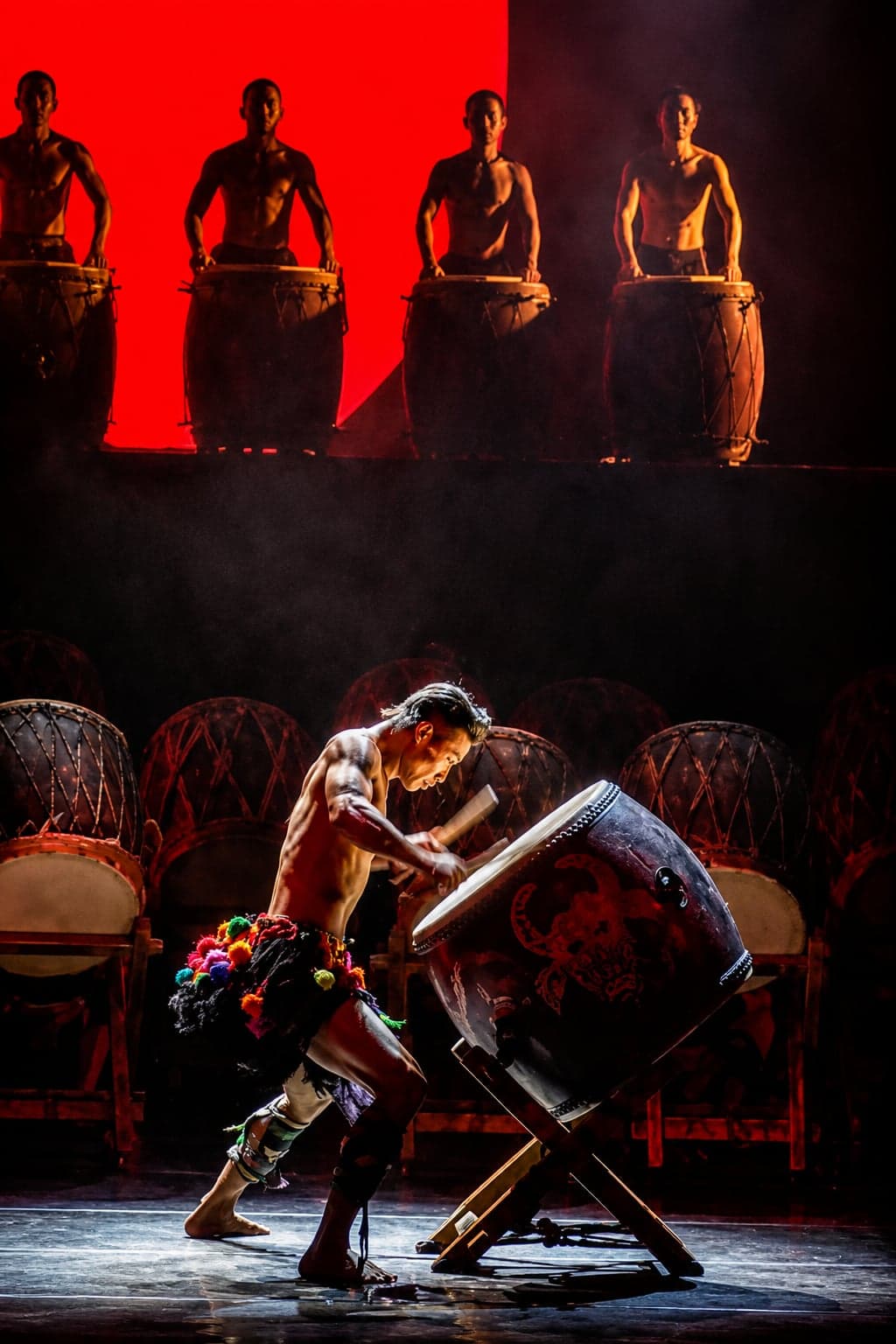
Performers in Yunnan minority dress on stage in Yang Liping's Dynamic Yunnan, the Bai choreographer's 2003 ethnic-dance work

Dynamic Yunnan(Yunnan Yingxiang, Yang Liping's ethnic-dance work)

Dynamic Yunnan is the show the Bai choreographer Yang Liping built around the home songs and dances of Yunnan's twenty-five minorities.

She premiered it in 2003 with more than sixty non-professional villagers recruited from those homelands, sharing the stage with her trained company. Wa stamping song, Yi torch ritual, Dai peacock dance, Tibetan harvest movement, drawn from the villages rather than imagined for the auditorium.

This is the year-round counterpart to the festival pair on this page. We arrange centre seats and brief you on the Wa, Yi, Dai and Tibetan numbers before the show, so the village provenance of each piece lands as it should. A private car takes you in and waits for the return.

How two days unfold

What two days
might look like.

  1. Day 01

    City rhythms, lake at the edge.

    Begin the day at the Yunnan Provincial Museum, where the Dian bronze galleries open with the Warring States Ox-Tiger Table before the school groups arrive. After a leisurely lunch, walk from the Jinma Biji archways into Kunming Old Street, where late-Qing courtyards still hold antique stalls and opera tea-houses. As evening approaches, head south to the shore of Dianchi Lake, with Xishan rising on the far side and the city softening behind you.

    • Yunnan Provincial Museum (Dian bronze galleries)
    • Jinma Biji Archway
    • Kunming Old Street (Wenming Street)
    • Dianchi Lake (lakeside walk)
    • Xishan above the water
    • Crossing-bridge noodles supper
  2. Day 02

    Stone forest at first light, then the road north.

    An early departure puts you at Shilin as the gates open, ninety kilometres east of Kunming and ahead of the day-trip convoys. Walk the inner pinnacle paths first, in their quietest hour, then take the wider loop before the coach groups reach it. Lunch settles into a Sani Yi family kitchen near the site, with the embroidery workshops a short walk from the table. The afternoon belongs to the next leg of your Yunnan trip: Lijiang by high-speed rail, Dali by road, or Shangri-La by air.

    • Shilin Stone Forest (gates-open arrival)
    • Inner pinnacle trails
    • Sani Yi family kitchen and embroidery workshops
    • Naigu Stone Forest (optional)
    • Onward leg: Lijiang rail, Dali road, or Shangri-La flight
    • Guandu Ancient Town tea-house (optional, if staying)

Best time

Year-round; spring and autumn easiest; July to September for wild mushrooms; November to March for the Dianchi gulls

Days needed

2 nights for Kunming; 3 with Shilin and a slower pace

Where it sits

Yunnan's main air gateway; before Lijiang, Dali or Shangri-La

Before you enquire

Questions worth
answering early.

  • Two nights is the clean answer for most private Yunnan trips. Day one runs at city pace through the Yunnan Provincial Museum, the Jinma Biji archways, Kunming Old Street and the shore of Dianchi at dusk. Day two leaves before first light for Shilin Stone Forest and continues to the next Yunnan leg in the afternoon. Stretch to three nights if you want Xishan and Dragon Gate, the Yunnan Ethnic Village or Guandu Ancient Town without compressing the morning.

One team behind your trip

You enjoy the trip,
we do the rest.

From your first enquiry to your last airport pickup, our specialists design your trip and stay in contact every step of the way. The guides, drivers and hotels you'll meet are part of our trusted network we've worked with for years, briefed to the same standards.

  • Dedicated specialists, start to finish
  • Guides briefed to our standards
  • Fully transparent, no hidden costs
  • No deposit until you confirm

Design your Kunming trip

Start with your preferences. We'll craft a private itinerary in Kunming that fits how you like to travel.

Enquiring about

Kunming

Step 1 of 5 · Where

Where in China is calling you?

Pick as many as you'd like, or 'not sure yet' and we'll suggest.

Portrait of Jack Guo

Jack Guo

Your travel specialist

Jack has spent ten years working with the guides, drivers and hoteliers across China. He'll be your contact from first enquiry to final airport pickup.

Private Kunming tours, designed around your companions | Everonia