
Lijiang
the Naxi capital under Jade Dragon Snow Mountain
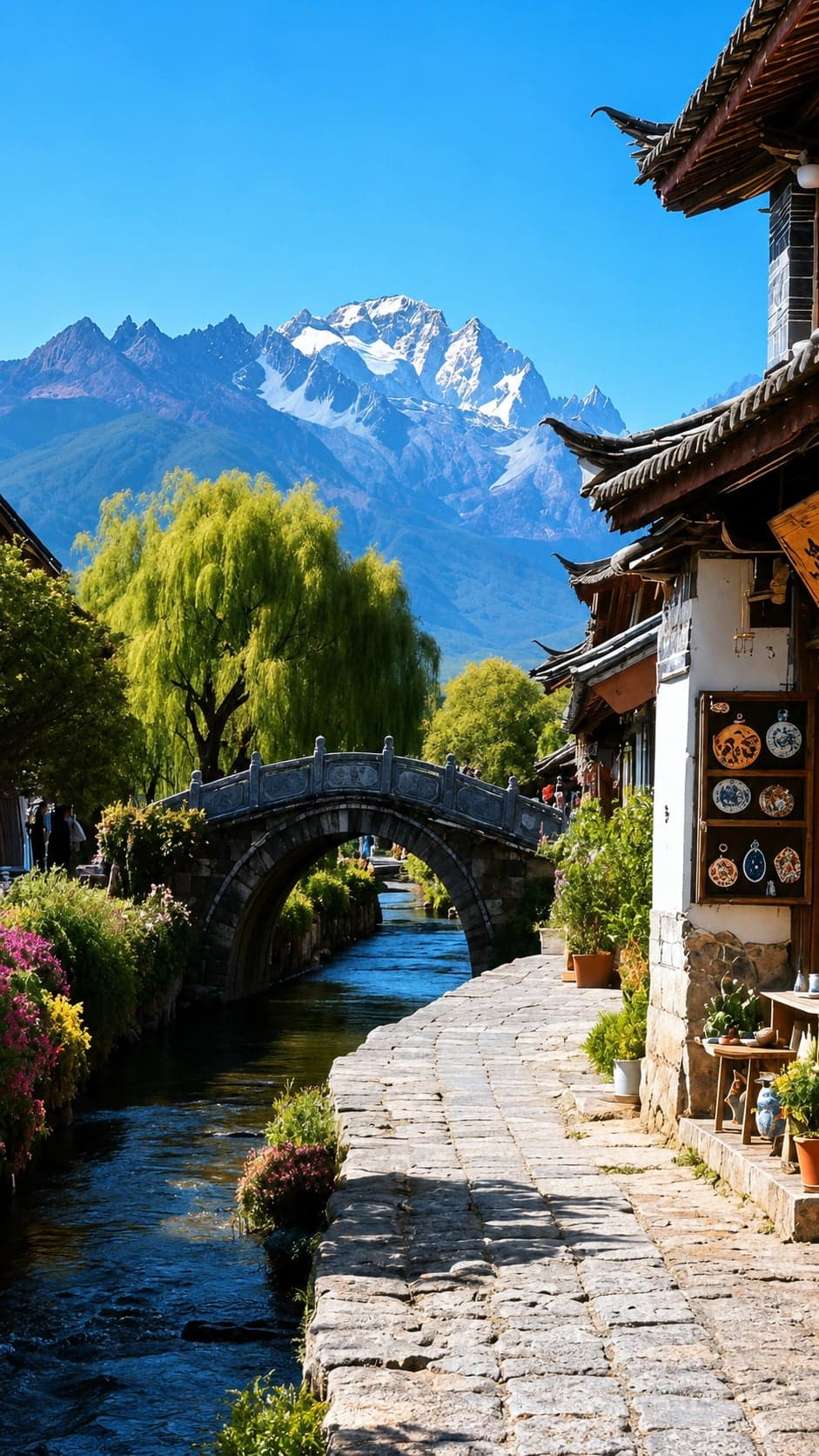
Lijiang is the last great Naxi capital, at the foot of Jade Dragon Snow Mountain. The old town runs canals of mountain snowmelt under every doorway, and the Dongba pictographic script is still inked on paper at Black Dragon Pool.
Why people
come to Lijiang.
What to see

Jade Dragon Snow Mountain(Yulong Xueshan, sacred to the Naxi)
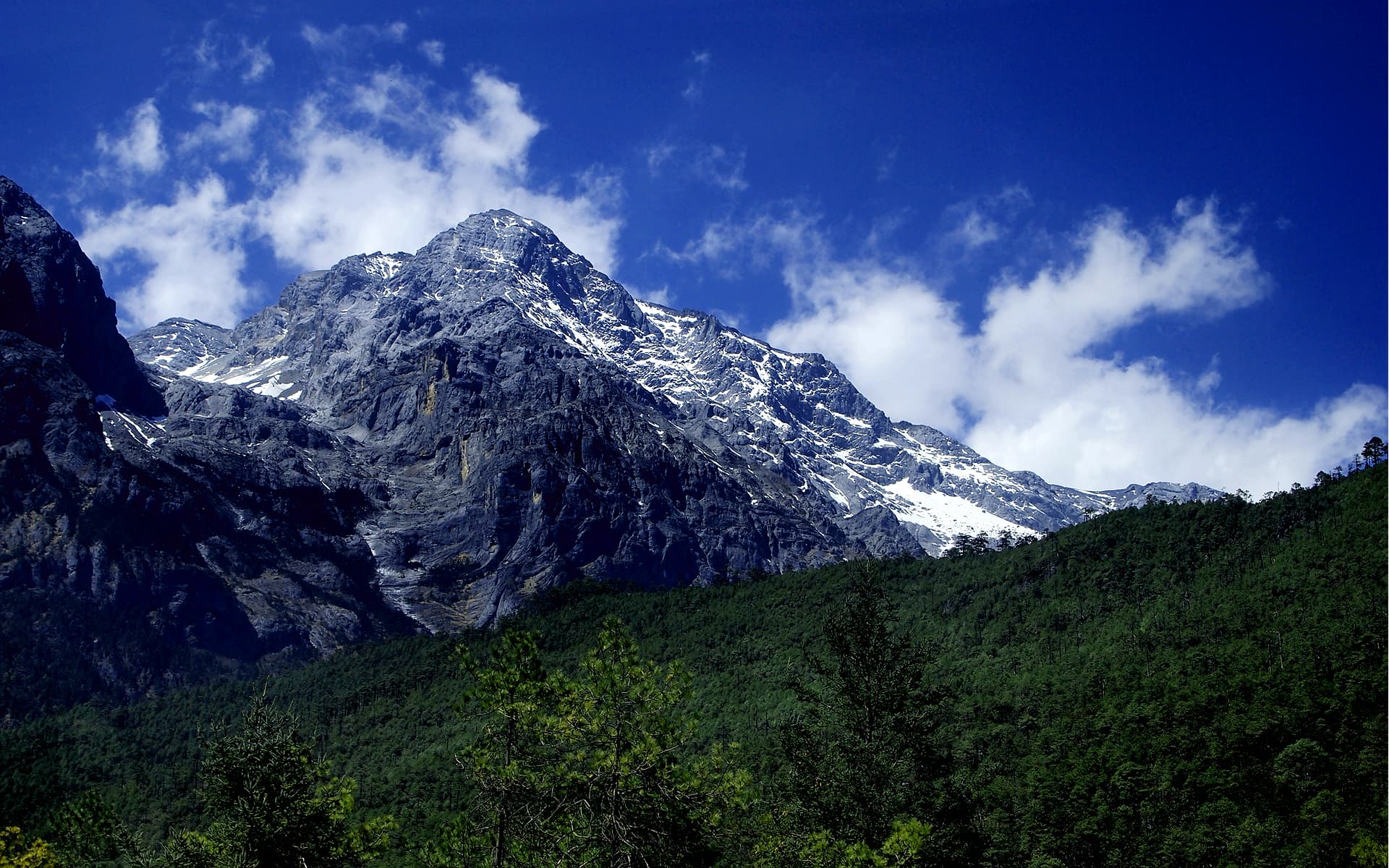
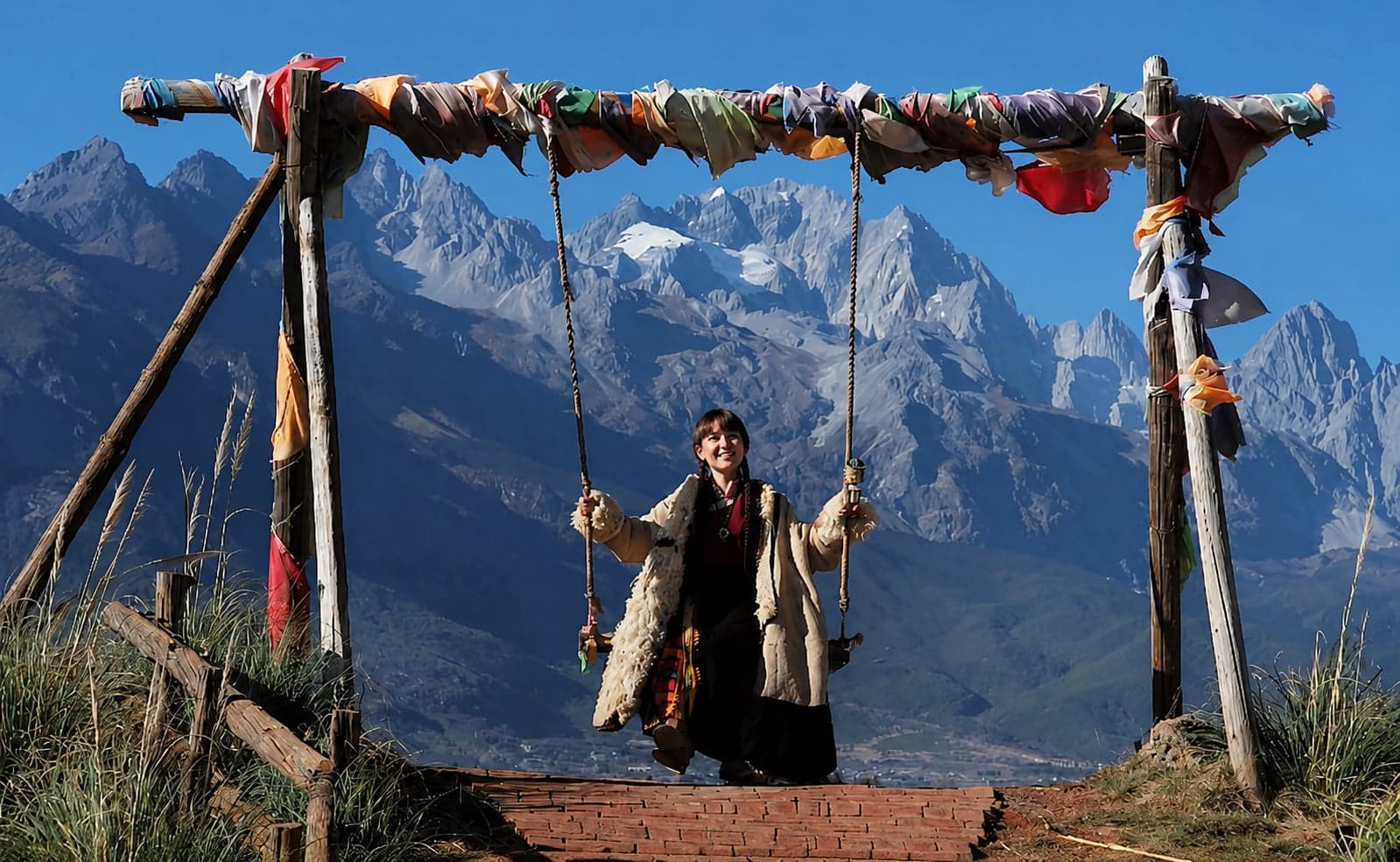
Jade Dragon Snow Mountain rises directly north of Lijiang as the sacred peak of the Naxi, its 13 ridges visible from the rooftops of Dayan when the air is clear.
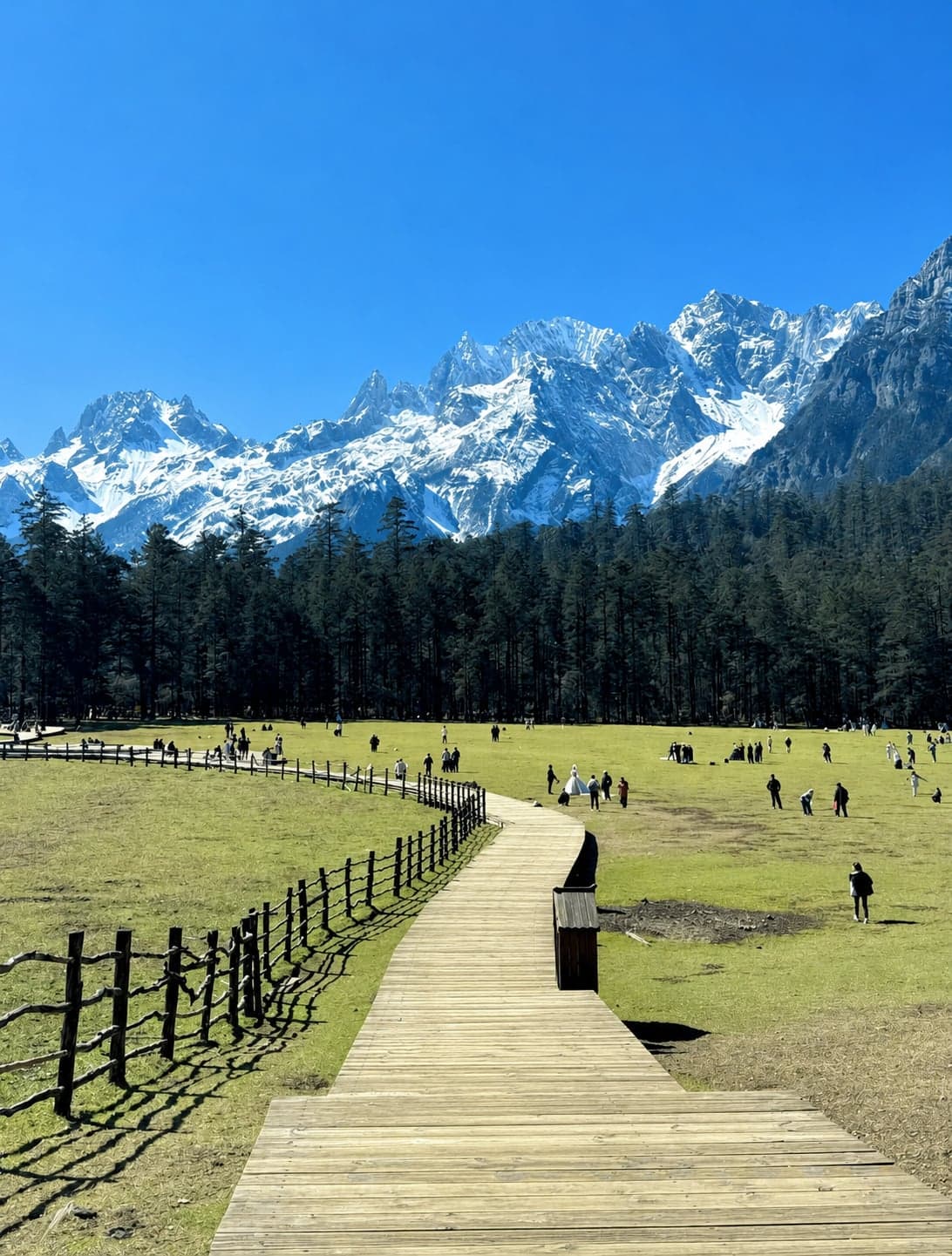
Three viewing routes share the massif: Glacier Park's cable car up to the upper boardwalk, Spruce Meadow's mid-slope flowers, and Yak Meadow's high pasture.
We pick the route in the morning, after the forecast and your appetite for stairs. A clear morning takes Glacier Park with oxygen canisters on hand. A mist day swaps to Yak Meadow, where the snowline sits above the cloud line.

Lijiang Old Town(Dayan, the city core of the three Naxi clusters)
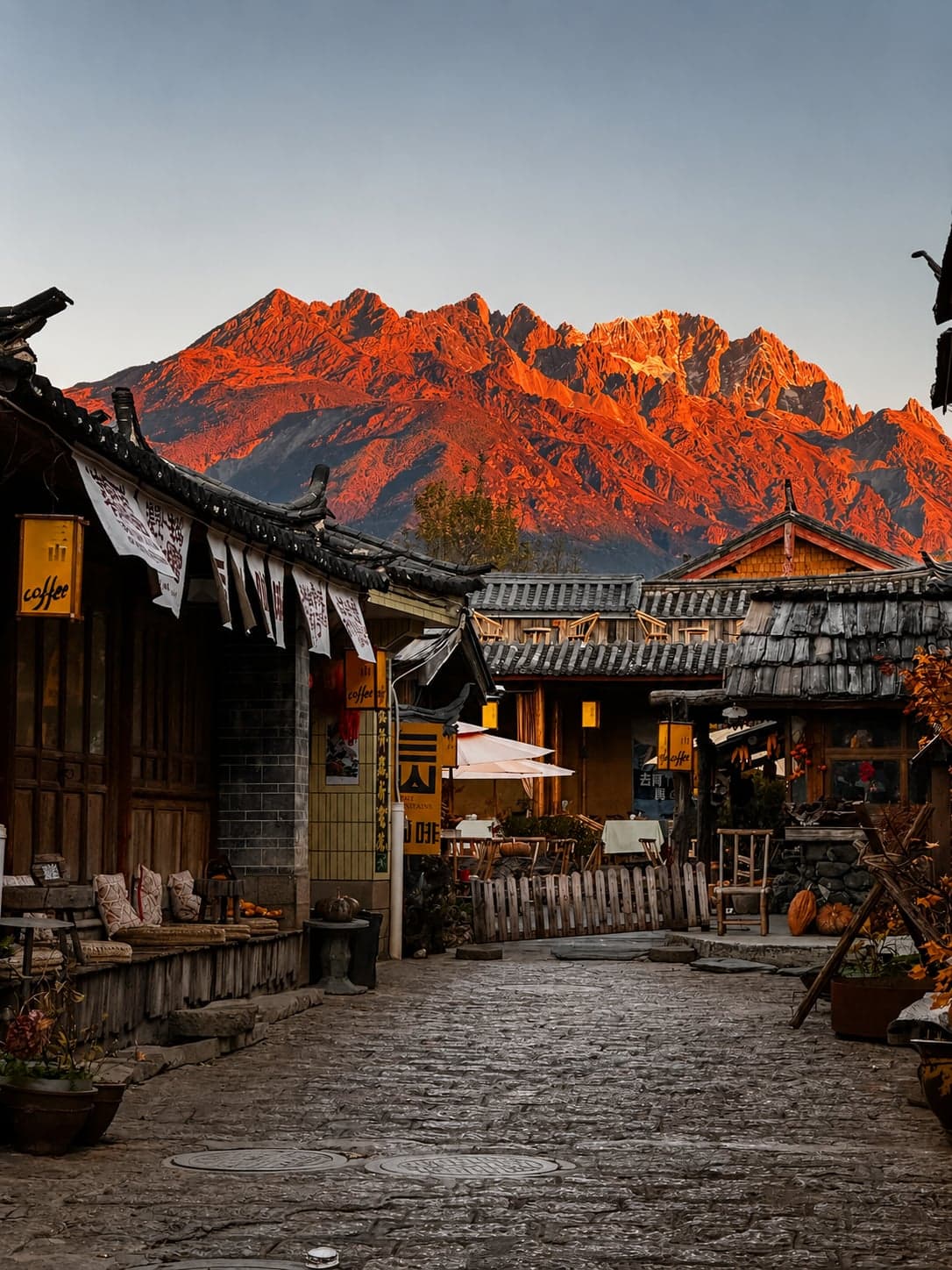
Dayan was the Naxi Mu chieftain seat and the southern hinge of the Tea and Horse Road, the urban core of the three Naxi clusters (Baisha and Shuhe sit on the plain to the north).
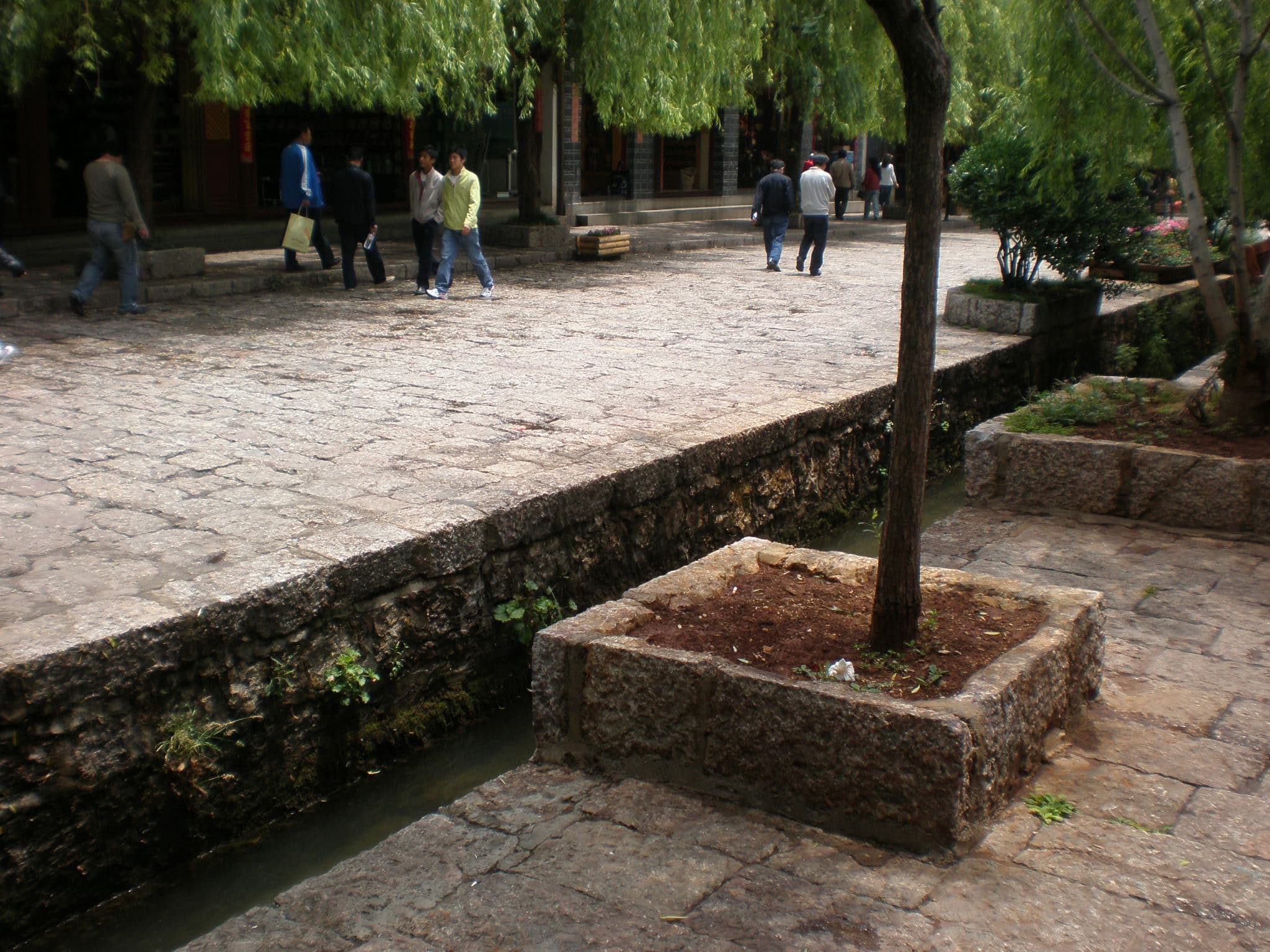
Snowmelt from Jade Dragon still runs the canals under every doorway. The hour to be here is before breakfast or after the lanterns come on.
We book a courtyard inn inside the old town or on its edge, then build the day around two quiet hours: a walk before the shutters lift, and a return after the lanterns come on. The best hour should be a walk from your door.

Blue Moon Valley(Lan Yue Gu, the glacial pools)
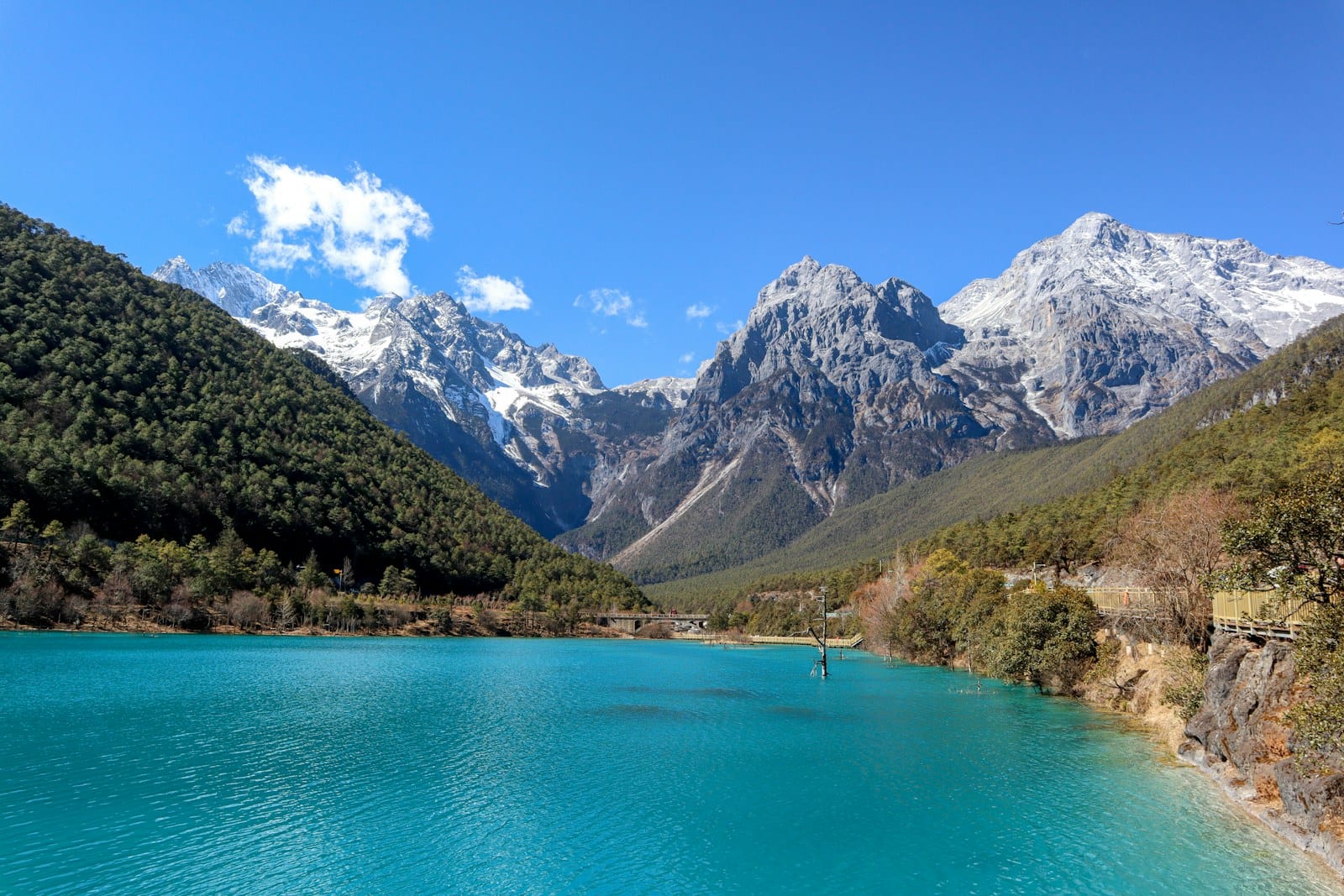
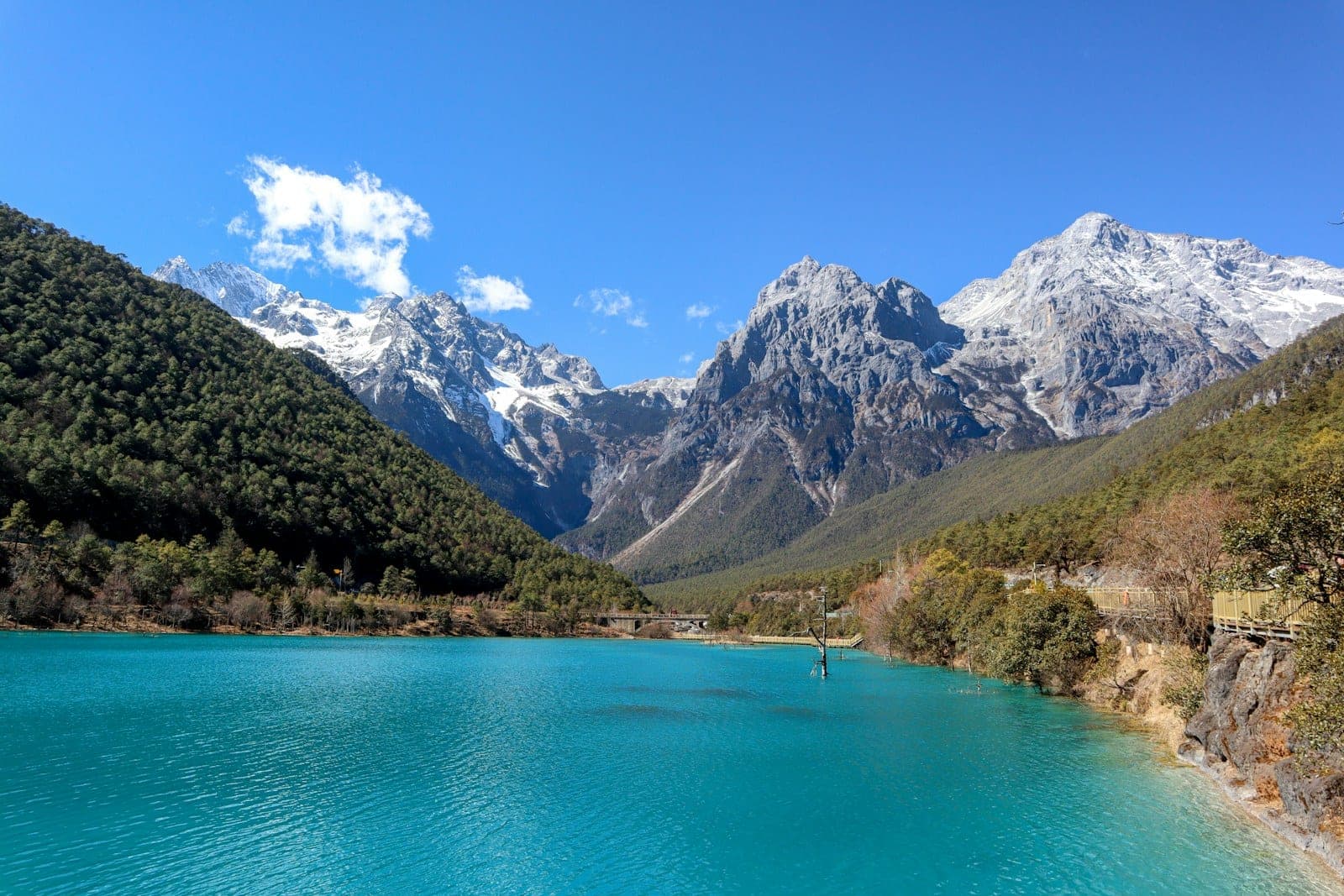
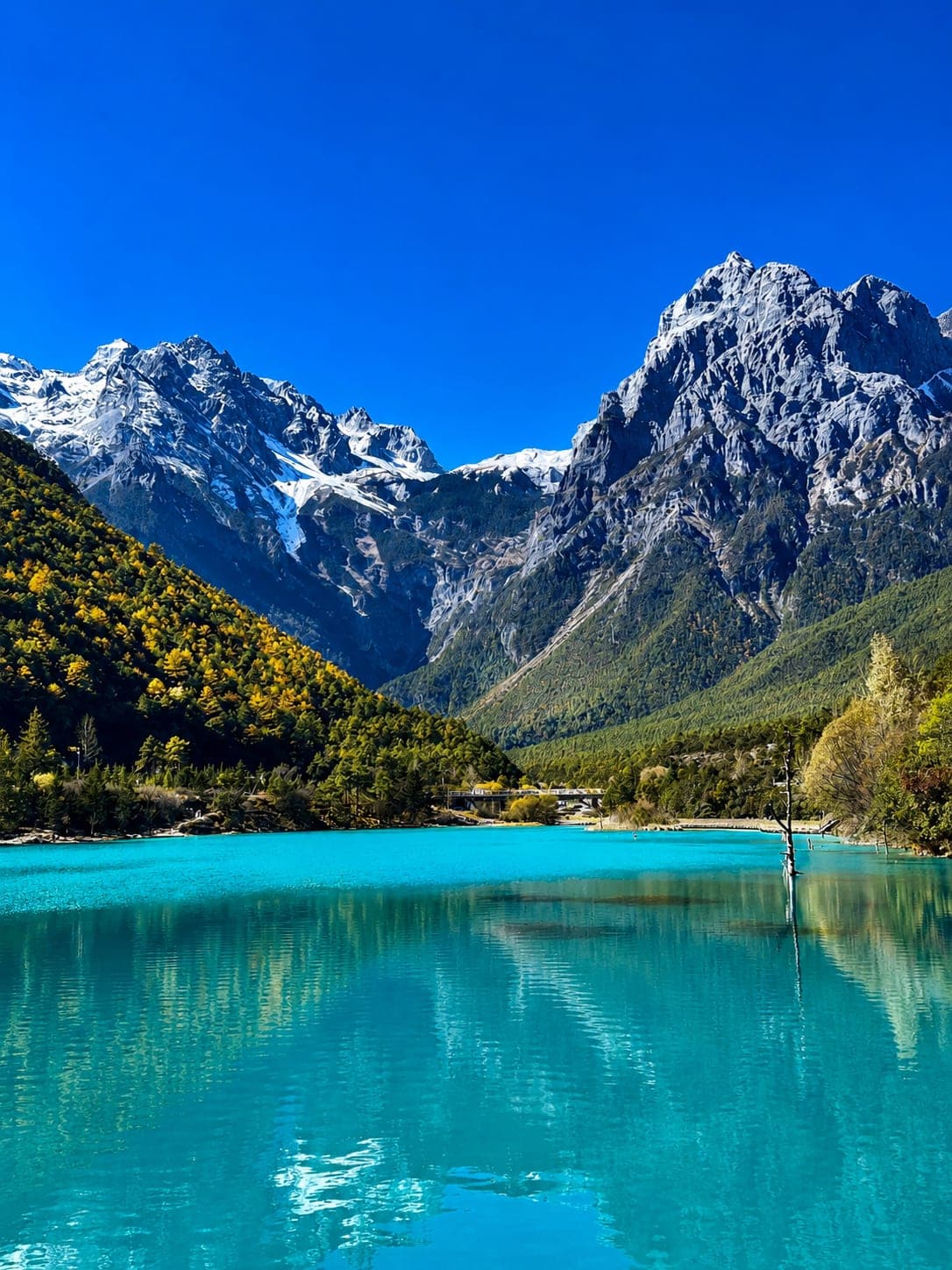
Blue Moon Valley sits at the foot of Jade Dragon's cable car, a chain of four glacial-melt pools along the lower mountain stream.
The colour is the reason to come: on a clear cold day the water reads true alpine blue. The four pools (Jade Liquid, Mirror, Blue Moon, Listening Wave) sit at around 3,000 metres.
We arrange Blue Moon as the descent half of the Glacier Park morning, so the cable-car queue is timed once at the top. The walking path follows the western shore of the four pools. Photography is best between ten and noon, when the sun reaches the valley floor.

Black Dragon Pool Park(Heilongtan, the Dongba script museum)
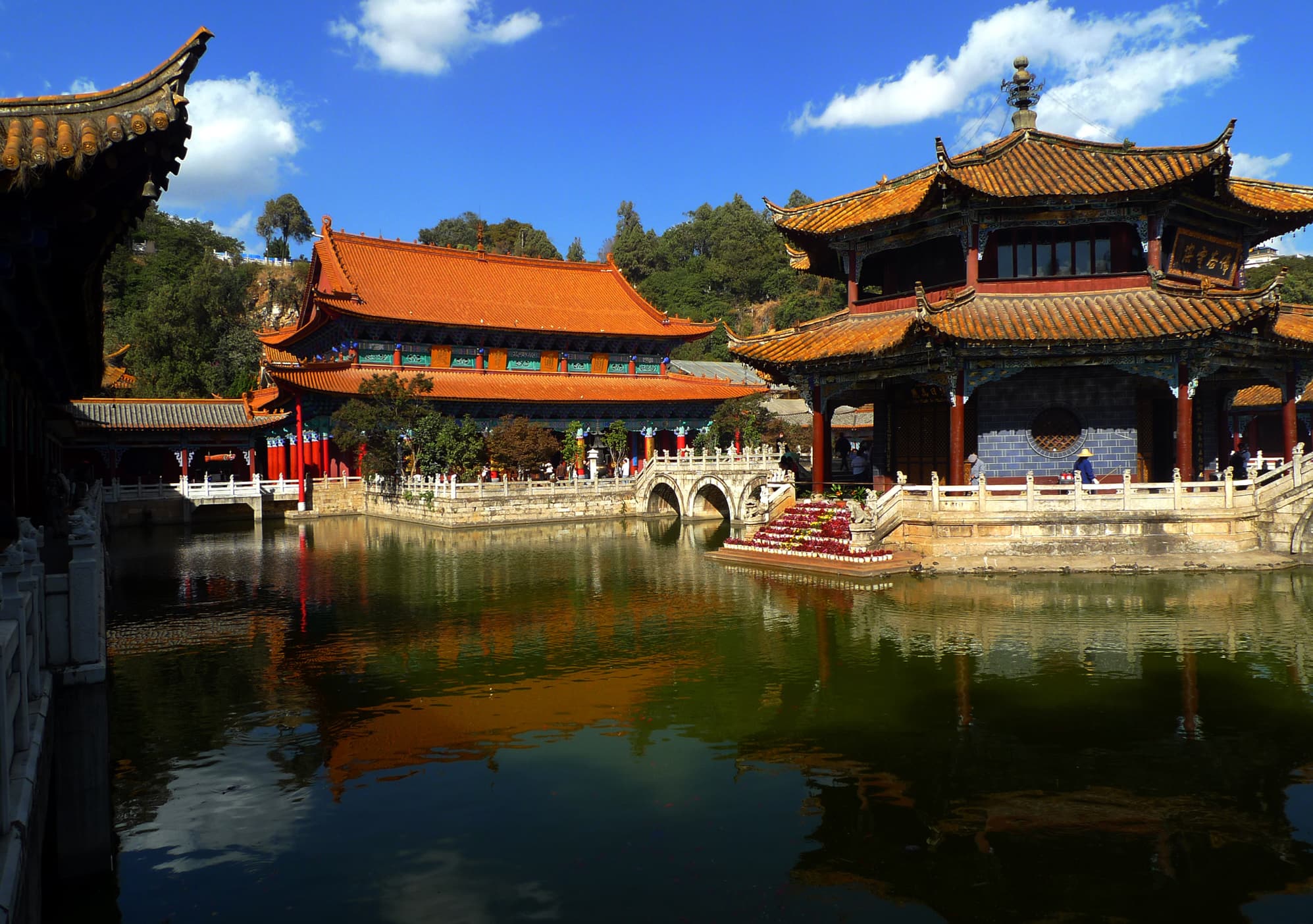
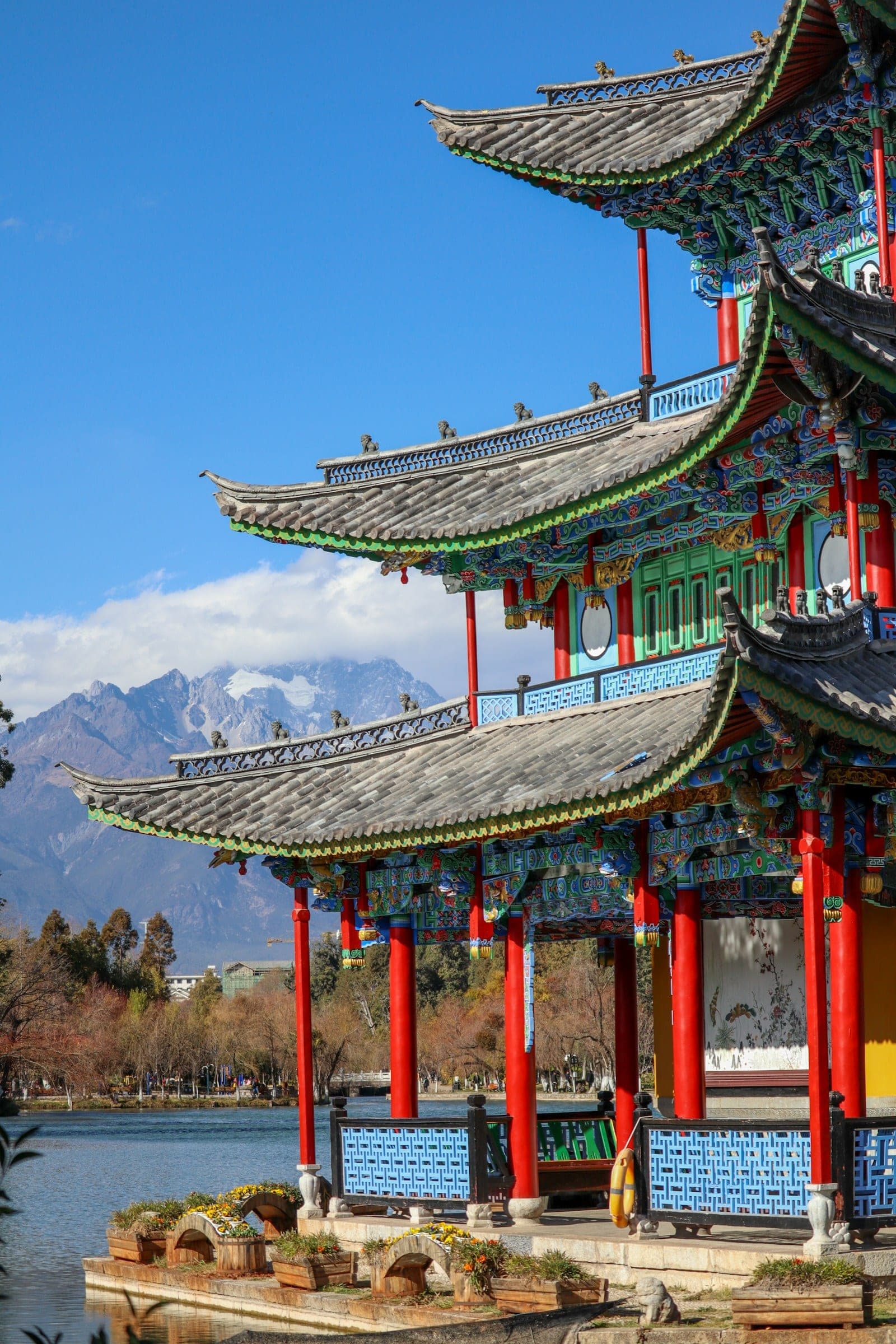
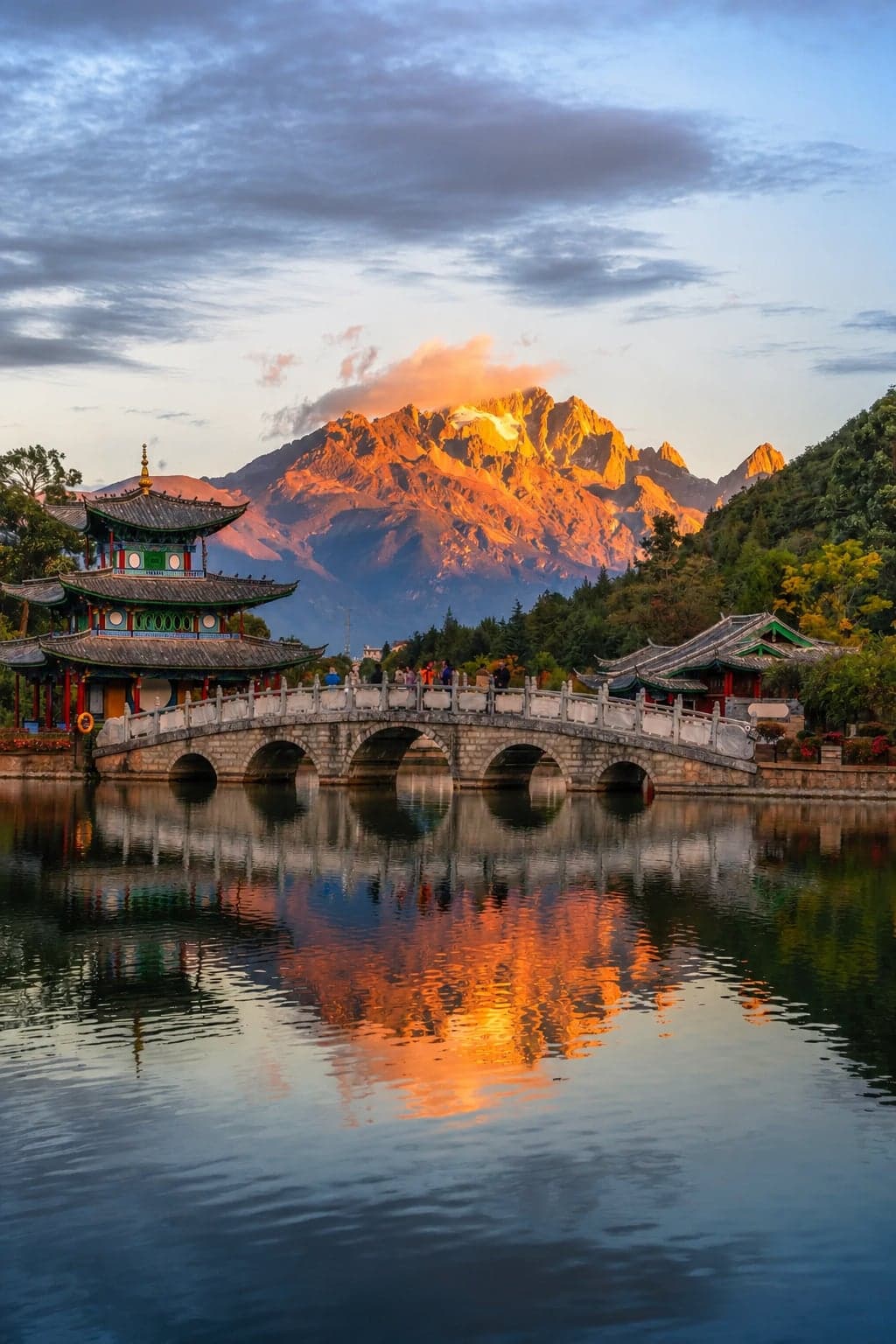
Black Dragon Pool sits at the north rim of Dayan, where a spring-fed lake mirrors Jade Dragon Snow Mountain on clear mornings.
Inside the same park, the Naxi Dongba Culture Museum holds the reference collection of Dongba pictographic script, the last writing system of its kind still in active use.
We time the visit for the morning when the forecast warns of afternoon cloud. A guide briefed by the museum's Dongba scholars walks the pictograph cases. The car waits at the south gate so the visit runs as one walk.

Tiger Leaping Gorge(Hutiao Xia, Three Parallel Rivers)
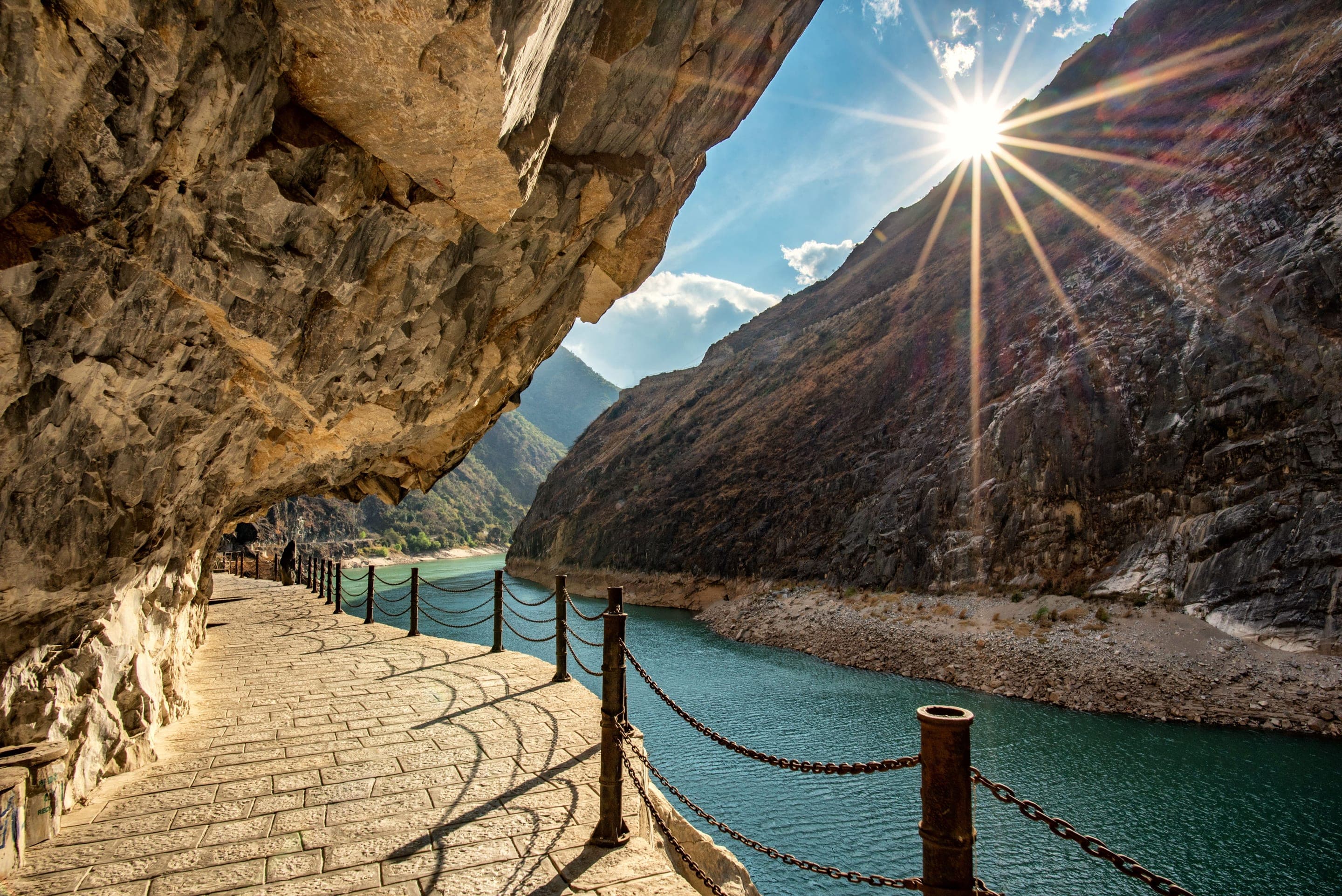
North of Lijiang, the upper Yangtze (called the Jinsha here) squeezes through Tiger Leaping Gorge between Jade Dragon and Haba snow mountains, part of the Three Parallel Rivers landscape.
The river falls 170 metres in 15 kilometres and the walls climb 3,000 more, one of the deepest river gorges in the world.
We avoid the rushed out-and-back day where the gorge is squeezed into a Lijiang round trip. A gorge night lets you walk the upper trail before the road traffic, then continue toward Shangri-La in the morning. The lodge is chosen for its view of the upper section.

Lugu Lake(the Mosuo matrilineal lake on the Yunnan-Sichuan border)
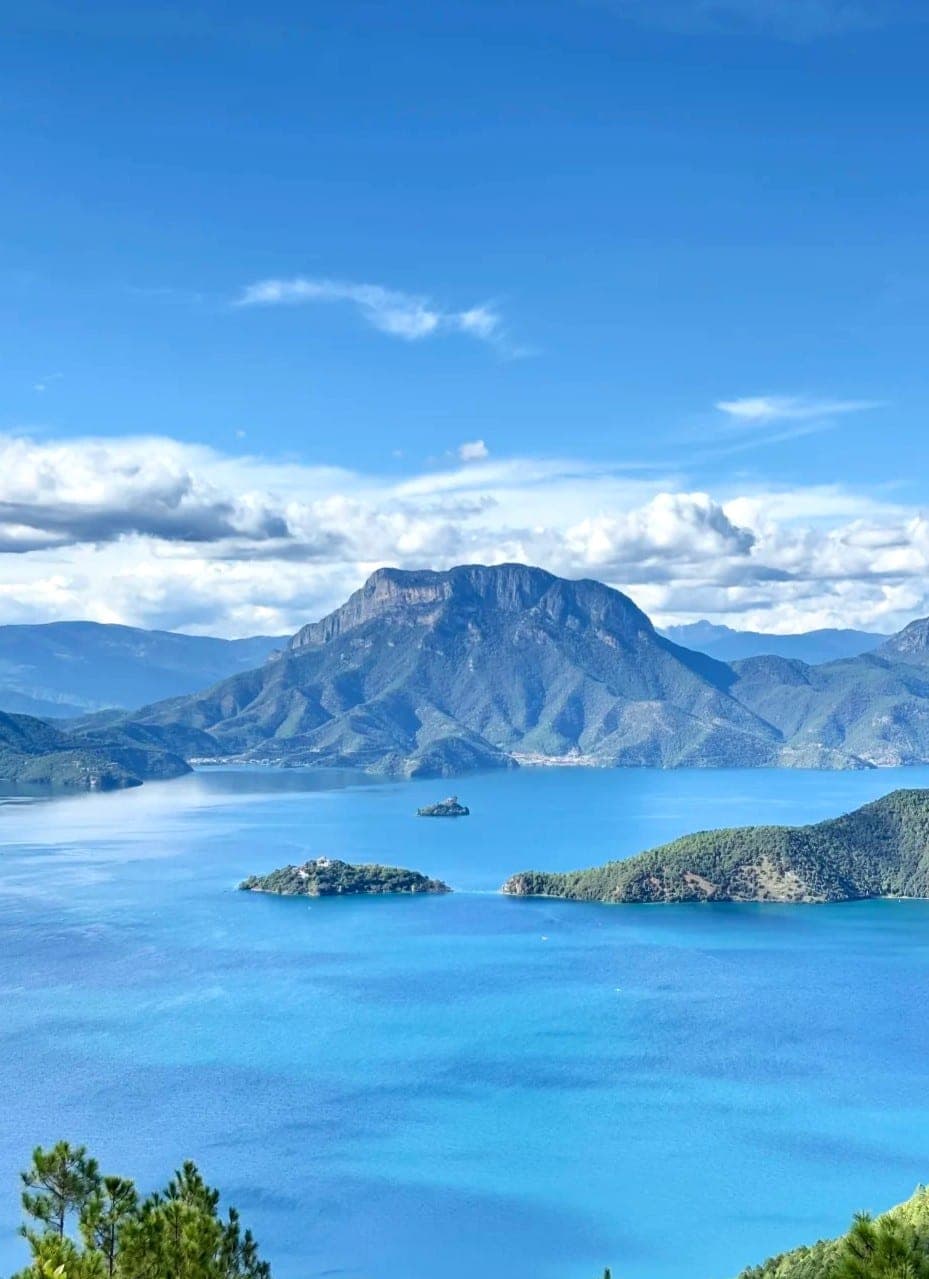
Lugu Lake sits in the mountains on the Yunnan-Sichuan border, a 50-square-kilometre alpine lake at 2,690 metres ringed by Mosuo villages.
The Mosuo are one of the world's last matrilineal societies: women head the household, and the walking-marriage tradition (a partner visits at night, returns home by morning) survives here.
Lugu Lake needs its own two-night arc inside the Lijiang circuit: the drive in is long mountain road and the cultural read needs two evenings. We stage an overnight at Ninglang and arrange a village stay on the eastern shore, where matrilineal households still receive guests by the older custom.

Baisha Old Town(the Naxi Mu chieftain seat, Dabaoji Palace murals)
Baisha sits 8 kilometres north of Dayan, the oldest of Lijiang's three Naxi clusters and an early Mu seat from the Yuan onward.
The draw is Dabaoji Palace's Ming-era murals, painted between the 14th and 17th centuries: over 40 panels where Buddhist, Daoist, Confucian and Naxi Dongba iconography share the same wall, a four-tradition fusion you won't see anywhere else in China.
Your guide walks the mural cycles in the order the iconography was meant to be read, naming which panel belongs to which tradition. The village embroidery school takes a half-hour session if you book ahead, with a Naxi-speaking guide where the schedule allows.

Shuhe Old Town(the quieter Naxi cluster, Tea and Horse Road)
Shuhe is the quieter of Lijiang's three Naxi clusters, 4 kilometres north of Dayan and a Tea and Horse Road waystation.
The Sifang Square at the centre is half the size of Dayan's and not lit at night, the cobblestones gentler, the canals running through more residential lanes.
We walk Shuhe after dinner or in the early morning, when Dayan's crowds have dispersed and the old waystation returns to its quiet. The Tea and Horse Road museum takes a short visit if the day allows, paired with tea at a courtyard café on the south canal.

Spruce Meadow(Yunshanping, the Naxi sacred meadow)
Spruce Meadow opens at the middle slope of Jade Dragon Snow Mountain, around 3,200 metres, where a chairlift from Ganhaizi Meadow rises into pasture rimmed by lower peaks.
The meadow is sacred ground in Naxi legend; the spruce trees are said to carry the spirits of lovers who came here in despair. Alpine wildflowers run May through August.
We add Spruce Meadow to the Glacier Park descent on a clear morning, or use it as the whole Jade Dragon route on days altitude is the question. The chairlift queue is timed for mid-morning, after the early Glacier Park traffic clears. Your guide tells the Naxi legend once you are walking the grass.
What to eat

La pai gu(Lijiang cured pork rib)
La pai gu, the Lijiang cured pork rib, is the dish most Naxi households serve when the cold sets in.
Ribs are dry-cured for weeks above the wood stove until the smoke has worked into the meat, then simmered in a clear mountain-vegetable broth with shiitake, tofu skin, and seasonal greens. The smoke is deep and woody, the meat falls off the bone, the broth salty and savoury with a faint sweetness from the vegetables underneath.
Booked at a family kitchen the guide knows, with the pot timed for the second-hour broth rather than the photo-ready first hour. The cured rib comes from a household smoker rather than the commercial supplier most central-square kitchens use.

Xianhua bing(Yunnan rose flower cake)
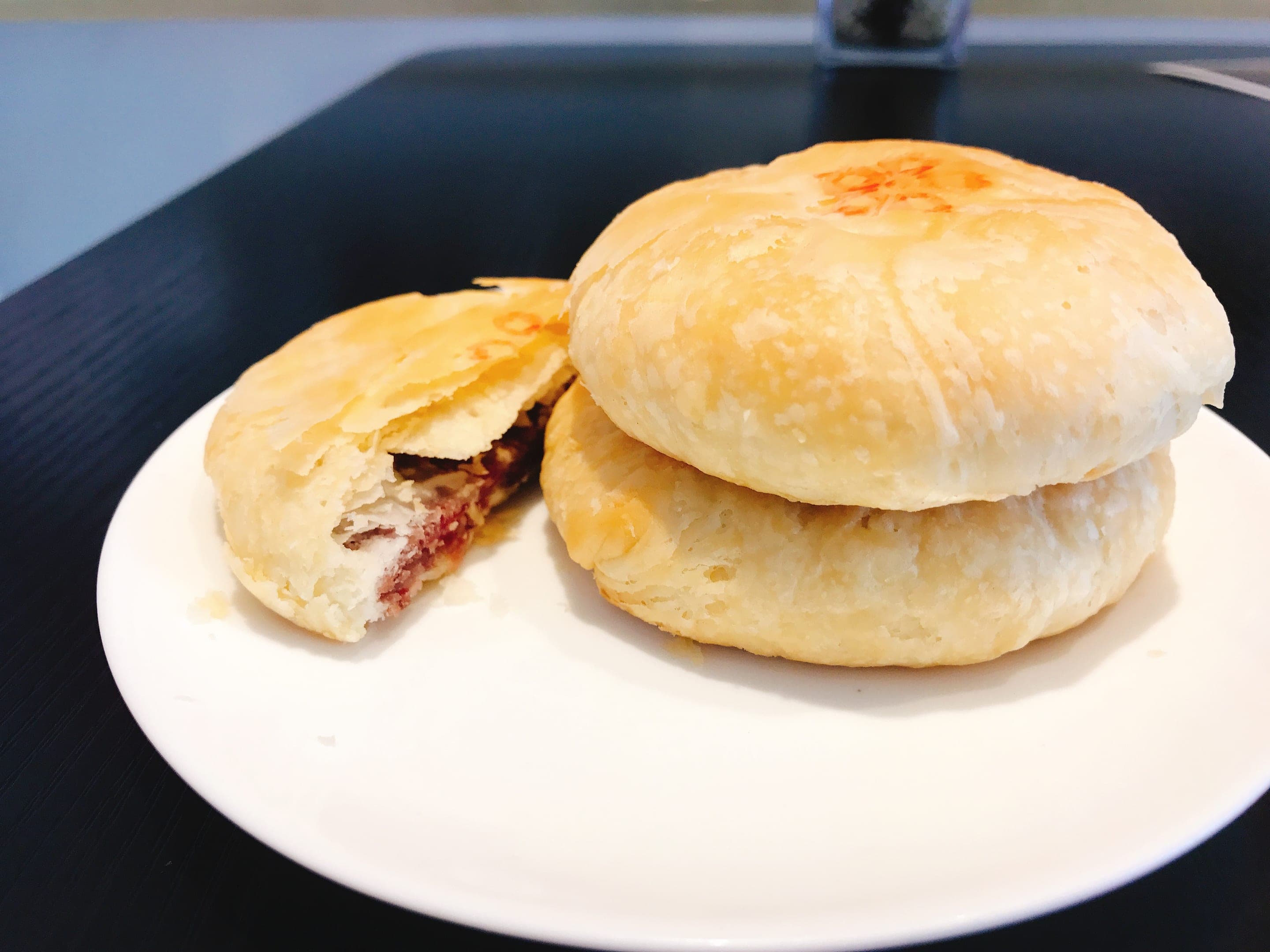
Xianhua bing, the Yunnan rose flower cake, is a small pastry layered like a Chinese puff and filled with sugared rose petals from the Yunnan highlands.
The petals come from the Heqing and Mile rose fields, harvested in May and pressed into jam the same week. The flavour is the surprise: floral and lightly sweet rather than perfumed-syrup heavy, the crisp pastry shattering against the soft rose centre.
We take you to a Lijiang bakery that presses xianhua bing fresh in the morning, not the central-square chain shop. The eating window is right after the trays come out of the oven, when the pastry is still warm against the soft rose centre.

Wild mushroom hotpot(ye sheng jun, June to October)
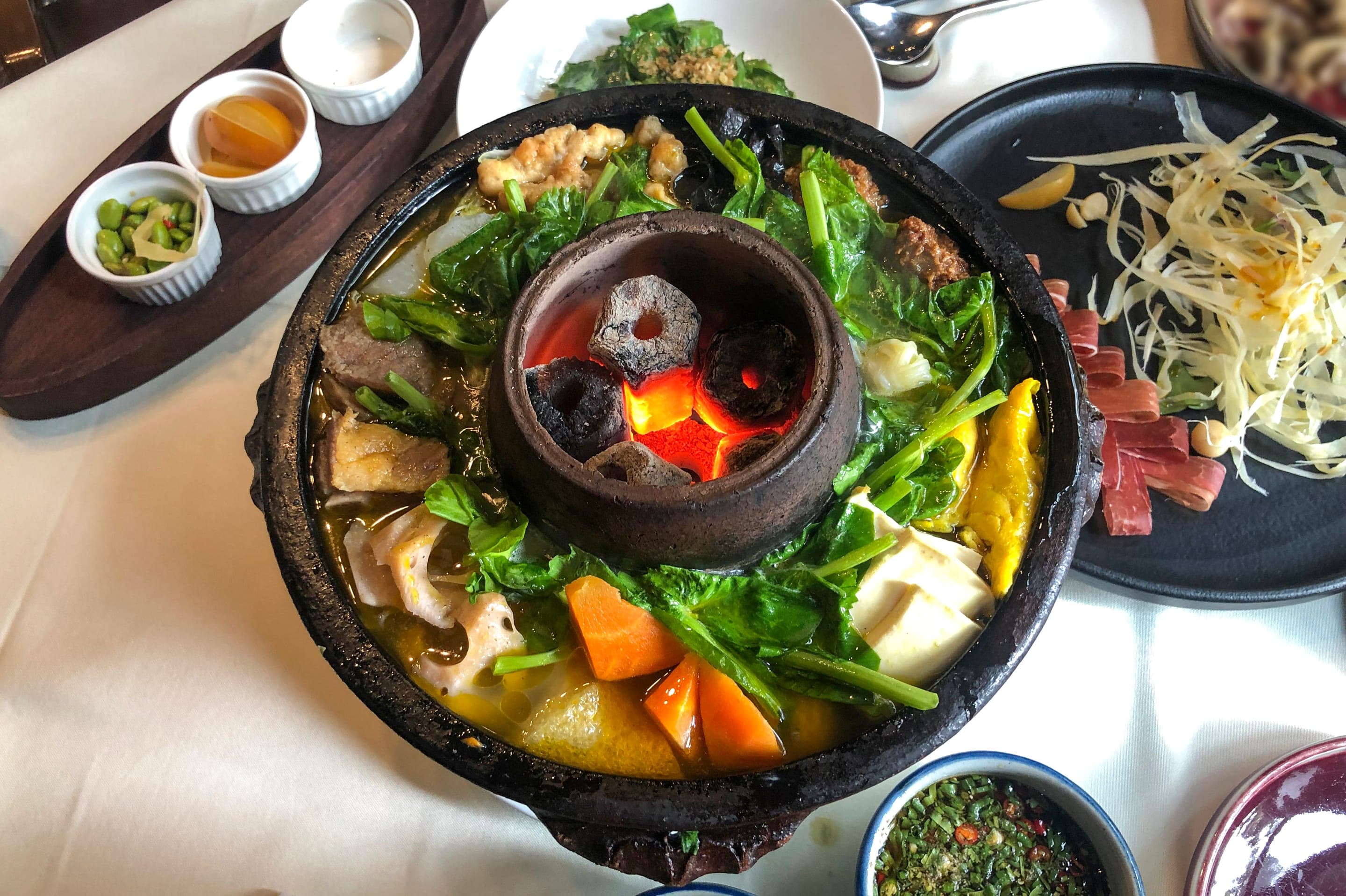
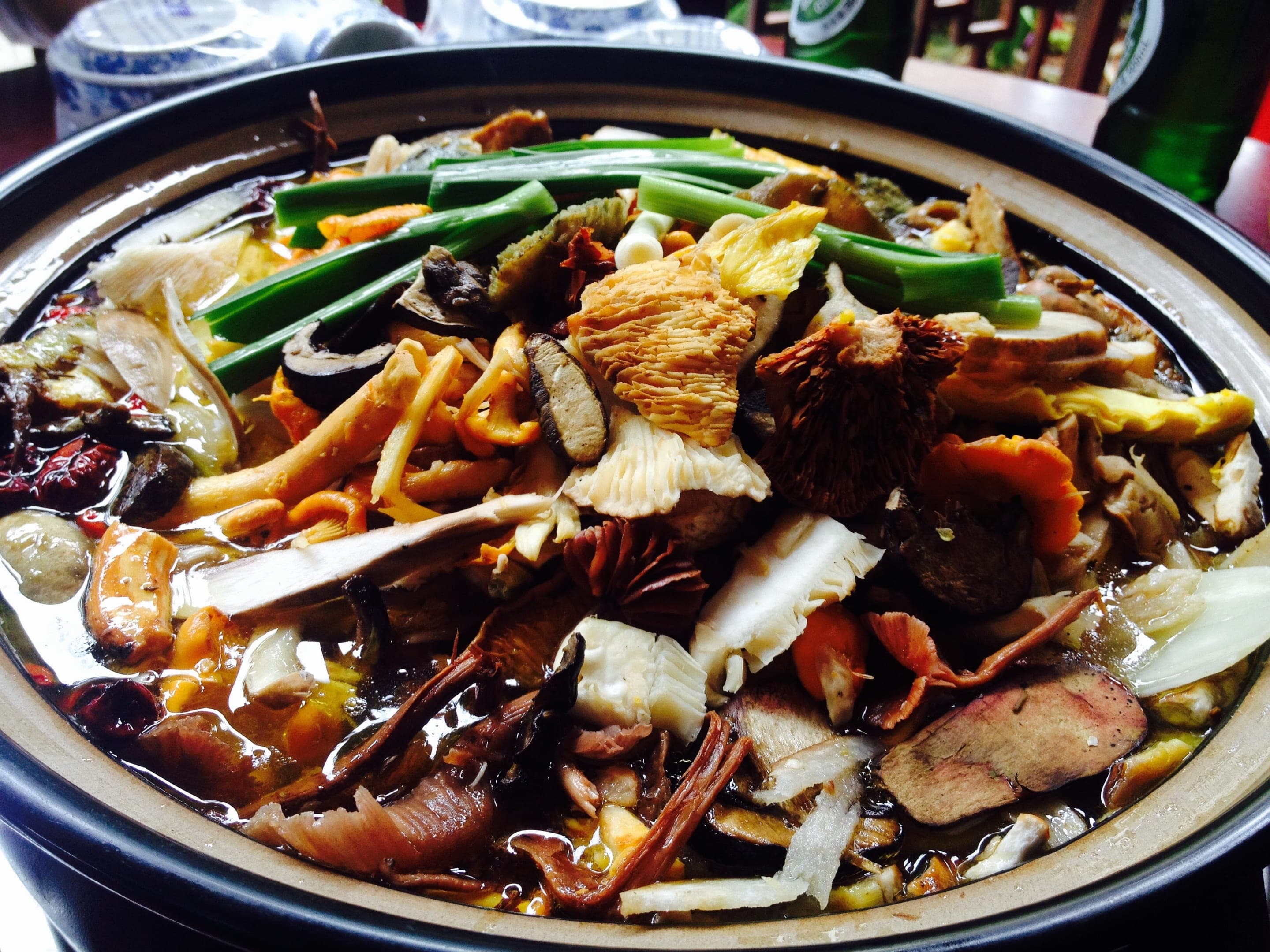
Ye sheng jun huo guo, the wild mushroom hotpot, is the summer-and-autumn dish, available June through October when the wild mushrooms come down from the mountains.
A free-range chicken broth carries porcini, matsutake, and jian shou qing, the bolete the Naxi prize for texture. The broth turns deep and woody as each species goes in, savoury and earthy with a clean sweetness from the chicken underneath.
Booked at a Yunnan kitchen the guide trusts on cook timing, with the species and cooking order handled by the chef rather than left to the table. Reserved only in the season the mushrooms are genuinely fresh; trips outside June through October swap onto the cured-rib pot instead.
Shows and experiences

Impression Lijiang(Zhang Yimou's outdoor show at the foot of Jade Dragon)
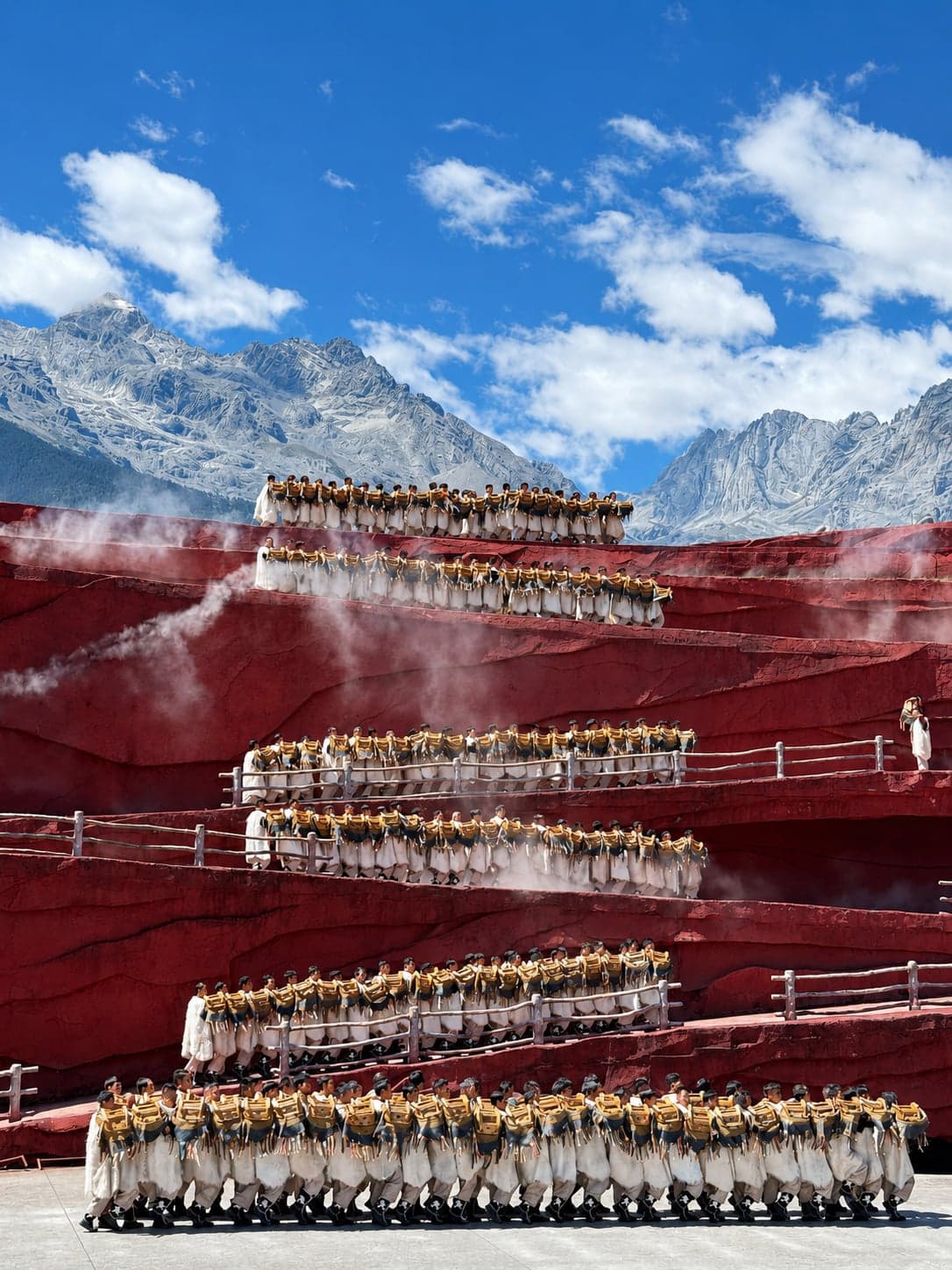
Impression Lijiang is Zhang Yimou's outdoor performance, staged at the foot of Jade Dragon Snow Mountain with the mountain itself as the backdrop.
Over 500 Naxi, Bai, Lisu, and Yi performers carry the 70-minute show across an open mountainside stage at 3,100 metres, with horses, drums, and the singing voices of the ethnic groups whose cultures it is built from. The performance is daytime, weather permitting.
Higher-tier seating goes in with the booking, so the mountain forms the upper edge of the stage view rather than sitting behind a row of heads. The performance starts after the cable-car queues have cleared the morning, so a Glacier Park morning pairs naturally into an early-afternoon show.

Lijiang Romance(Lijiang Qiangu Qing, the Songcheng evening show)
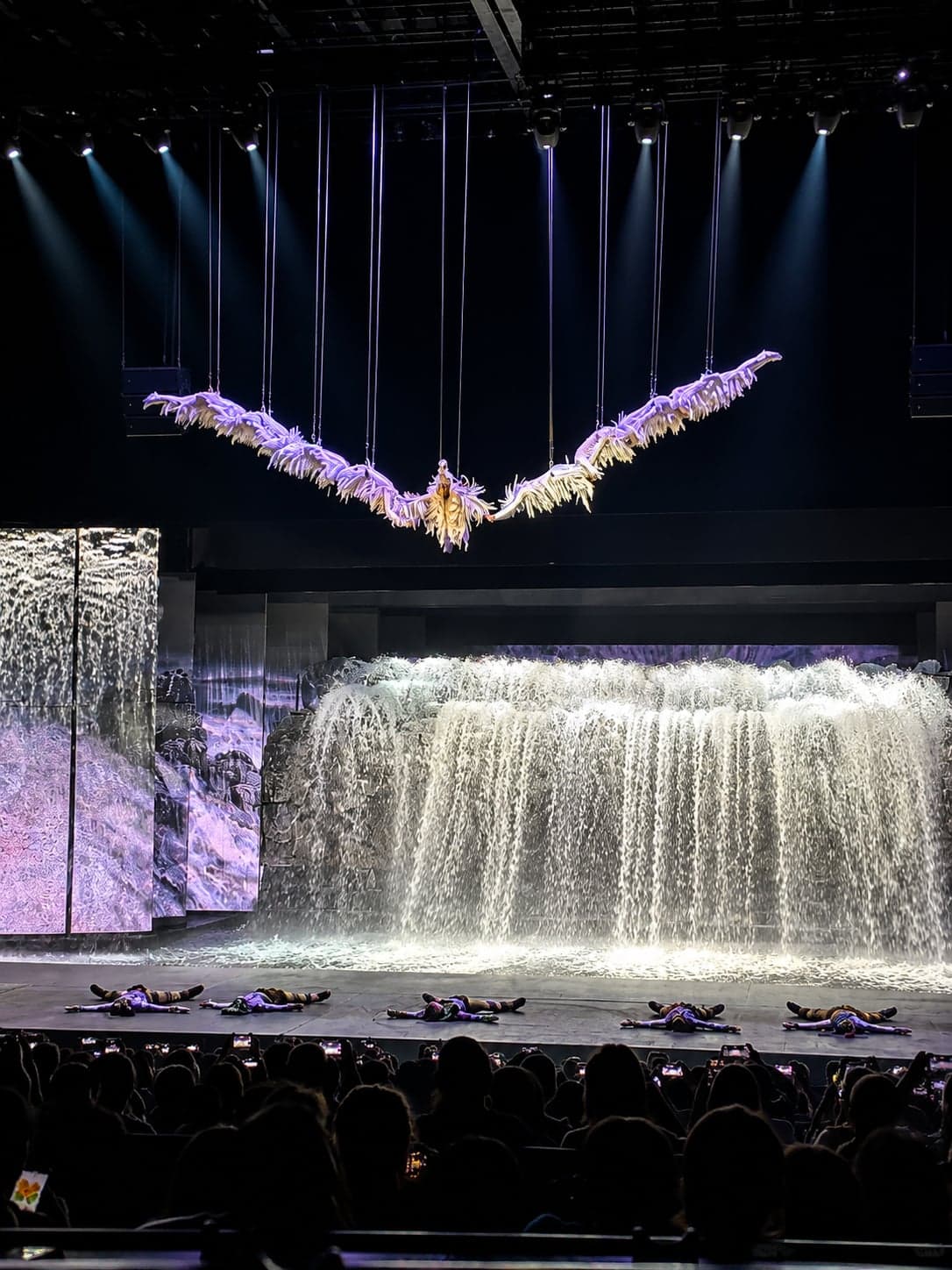
Lijiang Romance is Songcheng's indoor evening show, an hour-long production that tells the long Naxi story through music, dance, and large-scale stage effects.
The arc runs from the Tea and Horse Road caravans through the Mu chieftain era, the 1996 earthquake, and the present-day old town. Entertainment first, history second.
Centre-tier seating goes in with the booking, for the clearest sightlines. We time the show for the second evening of your stay, after the old town has been walked and the historical references read at human scale.

Naxi photoshoot(Lijiang zhuangzao, the ethnic-dress portrait afternoon)
Lijiang's costume-and-photo studios let you walk the old town and the lakes in the dress of the region's ethnic minorities: Naxi, Mosuo, Yi, or Tibetan, heavily embroidered jackets, silver headdresses, braided hair.
A morning runs through hair, makeup, and dressing, then a photographer follows you through the locations the studio knows by light and angle.
We book the studio that uses authentic regional pieces rather than the costume-rental shortcuts on the central square, with Naxi, Mosuo, Yi, or Tibetan styling chosen on the morning of. The locations are chosen for the early-afternoon light, so the photographs read warm rather than midday flat.
What three days
might look like.
- Day 01
Old-town hours, mountain reflection.
An early start before the shutters lift puts the first hour on Dayan's back lanes, through Sifang Square and up the Wangu Tower for a first read across the tiled rooftops. Late morning shifts north to Black Dragon Pool, where the lake mirrors Jade Dragon Snow Mountain on a clear day, with a slow hour at the Naxi Dongba Culture Museum. The afternoon settles into the lanes near Sifang for a tu ji mi xian lunch and a pot of pu-erh.
- Dayan back lanes before breakfast
- Sifang Square and Wangu Tower
- Black Dragon Pool (Heilongtan Park)
- Naxi Dongba Culture Museum
- Tu ji mi xian alley lunch
- Old-town lanterns at dusk
- Day 02
Three Naxi clusters, one route.
Spend the morning at Baisha for the early-thirteenth-century religious-architecture murals at Dabaoji Palace, read wall by wall by a guide who can name which iconography belongs to which tradition. As the afternoon settles, Shuhe's quieter lanes carry the third Naxi cluster's older texture, the cobblestones gentler underfoot than Dayan's. The drive back to Dayan takes about fifteen minutes. Dinner is la pai gu at a courtyard kitchen the guide knows, with the second-hour broth landing properly thick.
- Baisha Dabaoji Palace murals
- Shuhe Old Town (third Naxi cluster)
- Naxi embroidery school (optional)
- Short drive back to Dayan
- La pai gu at a courtyard kitchen
- Day 03
Snowmelt, ridge light, slow descent.
An early start at Glacier Park puts the cable car ahead of the cloud and onto the upper boardwalk in clear air, with oxygen canisters on hand. As the morning thins, the route descends to Spruce Meadow for alpine flowers at the mid slope, or swaps to Yak Meadow's high pasture if anyone in your companions is feeling the altitude. The afternoon returns to Lijiang slowly, with a long late lunch at a village kitchen at Yulong's foot before the day folds back into the old town.
- Glacier Park cable car (upper boardwalk)
- Blue Moon Valley glacial pools
- Spruce Meadow alpine flowers
- Yak Meadow (altitude alternative)
- Village kitchen lunch at Yulong's foot
- Slow return to Dayan
Best time
March to June · September to November
Days needed
3 nights for Lijiang · 6 to 7 nights with the gorge and Shangri-La
Where it sits
Northwest Yunnan, after Kunming or Dali, before Shangri-La
Questions worth
answering early.
Three nights covers Lijiang itself: a dawn walk in Dayan, Baisha and Shuhe for the older Naxi clusters, Black Dragon Pool for the mountain reflection, and a full day for Jade Dragon Snow Mountain with altitude pacing. Six to seven nights is the better shape if Tiger Leaping Gorge and Shangri-La are added. One night near the gorge changes the whole route. It turns a photo stop into a real mountain day.
You enjoy the trip,
we do the rest.
From your first enquiry to your last airport pickup, our specialists design your trip and stay in contact every step of the way. The guides, drivers and hotels you'll meet are part of our trusted network we've worked with for years, briefed to the same standards.
- Dedicated specialists, start to finish
- Guides briefed to our standards
- Fully transparent, no hidden costs
- No deposit until you confirm
Stretch the trip. Stitch in another.

Kunming
The cleanest Yunnan gateway. A lower-plateau night in Kunming before the climb up to Lijiang and Shangri-La gives the body twenty-four hours to start adjusting.
Read this destination
Chengdu
The southwest pair. Pandas, tea houses and Sichuan's slower pace in Chengdu; snow peaks and Naxi towns in Lijiang. Two-hour flight between them.
Read this destination
Guilin
Karst peaks on the Li River, then the higher plateaus of northwest Yunnan. One trip, two very different landscapes.
Read this destination
Useful before
you enquire.

When to visit China, month by month
Spring and autumn are the cleanest windows for Lijiang, the gorge and Shangri-La. The full year, by climate and crowd.
Read this guide
China tourist visa for US travellers
American passports still need a tourist visa for China under current rules. How the L-visa works, what we handle as part of your booking, and what is on you.
Read this guide
Health, safety and accessibility
Altitude, uneven paving, stairs and long road days matter in Lijiang. The planning layer to read first.
Read this guide
Payments and connectivity in China
Alipay and WeChat Pay now take overseas Visa and Mastercard. The practical setup to do before you fly.
Read this guide
Design your Lijiang trip
Start with your preferences. We'll craft a private itinerary in Lijiang that fits how you like to travel.

Jack Guo
Your travel specialist
Jack has spent ten years working with the guides, drivers and hoteliers across China. He'll be your contact from first enquiry to final airport pickup.