
Chengdu
tea-house China, at a different pace
Chengdu is the slow-paced capital of China's southwest. Around 200 giant pandas live on the wooded hills north of the city. In the old quarter, the tea houses fill with bamboo chairs and mahjong from morning, and mala kitchens send chilli oil through the lanes.
Why people
come to Chengdu.
What to see

Chengdu Panda Research Base(the breeding hills north of the city)
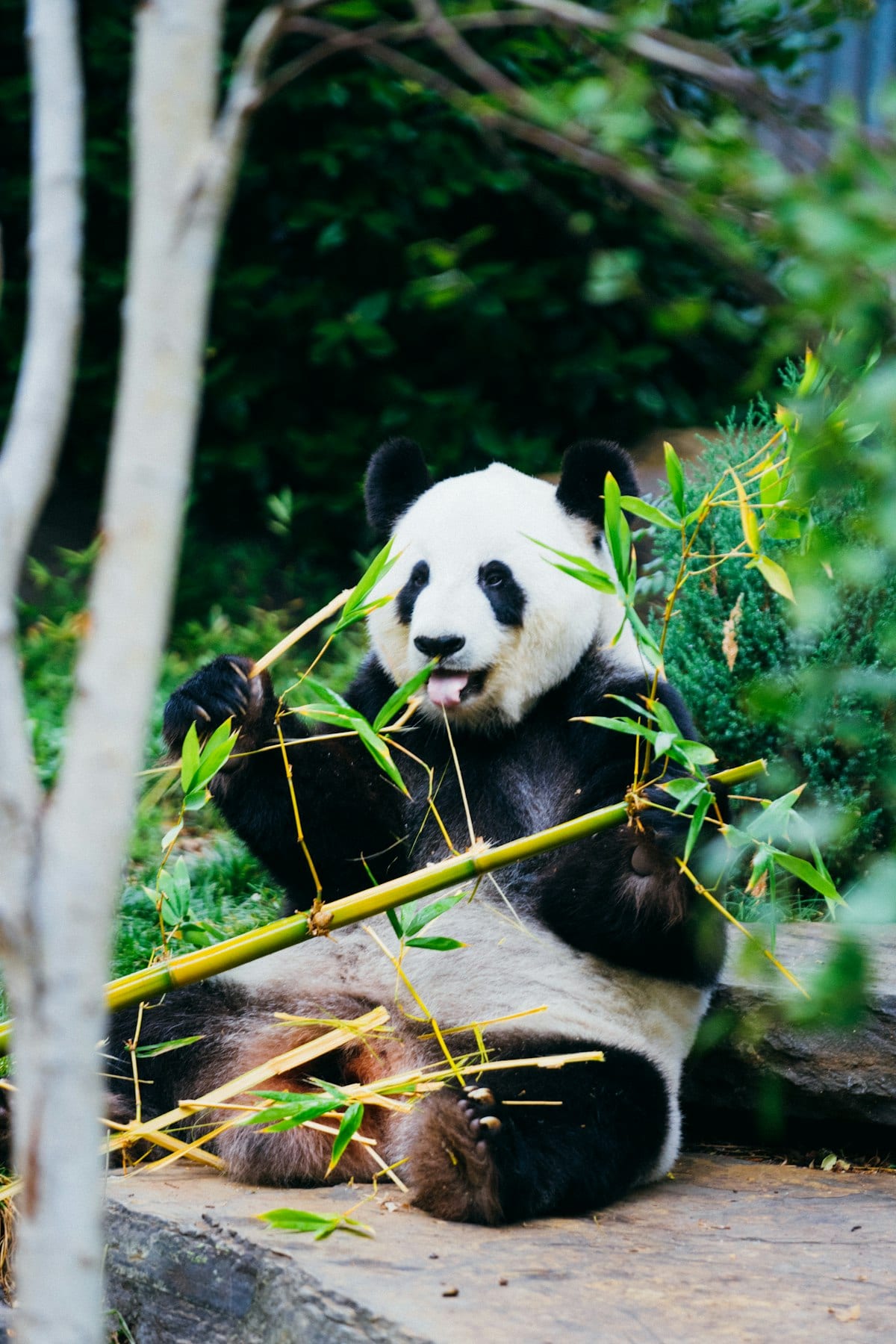
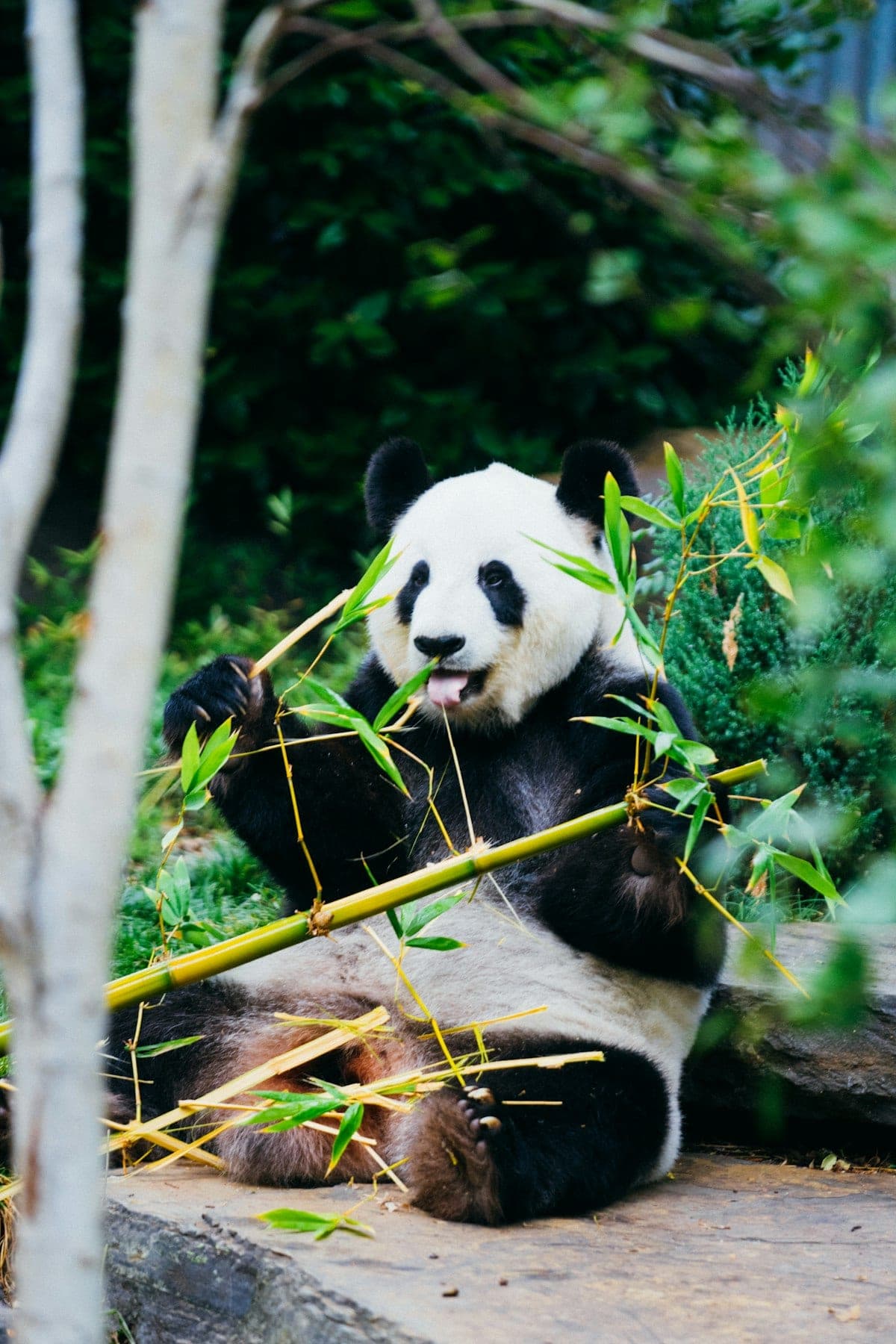
The Chengdu Research Base is the closest most travellers come to giant pandas in the wild.
Around 200 live across wooded hillsides on the city's northern edge, with red pandas climbing the lower paths between the bamboo groves. In the cool of the morning the adults are awake and eating; by mid-day they retreat to the shade.
We book tickets in your name before the seven-day release sells out, and time your arrival for the 07:30 gate so you are inside the breeding houses while the adults are still eating bamboo. The nursery viewing windows are on the route in cub season.

Leshan Giant Buddha(the Tang-era cliff Buddha above three rivers)
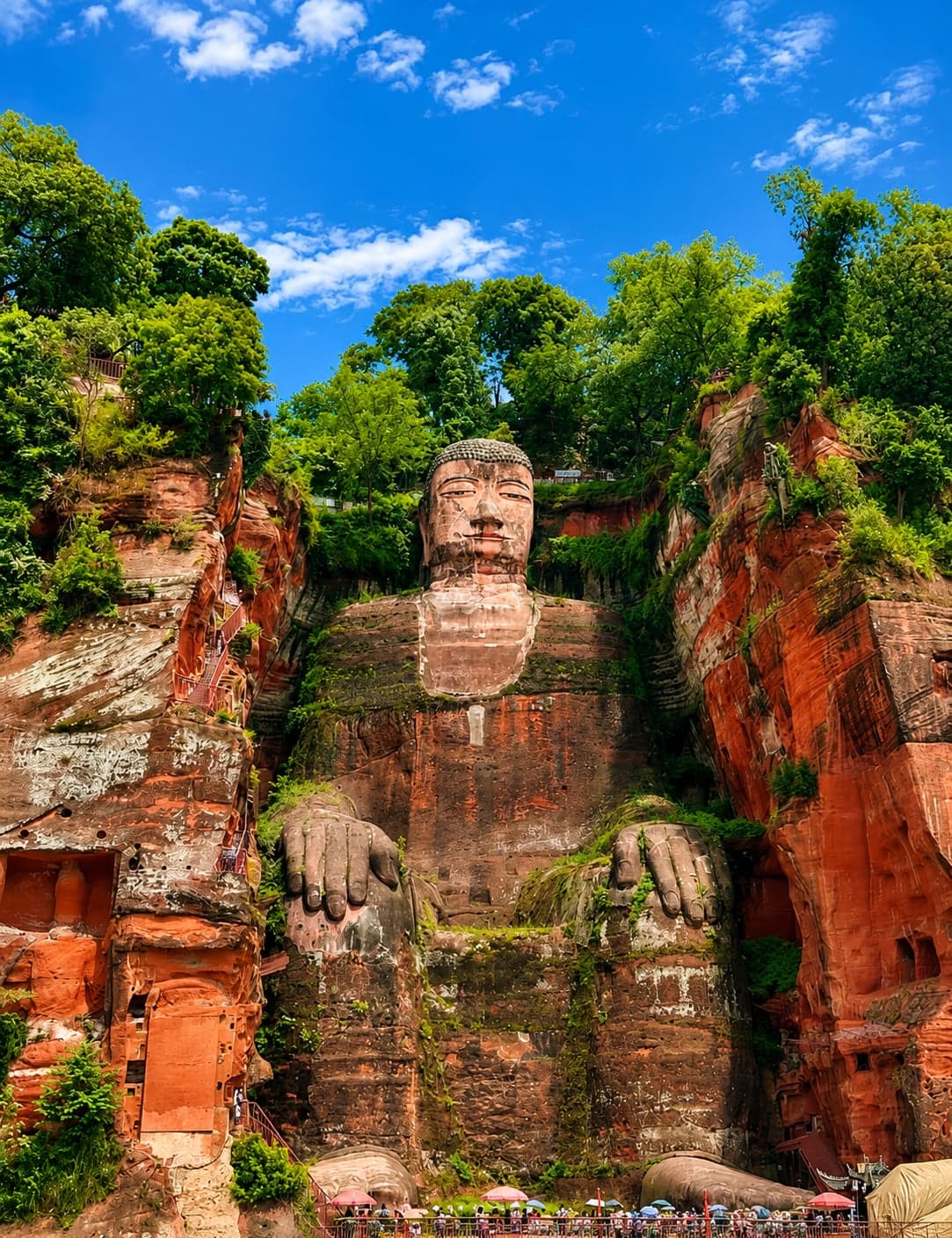
The Leshan Giant Buddha is the largest stone Buddha in the world, carved 71 metres tall straight into a red sandstone cliff above the confluence of three rivers.
The Tang-era monk Haitong began the carving in 713 CE to calm the white-water that wrecked boats below. The ears are 7 metres long, the nose nearly 6, and a man can stand on a toenail with room to spare.
We book the morning slot at the cliff entrance, ahead of the day-coaches, and pair it with the river-side boat so the Buddha is read from below first, where the scale lives. Your guide carries the Haitong story. Lunch is at a riverside kitchen, not the visitor canteen.

Mount Emei(one of China's four sacred Buddhist mountains)
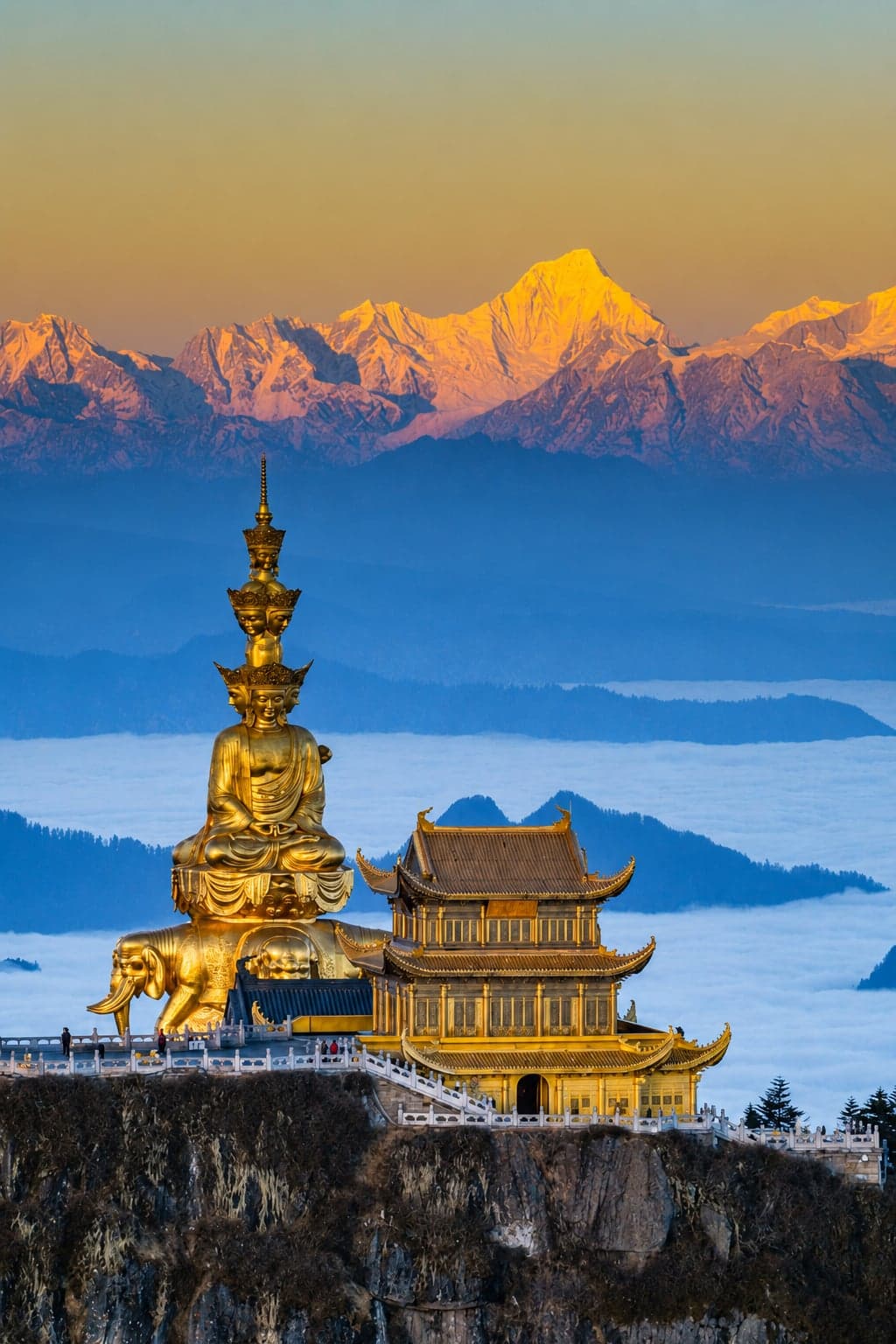
Mount Emei is one of China's four sacred Buddhist mountains.
The Golden Summit at 3,079 metres is reached by cable car, with a sea of clouds in the morning when the weather is on, and on the clearest days the Buddha's halo, the optical effect that wraps your own shadow in a rainbow ring.
An overnight at a monastery guesthouse near the summit puts you on the Golden Summit at first light, before the cable car runs the day's coach tours up. The cloud window is short, so we route the day around the forecast call.

Sanxingdui Museum(Bronze Age site, Guanghan)
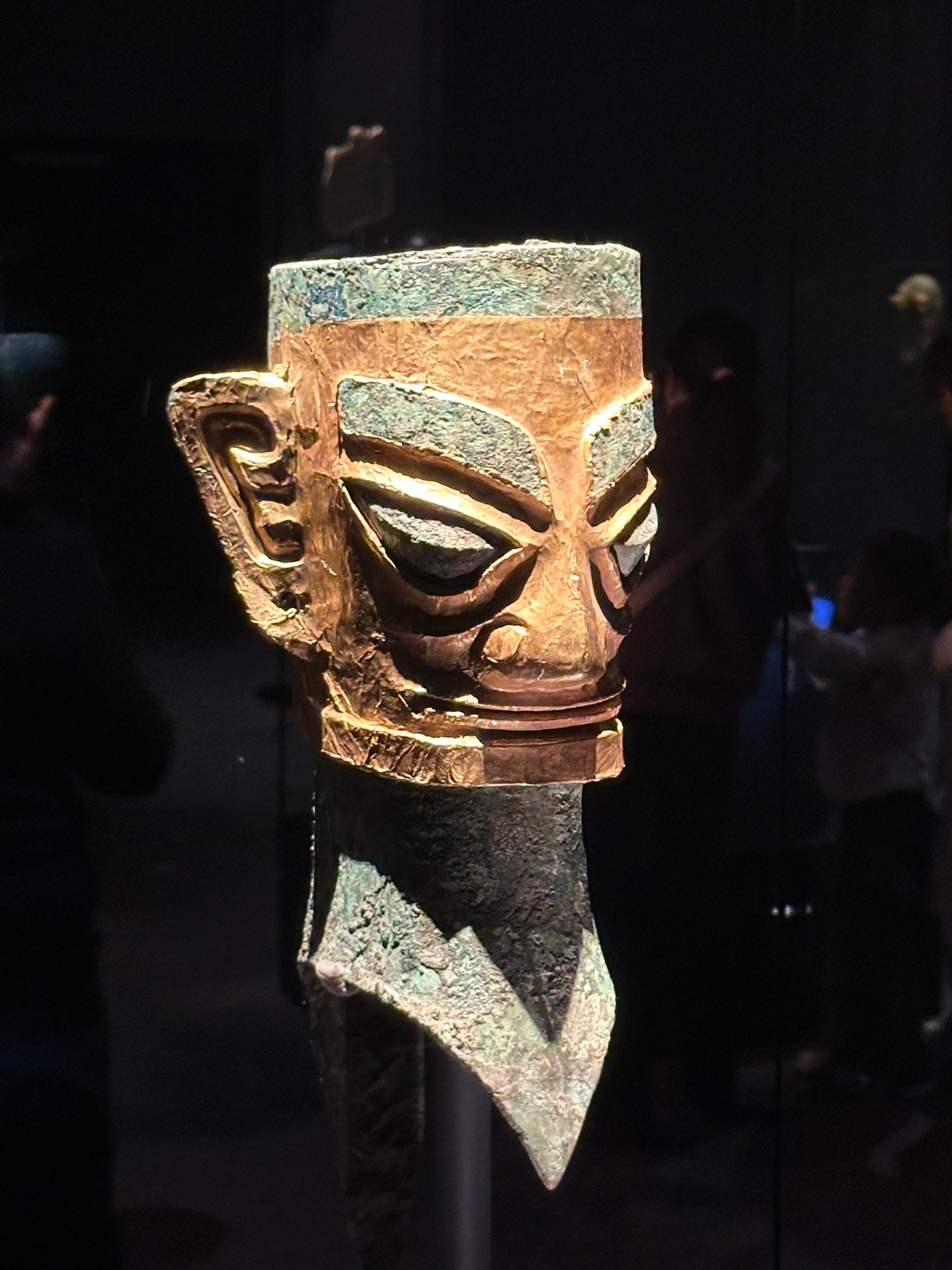
Sanxingdui is the lost Bronze Age civilisation of the Sichuan basin, around 3,000 years old.
The new museum opened in July 2023 with more than 1,500 exhibits, an hour north of Chengdu in Guanghan. The bronze masks are why people come, with stylised eyes that protrude from the face in cylindrical shafts, found nowhere else in Chinese art.
We book the morning entry window in your name and run the bronze halls before the coach tours arrive, so the staring masks land in the quiet they need. Your guide carries the discovery story, from the 1986 farmer-pits to the 2019 reopening. Lunch is at a family kitchen on the drive back.

Dujiangyan(the 2,000-year working irrigation system)
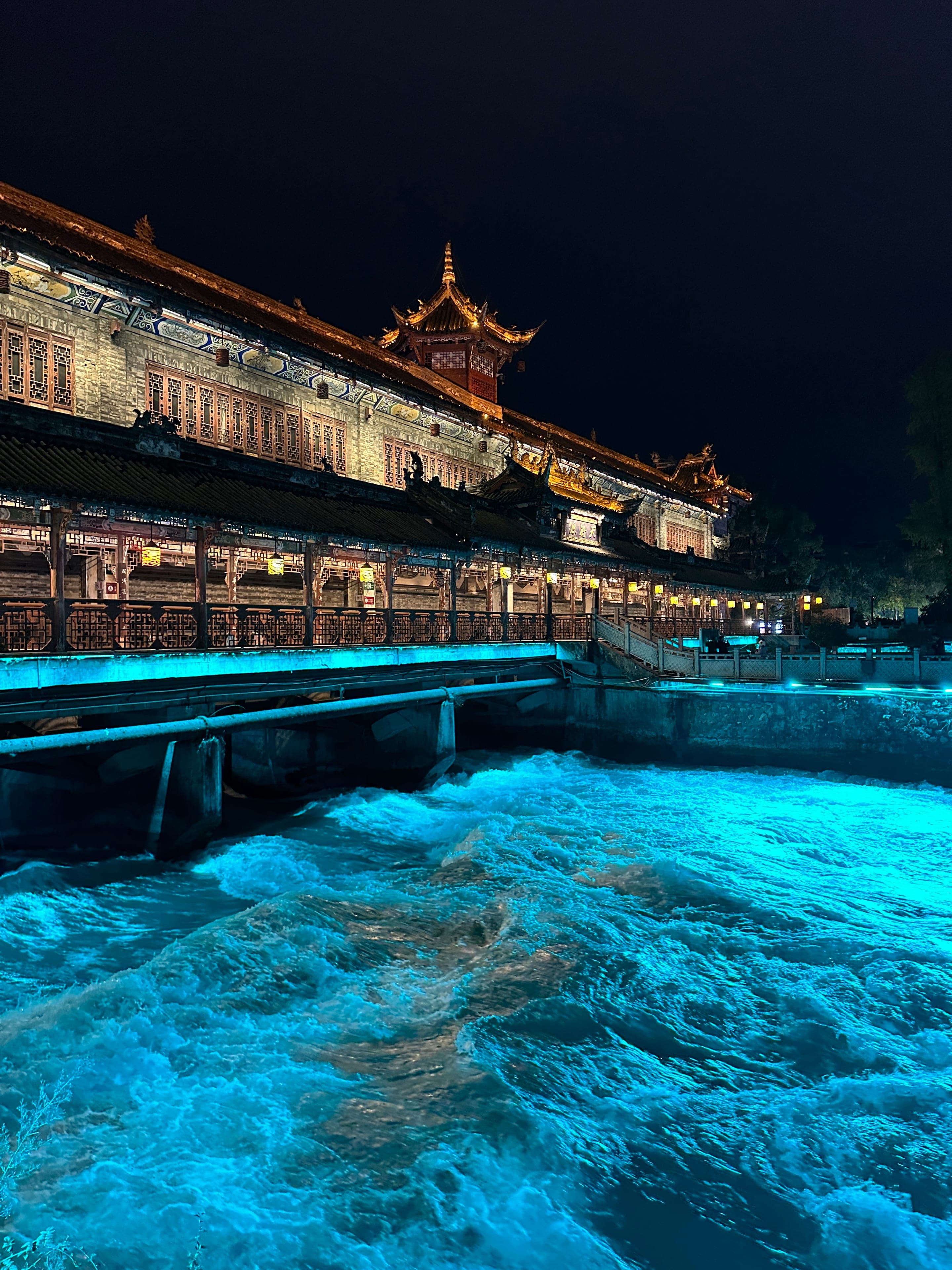
Dujiangyan is one of the world's oldest working hydraulic systems, built around 256 BCE by the Qin engineer Li Bing.
It splits the Min River into two streams without a single dam wall, and still waters more than 5,000 square kilometres of farmland today. The fish-mouth divider sits in a natural bend, so the current's own force carries clear surface water into the inner channel while heavier sediment runs out the outer.
We pick between a morning visit and an evening visit against the weather and what you want from the day. Morning brings soft light over the fish-mouth divider; after dark the river itself is the show, coloured light running beneath the engineering. Lunch is at a family-run Sichuan kitchen.

Wuhou Shrine(Three Kingdoms memorial)
Wuhou Shrine is China's most important Three Kingdoms memorial, founded around 223 CE when Liu Bei's tomb was laid here.
Liu Bei founded the Shu Han kingdom; Zhuge Liang served as his chief minister. It is the only shrine in China where a ruler and his minister are honoured under one roof. Jinli Street begins at the east gate.
Your guide carries the Three Kingdoms narrative as the halls read, Liu Bei in front, Zhuge Liang in back. We time the arrival for late afternoon, when the red walls and cypress shade are deepest, and you walk straight into Jinli's lantern-lit lanes as the dusk tasting begins.

People's Park & Heming Teahouse
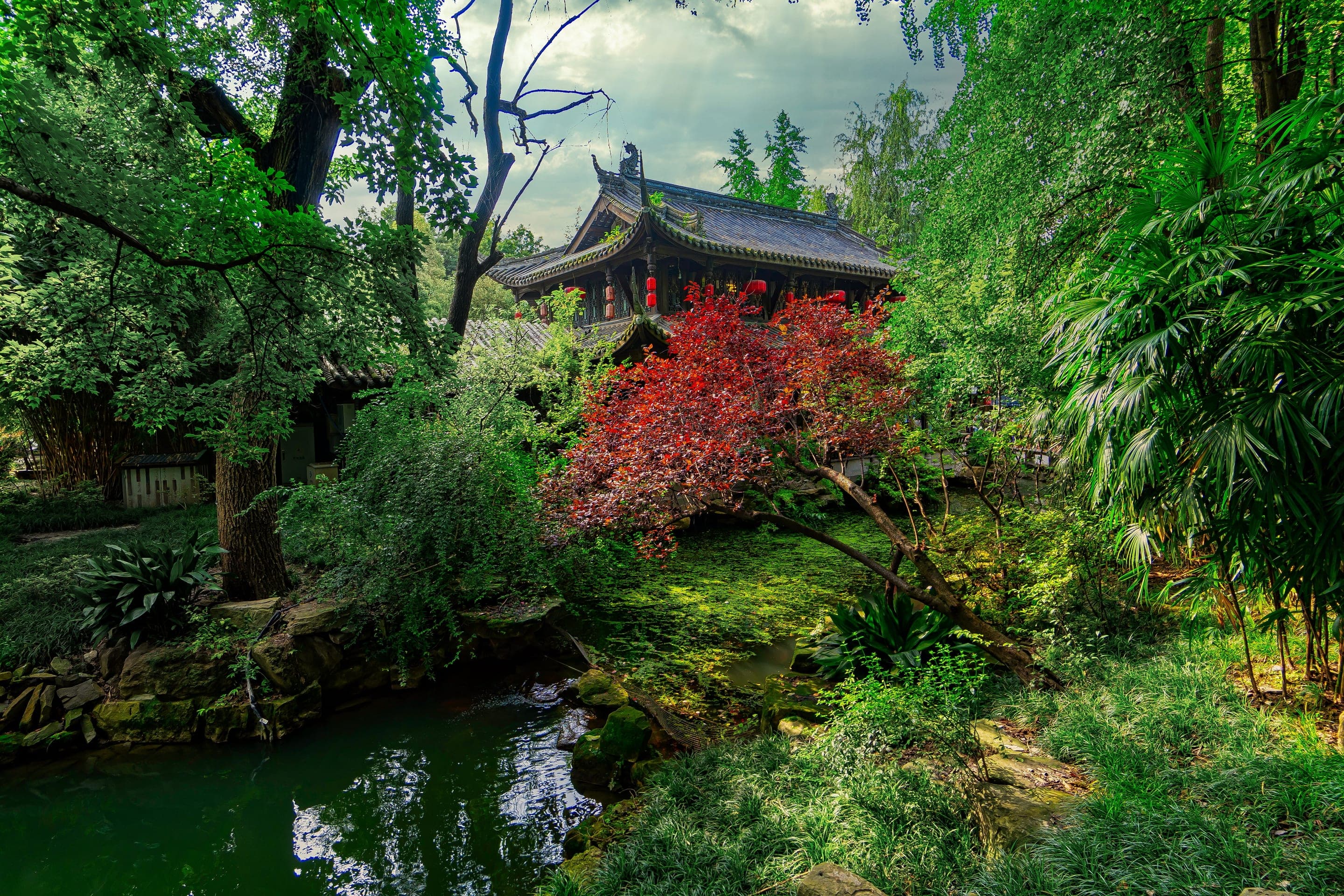
People's Park is Chengdu's social heart, and Heming Teahouse on the lake at its centre has been pouring bamboo-leaf green tea since 1923.
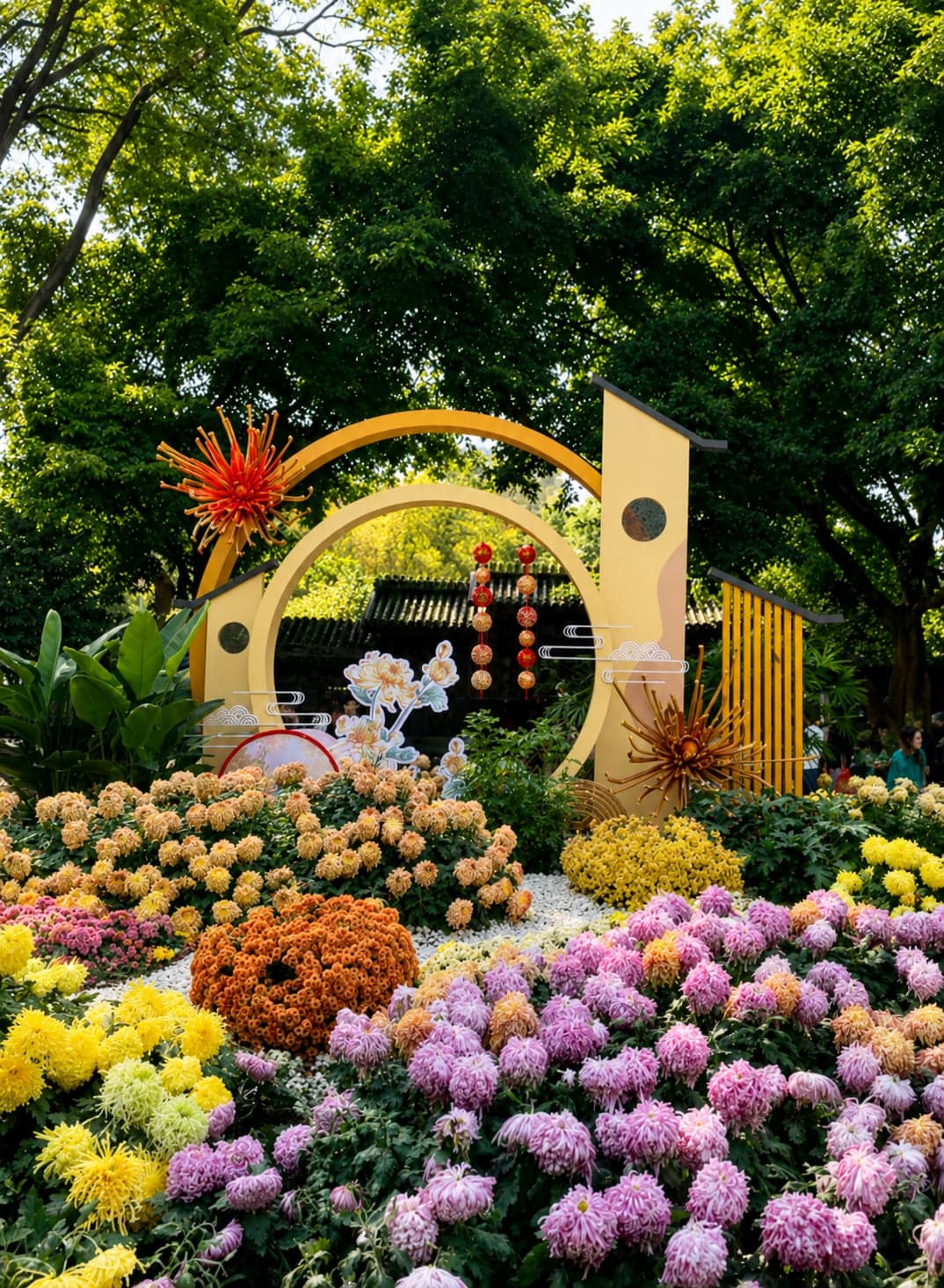
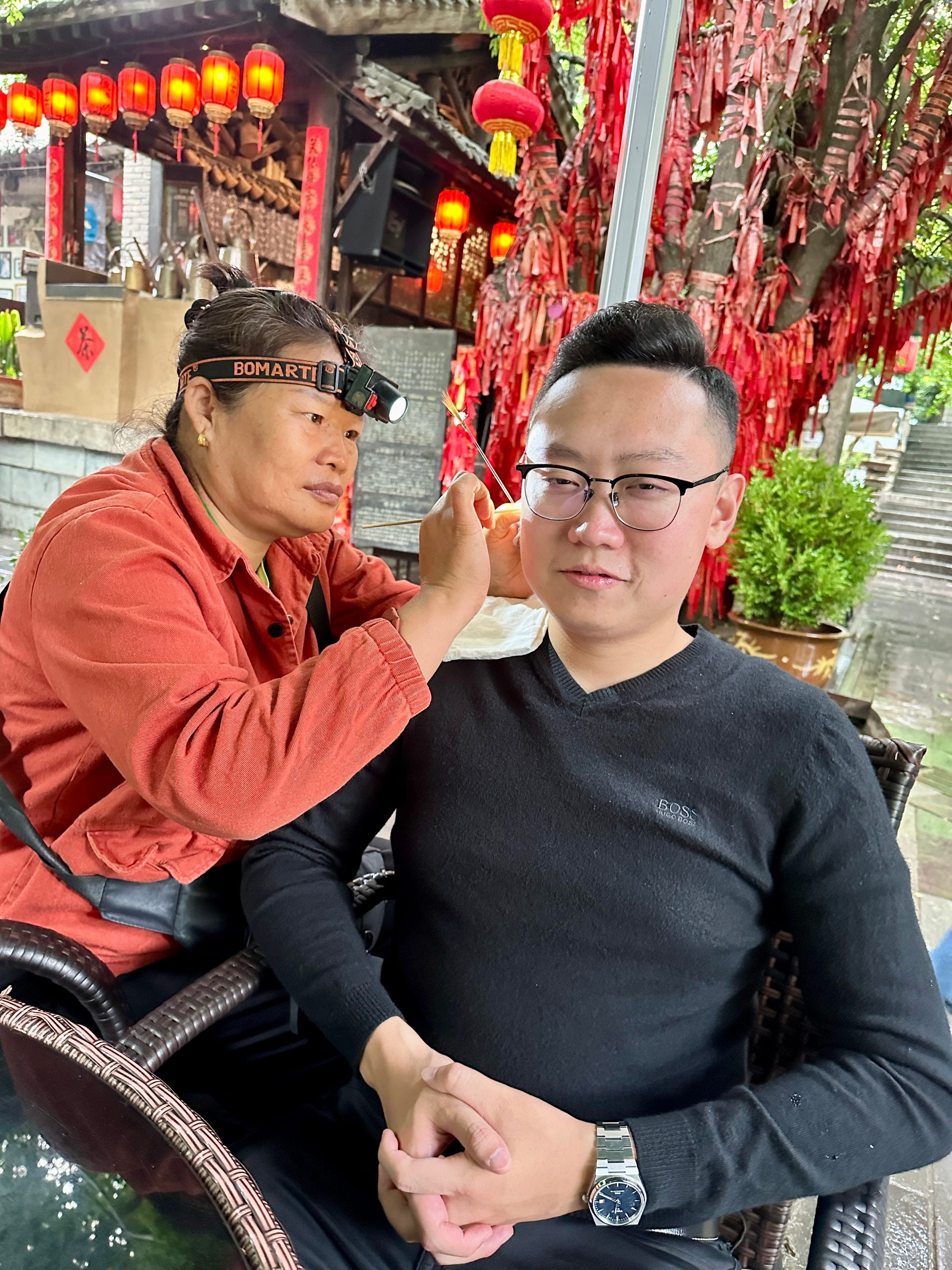
Afternoons fill with retirees playing mahjong, the clack of tiles carrying across the water, and ear-cleaners moving table to table with their long brass picks. Late October through November the park hosts its chrysanthemum exhibition: 200,000 pots along the lakeside paths.
Your guide knows the regulars at Heming, and we time the arrival for early afternoon, when the mahjong tables are warmed up but the heat is still gentle. The table is set lakeside, and a pot of bamboo-leaf green is poured before you sit.

Wide-and-Narrow Alleys(Kuanzhai Xiangzi)
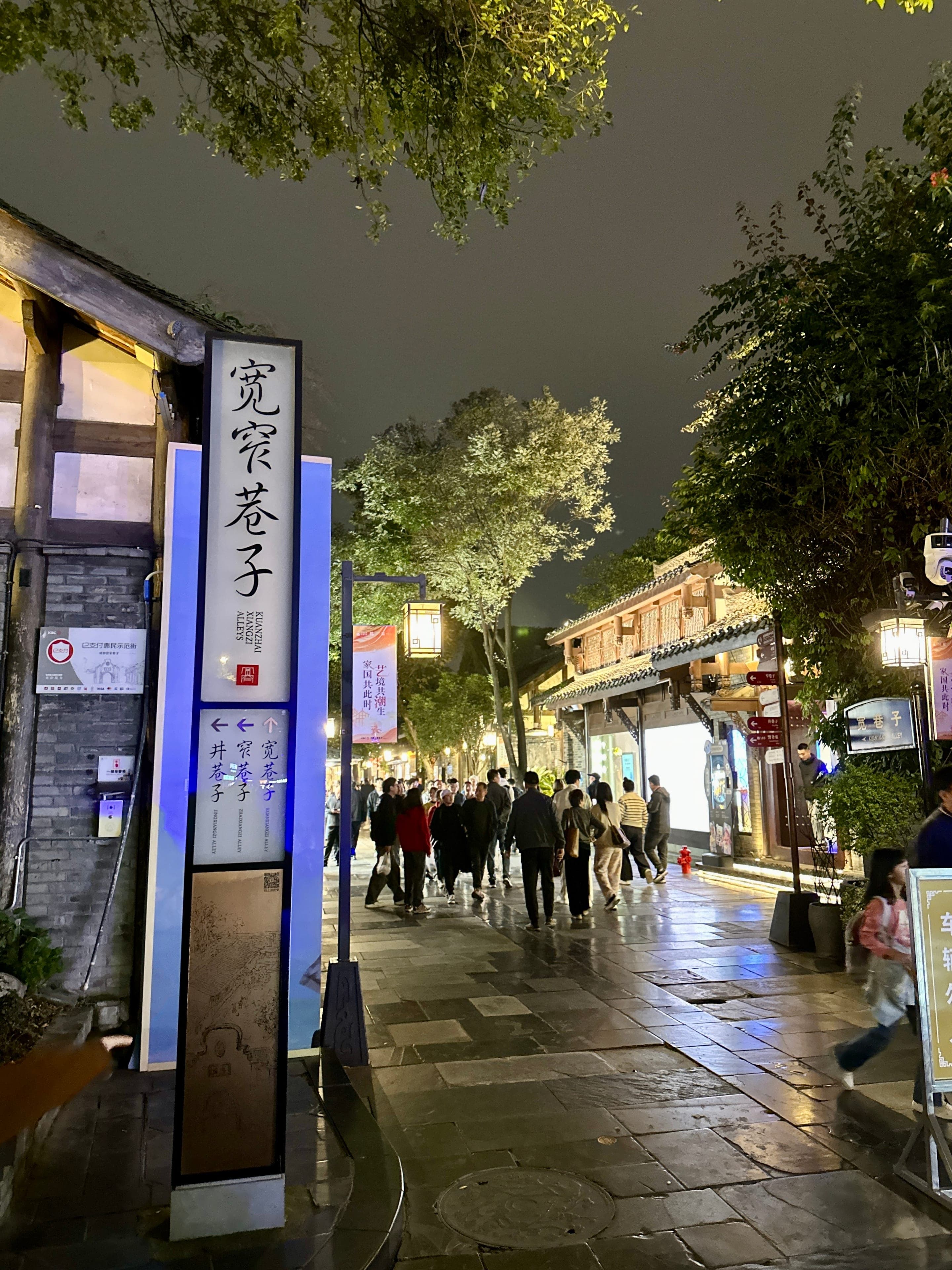
Wide-and-Narrow Alleys are three parallel Qing-era lanes on the western side of the old city, restored in 2008.
Wide Alley runs the courtyard teahouses, Narrow Alley keeps the smaller shops and craft demonstrations, Well Alley sits between with bars and cafés. Best walked slowly in late afternoon, when the lanterns come on along the eaves.
We book a specific older courtyard teahouse under your name, with the table set on the inner courtyard rather than the street side. The visit is timed for late afternoon, when the lanterns come on, and the guide knows which courtyards still pour their own tea.

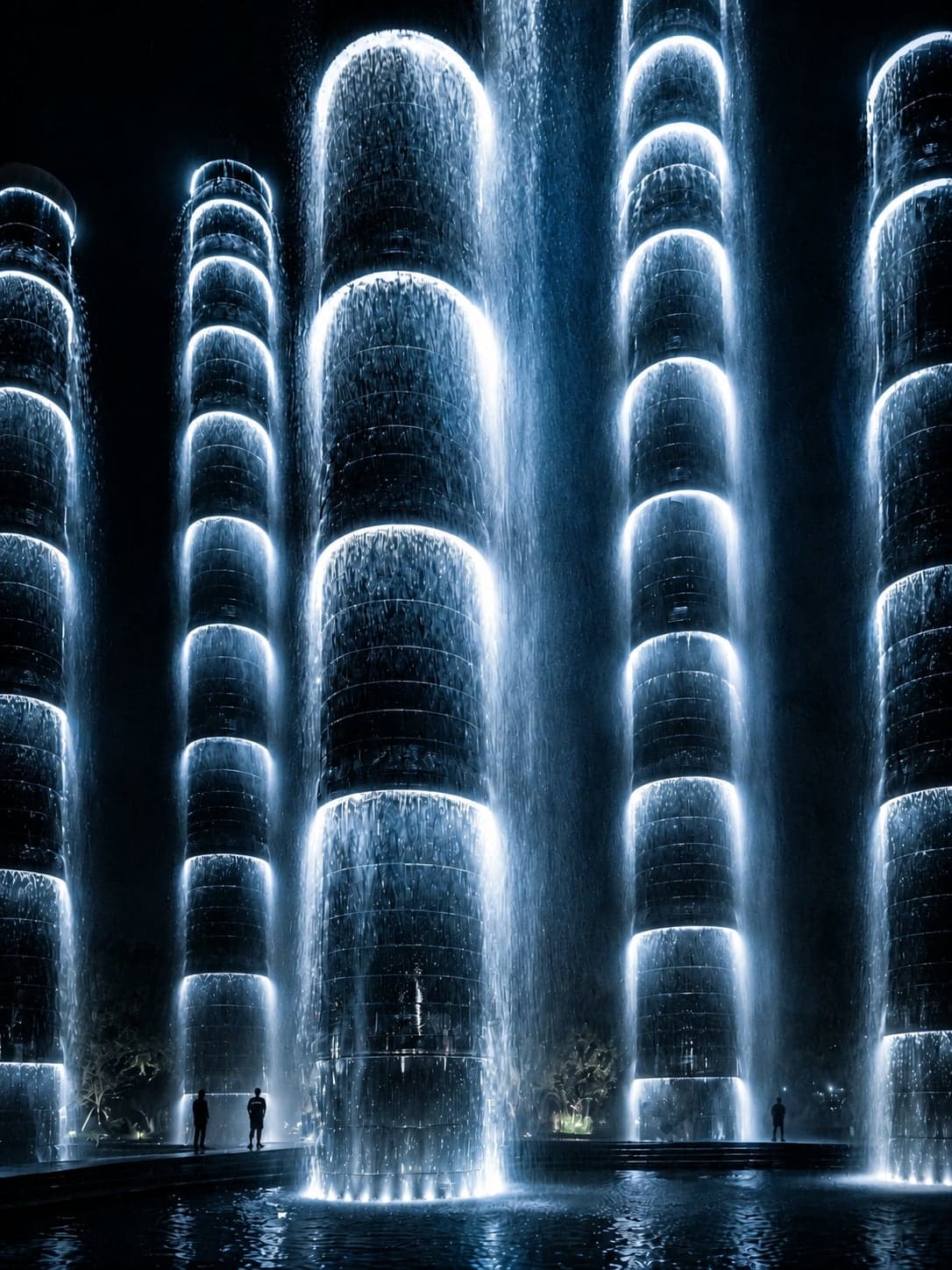
Tower of Vitality(bamboo fountain landmark, Chengdu SKP)
The Tower of Vitality is Chengdu's newest landmark, set in the sunken SKP plaza of the Jiaozi Financial District.
Six bamboo-shaped fountain towers rise 39 metres from the plaza floor, releasing curtains of water from the crown that catch the floodlights after dark. Bamboo carries the meaning of steady growth, and locals read the six towers as the Tianfu plain's own water finally falling from the sky.
We time the visit for the evening run, when the bamboo crowns light up and the water curtains read against the dark plaza, with a table booked beforehand at one of the kitchens overlooking the square. The car waits at the plaza for the return.
What to eat

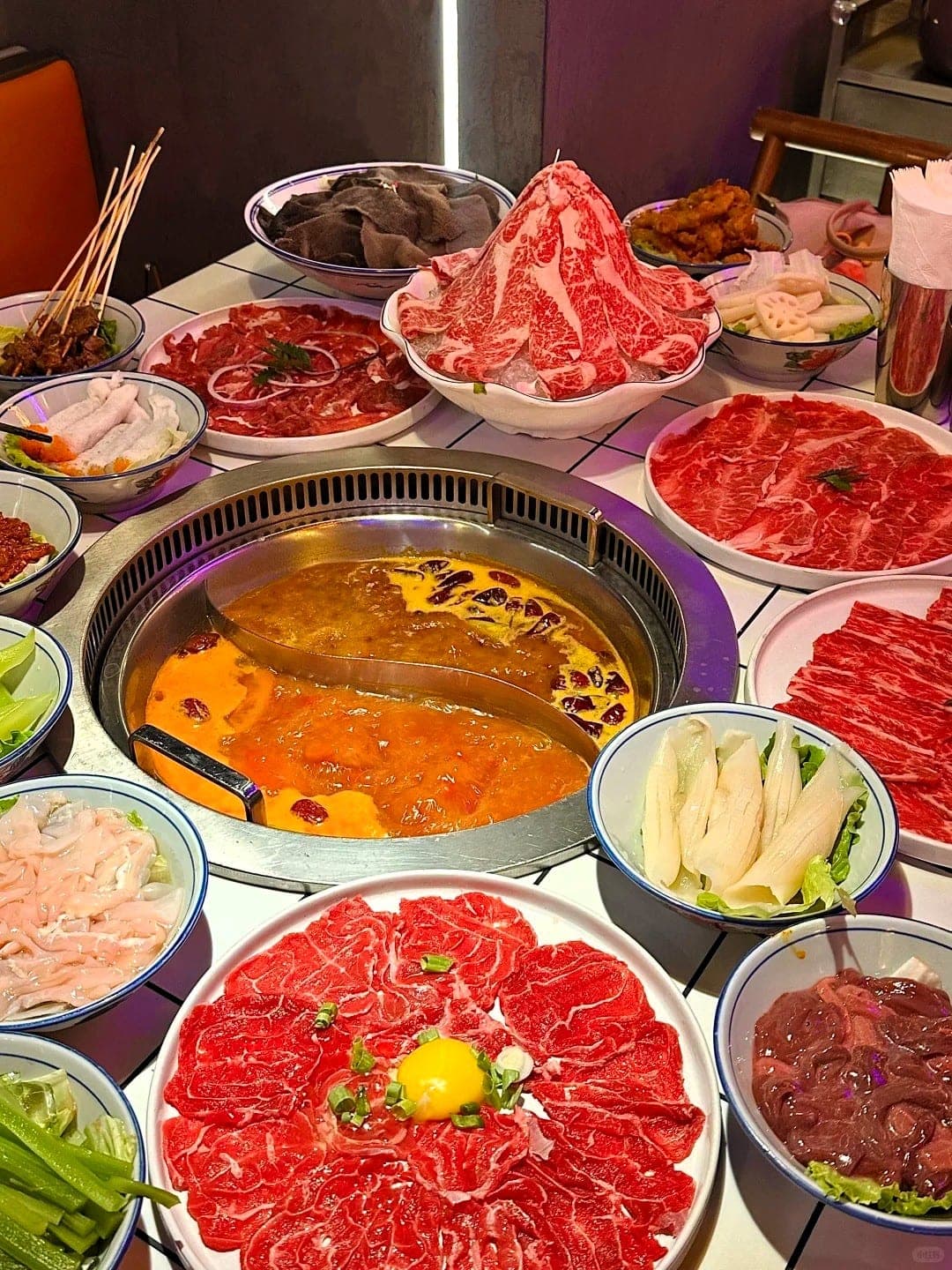
Sichuan mala at the table
Sichuan cuisine is built on mala: the combination of chilli heat and Sichuan-pepper numbness, with Chengdu as its home kitchen.
The numbness is the part first-time visitors don't expect. It lands as a tingle on the lips, then a slow buzz across the tongue, and by the second meal reads as flavour rather than confusion. Mapo tofu arrives glossed with chilli oil and fermented bean paste. Hot pot is the evening ritual: red broth bubbling at the centre, beef, tripe and greens dipped in.
We pick the restaurant against the day's spice tolerance, and the guide orders against what your table is comfortable with rather than what the menu can throw at it. Hot pot is paced across rounds so the numbness lands in waves rather than all at once.

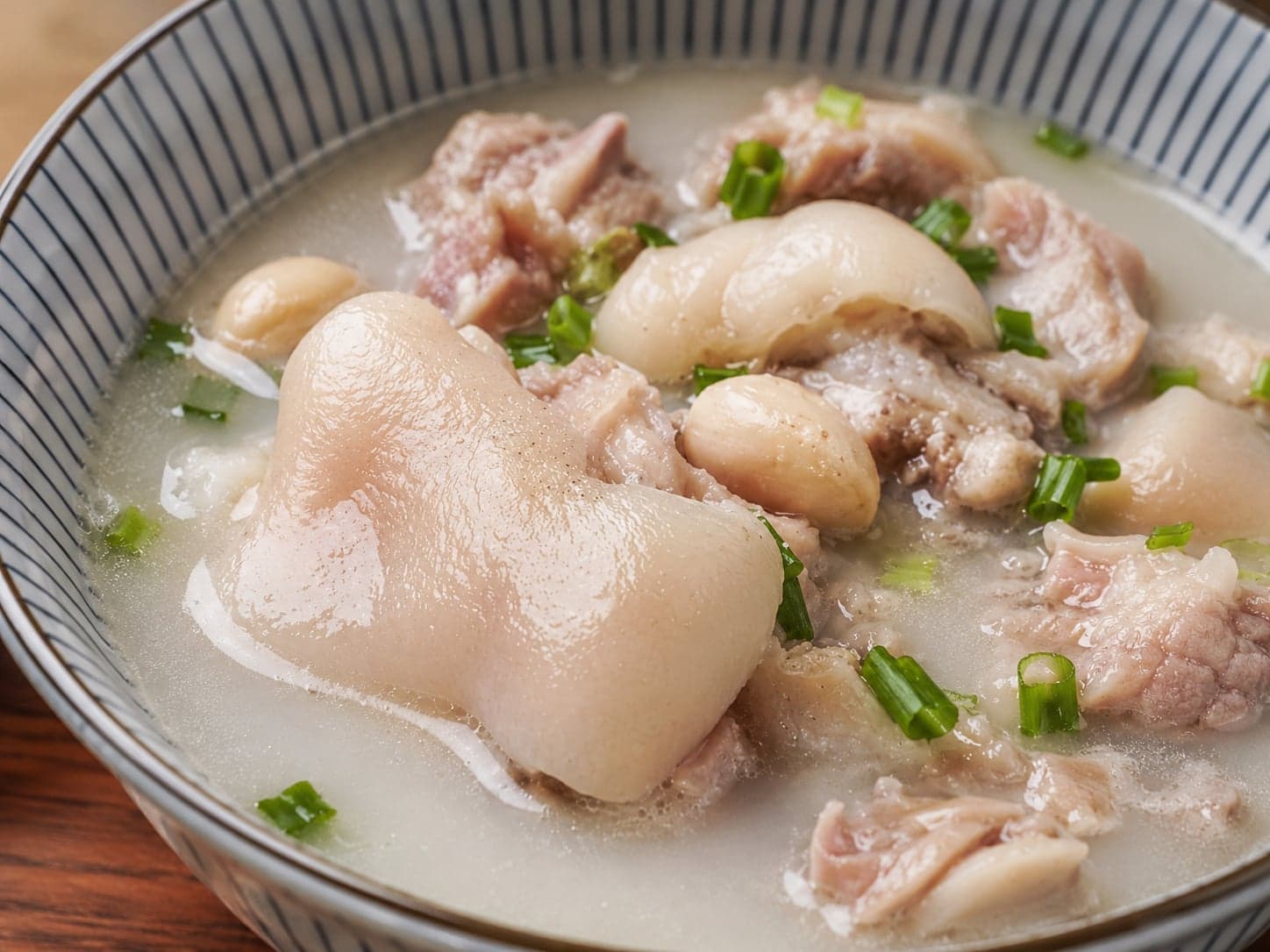
Pig trotter soup(Ti Hua)
Pig trotter soup is what Chengdu reaches for when the mala has done its work.
A whole trotter simmers for six hours with white kidney beans, until the broth turns the colour of milk and the skin loosens off the bone. It arrives in a wide bowl beside a small dish of chilli flakes, ground Sichuan pepper, soy and chopped scallion. The soup is clean and almost sweet; the dipping dish is where you decide how much heat to put back in.
We time the meal for the late hour the dish was built for, after the evening's opera or after the Wide-and-Narrow lanterns come down. Your bowl comes from the pot that has been simmering all day, so the broth is already milky-white when it reaches you.

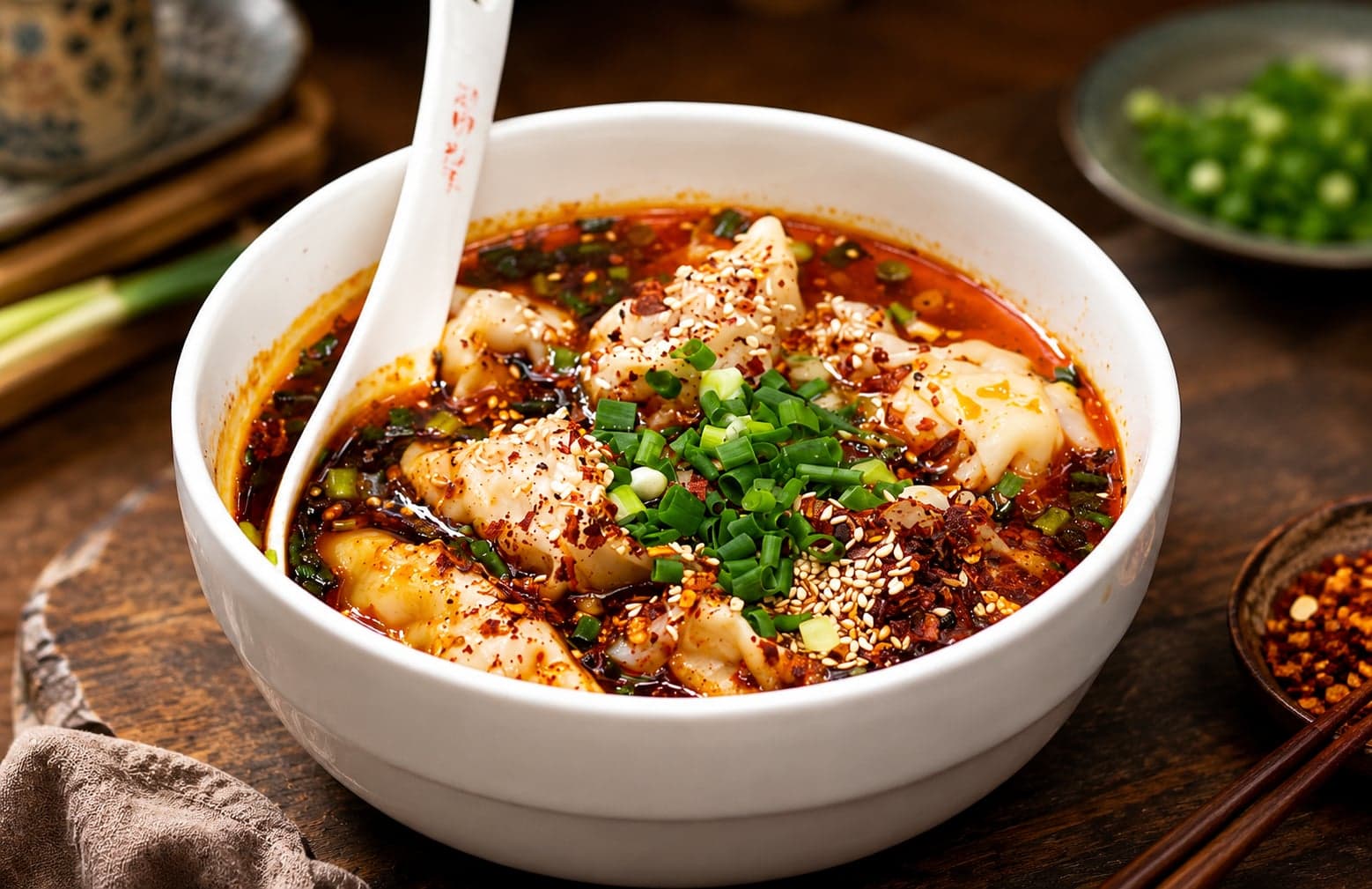
Red oil wontons(Hongyou Chaoshou)
Red oil wontons are the dish Chengdu does best at lunchtime.
Square pork wrappers are pleated so the corners cross like folded arms, which is what 'chaoshou' means in the local dialect. They arrive on a small plate, glossed with a sauce of house-pressed chilli oil, aged soy, garlic and ground Sichuan pepper. The wonton itself is mild and slick; the sauce does all the talking.
We seat you at a respected house between lunch services, when the kitchen is dressing the day's sauce fresh and the wontons reach the table within three minutes of going into the pot. The guide orders both the red-oil plate and the mild clear-broth bowl, so you taste the dish in two registers.
Shows and experiences

Sichuan ear-cleaning(Cai Er, the teahouse craft)
Ear-cleaning is one of Chengdu's three teahouse pleasures, alongside mahjong and a pot of bamboo-leaf green.
The masters move between the lakeside tables with a long brass pick and a small tuning fork, working table to table for a handful of coins a sitting. The tuning fork rings against the pick and sends a fine hum through the ear. A session runs around ten minutes.
We seat you at one of the older teahouses in the surrounding lanes, where the masters are second- and third-generation rather than the visitor-row pop-ups along the main path. Your guide handles the cash arrangement so the session reads as it does for the regulars.

Long-spout tea-pouring(Chang Zui Hu, the Sichuan tea art)
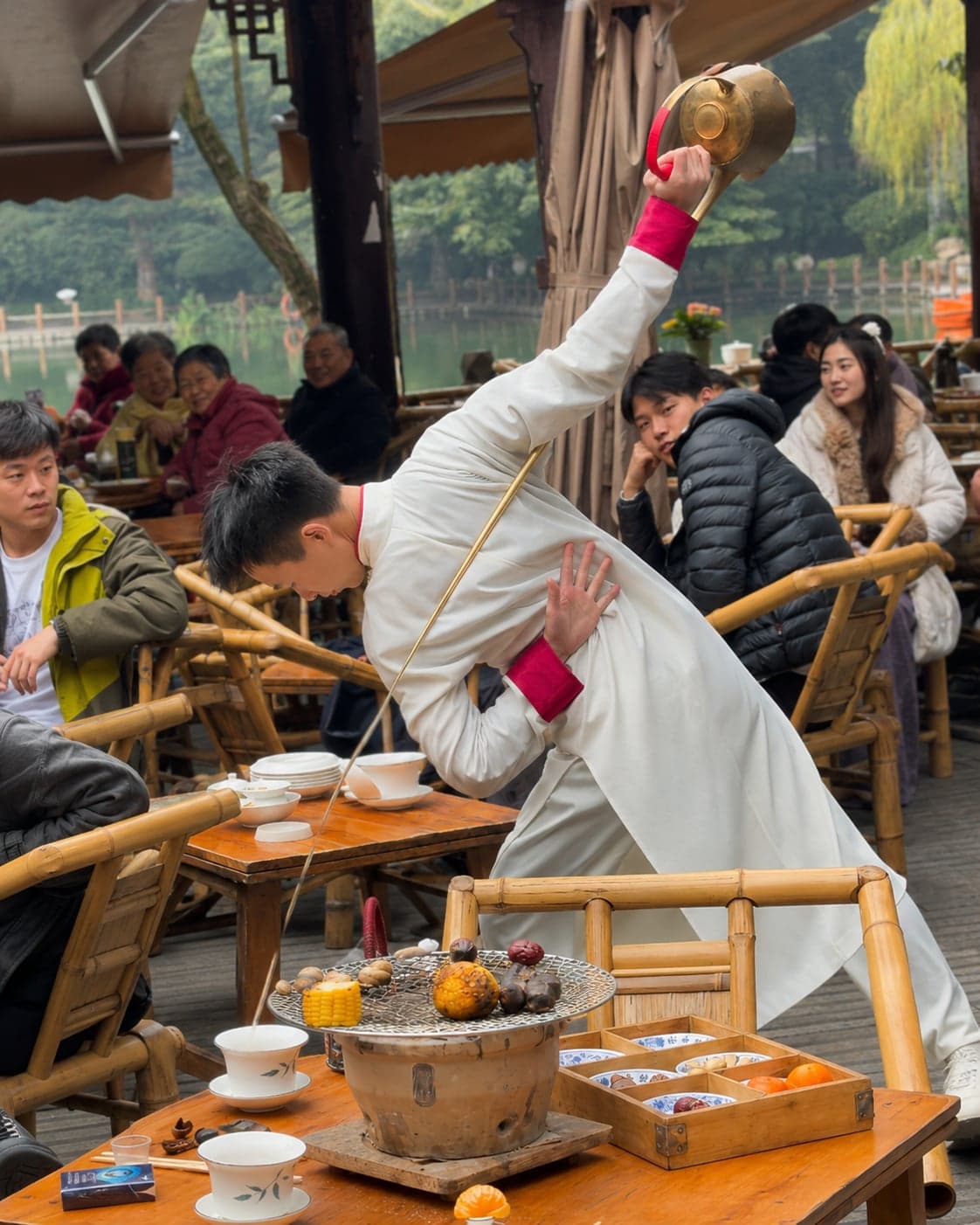
Long-spout tea-pouring is the teahouse performance Sichuan made its own.
A tea master pours boiling water from a copper kettle with a meter-long spout, swung over the shoulder, behind the back, between the elbows, while the gaiwan on the table fills without a drop spilled. The moves carry martial-arts names: monkey offering peaches, Su Qin carrying the sword. Bamboo-leaf green or jasmine waits in the cup below.
We seat you at the front of the table at a working teahouse where the masters trained under the older line, not the hotel-lobby version on the coach circuit. The gaiwan is poured fresh before the show begins, and the second pour comes by hand at your table once the kettle returns to the brazier, so the demonstration closes back into an actual cup of tea.

Sichuan opera face-changing
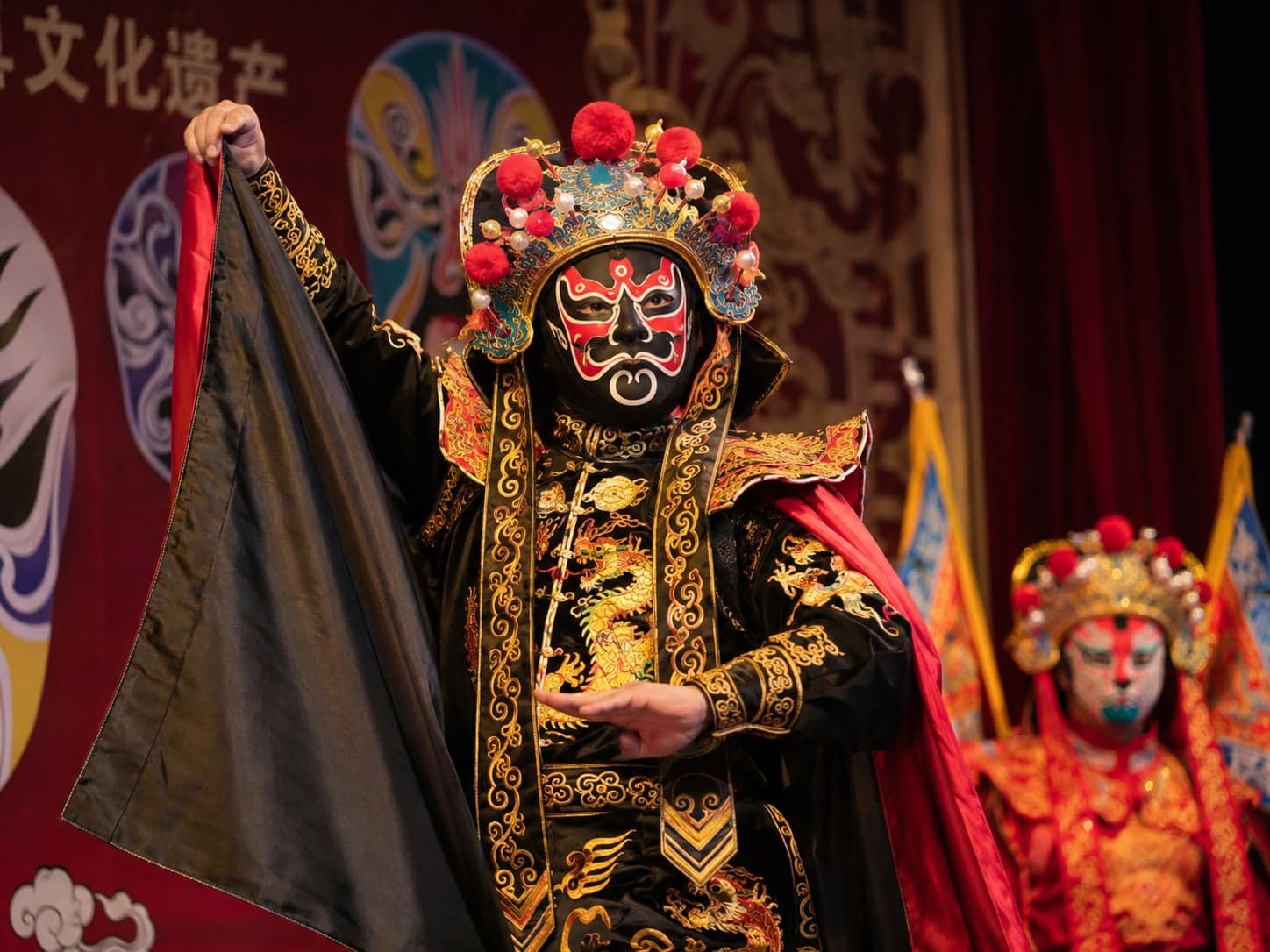
Sichuan opera is the regional theatre tradition built around face-changing, or bianlian: the trick of switching painted silk masks in less than a second.
The evening runs at one of the city's smaller working opera houses. Face-changing is the headline, but hand-shadow puppetry, on-stage fire-breathing and comic monologue often steal the night. About ninety minutes, gaiwan tea poured throughout.
We book a front-of-house table in advance at a working teahouse-opera, with seating close enough that the timing of the mask change is the trick, not the mask itself. Gaiwan tea is poured through the performance, and a quiet car waits at the lane outside for the return.
What three days
might look like.
- Day 01
Pandas, tea, lantern lanes.
An early start at the Chengdu Panda Base allows time inside the breeding houses while the adults are still eating bamboo. The late morning slows into People's Park, where an hour at Heming Teahouse passes with the mahjong tables running and a pot of bamboo-leaf green on the lakeside table. A relaxed Sichuan lunch follows on the way back to your hotel quarter, with the afternoon yours to wander or rest. As dusk settles over Jinli's lantern-lit lanes, a guided six-stop tasting unfolds at the pace of a slow walk, through stalls that still make the snack by hand.
- Chengdu Panda Base
- Nursery viewing windows (cub season)
- People's Park
- Heming Teahouse (lakeside table)
- Jinli Street (after dark)
- Day 02
Ancient waters, sacred slopes.
Spend the morning west of the city at Dujiangyan, where the fish-mouth divider and the spillway read clearest in the soft early light, and a temple complex climbs the hill behind for the rest of Li Bing's story. Continue to Qingcheng Mountain in the cooler afternoon, where the front-mountain Daoist temple path stays in forest shade and the halls appear at the bends. A family-run Sichuan lunch in Dujiangyan town follows, away from the visitor-centre canteen. A late return to Chengdu leaves the evening unhurried at your hotel.
- Dujiangyan Irrigation System
- Fish-mouth divider and spillway
- Li Bing temple complex
- Qingcheng Mountain (front mountain)
- Daoist temple path
- Day 03
Poetry, tea, the city's last evening.
Begin the morning at Du Fu Cottage, where a guide reads three of the Tang poet's most-quoted lines at the very spots they describe. Continue to Wenshu Monastery for a vegetarian lunch in the inner-courtyard hall, the abbot's-recipe set rather than the cafeteria menu next door. The afternoon unfolds along Wide-and-Narrow Alleys, with an hour at an older courtyard teahouse as the light shifts against the grey-tile roofs. As evening falls, a working teahouse-opera brings the spectacle of Sichuan face-changing, the front-of-house table booked in advance.
- Du Fu Cottage (Du Fu Cao Tang)
- Wenshu Monastery vegetarian hall
- Wide Alley
- Narrow Alley (courtyard teahouse)
- Sichuan opera (face-changing)
Best time
March to May · September to November
Days needed
2 to 4 days
Where it sits
Two scheduled hours by air from Xi'an · three from Beijing
Questions worth
answering early.
Three full days is the minimum I would plan for a first Chengdu stop. One day for the Panda Base at the 07:30 gate, with People's Park and Jinli at dusk. One day west for Dujiangyan and Qingcheng Mountain. One day in the city for Wuhou Shrine, Wide-and-Narrow Alleys, and a Sichuan opera in the evening. Add a fourth day north for Sanxingdui's bronze museum. Or two further days south for the Leshan Giant Buddha and Mount Emei, with an overnight at the summit for the sea-of-clouds window.
Hand us the dream,
We carry it through.
From your first enquiry to your last airport pickup, our specialists design your trip and stay in contact every step of the way. The guides, drivers and hotels you'll meet are part of our trusted network we've worked with for years, briefed to the same standards.
- Dedicated specialists, start to finish
- Guides briefed to our standards
- Fully transparent, no hidden costs
- No deposit until you confirm
Stretch the trip. Stitch in another.

Xi'an
North-south balance. Tang-dynasty courts and Sichuan tea houses, two scheduled hours apart by air.
Read this destination
Guilin
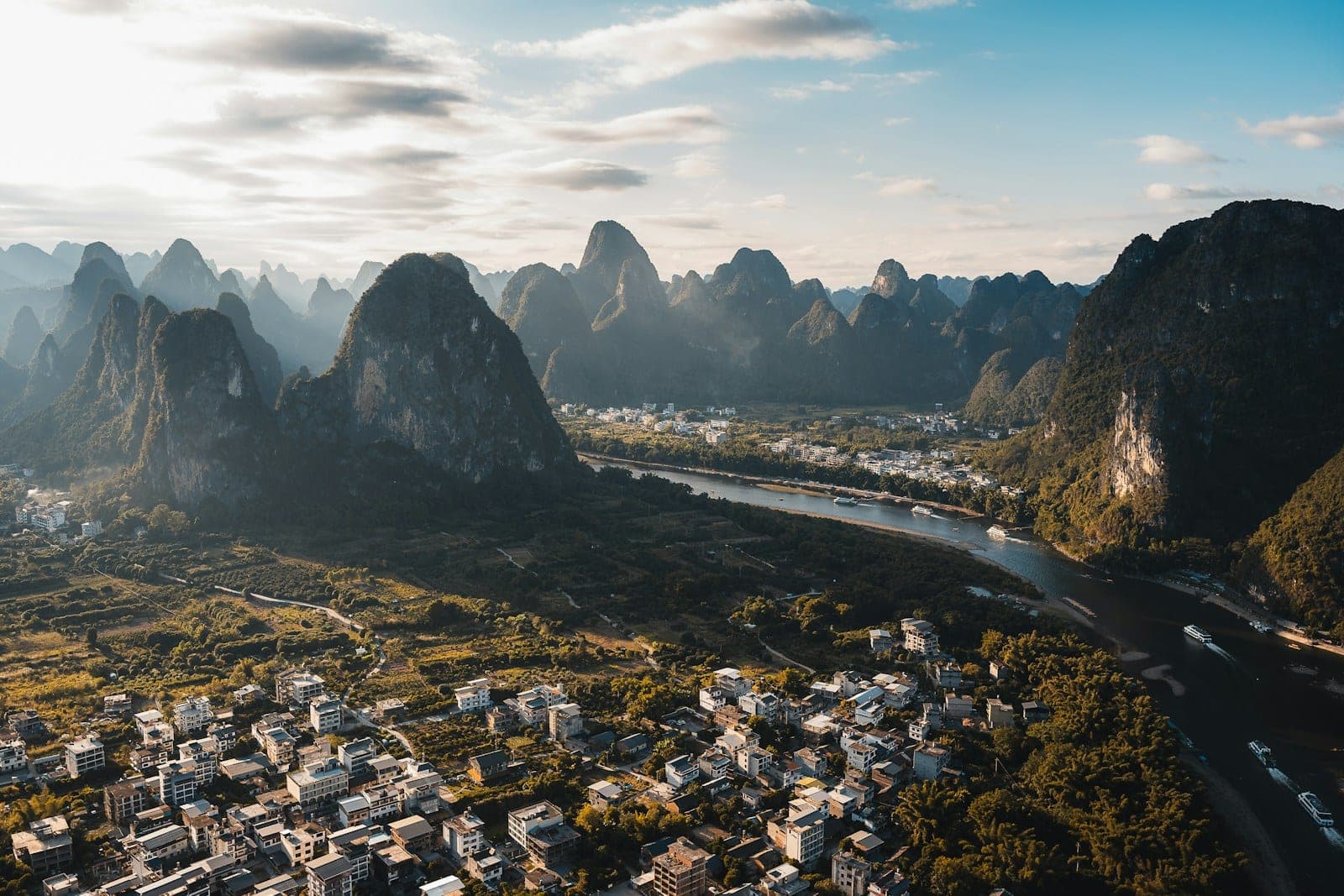
South-China pair. Tea-house Sichuan, then karst peaks and the quiet river south.
Read this destination
Lijiang
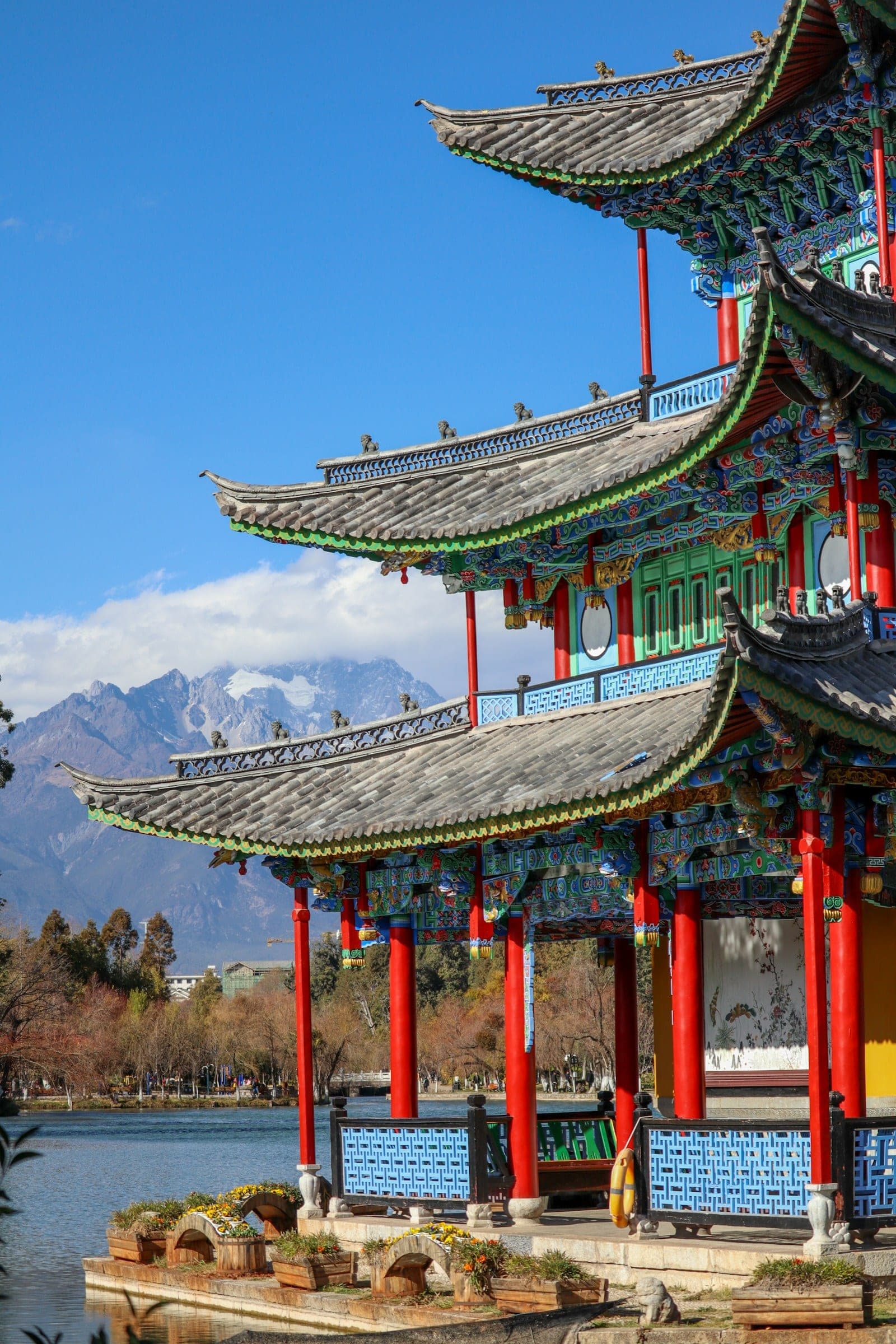
Slow-pace continuation south into Yunnan. Naxi old town, the Jade Dragon range above.
Read this destination
Useful before
you enquire.

China tourist visa for US travellers
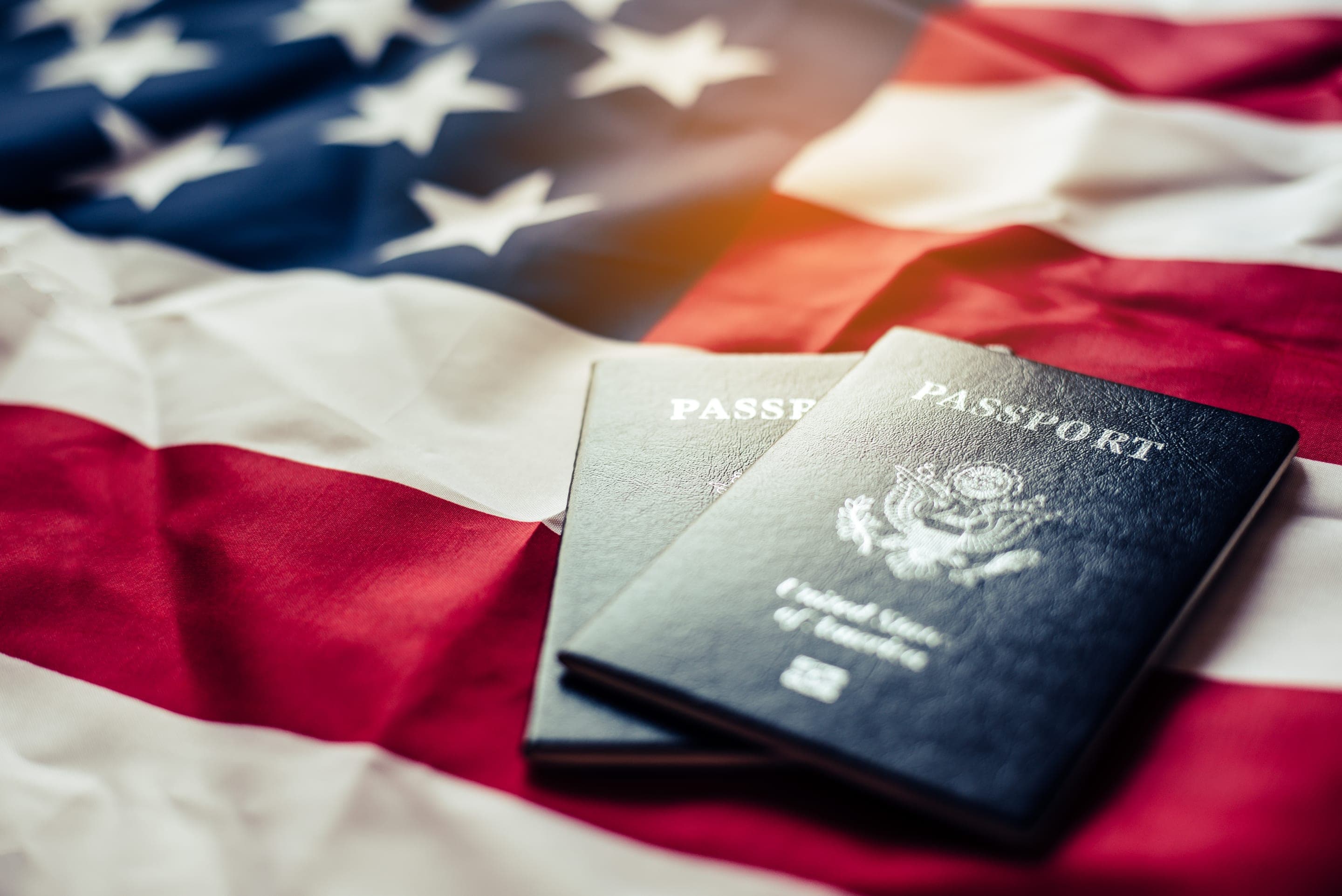
American passports still need a tourist visa for China under current rules. How the L-visa works, what we handle as part of your booking, and what is on you.
Read this guide
When to visit China, month by month
March through May and September through November are the cleanest windows for Chengdu. The whole year, read by climate and crowd.
Read this guide
How many days do you need in China
Chengdu adds 2 to 3 days to the Beijing, Xian, Shanghai backbone. What those days hold, and how the legs connect.
Read this guide
Payments and connectivity in China
Set up Alipay or WeChat Pay before you fly. Cards work widely after binding, but limits and small merchants need planning.
Read this guide
How our pricing works
What sits inside the figure on your quote, and what sits outside it. The structure, written out.
Read this guide

Jack Guo
Senior Travel Specialist
Jack has spent ten years working with the guides, drivers and hoteliers across China. He'll be your contact from first enquiry to final airport pickup.
Tell us about your Chengdu trip
Five quick questions. We'll send you a Chengdu-anchored draft with the price within one business day. No deposit. No hard-sell.