

Xi'an
the ancient capital of thirteen dynasties
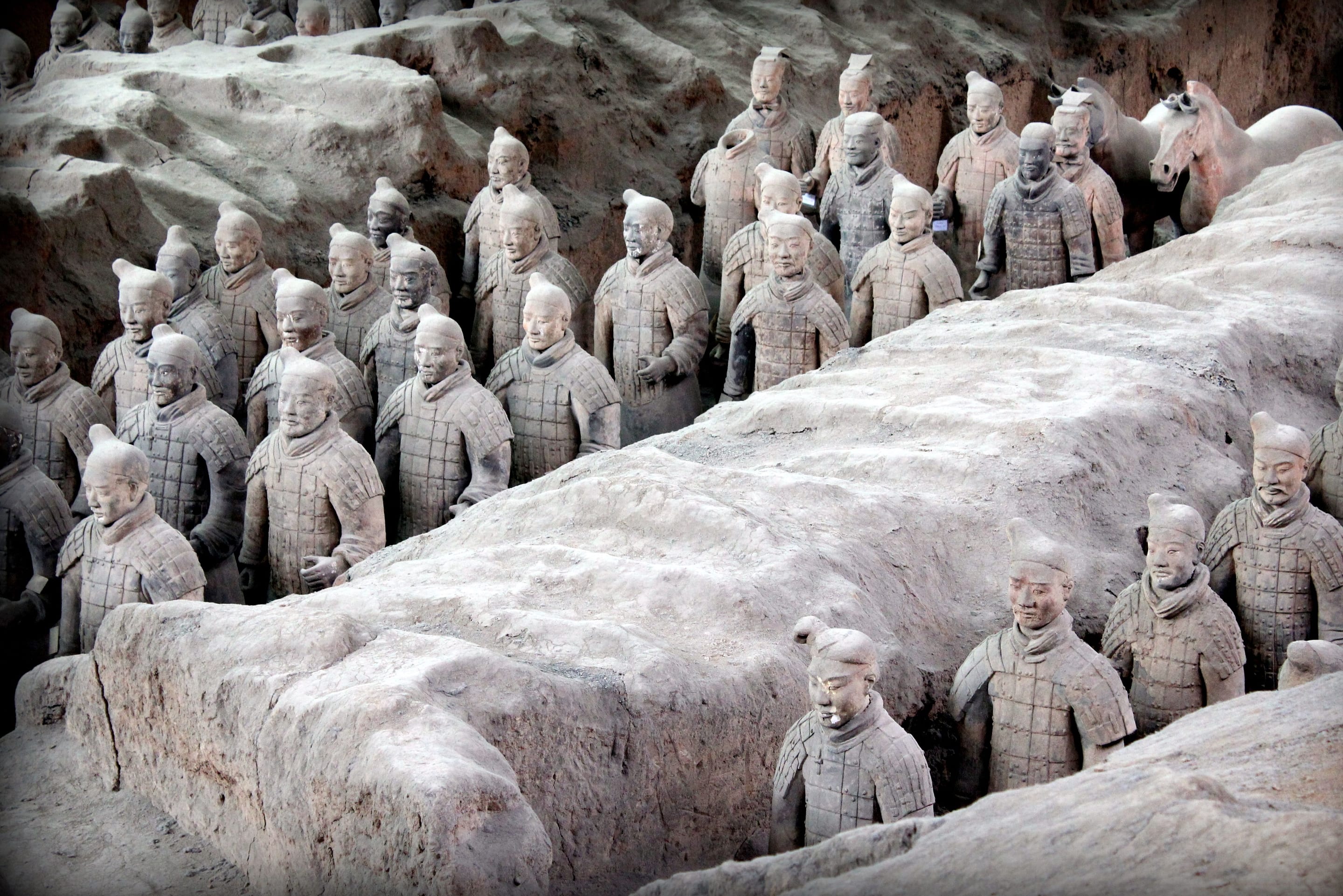
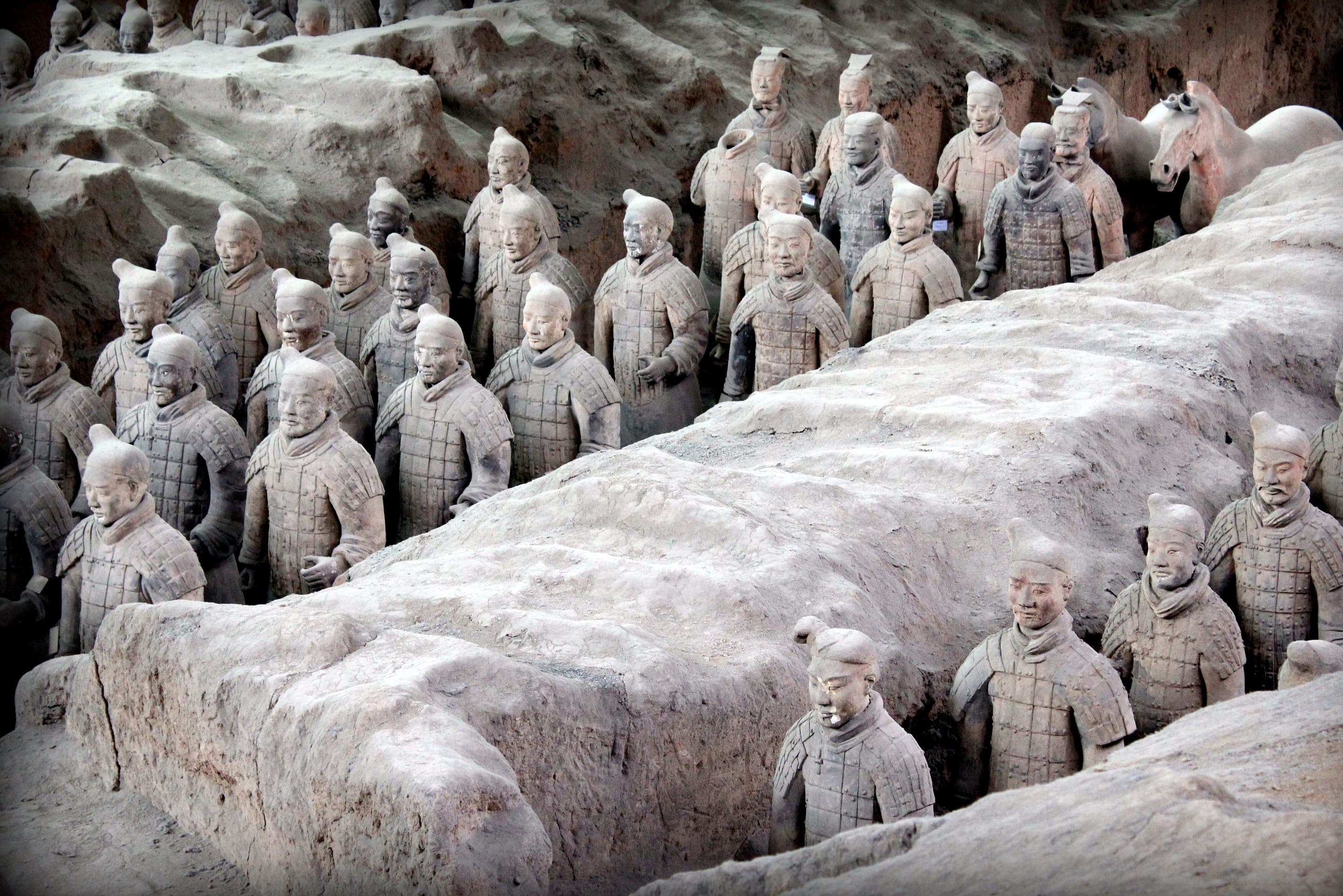
Xi'an is where China's story begins. Beneath the yellow-earth plains east of the city, 8,000 Terracotta Warriors stand eternal guard over the First Emperor. Inside the Ming walls, hand-pulled noodles and lamb skewers fill the lanes around the Drum Tower.
Why people
come to Xi'an.
What to see

Terracotta Army(Qin Shi Huang Mausoleum)
Discovered by local farmers digging a well in 1974, the site holds thousands of life-size warriors, horses and chariots that have guarded the mausoleum of China's First Emperor for more than two millennia.
Each warrior was modelled with an individual face, no two the same. The bronze chariots in the side hall are easy to miss on the way out.
We arrange the 08:30 first window and sequence the route through Pit One, Pit Two, Pit Three and the bronze chariots in order. Arriving before the largest tour groups gives you the time and space to enjoy the site as more than a famous photograph, with a specialist guide alongside.

Bell Tower(the city's centre)
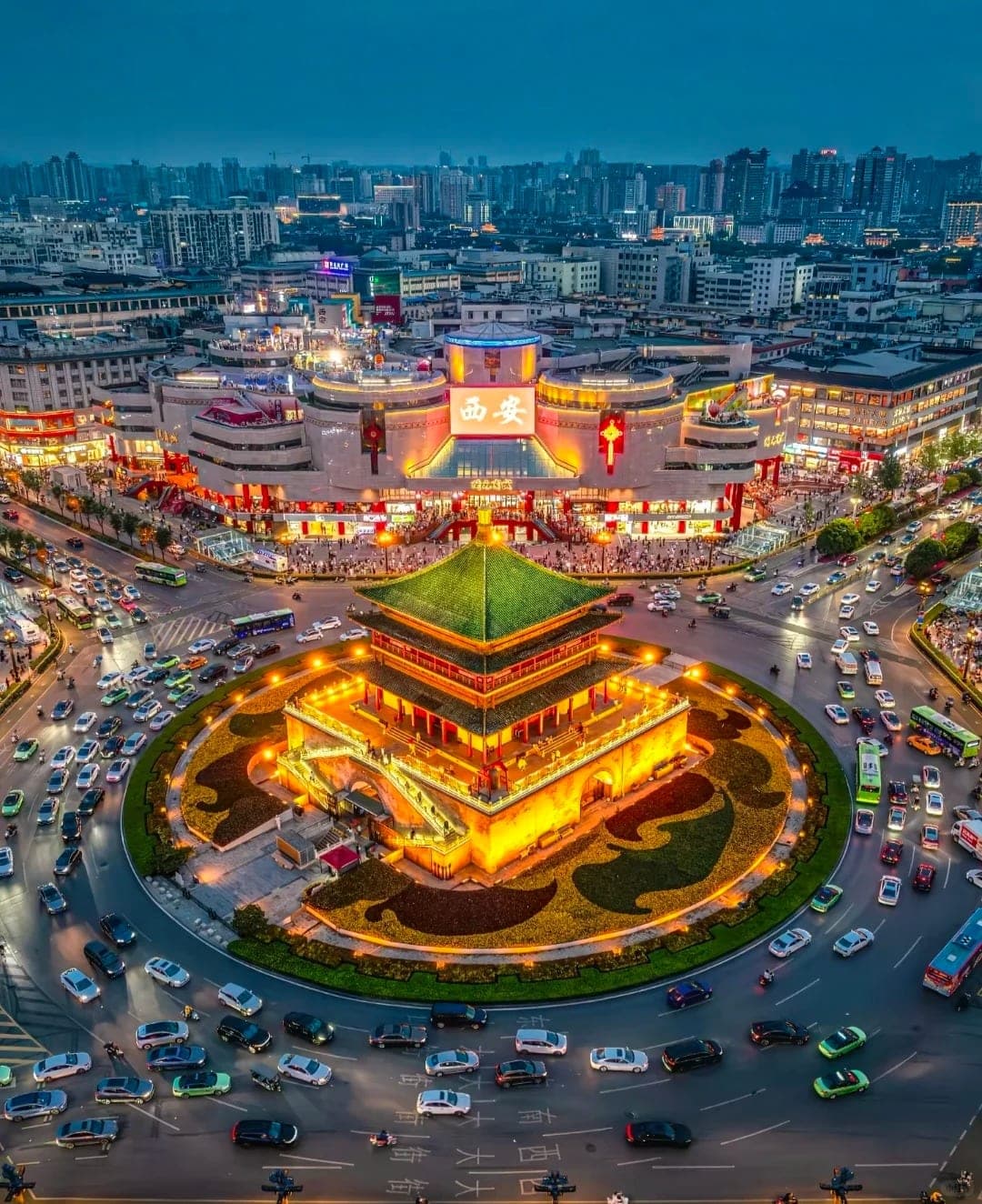
At the centre of Xi'an's old city, where the four main streets meet, the Bell Tower has stood at this intersection since 1582, moved here under the Wanli emperor from its original 1384 site two blocks west.
Its bronze bell once set the rhythm of imperial life: the city gates at dawn, the watch through the night, the turning of the seasons.
We time the climb for late afternoon, when the lanterns in the upper hall begin to glow and long shadows fall across the four streets below. The tower works as a natural pivot between an afternoon on the city wall and dinner in the food lanes.

Huashan(Mount Hua, the West Sacred Mountain)
Rising from the plains east of Xi'an, Huashan has been walked for centuries by emperors, pilgrims and poets.
Granite peaks, sheer cliffs and narrow stair paths cut between summits, with prayer ribbons tied along the railings and small temples set on the highest ledges. The walking is the experience.
We tailor the day around your fitness, the weather and cable-car timings. Strong walkers ascend by West Peak and descend by North, with South and East added when time allows. Gentler days stay on the North Peak panoramas.

Shaanxi History Museum
If you want a clear line through the rise and fall of China's imperial dynasties, the Shaanxi History Museum is the right way in.
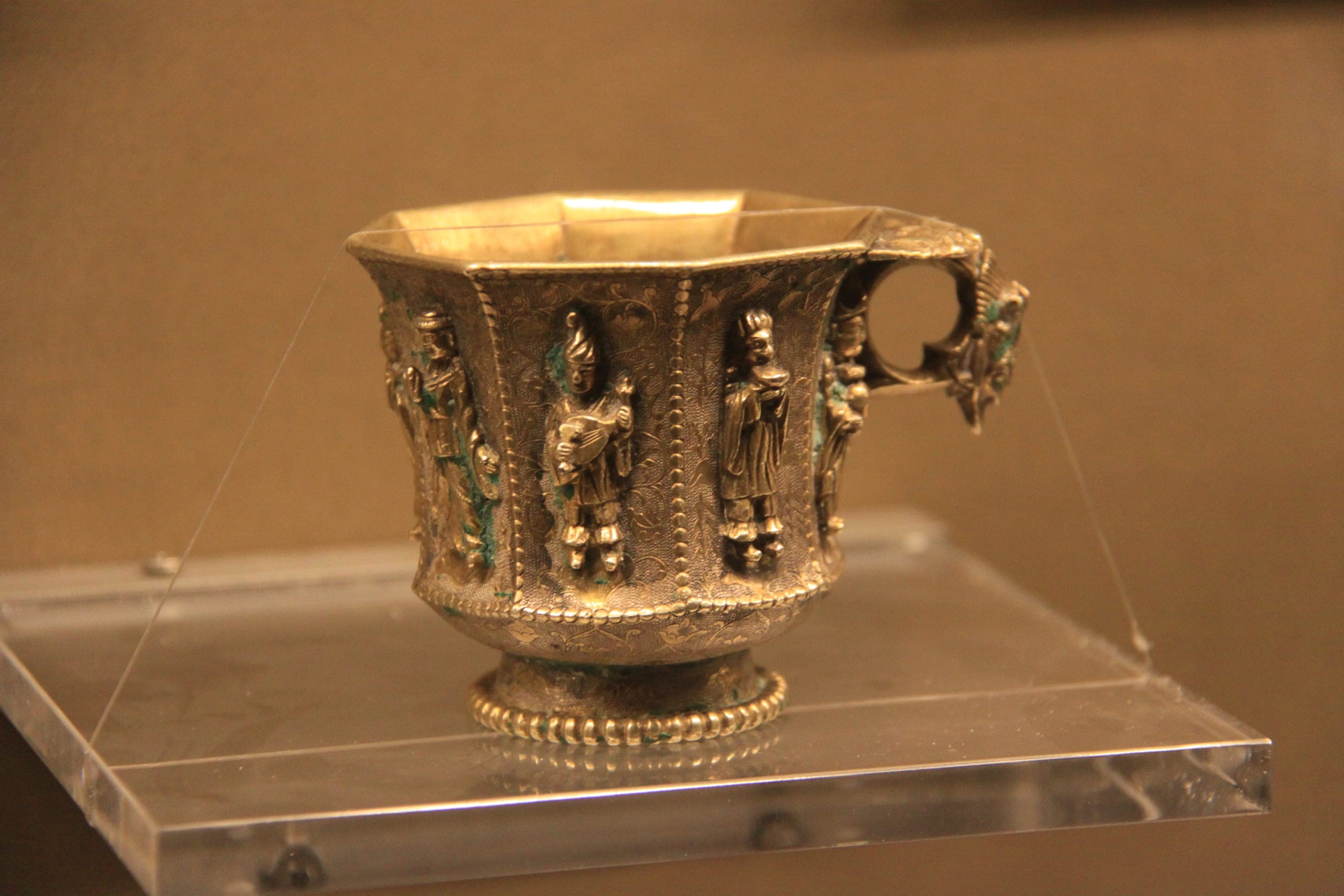
Over 370,000 artefacts span thousands of years, with the Tang galleries the centre of gravity. The Hejia Village hoard is the highlight: gold, silver, jade and gilded pieces buried by a Tang household.
We book your reservation against your passport details and time the visit for the quieter entry windows, with the Tang galleries first. If your day falls on the Monday closure, we move you to the Forest of Stelae so the trip's heritage thread continues.

Big Wild Goose Pagoda(Da Ci'en Temple)
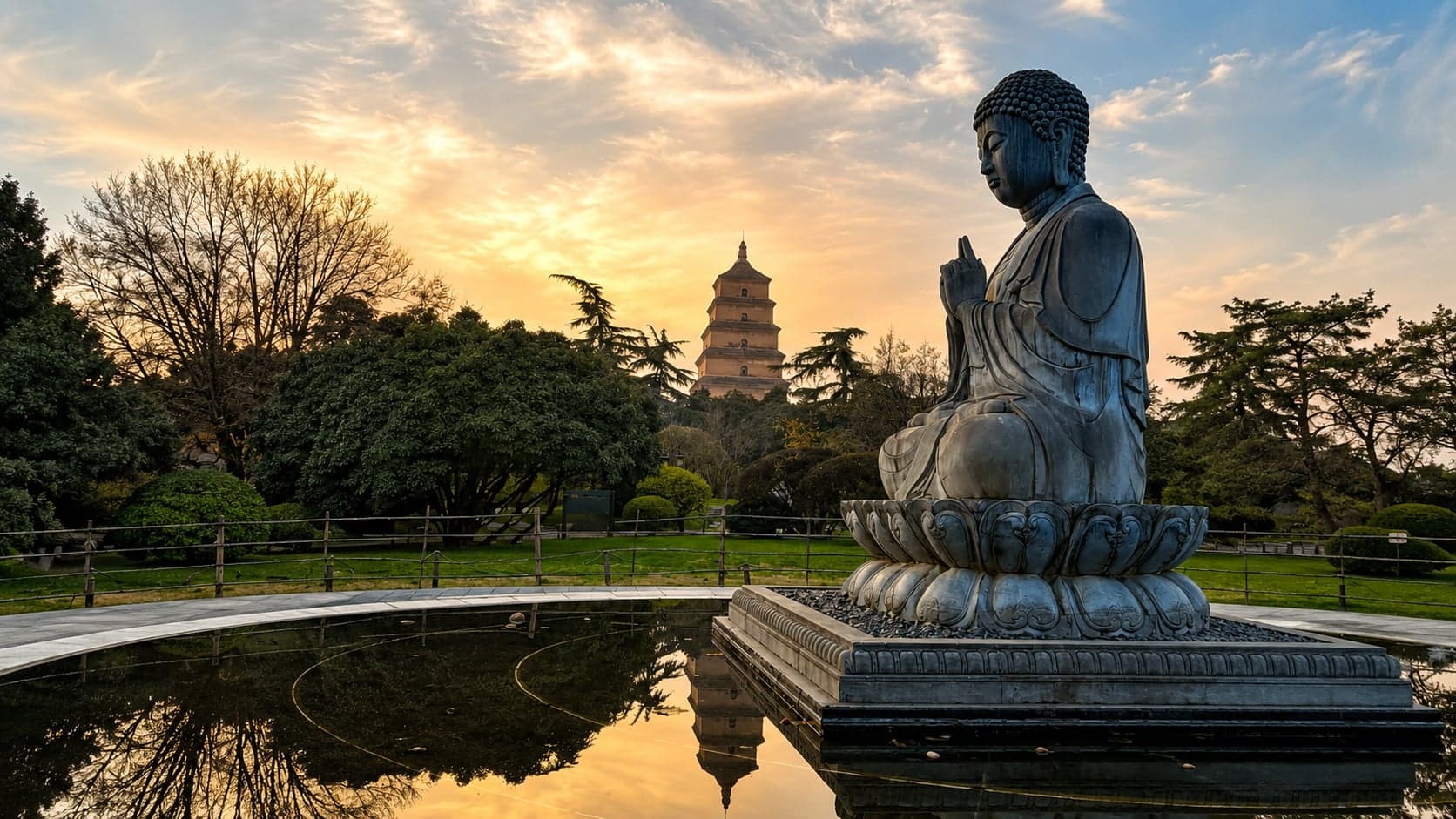
Rising above Da Ci'en Temple, the Big Wild Goose Pagoda was completed in 652 to hold the Buddhist scriptures the monk Xuanzang carried back from India after 17 years on the road.
The Silk Road ran through Xi'an then, and the pagoda became its enduring Tang symbol.
We visit in the late afternoon, when the crowds ease and the temple grounds quiet. Your guide walks you through Xuanzang's story and the pagoda's place in the spread of Buddhism across Asia.

Huaqing Palace(Tang hot springs)
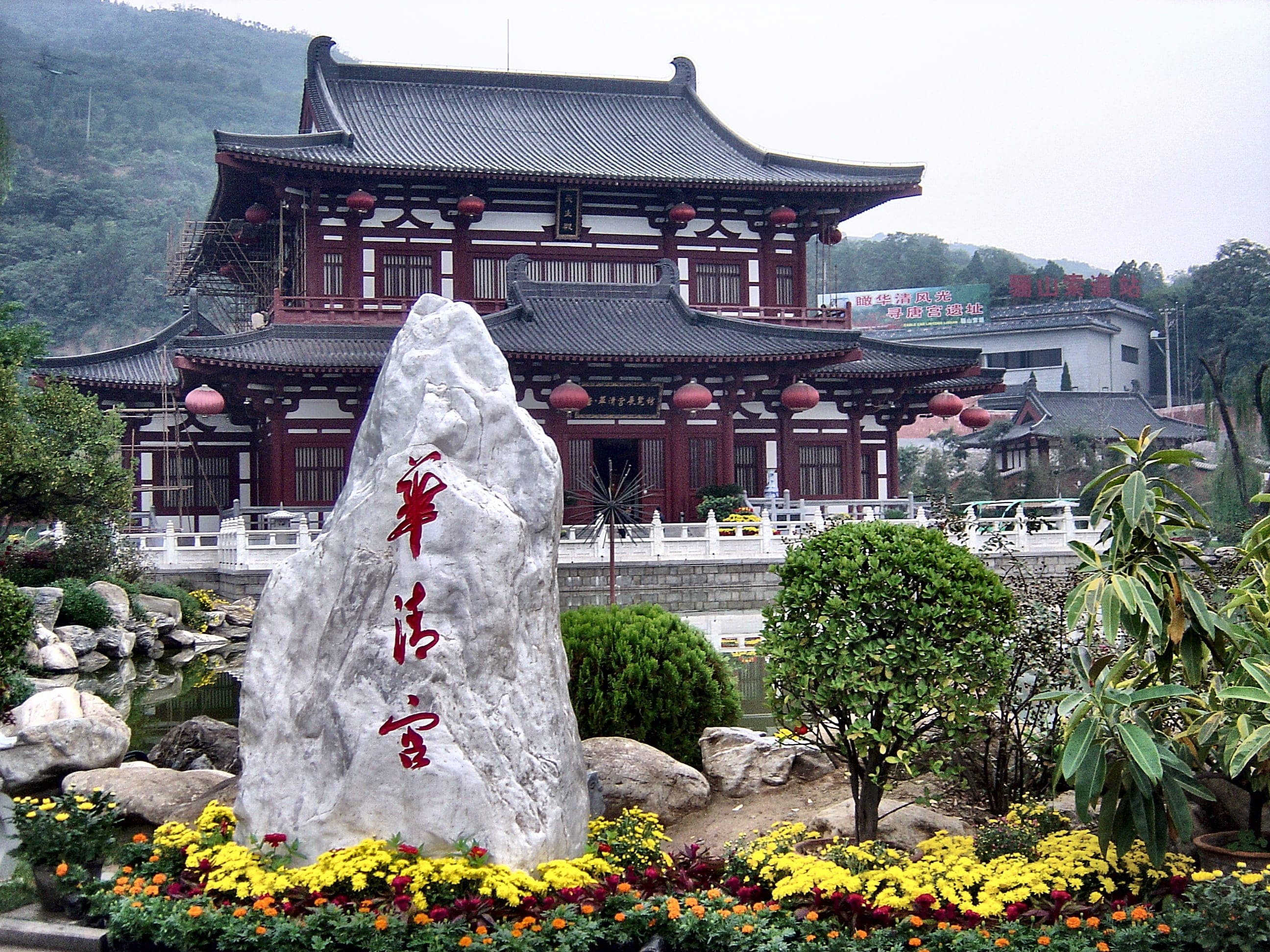
Set against the wooded slopes of Lishan, Huaqing Palace has drawn emperors to its hot springs for centuries.
You can walk through the Tang-dynasty bath ruins where Emperor Xuanzong and Yang Guifei lived out their love story, then climb to the pavilions where Chiang Kai-shek was taken at gunpoint during the 1936 Xi'an Incident.
We pair Huaqing with the Warriors and visit second, when the grounds are quieter and the heat of the day has eased. We can book seats for the evening Chang Hen Ge performance staged on Nine Dragon Lake.

Tang Paradise(Datang Furong Yuan)
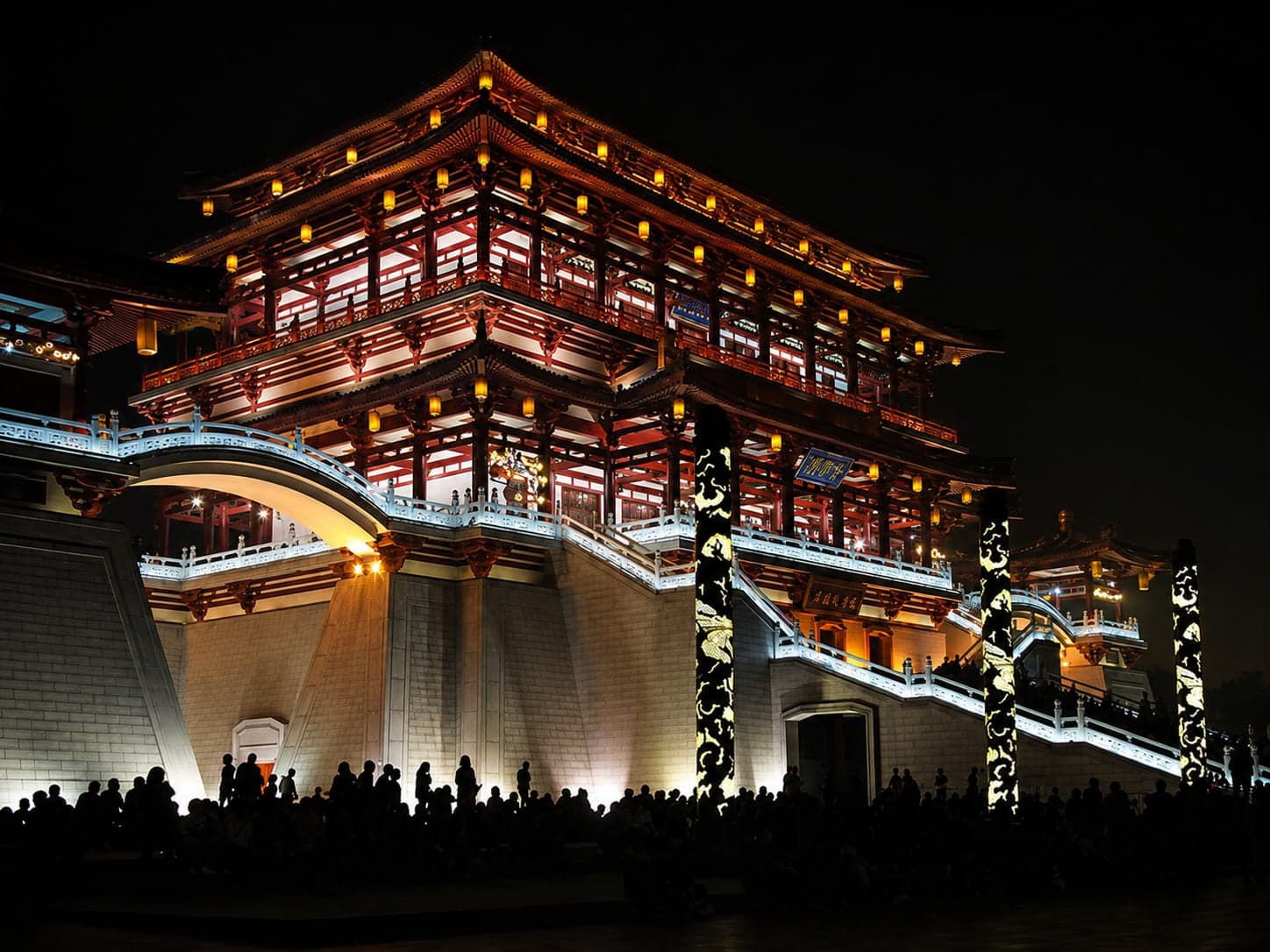
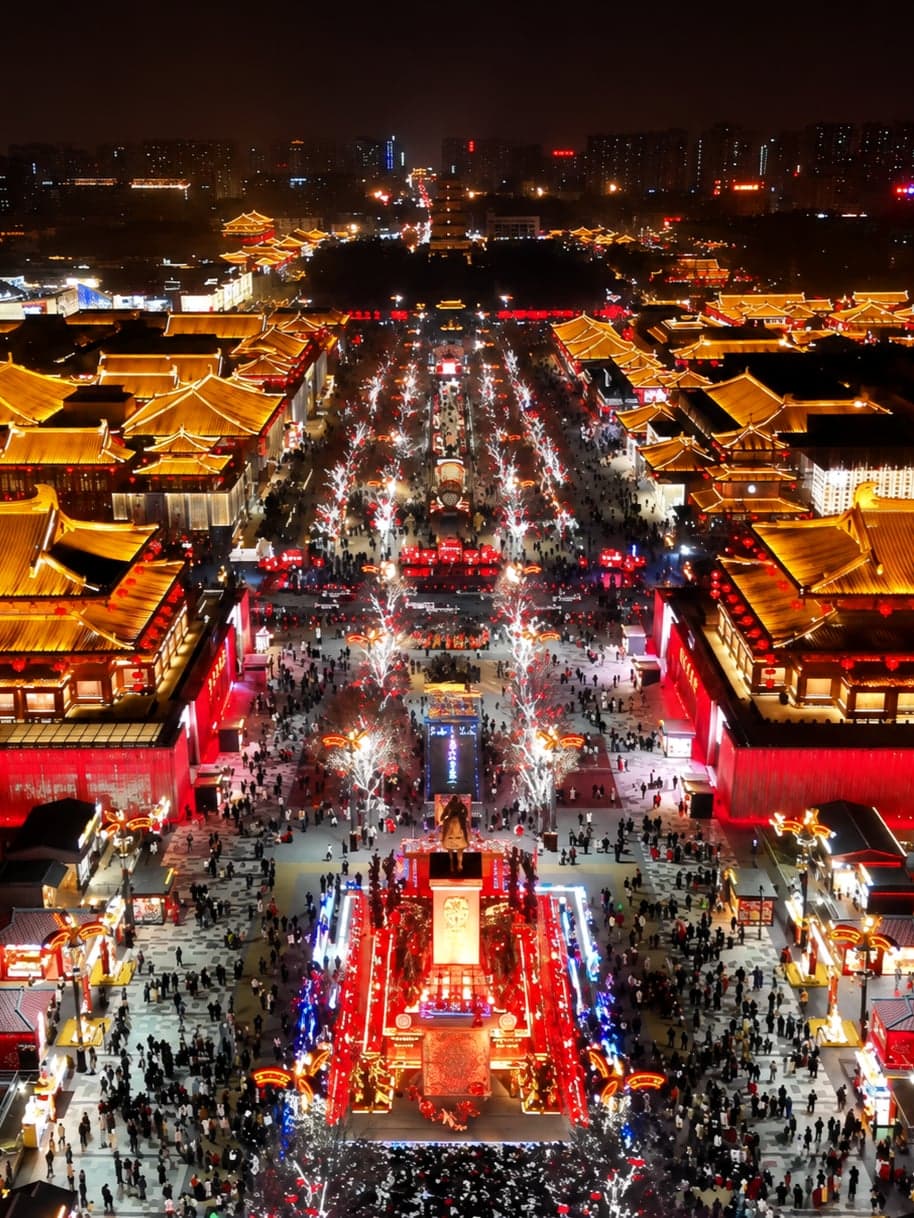
Beside the Big Wild Goose Pagoda, Tang Paradise rebuilds a Tang imperial garden as a cultural park: timber pavilions on Furong Lake, lit walkways, and live performances staged around the water after dark.
The park makes the high Tang easy to feel rather than read about.
We often place Tang Paradise as a soft, atmospheric close to a museum-and-temple day. We check the evening's performance schedule and route you to catch it, then time the rest of the visit for the quieter hours after the headline show.

Xi'an City Wall(Ming Hongwu)
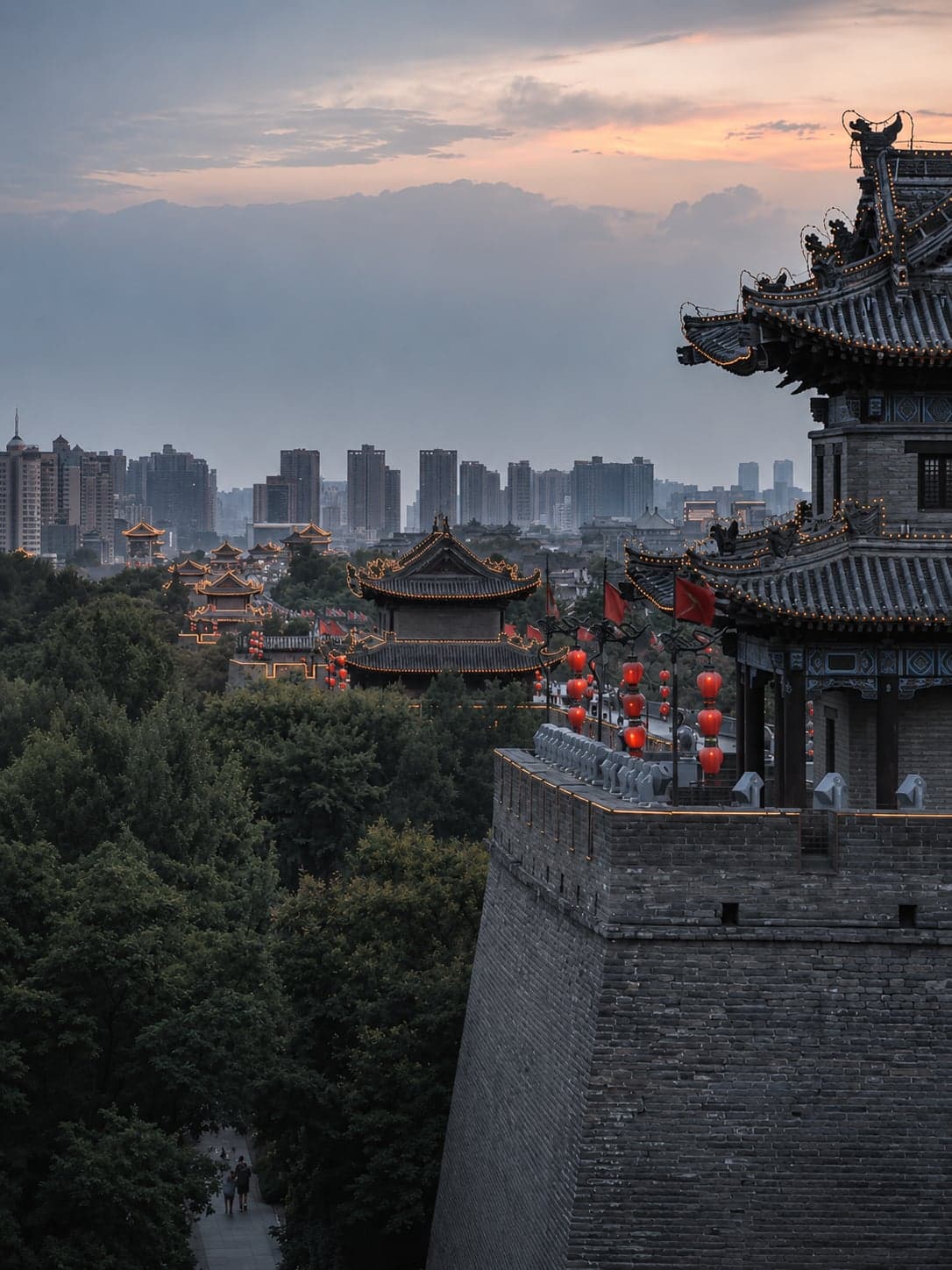
The Ming City Wall encircles Xi'an's historic heart, 13.74 kilometres of grand gates, watchtowers, moat and broad brick ramparts that have stood for over six centuries.
Up top it gives Xi'an its clearest perspective: history at eye level, modern city life moving on below.
We ride the wall when it is at its most atmospheric, either the quiet hour after opening or the golden light of late afternoon. Bicycles are arranged at the South Gate so you set your own pace. We pause near Wenchang Gate for tea and a freshly made Xi'an bun.

Forest of Stelae(the Beilin Museum)
Tucked inside the grounds of Xi'an's former Confucius Temple, the Beilin Museum holds nearly 3,000 stone steles, an archive of Chinese calligraphy, literature and history carved into rock.
The collection began in 1087, one of the longest-running of its kind in China.
Your guide walks the galleries through three threads: classical learning, cross-cultural exchange, and the evolution of Chinese calligraphy. We can add a stone-rubbing session, so you leave with a sheet of the script you have just been reading on the wall.
What to eat

Xi'an BBQ Skewers(Cumin, Chilli, Charcoal)
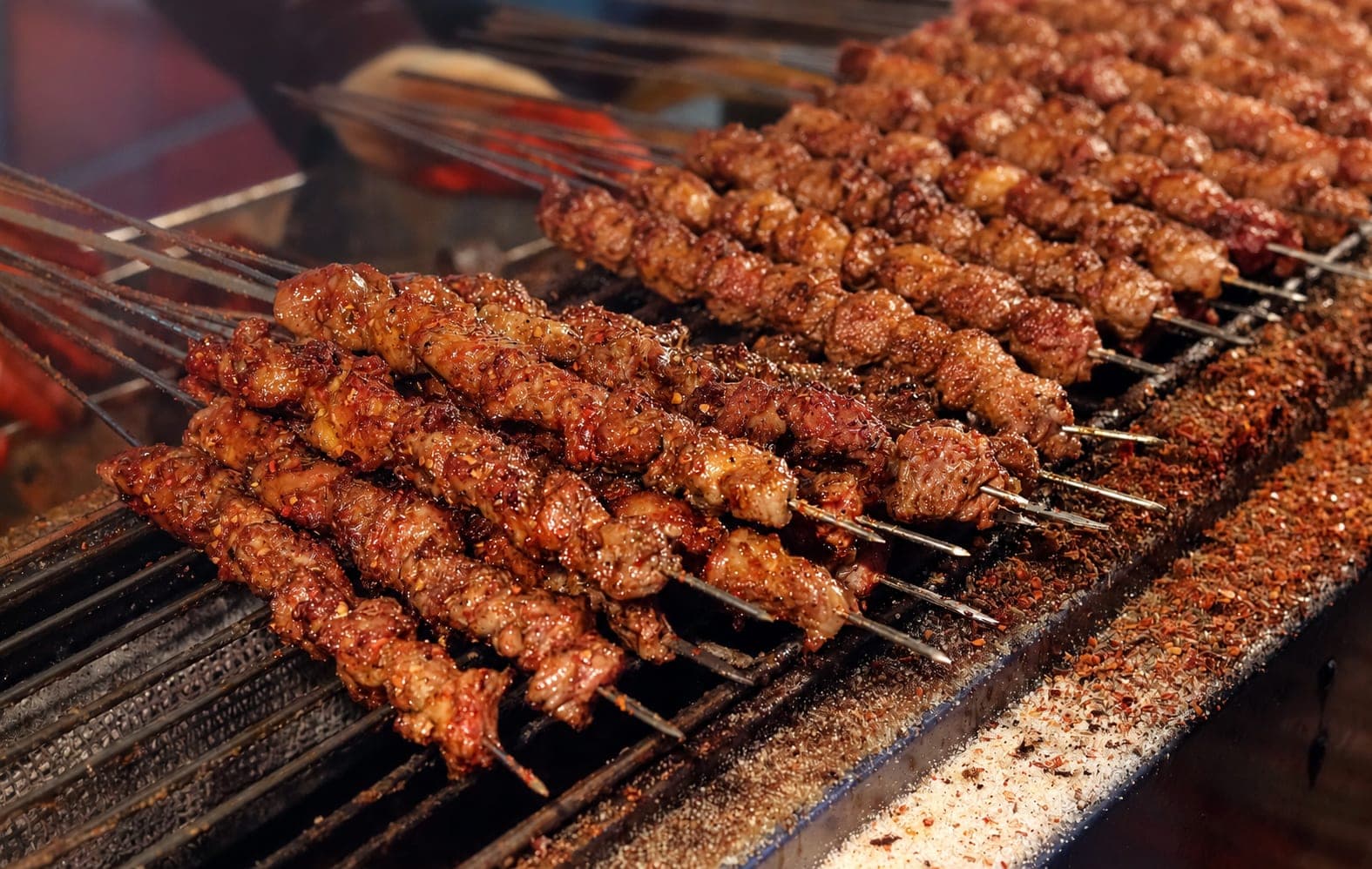
The lanes around the Drum Tower come alive each evening with the smoke of charcoal grills and the sizzle of lamb.
Hui Muslim cooks slice the meat thin, season it with salt, cumin and ground chilli, then turn it over the coals until the edges crisp. The cumin came east on the Silk Road; the flavour is unmistakably Xi'an.
We pick a trusted local favourite where charcoal grilling is still done by hand. Skewers come in small rounds so each one arrives fresh from the fire, smoky char on the edges, the spice still warm.

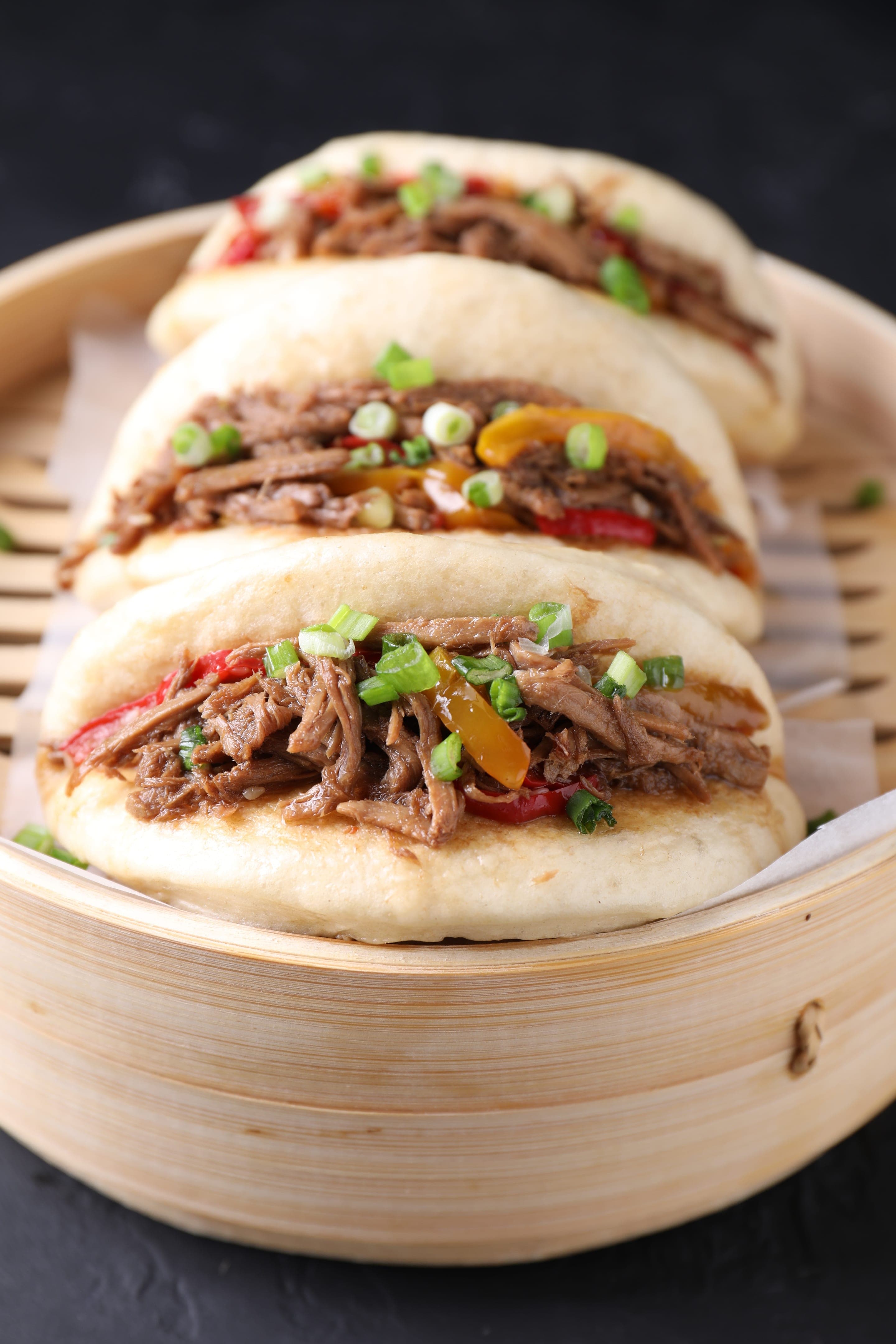
Rou jia mo(Xi'an's pulled-pork flatbread)
Often called China's hamburger, rou jia mo is the small dish Xi'an is best known for.
Pork is slow-braised for hours in a dark, fragrant master stock until it shreds at the touch of a knife, then chopped and packed into a freshly baked wheat bun pulled hot from the clay oven. The bun crackles, the meat is juicy and rich, the spice quiet but warm.
We time the stop for the busy cooking windows, when bread is coming out of the oven in batches and the meat pot is at its deepest flavour. Your guide points out the small differences in stock, seasoning and bake that separate the good stalls from the great.

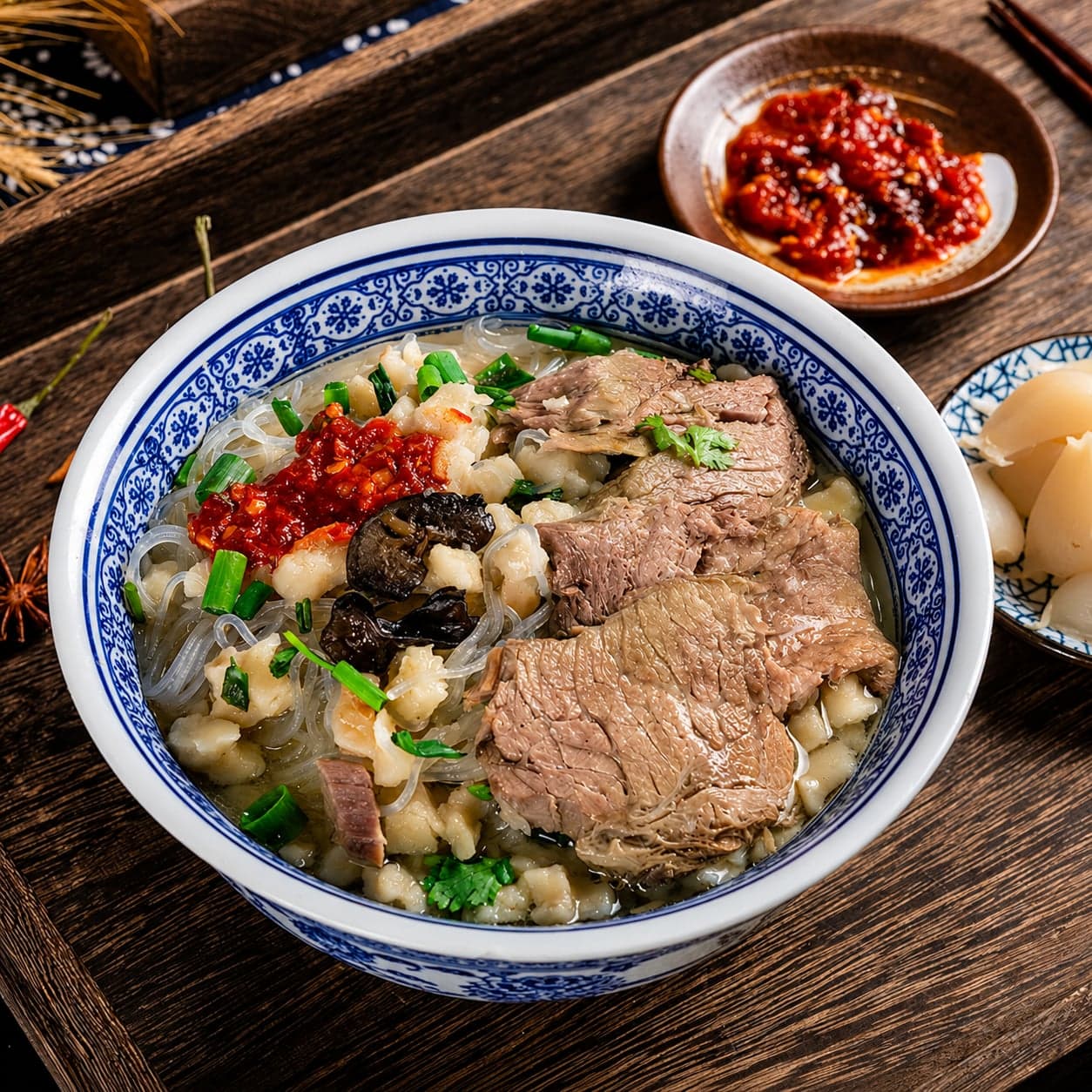
Yangrou paomo(mutton soup with hand-torn bread)
Among Xi'an's most loved dishes, yangrou paomo is the bowl that asks you to slow down.
You sit at a long table and tear a thick flatbread into chickpea-sized pieces. The kitchen pours in mutton broth that has simmered all morning with warm spices and white pepper, drops in tender lamb and glass noodles, and the bread comes back soaked through, warm and savoury.
We take you to one of the city's most respected paomo houses, where the broth and bread are still made the old way. Your guide explains the tearing technique so the pieces drink the soup properly. Plan on an hour, not twenty minutes.
Shows and experiences

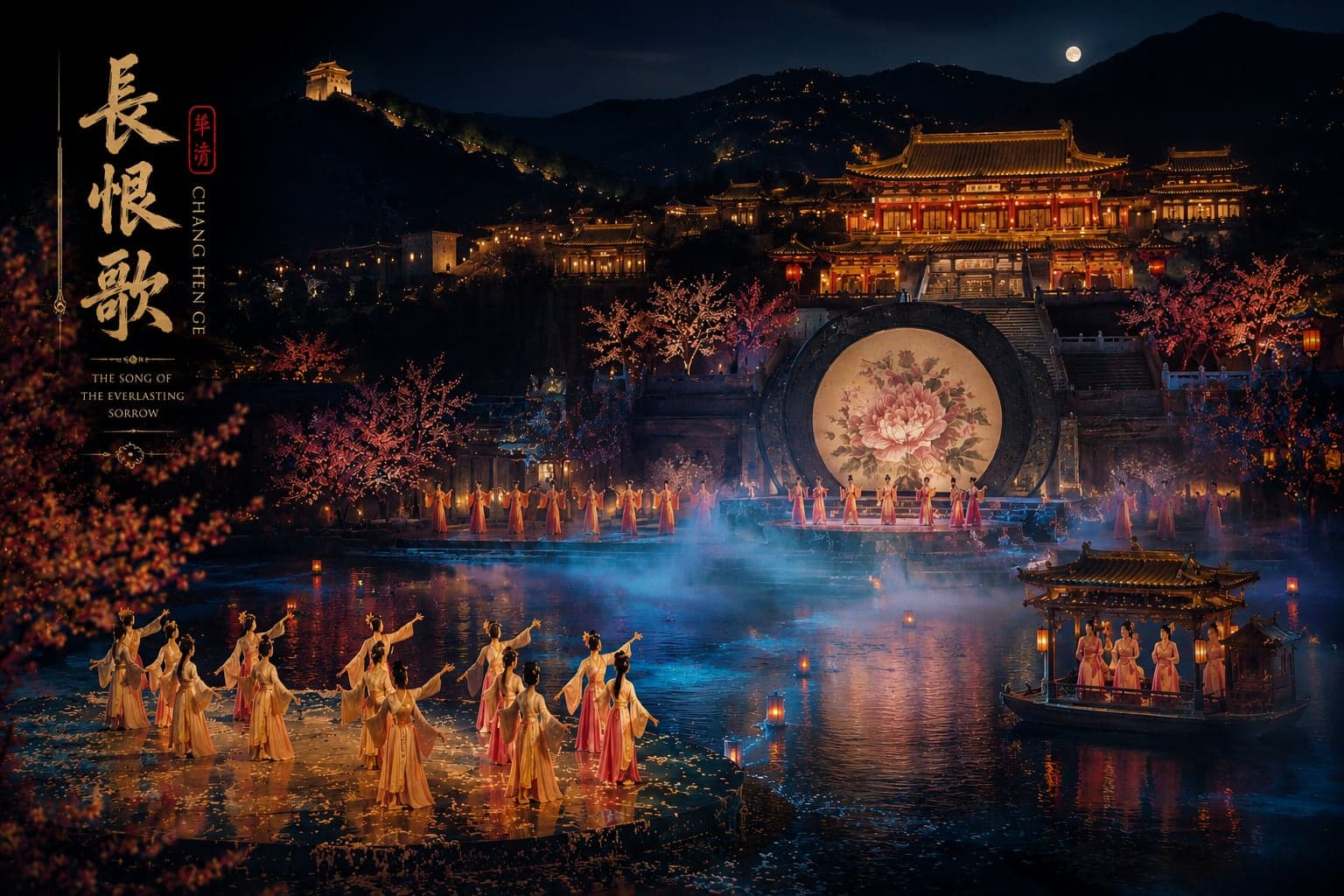
Chang Hen Ge at Huaqing(the Song of Everlasting Sorrow musical)
As night falls over Huaqing Palace, the love story of Emperor Xuanzong and Yang Guifei plays out on water in Chang Hen Ge.
The stage floats on Nine Dragon Lake, dancers move across it under lasers and lantern light, and Lishan rises lit blue behind.
We only include Chang Hen Ge when the season, weather and your evening schedule align. Seats are booked ahead, with the strongest sightlines first. Your car waits at the venue exit for a calm return.

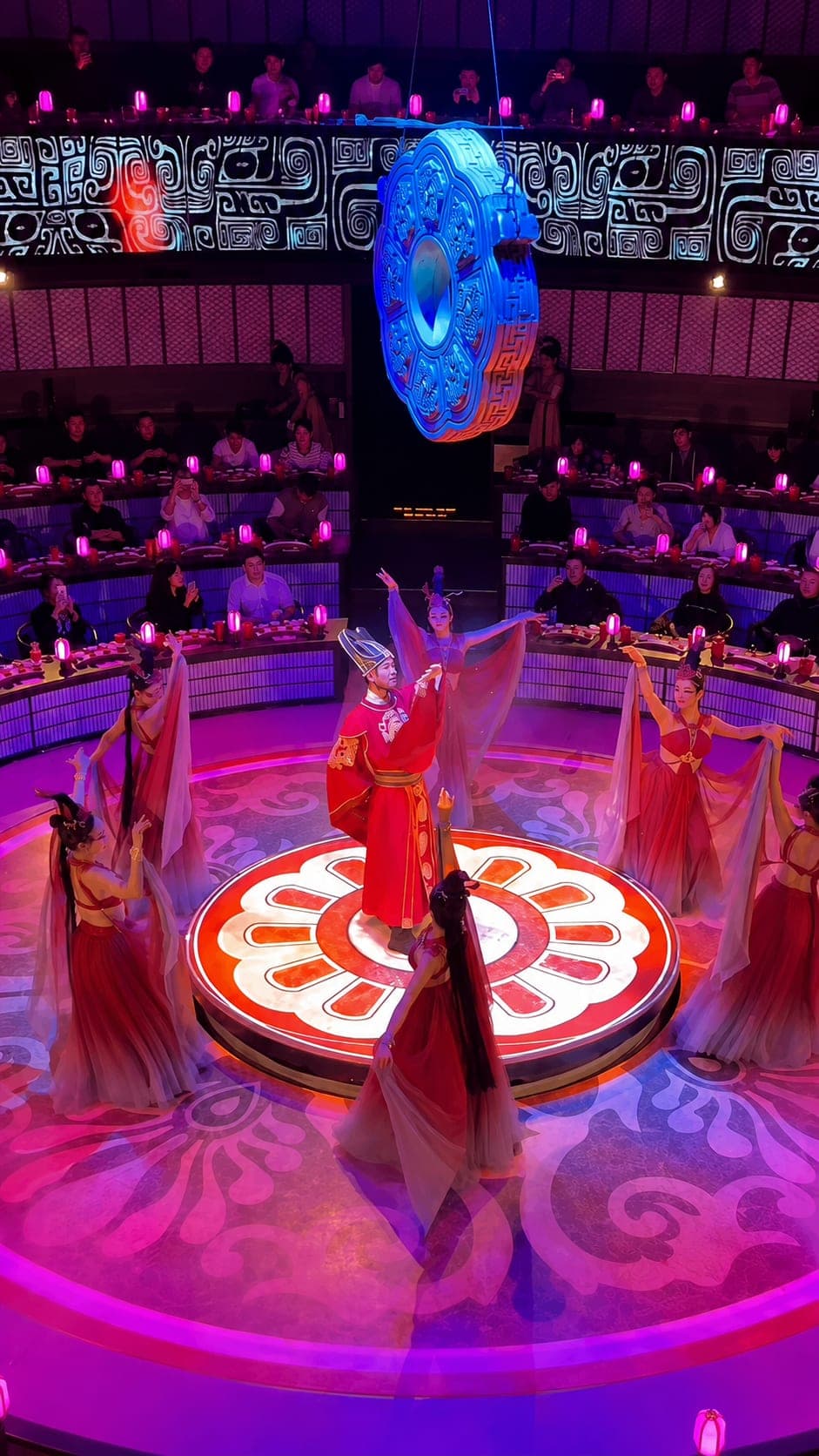
Tang Dynasty Show and Imperial Banquet(Tang Dynasty Palace, dinner-and-show)
Near the south gate of the old city, the Tang Dynasty Palace has been staging an evening of imperial banquet and court music for decades.
The kitchen draws on Tang court traditions and Shaanxi cooking for a multi-course imperial menu, with a full orchestra and dance troupe performing the music, robes and ceremonies of the Tang court.
We book the Imperial Banquet tier, not the dumpling banquet, with seating along the central aisle where the dancers pass closest. Dinner begins around six and finishes well before the curtain, so the meal is unhurried.

The Great Qin(Jiu Jiu Da Qin, immersive Qin-dynasty stage show)
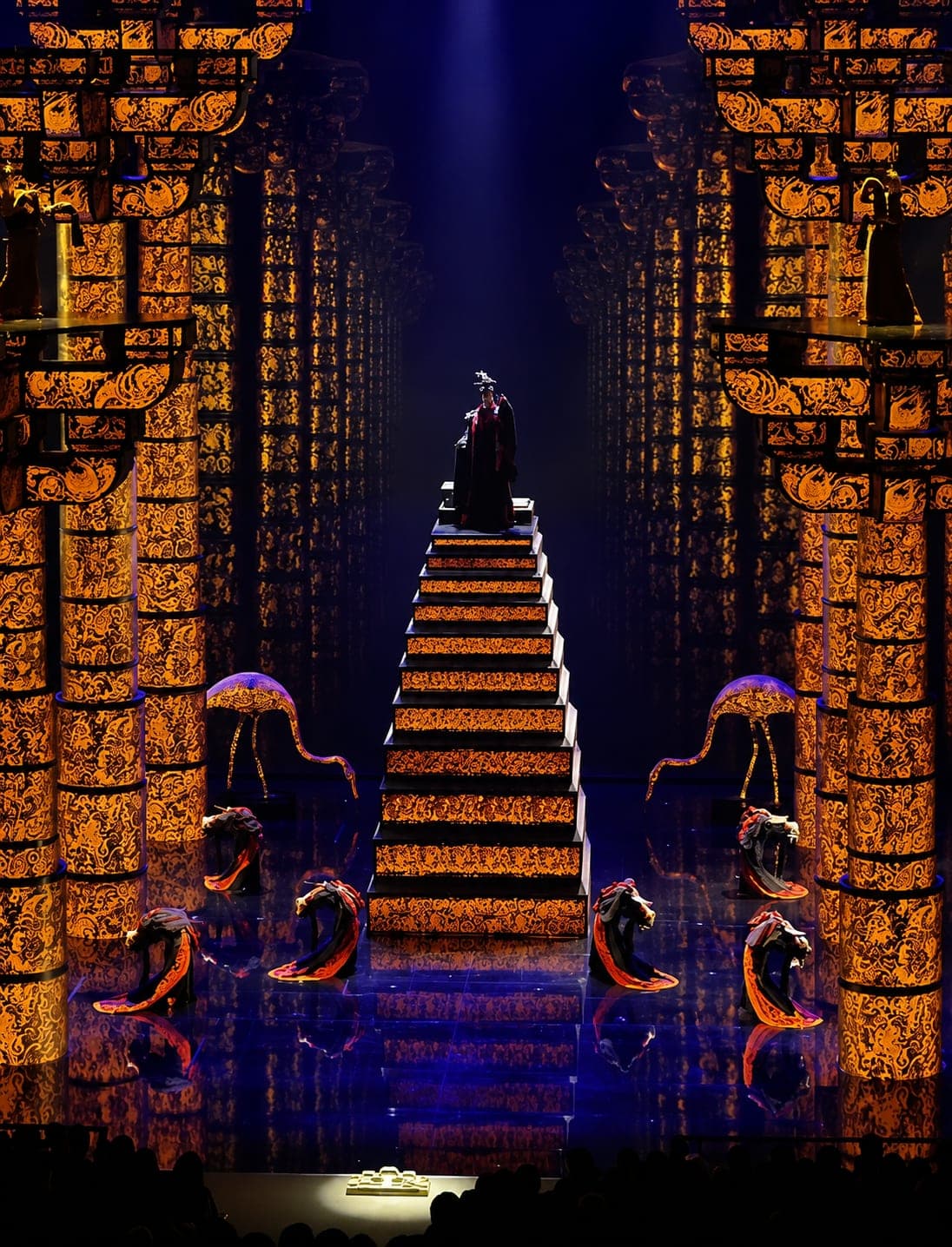
On the edge of the Epang Palace ruins west of Xi'an, a purpose-built theatre stages the Great Qin, an 80-minute moving show that retells the rise of China's first empire.
The audience rides track-mounted platforms across six scenes, told through Heifu, a real Qin soldier whose letters home survived in a tomb.
We book the higher rows along the longest sightlines, where the moving platforms cross all six transitions in clean profile. The drive from the old city takes about forty minutes, so we pair the evening with a relaxed dinner inside the wall first.
What three days
might look like.
- Day 01
Ancient wonders, unhurried discoveries.
An early start at the Terracotta Warriors allows time to explore before the crowds arrive. Discover hidden corners of the site, then return to Xi'an's old town for a leisurely lunch and a relaxed afternoon. As evening approaches, enjoy a gentle cycle along the ancient city wall, finishing with tea near Wenchang Gate as the sun sets over the city.
- Terracotta Warriors Museum
- Lesser-visited excavation pits
- Xi'an Old Town
- South Gate (Yongning Gate)
- Xi'an City Wall
- Wenchang Gate
- Day 02
Tang splendour, Silk Road flavours.
Spend the morning at Huaqing Palace, where imperial gardens and bathing pavilions recall the romance of the Tang Dynasty. Continue to the Five-Room Hall, site of the Xi'an Incident, before enjoying a quieter pace at the Big Wild Goose Pagoda. As evening falls, explore Yongxingfang with a guided tasting of Shaanxi specialties, with the option to end the day with the spectacular Chang Hen Ge performance.
- Huaqing Palace
- Five-Room Hall (Xi'an Incident Site)
- Big Wild Goose Pagoda
- Yongxingfang Food Street
- Chang Hen Ge Performance (optional)
- Day 03
Treasures, traditions, and time to wander.
Begin the day among the treasures of the Shaanxi History Museum, where centuries of Silk Road history come to life. On Mondays, when the museum is closed, the Forest of Stelae offers an equally fascinating glimpse into China's calligraphic heritage. The afternoon is yours to explore the Muslim Quarter at your own pace, wandering from bustling market streets into quieter laneways filled with local flavours. For those wishing to continue into the evening, Tang Paradise offers a colourful finale inspired by the grandeur of the Tang Dynasty.
- Shaanxi History Museum
- Hejia Village Treasure Gallery
- Forest of Stelae Museum (Monday alternative)
- Muslim Quarter
- Drum Tower District
- Tang Paradise (optional)
Best time
September to November; April to May
Days needed
3 full days; 4 with Huashan
Where it sits
After Beijing; before Shanghai
Questions worth
answering early.
Three full days is the minimum I would plan for a first Xi'an stop. One day goes to the Warriors and the City Wall. One day covers Huaqing, Big Wild Goose Pagoda and Yongxingfang. One day belongs to Shaanxi History Museum or Beilin. Add a fourth day for Huashan, a slower museum day or a softer arrival.
Hand us the dream,
We carry it through.
From your first enquiry to your last airport pickup, our specialists design your trip and stay in contact every step of the way. The guides, drivers and hotels you'll meet are part of our trusted network we've worked with for years, briefed to the same standards.
- Dedicated specialists, start to finish
- Guides briefed to our standards
- Fully transparent, no hidden costs
- No deposit until you confirm
Useful before
you enquire.

How many days in Xi'an
Three full days is the minimum that respects the city. Four buys Huashan, a slower museum day or a softer arrival.
Read this guide
How many days do you need in China
Xi'an is 2 to 3 days of the classic route. Beijing and Shanghai take the rest. How the city slots into the wider itinerary.
Read this guide
Terracotta Army tickets and early access
Timed tickets, passport details and the 08:30 first window. The practical briefing before you build the day.
Read this guide
China tourist visa for US travellers
American passports still need a tourist visa for China under current rules. How the L-visa works, what we handle as part of your booking, and what is on you.
Read this guide
Payments and connectivity in China
Set up Alipay or WeChat Pay before you fly. Cards work widely after binding, but limits and small merchants need planning.
Read this guide

Jack Guo
Senior Travel Specialist
Jack has spent ten years working with the guides, drivers and hoteliers across China. He'll be your contact from first enquiry to final airport pickup.
Tell us about your Xi'an trip
Five quick questions. We'll send you a Xi'an-anchored draft with the price within one business day. No deposit. No hard-sell.