
Guilin
karst peaks and quiet river
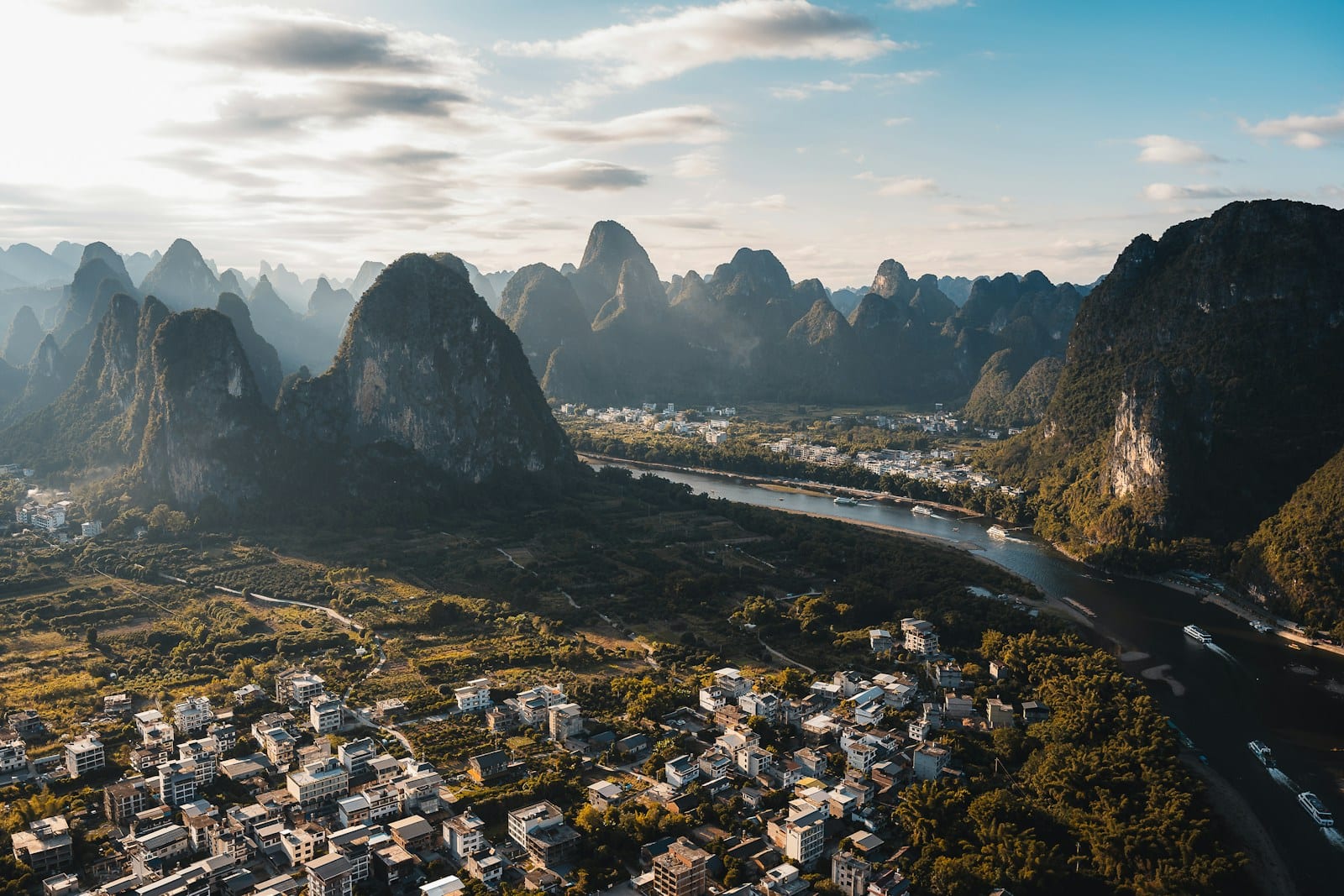
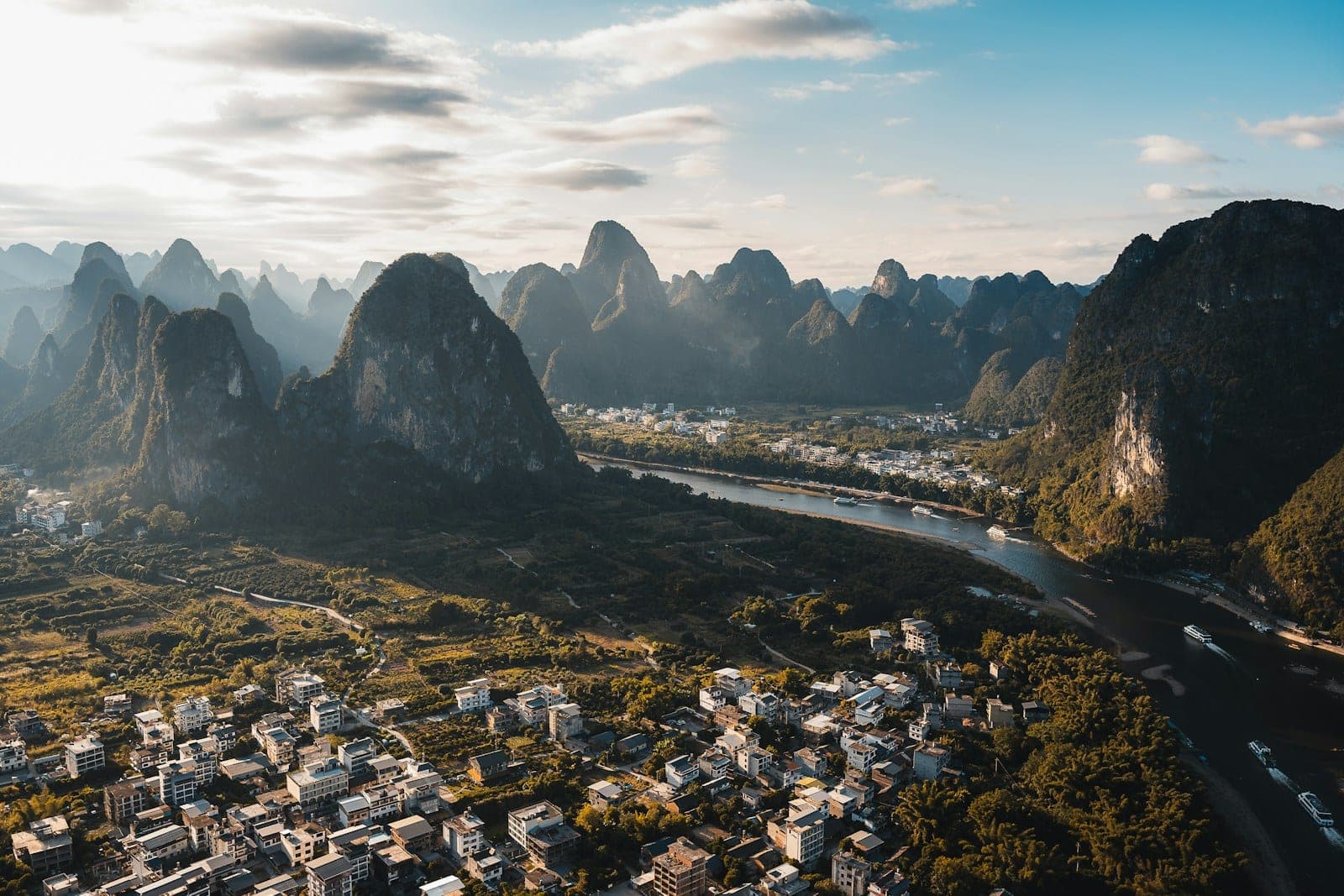
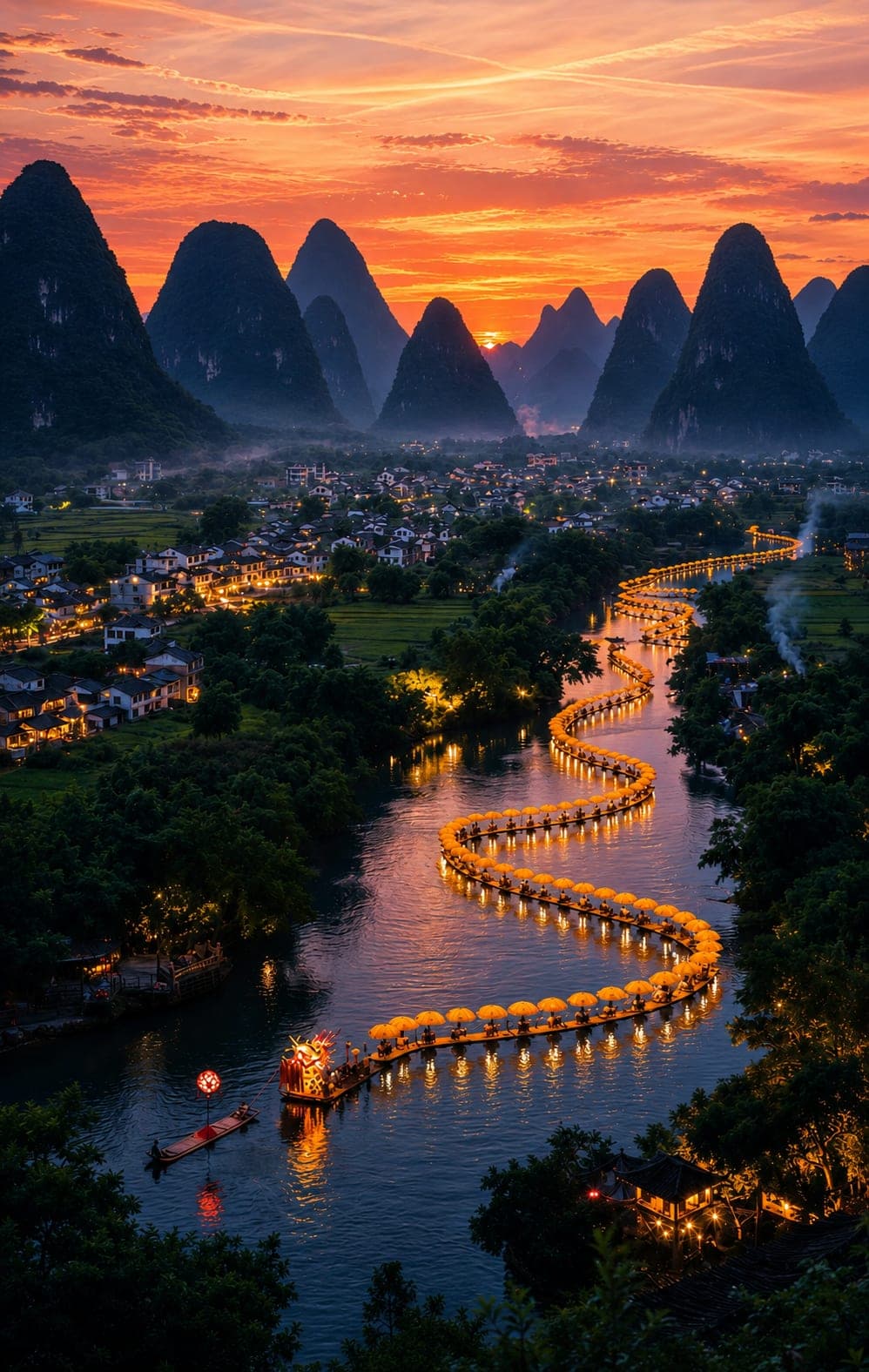
Guilin is the landscape Chinese painters have returned to for a thousand years. Along the Li River, limestone peaks rise straight from rice fields and fishing villages. North of the city, Zhuang and Yao families have farmed the Longji terraces for seven centuries.
South China,
at the pace
of the river.
What to see

Li River(Guilin to Yangshuo)
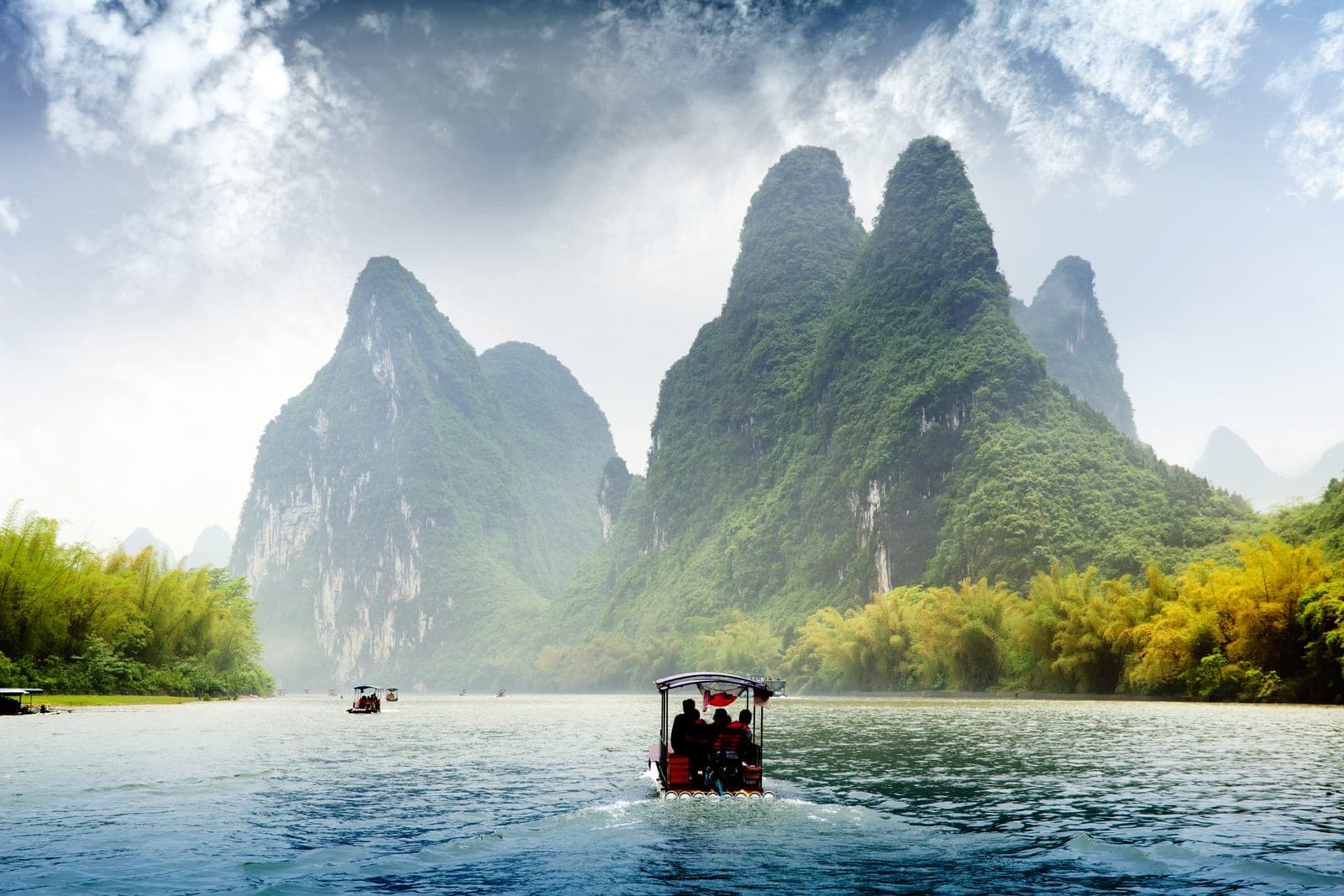
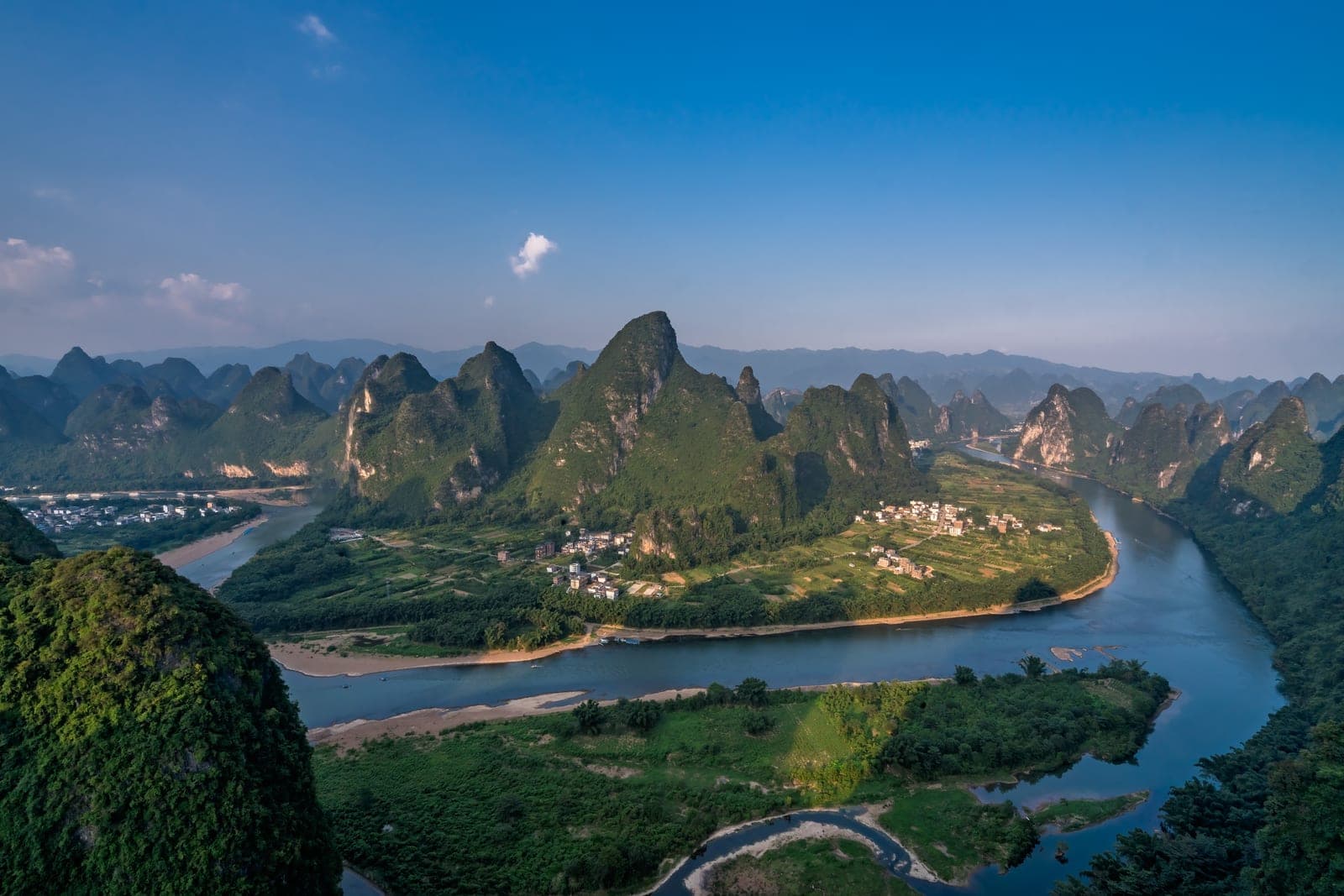
The Li River winds eighty kilometres south of Guilin between bamboo groves and limestone peaks that rise straight from the water.
The 20-yuan banknote is drawn at Yellow Cloth Shoal, halfway along. The midway landmark is Nine Horses Fresco Hill, the 400-metre cliff Chinese travellers have read as galloping horses for centuries.
We choose the boat after looking at your dates, the water level, and the public schedule that morning. On a private-vessel day, the captain is briefed by a Guilin specialist. On a public-boat day, we book the quietest cabin and add a private Yangshuo afternoon on the Yulong.

Longji rice terraces(Dragon's Backbone, Longsheng)
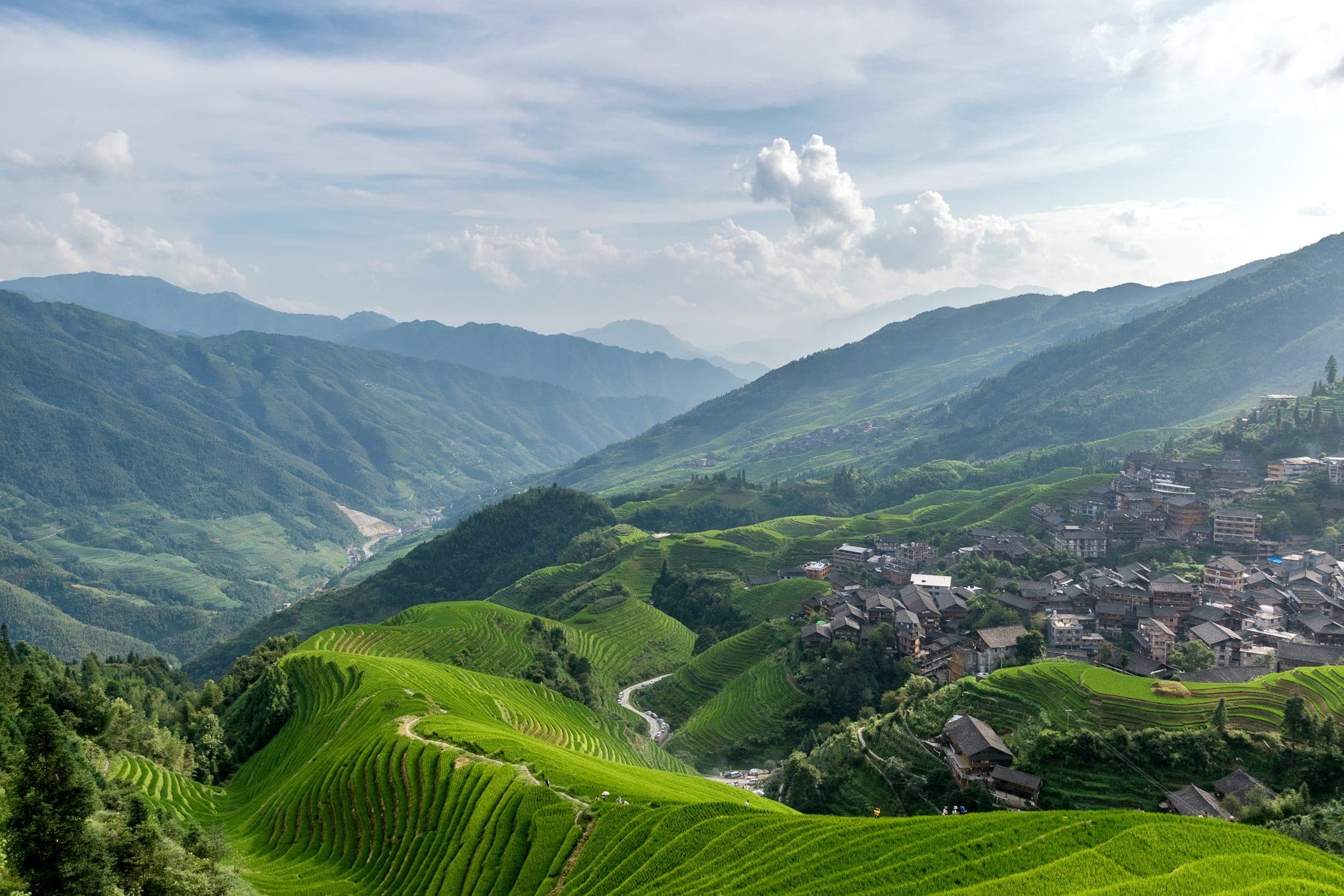
The Longji terraces are the 700-year-old hillside steps two and a half hours north of Guilin, worked by Zhuang and Yao families along the Longsheng ridges.
Spring fills them with water for planting; late September turns the rice to gold. Ping'an sits at the southern end with broader views; Jinkeng Dazhai is the longer drive and the bigger walk.
We choose the viewpoint and the village after looking at the month, the cloud cover, and how much walking your companions want. Flooded April or gold late-September leans toward Ping'an. Deeper walks head into Jinkeng Dazhai, with lunch at a Zhuang or Yao family house.

Elephant Trunk Hill(Xiangbi Shan, the symbol of Guilin)
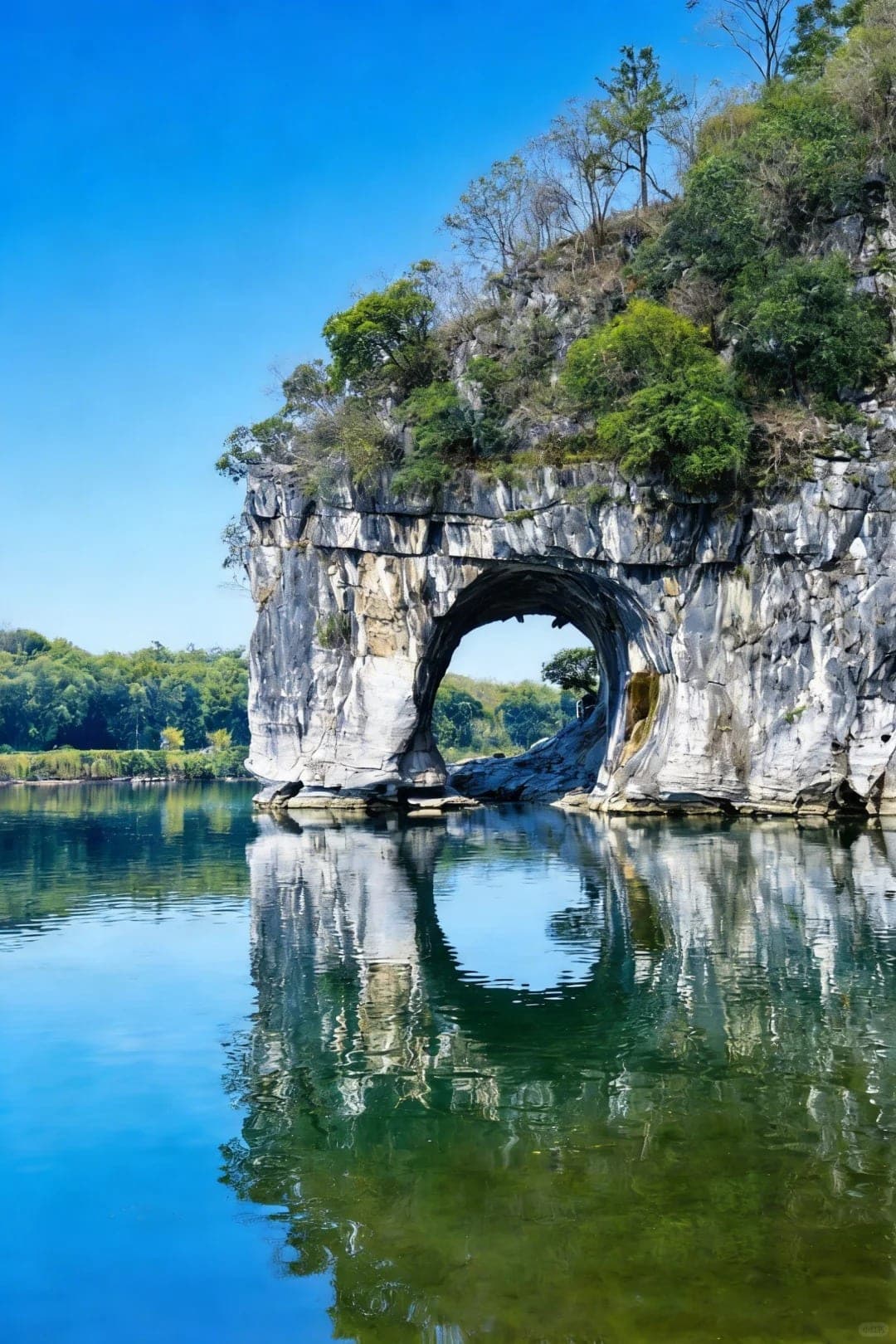
Elephant Trunk Hill is the symbol of Guilin.
The karst rises 55 metres straight from the confluence of the Li and the Peach Blossom rivers, in the shape of an elephant lowering its trunk to drink. Water Moon Cave, the semicircular tunnel between the trunk and the legs, has drawn visitors since the Tang dynasty.
We time the visit for early morning or the last hour of light, when the karst glows against the river and the camera groups have not boarded or have cleared. Your guide reads the elephant from the river bank first, then walks you up the side path to the pagoda.

Xianggong Hill(the 180-degree Li River bend, Xingping)
Xianggong Hill is the karst summit on the western bank of the Li River in Xingping, the dawn viewpoint ink painters and photographers have returned to for generations.
The river loops 180 degrees around the cliff base, the peaks behind layered in receding mist on most clear mornings. The climb runs around 20 to 30 minutes on built steps.
We set the car for a 4:30 a.m. lift from Yangshuo, thermos coffee in hand and head torches ready for the steps, so you reach the summit before the horizon turns. Your guide knows which ledge sits clear of the photo-group tripods. Breakfast waits back in town by mid-morning.

Xingping Ancient Town(265 CE, the 20-yuan banknote view)
Xingping is the river town the 20-yuan banknote was drawn at, a cluster of Ming and Qing slate roofs half an hour upstream from Yellow Cloth Shoal.
First settled in 265 during the Three Kingdoms period, it held the county seat for centuries before the line moved south to Yangshuo. The old streets still run on cobblestone.
We step ashore at Xingping pier as the cruise terminates, then walk straight into the old town before the day boats finish unloading. Your guide reads the 20-yuan view from the bank, then walks you back through the side lanes where the older families still hang fish to dry.

Sun and Moon Pagodas(Riyue Shuangta, Shanhu Lake)
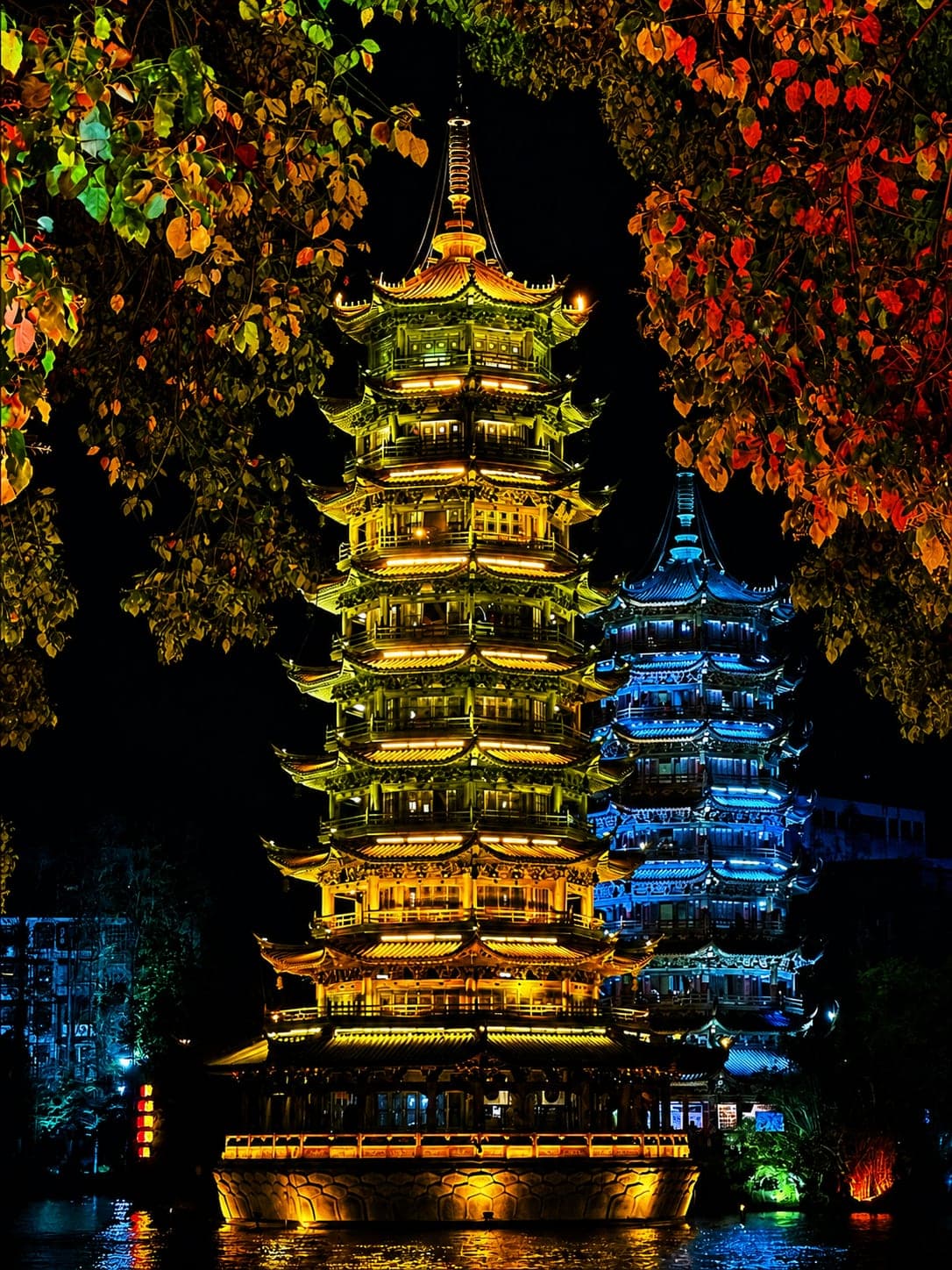
The Sun and Moon Pagodas rise from Shanhu Lake in central Guilin, a pair of waterside towers lit gold and silver after dark.
The Sun Pagoda stands 41 metres over nine bronze-cast floors. Beside it the Moon Pagoda climbs 35 metres in white marble and glazed tile. The illumination is the reason most travellers come.
We time the walk for the half-hour after the floodlights come on, when the bronze and the marble catch full colour against the dark water. Your guide knows which bank of Shanhu Lake gives the cleanest reflection on a still evening, and the car is held close to the gate.

Yangshuo West Street(Xi Jie, 590 CE, the evening hour)
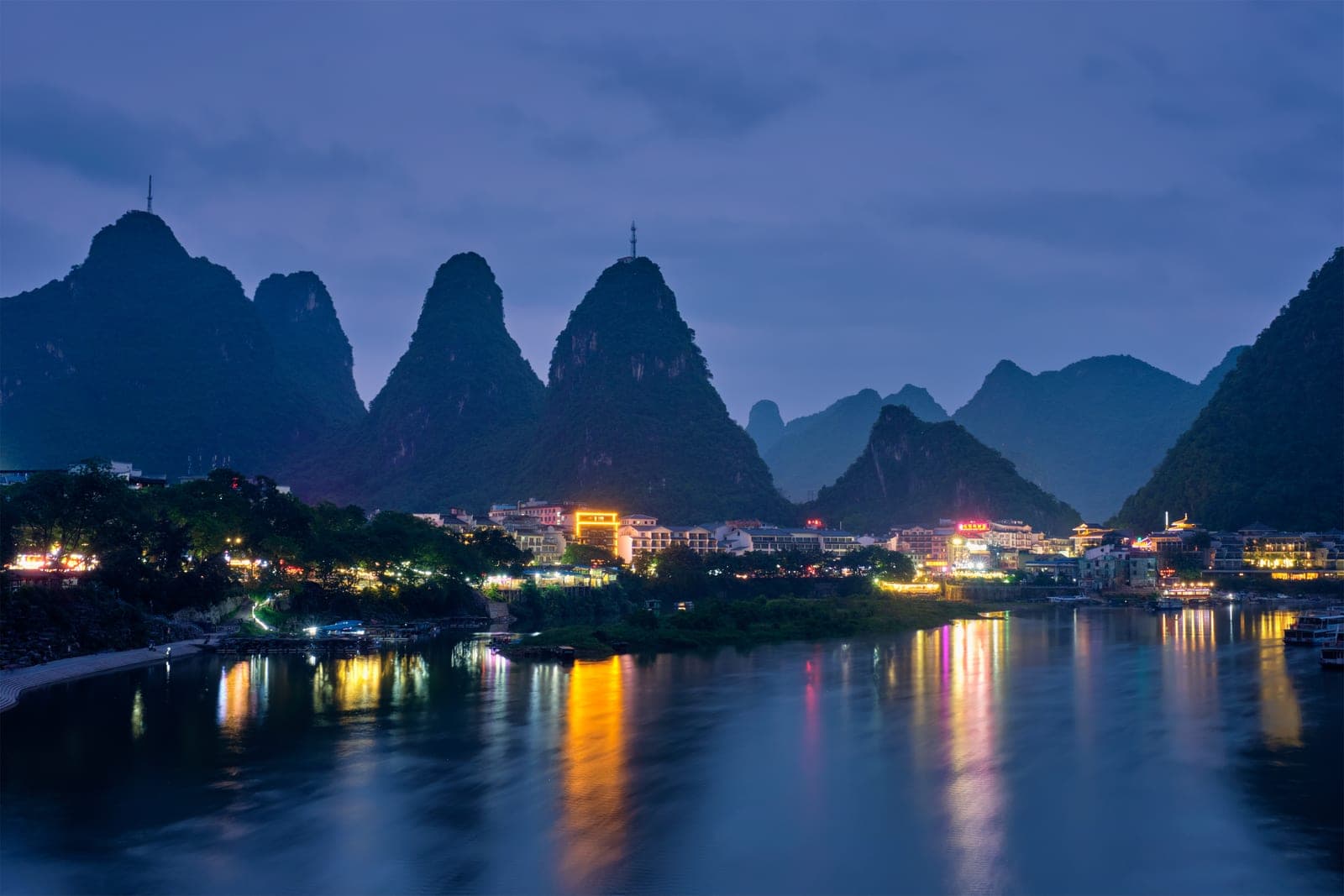
Yangshuo West Street has run through the town centre for more than 1,400 years, first laid out in the Sui dynasty around 590.
Most surviving buildings are Ming and Qing, blue-grey brick under upturned eaves, lined now with beer-fish kitchens, rice-noodle stalls, and second-floor bars. Evening is the right hour.
Your guide leads a 45-minute walk at dusk, then steps back so your companions can wander at their own pace. The beer-fish kitchen we book sits one lane back from the main stretch, where the wok is fired only after you sit down. The car waits at the north end.

East-West Alley(Dongxi Xiang, fronting the Princes' City)
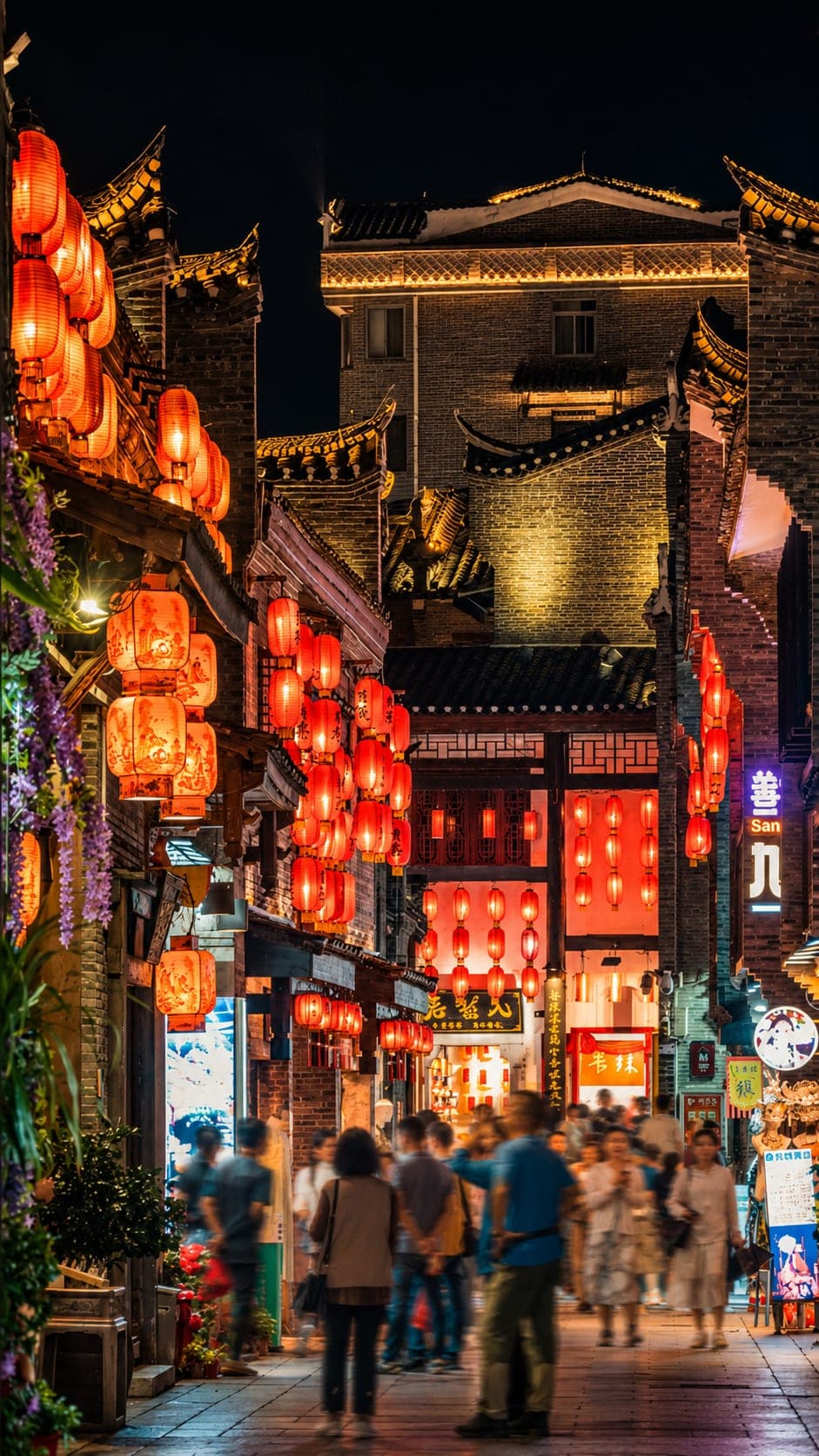
East-West Alley sits at the heart of Guilin's old town, three restored lanes that line the front of Jingjiang Princes' City.
First laid out in the Tang dynasty, restored and reopened in June 2016, the architecture is set to late-Qing and early-Republic timber and grey brick. The lanes carry Guangxi snack stalls, century-old shop signs, and quieter teahouses upstairs.
We pair the visit with Jingjiang Princes' City next door, walking through the Ming compound first and stepping out the front gate into the alley's morning quiet. The history and the restored streetscape read as one continuous walk, and the snack stalls catch you before the lunchtime queue.

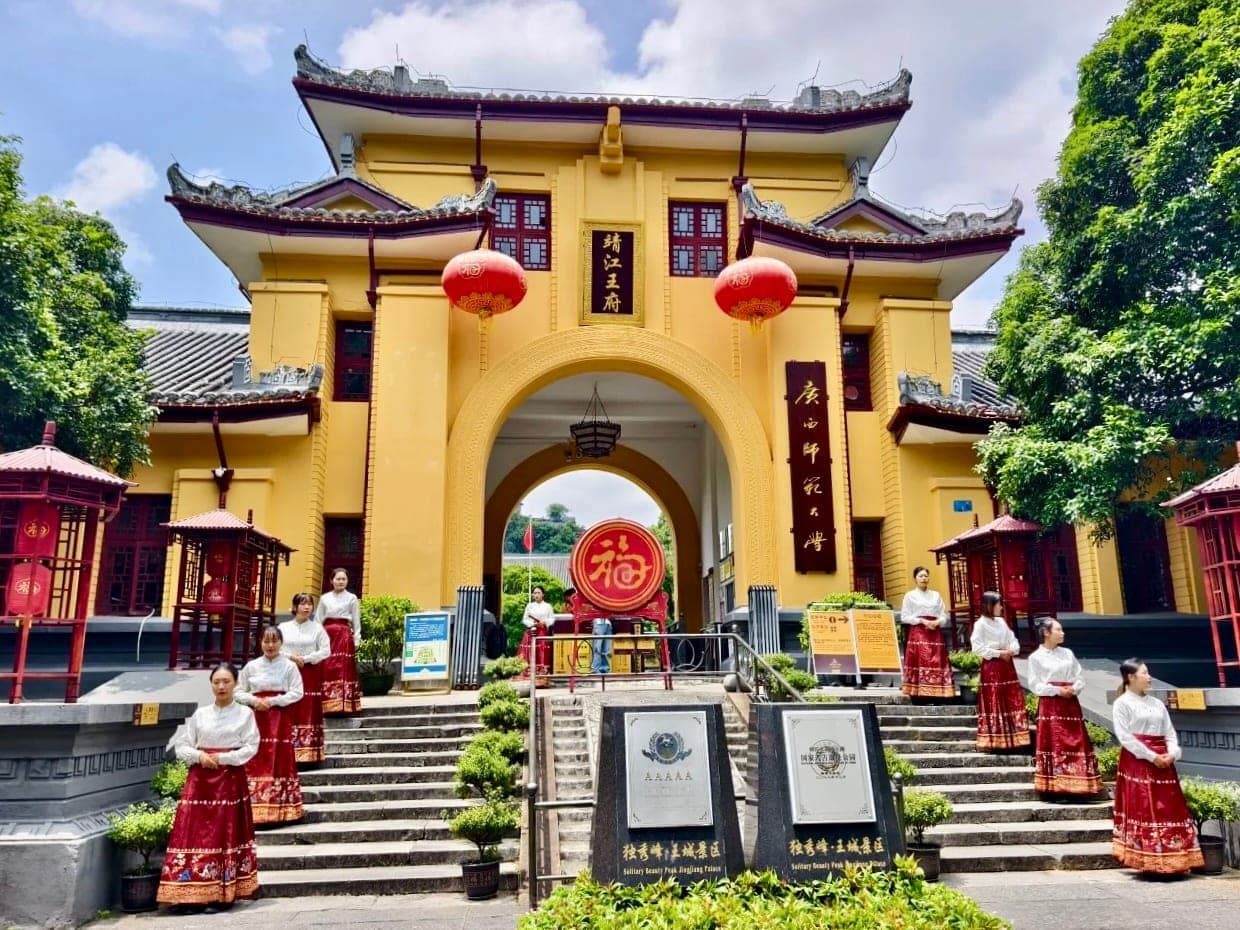
Jingjiang Princes' City(1372, Solitary Beauty Peak)
Jingjiang Princes' City has stood at the centre of Guilin's old town since 1372, built by the Ming court for the Hongwu Emperor's grandnephew.
Original walls and gates still circle the compound; inside, the prince's hall and a Qing examination room. A lone karst peak rises behind, the Southern Song line carved at its foot: 'Guilin's mountains and waters are the finest under heaven.'
We time the visit for early morning, before the school groups arrive and before the climb up the peak gets warm. Your guide reads the inscription with you at the foot of the cliff, walks you through Reading Cave and up to the summit pavilion.
What to eat

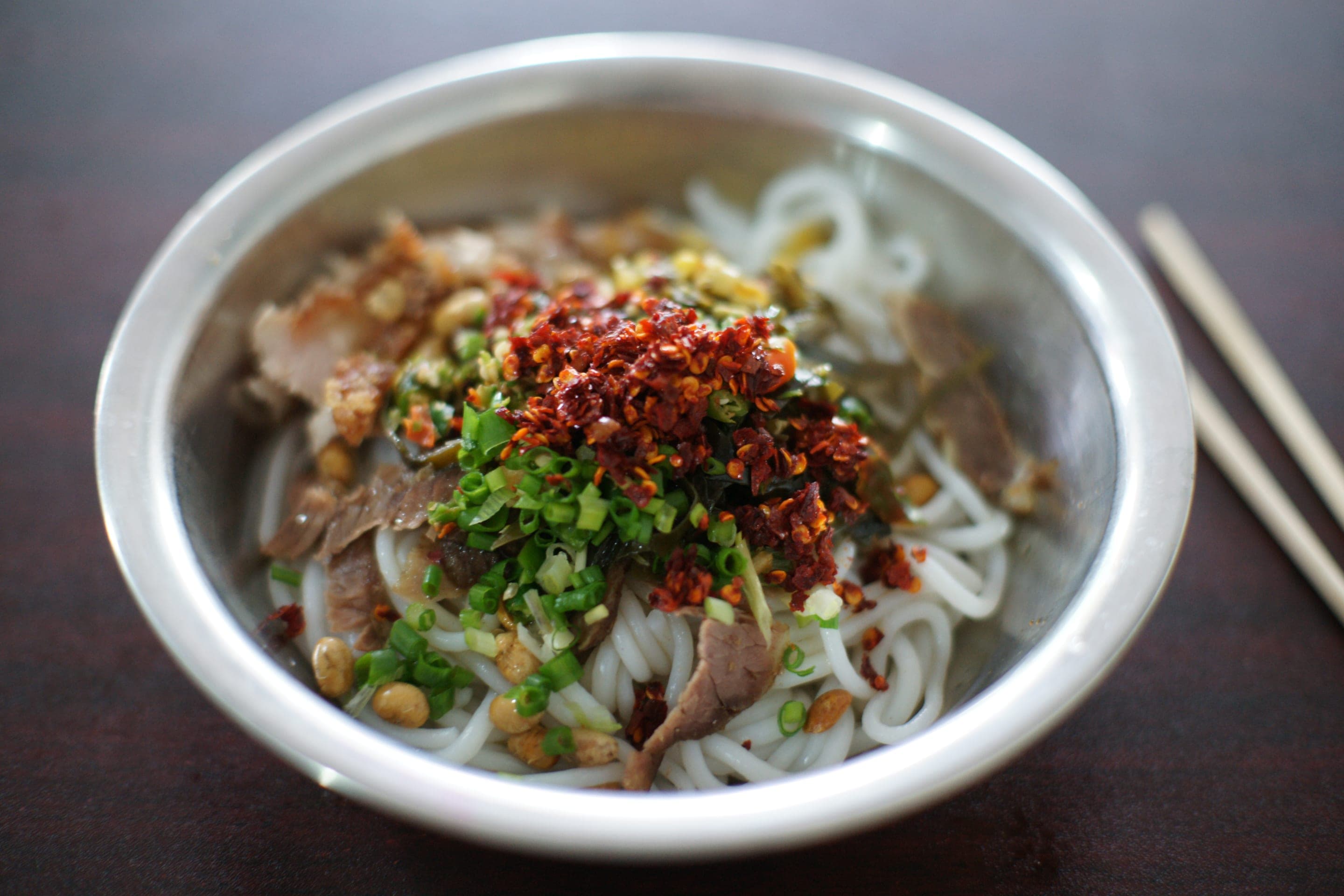
Guilin rice noodles(mifen, the breakfast bowl)
Guilin rice noodles are the bowl this city wakes up to.
The bowl arrives dry: round noodles topped with cured horsemeat, slow-cooked beef shin or roast pork, then peanuts, sour bamboo, pickled long beans, fresh coriander, and chilli oil. You pour the slow-simmered master stock over the lot. Warm and savoury, faintly sweet from the bones, with crunch from the peanuts and sour bite cutting through the chilli.
Breakfast is set at the stall the guide rates highest, with the order placed in rounds so your companions can try each topping side by side. Skipping the hotel buffet means walking into a city already awake, at a counter where regulars are known by name.

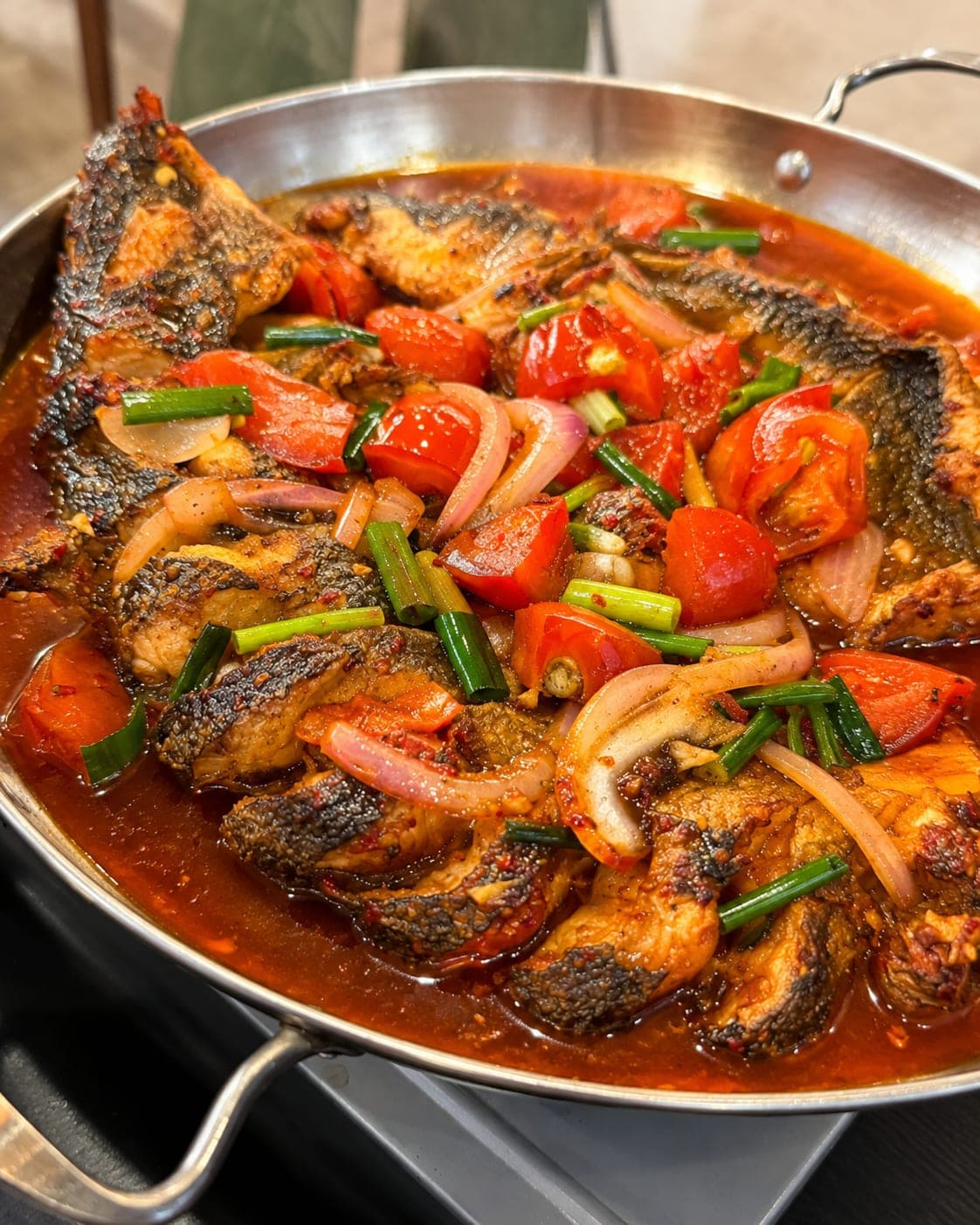
Yangshuo beer fish(Pijiu yu, Li River carp in beer)
Yangshuo beer fish, or pijiu yu, is the signature dish of the southern Li River.
A whole river carp is pan-seared, then braised in a wok with Liquan beer, red chilli, ginger, garlic, and spring onion. The flesh stays tender, the skin crisps, the broth turns malt-sweet from the beer and sharp with chilli. The dish started in West Street kitchens in the early 1980s.
Dinner is set at a riverside kitchen the guide books after seeing the day's catch and the table size, so the fish hits the pan after you sit down. The wok arrives still hissing, the broth bright with chilli, the kind of finish a coach-load kitchen cannot hold.

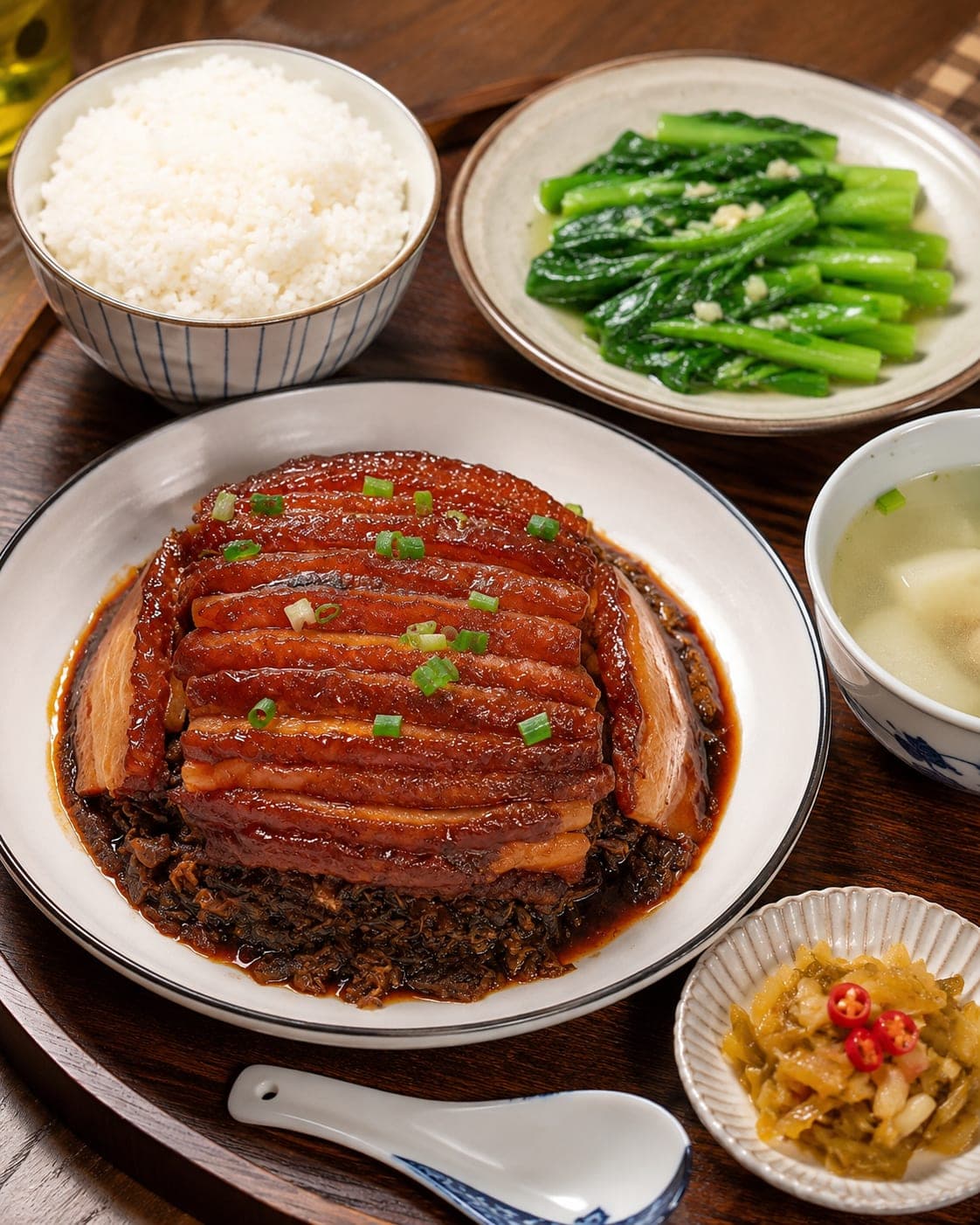
Lipu taro pork(yutou kourou, the banquet table)
Lipu taro pork is the dish Guilin lays on the table for a banquet.
Slices of slow-braised pork belly are layered with Lipu taro, a tribute-grade variety the Qing court took from Lipu County, then steamed for an hour. The taro turns deep purple, soft and starchy, faintly sweet. The pork belly stays glossy and rich, the skin crisp at the edges under a dark soy glaze.
Dinner is booked at the Guilin kitchen the guide rates highest for the taro, with the dish ordered at the start of the meal so the full hour of steaming runs while the table moves through the lighter courses. The first slice arrives still hissing under its glaze.
Shows and experiences

Impression Liu Sanjie(Zhang Yimou's outdoor show)
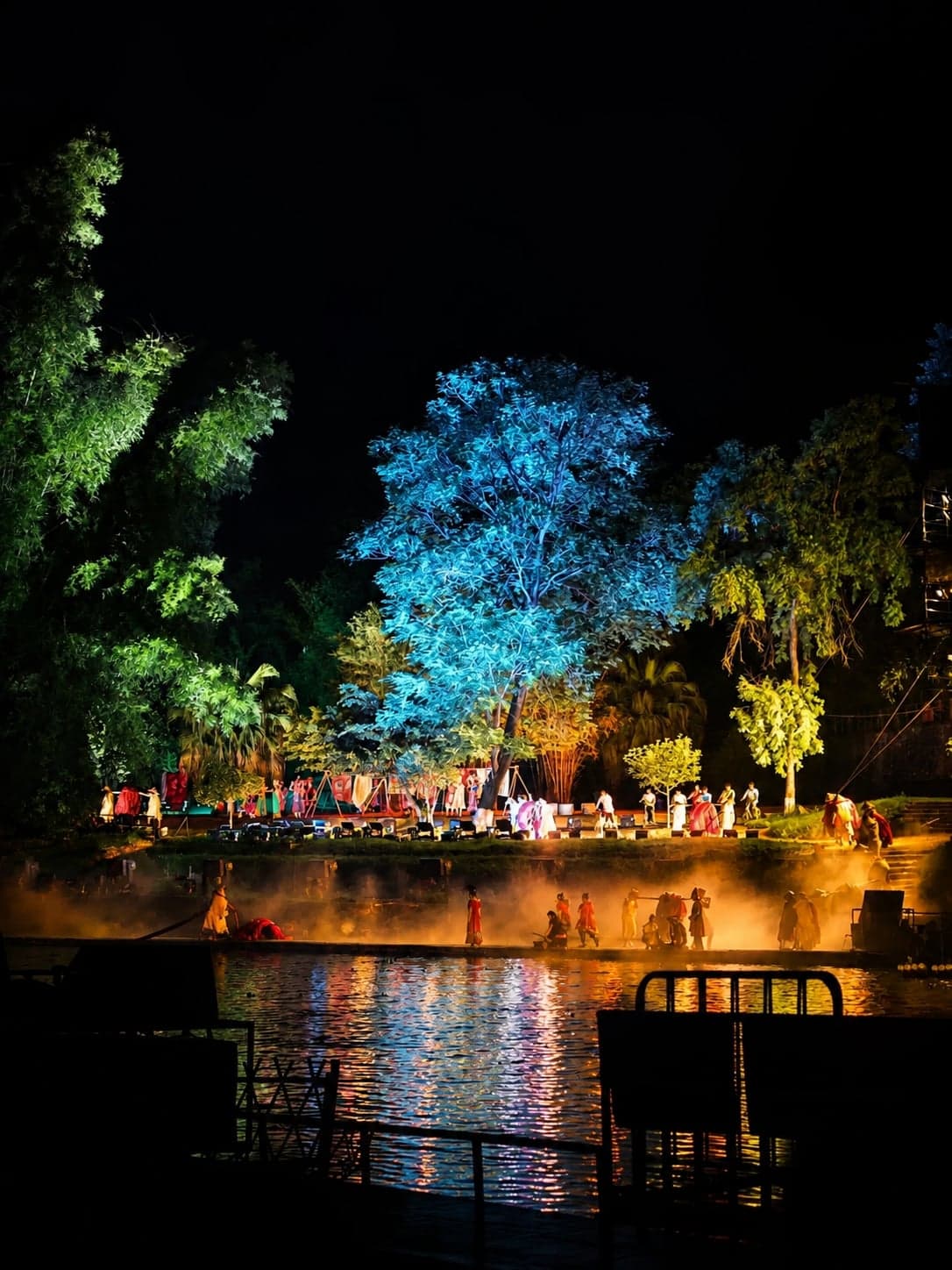
Impression Liu Sanjie is the outdoor evening show staged on the Li River below Yangshuo.
Zhang Yimou directed the 2004 premiere, with the river itself as the stage and the karst peaks behind. Around 600 performers work the water, most of them local farmers, fishermen, and Yao and Zhuang villagers. The show runs 70 minutes.
We book mid-tier seats far enough back to read the full water stage, with a private car held near the exit so the ride back skips the post-curtain queue. A thin layer is worth packing; the riverside cools quickly once the sun has gone.

Hot air balloon at dawn(Yangshuo karst from above)
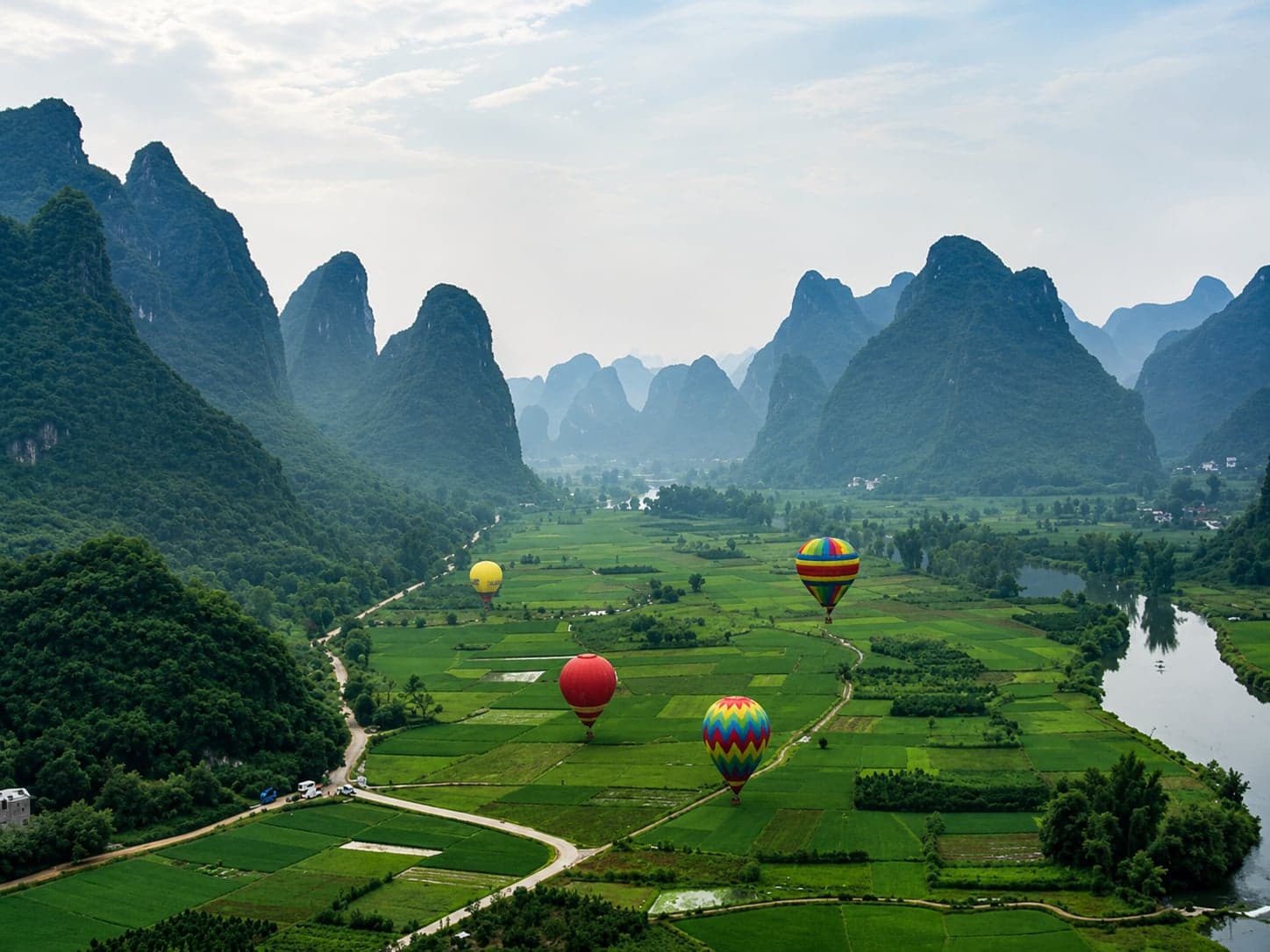
A Yangshuo dawn balloon flight is an hour over the karst peaks at sunrise.
The burner fires, the basket rises, and the route drifts above mandarin orchards, the Yulong's meanders, and the peaks of the Ten-Mile Gallery. Landings sit in the rice fields north of Moon Hill.
We book a private basket and a pre-dawn lift from Yangshuo, with hotel coffee and a breakfast hamper at the landing field. Weather rules the morning; if winds cancel, we hold the next clear dawn as a backup, or the day pivots to the Yulong instead.

Yulong River bamboo raft(the quieter tributary, west of Yangshuo)
The Yulong is the quieter tributary west of Yangshuo, parallel to the Li, closed to power vessels.
Bamboo rafts drift sections of the 43-kilometre river at the pace of the current, past stone bridges and karst peaks reflected in slow water. The Ming-era Fuli Bridge anchors the upstream end; the Jinlong-to-Jiuxian section runs 9.5 kilometres past 28 small dams.
We choose the raft section after looking at your appetite for a longer drift, the river flow that morning, and how busy the public landings are. Fuli-to-Gongnong starts early so the light still sits on the bridge stones. On a busier day, the Jinlong-to-Jiuxian section runs better.
Three days,
built around
the river.
- Day 01
River pace, peak by peak.
An early start at the Guilin pier puts you on the water before the public lanes fill. Drift south through the limestone peaks for the morning, the Nine Horses cliff at midway and lunch on board as the channel narrows toward Yangshuo. Step ashore at Xingping pier and walk the slate-roofed lanes the 20-yuan note was drawn at, then on into the Yangshuo countryside. As evening falls, the lanterns come up along West Street, the 1,400-year pedestrian lane still serving the town's beer-fish kitchens.
- Li River cruise (Guilin to Yangshuo)
- Nine Horses Fresco Hill
- Xingping Ancient Town
- Yangshuo countryside afternoon
- Yangshuo West Street
- Beer-fish kitchen dinner
- Day 02
Country lanes, river under stars.
Begin before dawn with a quiet climb up Xianggong Hill for the morning over the Li's most-photographed bend. After breakfast, set out by bicycle along the Ten-Mile Gallery toward Moon Hill, with karst peaks both sides and a support van behind for the climbs. Lunch is taken in a village kitchen on the return leg. The afternoon drifts down the Yulong on a bamboo raft past the Ming-era Fuli Bridge. As night falls, the river itself becomes the stage at Impression Liu Sanjie.
- Xianggong Hill sunrise
- Ten-Mile Gallery cycle
- Moon Hill viewpoint
- Yulong River bamboo raft
- Fuli Bridge
- Impression Liu Sanjie (evening show)
- Day 03
Higher ground, season willing.
A morning drive north into the mountains of Longsheng County, about two and a half hours from Guilin. Spring fills the slopes with water for planting; late September turns the rice to gold; even in winter, the dry-stone walls and the cloud-line above the ridge hold their own. Your guide picks the village by the month, between Ping'an's broader ridges and the deeper walks of Jinkeng Dazhai, with a long lunch in a Zhuang or Yao family house that has worked these slopes for generations. The afternoon belongs to the terrace paths, the light, and the cloud, before the drive back to Guilin or onward to your next stop in China.
- Longji rice terraces
- Ping'an village (broader ridges)
- Jinkeng Dazhai (deeper ridge walks)
- Zhuang or Yao family lunch
- Terrace ridge paths
Best time
September to November; April to May
Days needed
3 days; 2 if you skip Longji
Where it sits
South-China leg; pairs with Shanghai or Chengdu
Questions worth
answering early.
Three days is the clean version. One day for the Li River down to Yangshuo, ending on West Street. One day for the Yangshuo countryside, with a Xianggong dawn, the Ten-Mile Gallery cycle, the Yulong bamboo raft, and Impression Liu Sanjie. One day for Longji when the terraces are in season. Two days works if you skip Longji. Four days gives room for a slower Longji walk or a Guilin city day for Elephant Trunk Hill, the Sun and Moon Pagodas, and East-West Alley.
Hand us the dream,
We carry it through.
From your first enquiry to your last airport pickup, our specialists design your trip and stay in contact every step of the way. The guides, drivers and hotels you'll meet are part of our trusted network we've worked with for years, briefed to the same standards.
- Dedicated specialists, start to finish
- Guides briefed to our standards
- Fully transparent, no hidden costs
- No deposit until you confirm
Stretch the trip. Stitch in another.

Shanghai
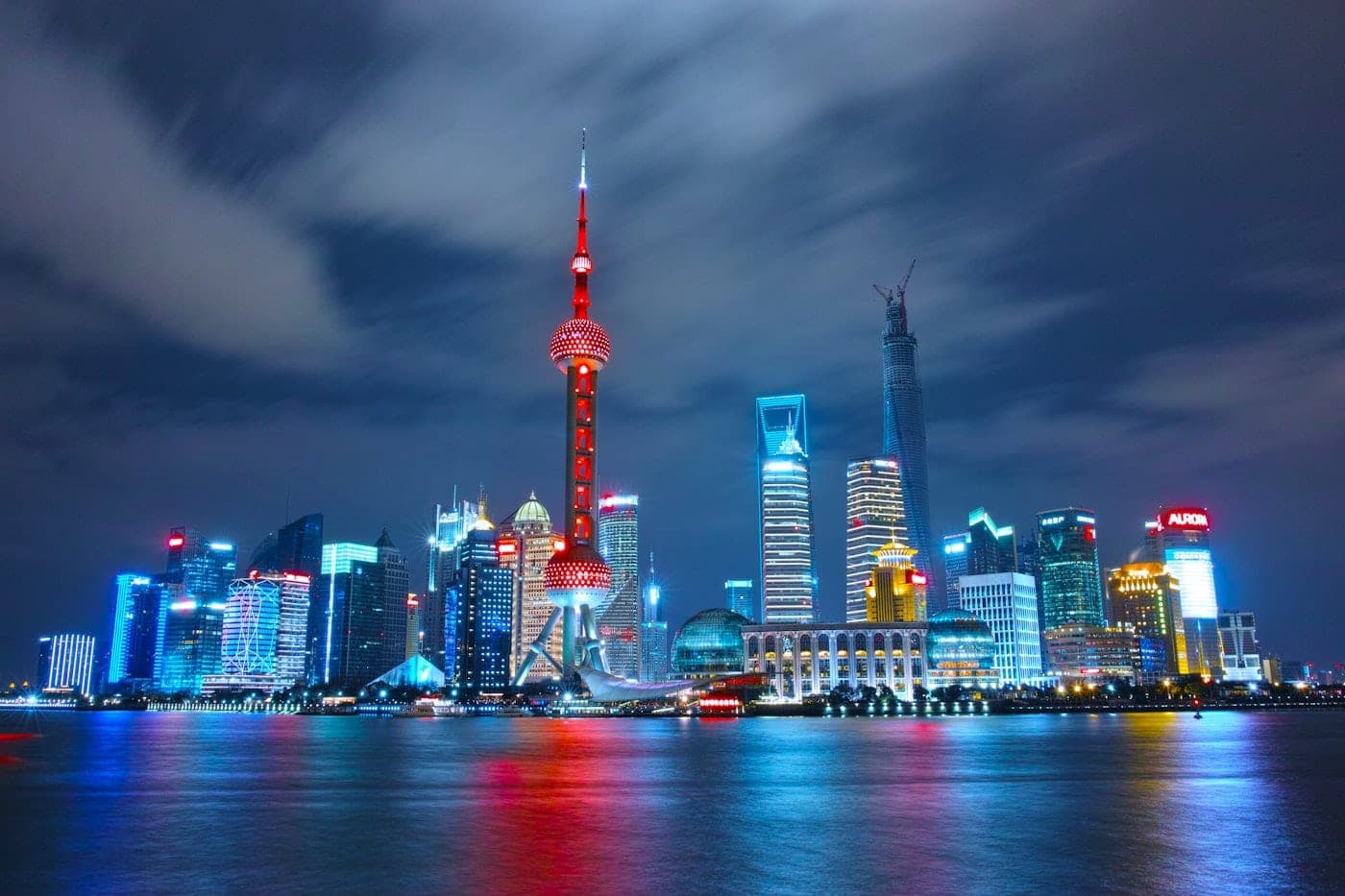
The cleanest contrast. Shanghai for the modern arrival, Guilin for the river country to the south.
Read this destination
Chengdu
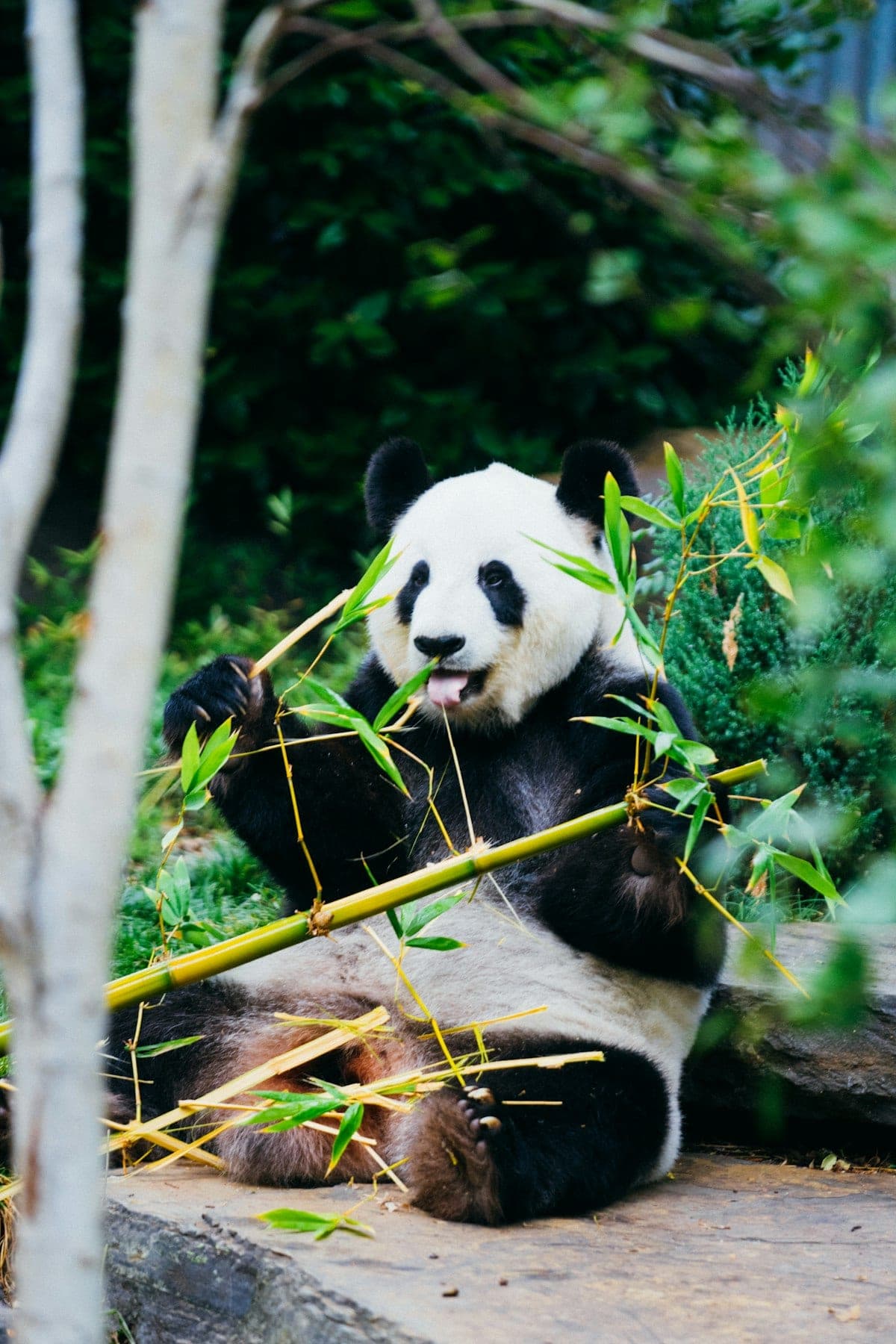
Tea houses, pandas, and Sichuan kitchens, then the quieter river line through Yangshuo.
Read this destination
Xi'an
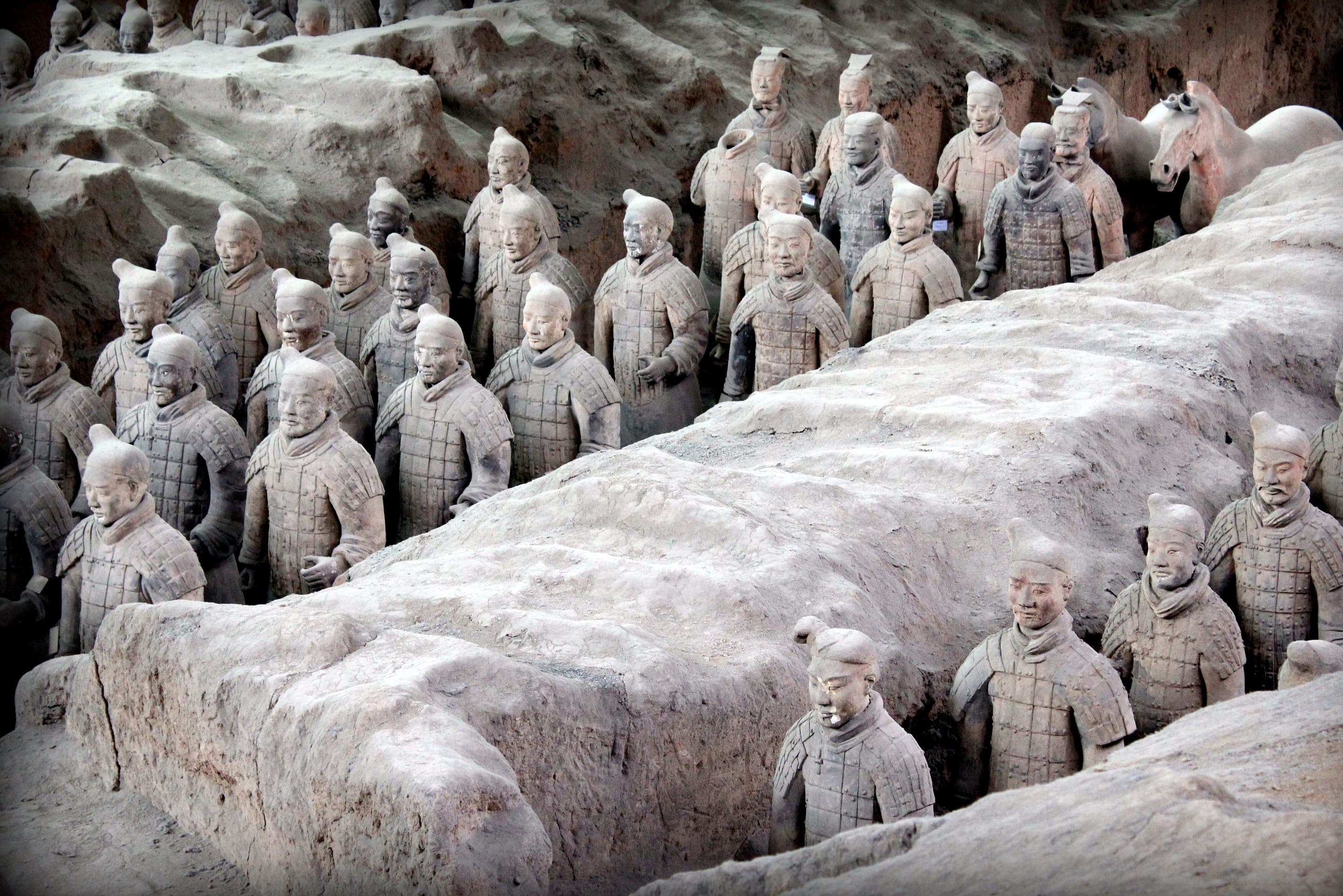
Imperial north, southern karst. Two regions, two rhythms.
Read this destination
Lijiang
Two versions of the southwest. Guilin's river karst, then Yunnan's old town and higher mountain air.
Read this destination
Useful before
you enquire.

When to visit China, month by month
Guilin is strongest in autumn, with a spring window for the flooded Longji terraces. The whole China year, by region and crowd.
Read this guide
China tourist visa for US travellers
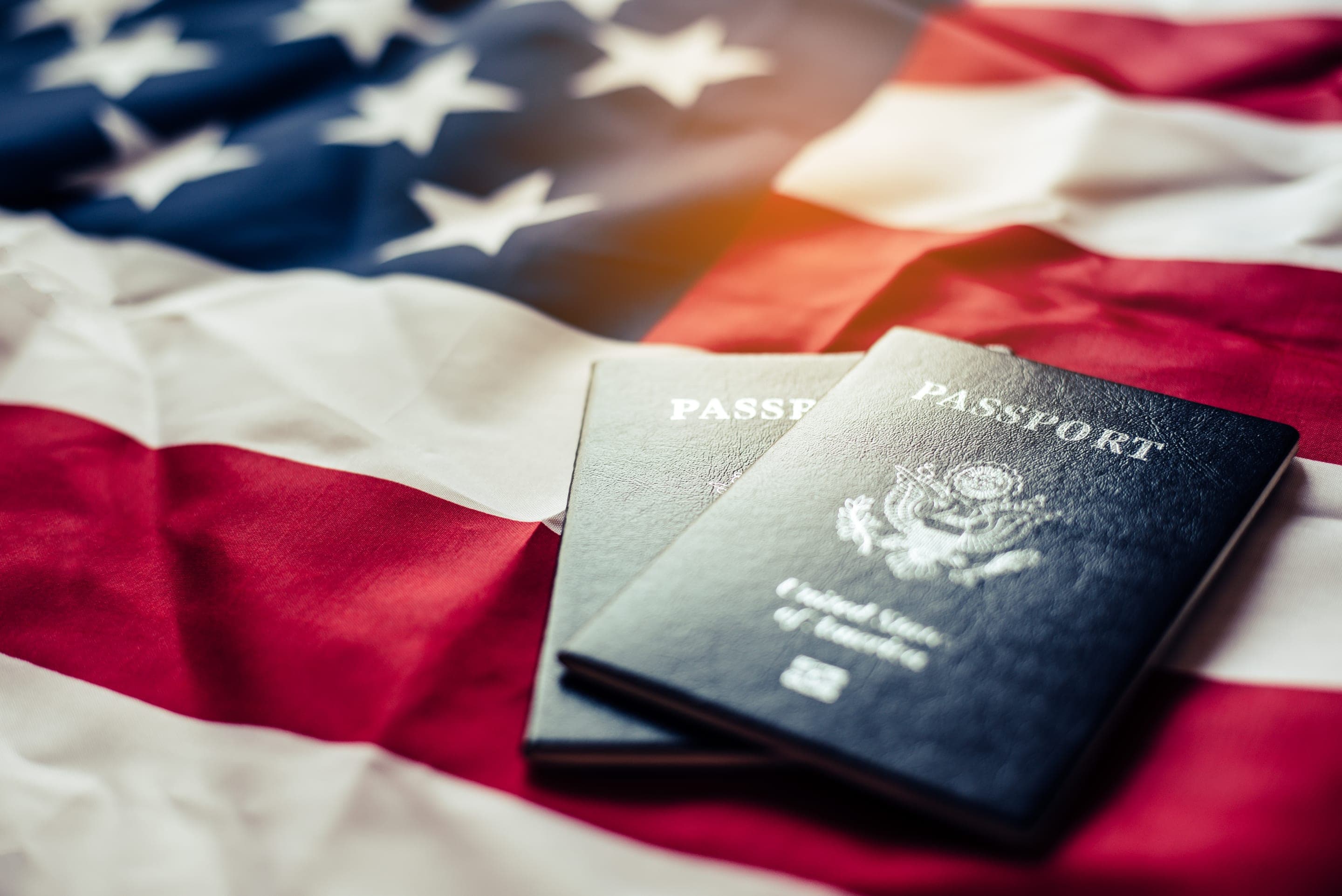
American passports still need a tourist visa for China under current rules. How the L-visa works, what we handle as part of your booking, and what is on you.
Read this guide
How our pricing works
What sits inside the figure on your quote, and what sits outside it. The structure, written out.
Read this guide
Payments and connectivity in China
Alipay and WeChat Pay now take overseas Visa and Mastercard. The practical setup to do before you fly.
Read this guide

Jack Guo
Senior Travel Specialist
Jack has spent ten years working with the guides, drivers and hoteliers across China. He'll be your contact from first enquiry to final airport pickup.
Tell us about your Guilin trip
Five quick questions. We'll send you a Guilin-anchored draft with the price within one business day. No deposit. No hard-sell.