

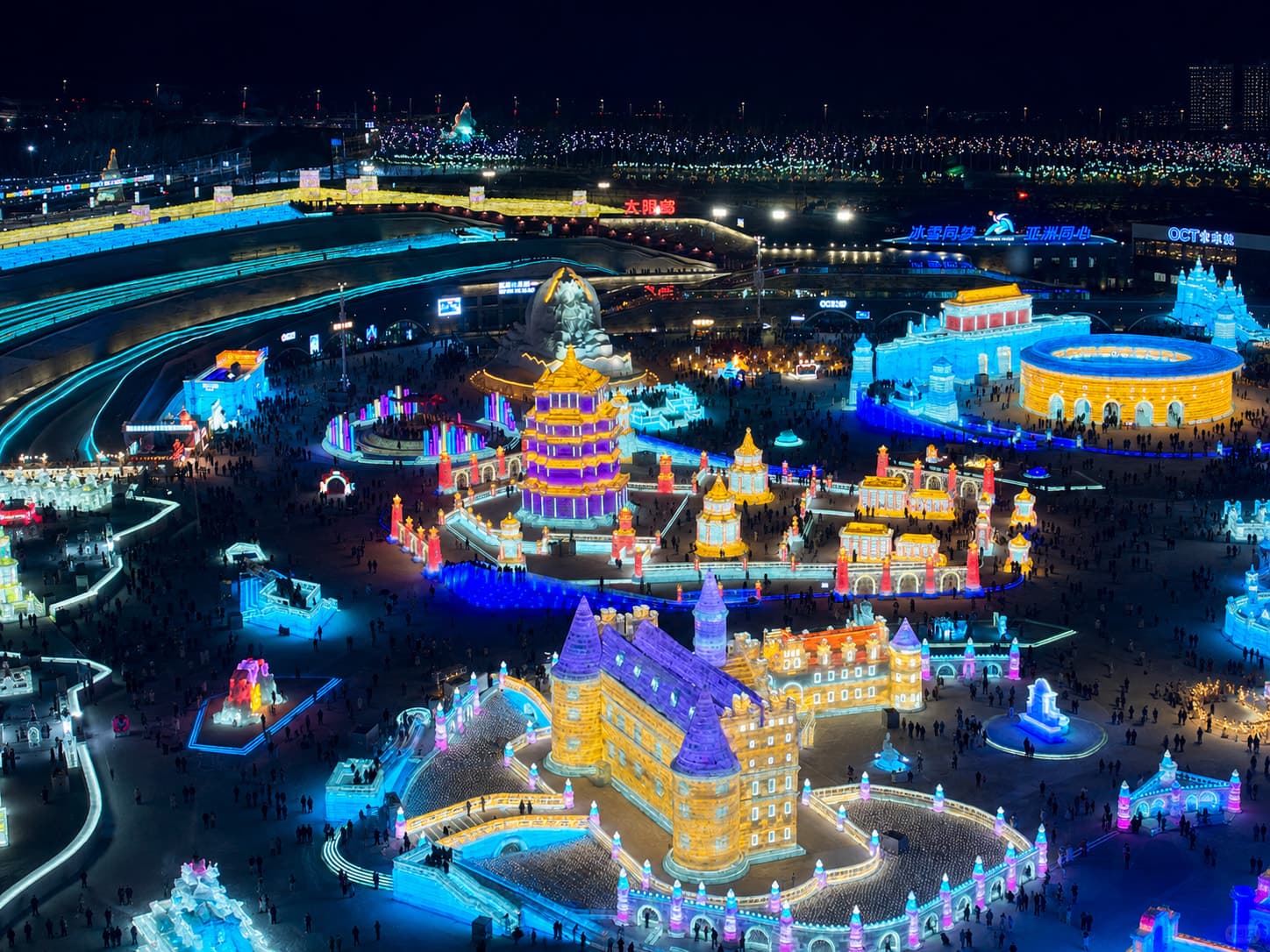
An ice city,rebuilt and meltedevery year.
Two hours by air from Beijing, in north-east China. Open late December through February. Often below -30°C.
Harbin is what China does with a Siberian winter. For about ten weeks each year an entire city of ice is built across the river from the old town: full-scale buildings, towers, replica monuments, all carved from blocks cut out of the Songhua River and lit from inside. The Harbin International Ice and Snow Festival runs from late December through late February; the main Ice and Snow World park opens around Christmas Eve and closes when the weather warms enough to melt the structures, typically by late February. This is the only experience in this catalogue with a strict season, and the cold is real: -20°C is normal, -30°C is not uncommon. We arrange Harbin as a four-night trip with the right gear.
Four nights,
the right gear.
Ice and Snow World at blue hour
Before the internal lights overpower the sky.
The main park opens at noon; the sculptures are lit from 16:00. The best half-hour is just after 17:00 in January, when the sky is deep blue and the ice still has its colour, before the LED lights overpower the camera. We have you there in time, in coats warm enough for the wait. The window is genuinely short, about thirty minutes, and we plan around it.
The Songhua River at sunrise
The carvers, before the crowds.
The blocks for the city are cut from the frozen river before dawn. The carvers work the sun-warmed afternoon. We bring you out to the river at first light to watch the cut, then to a Russian breakfast at a heated old-town café before the day-trip buses arrive at the festival site.
Saint Sophia at -30°C
Russian Harbin, still standing.
Harbin was a Russian-built railway town in the early twentieth century, the Trans-Manchurian Railway hub from 1898 onward. Saint Sophia Cathedral's onion domes and the Daoliqu district survive. We walk it slowly in insulated boots, with a long lunch inside, and a stop at a working sausage maker for the Russian-style red sausage and Harbin beer the city is known for.
Questions worth
answering early.
The main Ice and Snow World park typically opens in the third week of December and runs until late February, with the precise dates announced by the city each year (usually in October or November). The Harbin International Ice and Snow Sculpture Festival officially opens 5 January each year as a fixed event. Conditions are best between early January and mid-February: coldest, clearest, sculptures freshest. We plan around the published open date for your travel year.
The winter loop,
Beijing as the anchor.
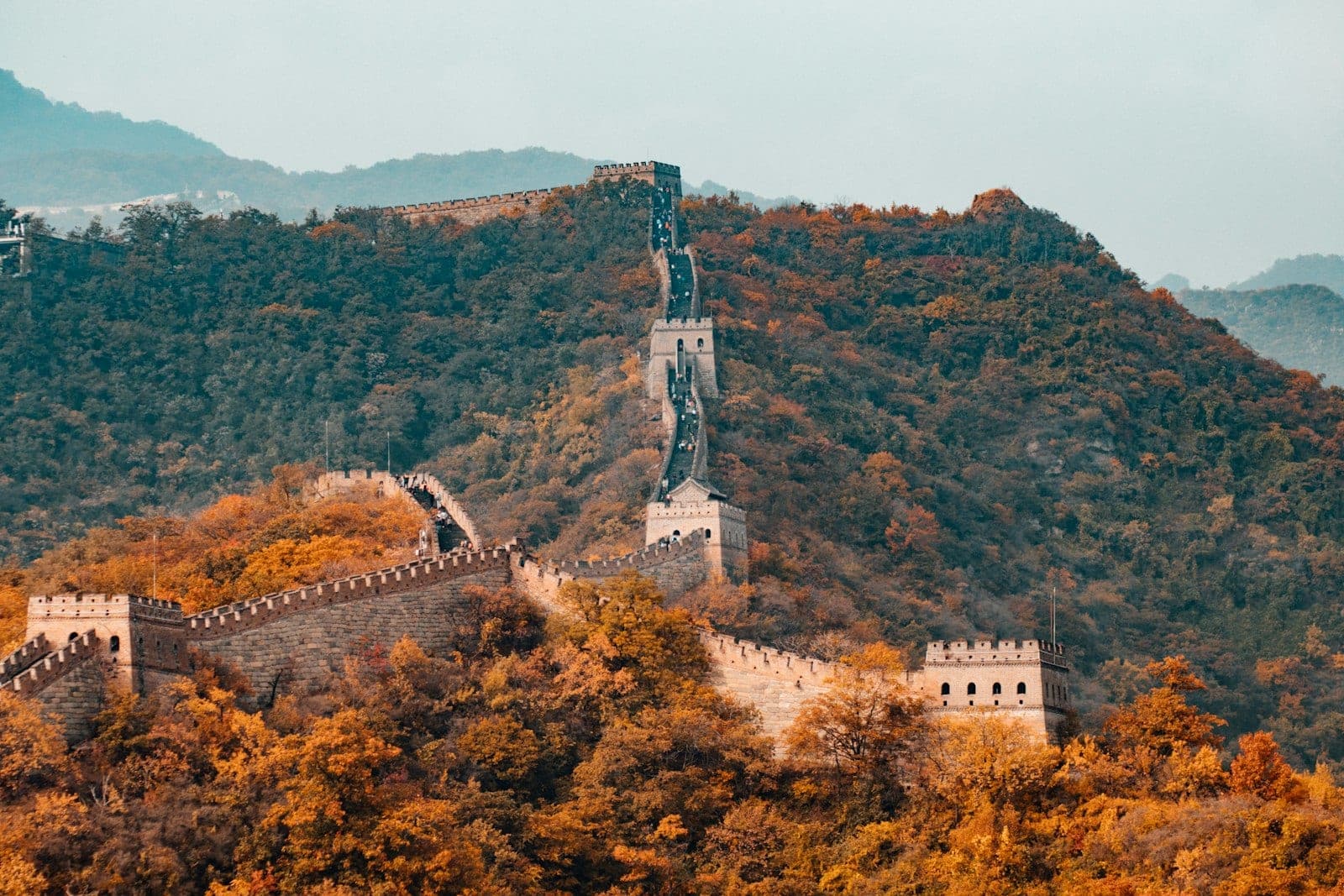
The Great Wall
Two hours south by air. The Wall under winter sky on the way down, empty in February. Photographs that don't exist in summer.
Read this experience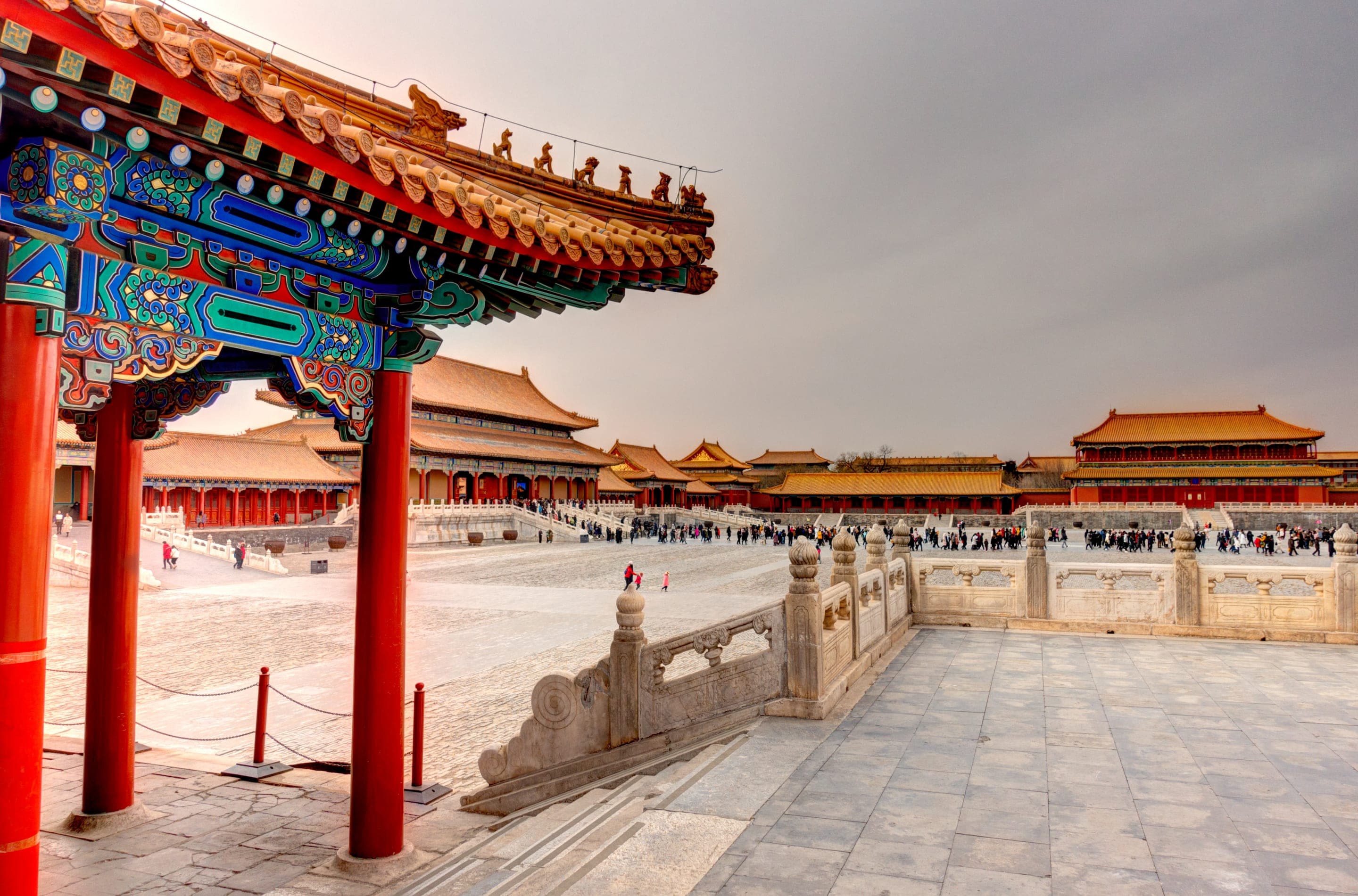
The Forbidden City
Beijing as the warm-side anchor. Ice city north, imperial palace south, four hours apart.
Read this experience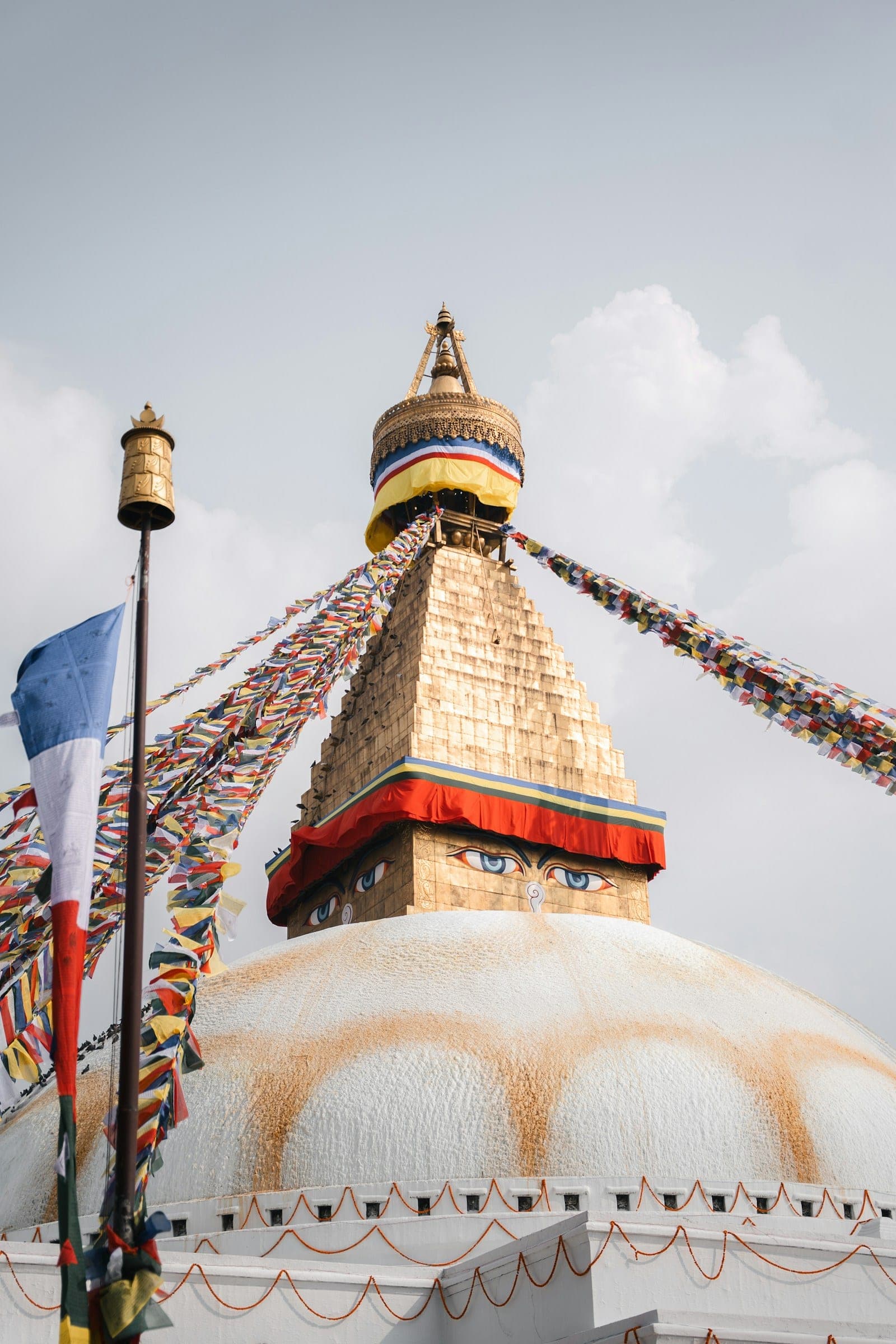
Shangri-La
The two coldest places in this catalogue. Tibetan plateau snow and Manchurian river ice, altitude and latitude, one country.
Read this experience

Jack Guo
Senior Travel Specialist
Jack has spent ten years working with the guides, drivers and hoteliers across China. He'll be your contact from first enquiry to final airport pickup.
Add Harbin Ice & Snow Festival to your trip
Five quick questions. We'll send you a draft that includes Harbin Ice & Snow Festival, with the price, within one business day. No deposit. No hard-sell.