

32 million people,built intovertical land.
A city carved into the wedge of land where the Jialing meets the Yangtze. Light-rail trains through apartment blocks, cable cars over the river.
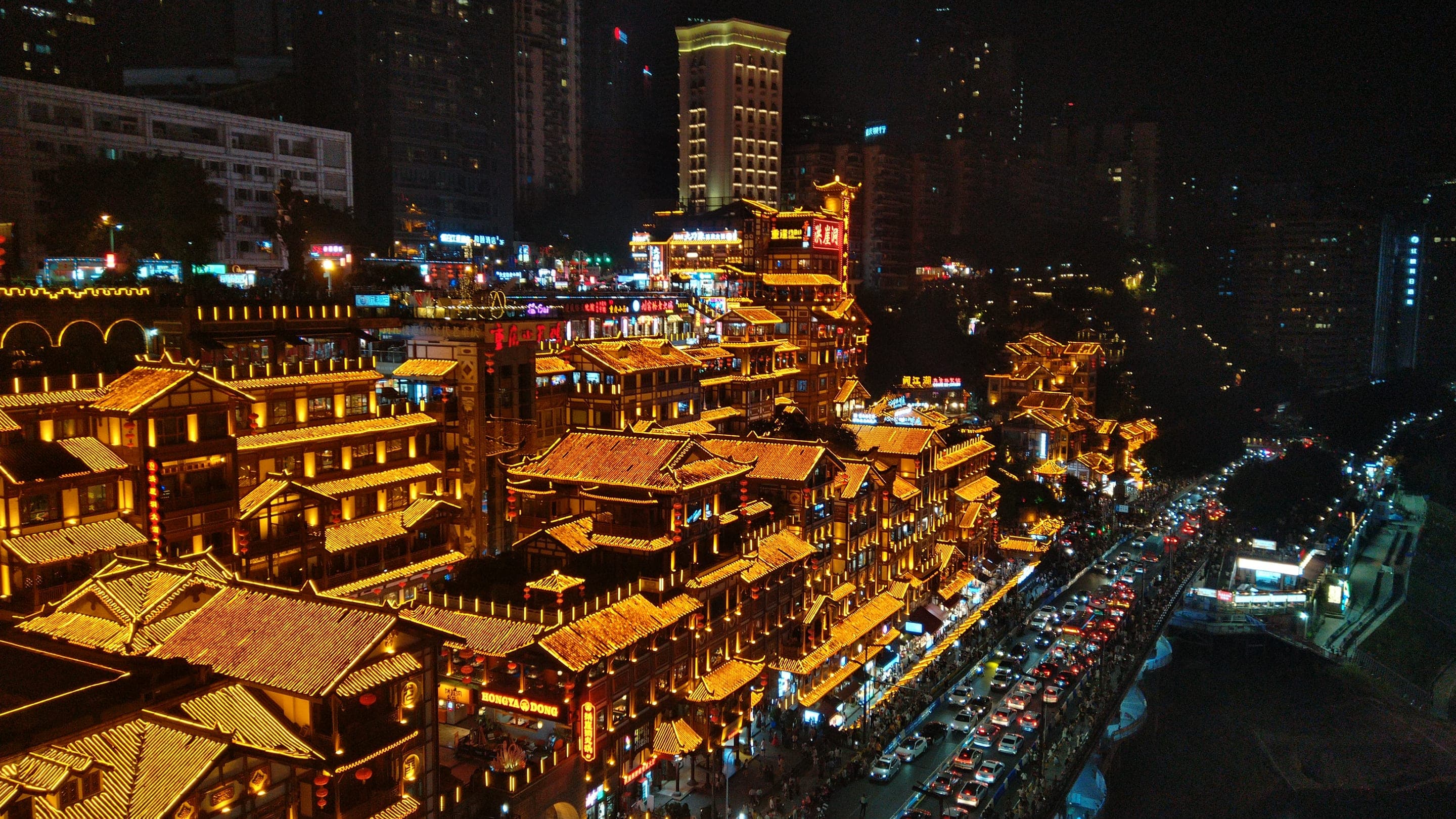
Chongqing is a city of about thirty-two million people, the largest municipality in China, built into a vertical wedge of land where the Jialing River meets the Yangtze. The terrain forces the city upward. Light-rail Line 2 passes through the sixth floor of a residential apartment block at Liziba, and a 1987 commuter cable car still runs across the Yangtze at the height of the eighth floor. Hongya Cave, the lantern-lit cliff complex on the river, is at its best when the sky is still blue and the lanterns have just come on. We arrange Chongqing as a two-night stop, paced so the most photographable moments land at the right hour.
The vertical city,
in three movements.
Liziba Station
The train through the building.
Line 2 of the Chongqing metro passes through the sixth floor of a nineteen-storey residential block at Liziba. We time the visit to a non-rush window, take you to the observation point on the opposite side of the road (the photograph is taken from across, not from the platform), and you catch three trains pass through in twenty minutes. The viral image, in real life.
Hongya Cave at blue hour
Just before the lanterns burn out the colour.
Hongyadong is a stilt-house complex carved into a riverside cliff. Twelve floors of restaurants, shops, and lantern light. We bring you at the half-hour before the lanterns saturate the camera, around 18:30 in summer and 17:30 in winter. The exposure window when both the sky and the lanterns are readable is short; we plan around it.
The Yangtze cableway
Above the city, across the river.
The 1987 cable car across the Yangtze is a working commuter line, about four minutes across, with the most-painted skyline in southwest China underneath. At sunset the view back over the Liberation Monument peninsula is the photograph. Half the price of a tourist boat, twice the view.
Questions worth
answering early.
Two nights is the honest answer. One night gives you the cableway and Hongya Cave at dusk but cuts the Liziba morning. A pure stopover treats Chongqing as a logistics city; that is fine if your interest is really the Yangtze cruise or a Wulong day-trip, but you will miss the city itself. The two-night version is what most travellers tell us they wish they had booked when they arrive on the one-night version.
The cluster
around the river, all within easy reach.
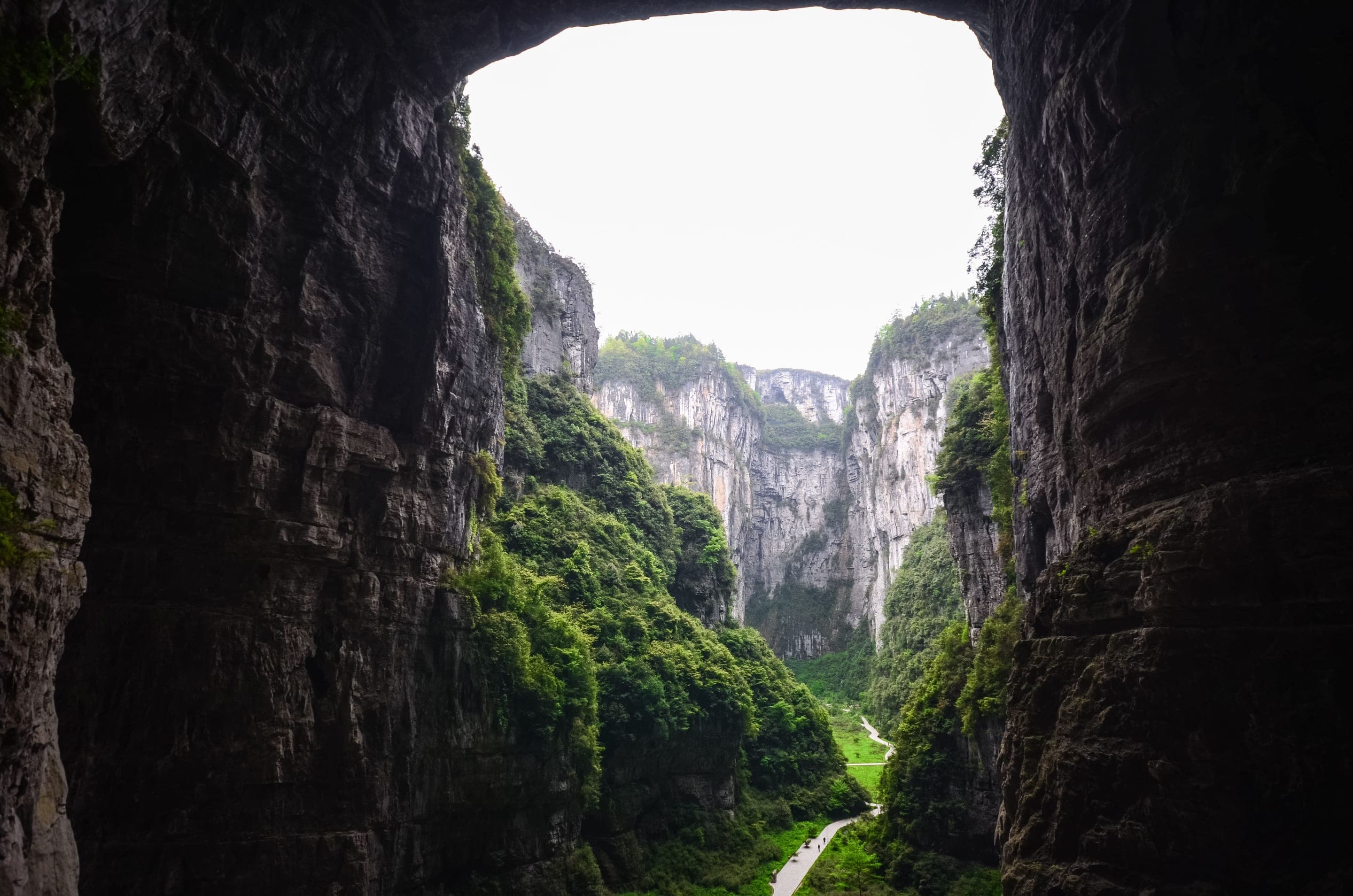
Wulong Karst
Two hours east, UNESCO three natural bridges. The canonical Chongqing day-trip out and back.
Read this experience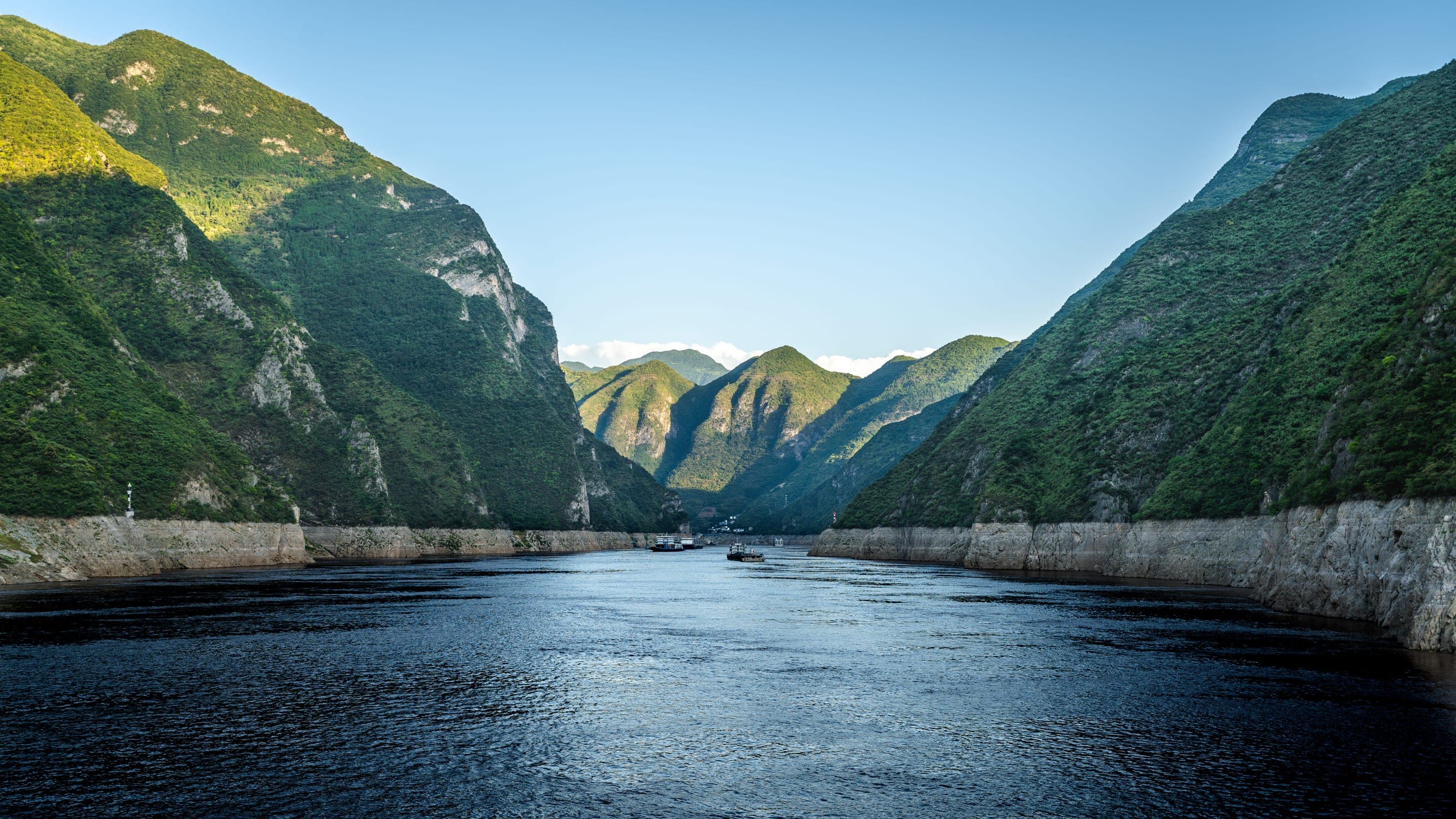
The Yangtze Three Gorges
The cruise embarks here. Two nights in Chongqing, four nights downriver.
Read this experience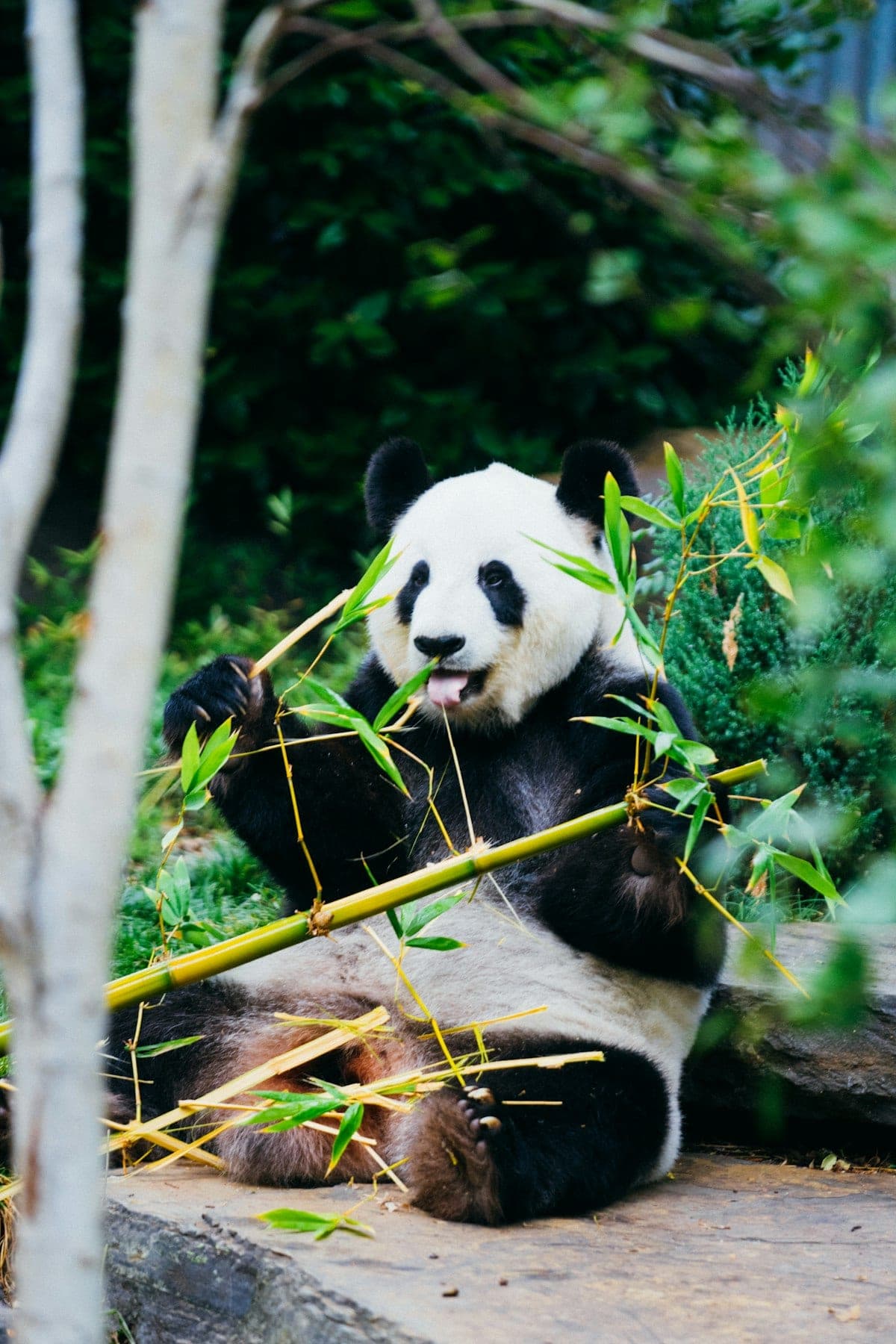
The Chengdu Pandas
Three hundred kilometres west, one hour by high-speed rail. Pandas in the morning, Chongqing skyline by dusk.
Read this experience

Jack Guo
Senior Travel Specialist
Jack has spent ten years working with the guides, drivers and hoteliers across China. He'll be your contact from first enquiry to final airport pickup.
Add Chongqing to your trip
Five quick questions. We'll send you a draft that includes Chongqing, with the price, within one business day. No deposit. No hard-sell.