
Zhangjiajie
the sandstone-pillar landscape of northwest Hunan
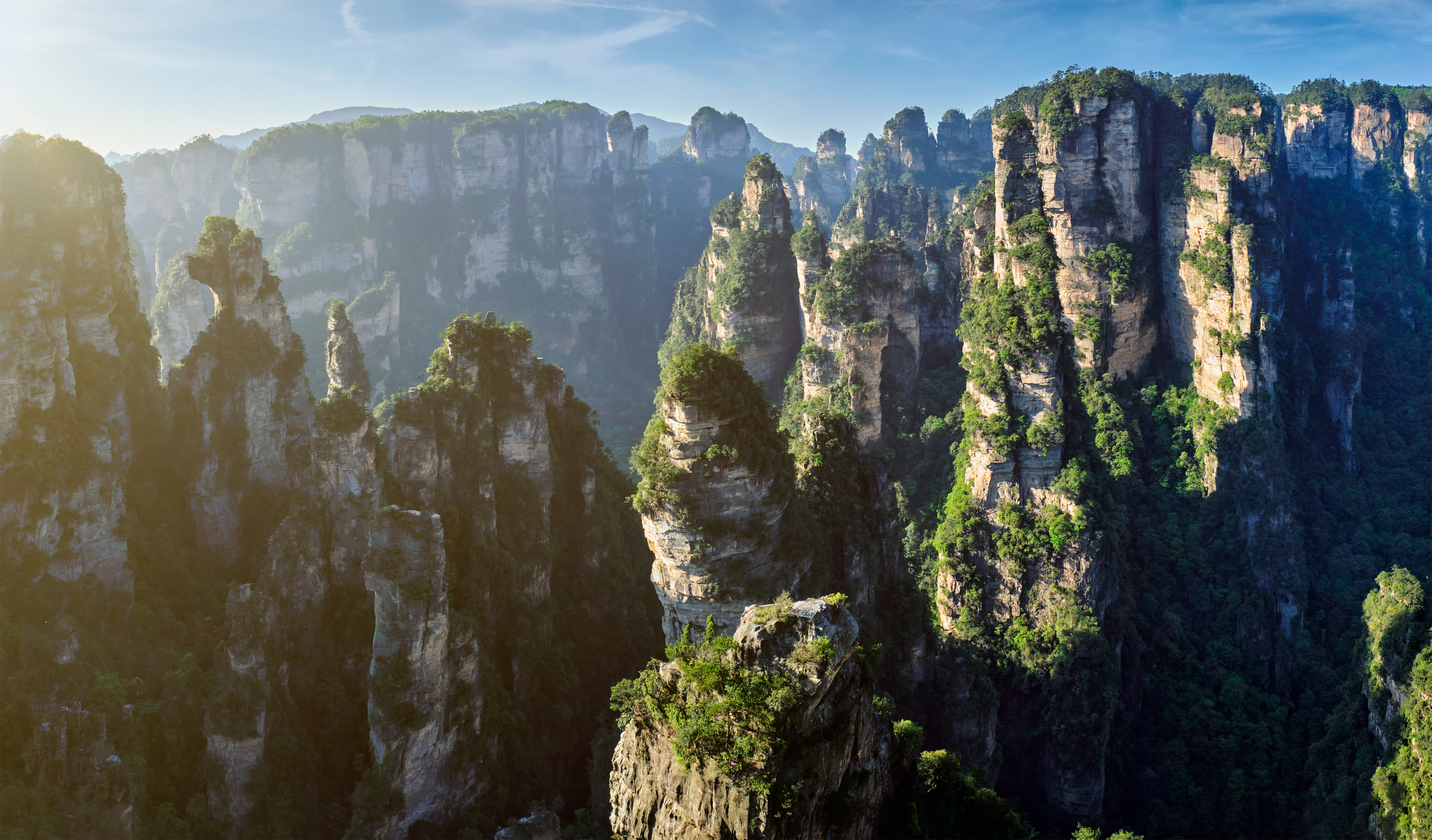
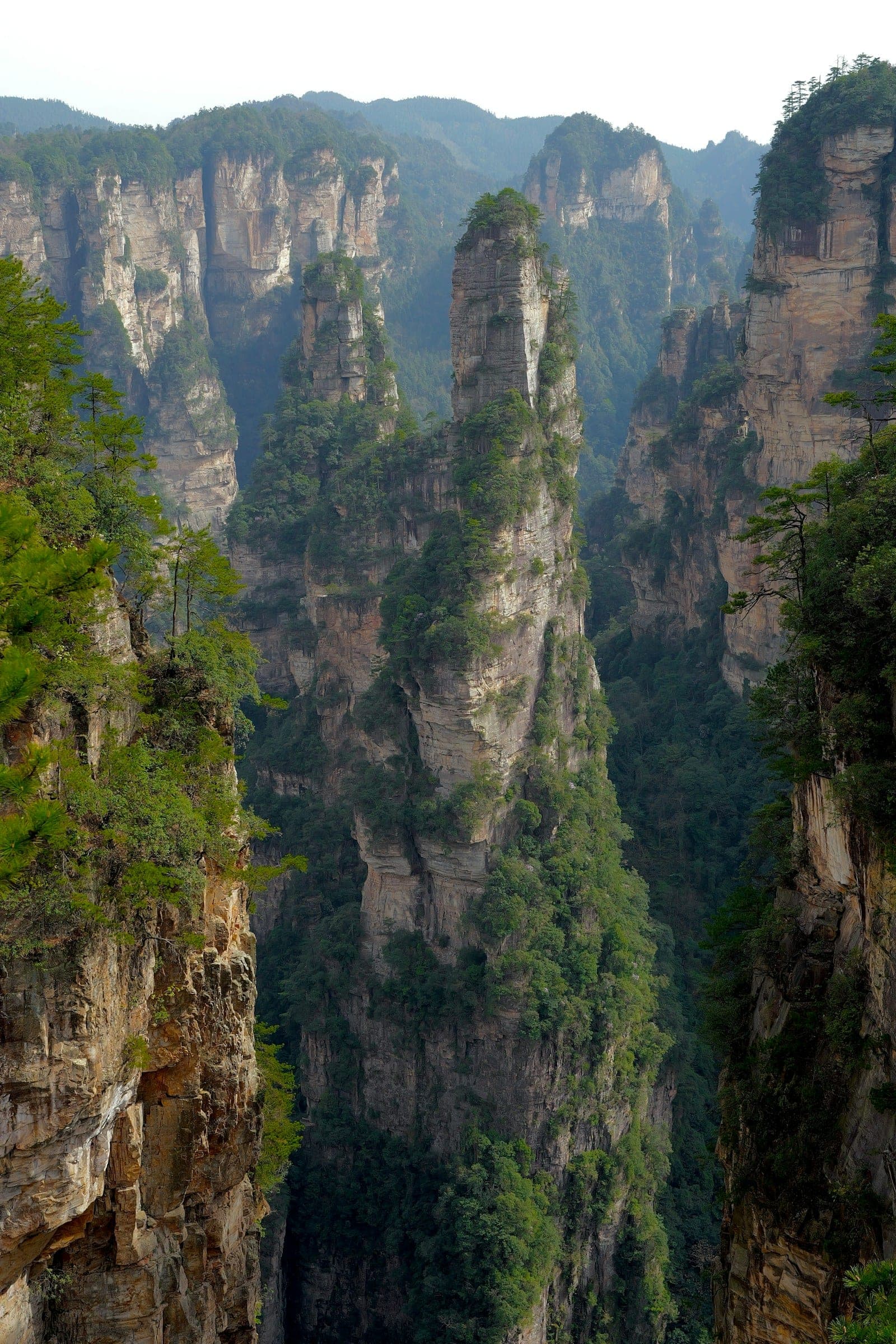
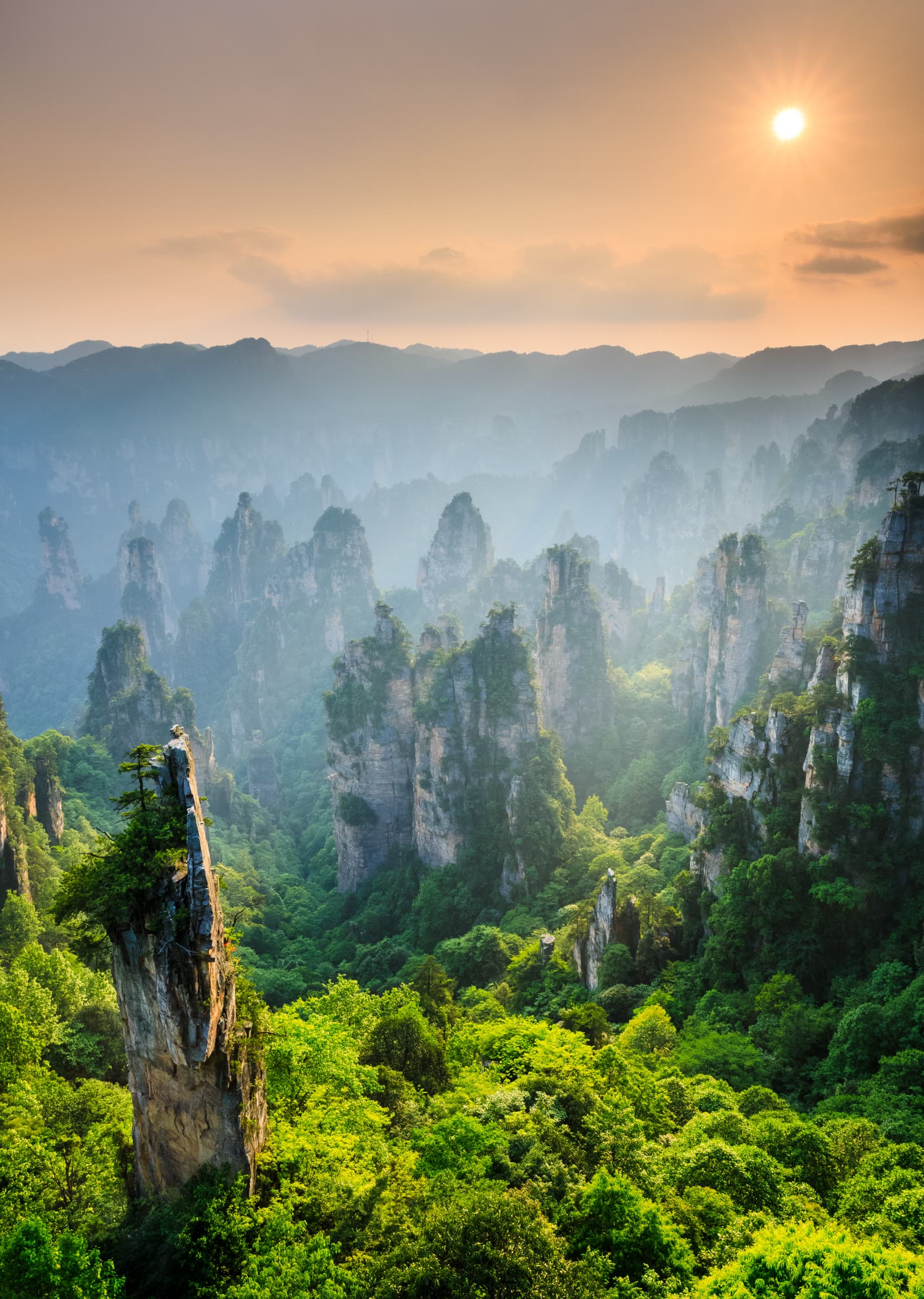
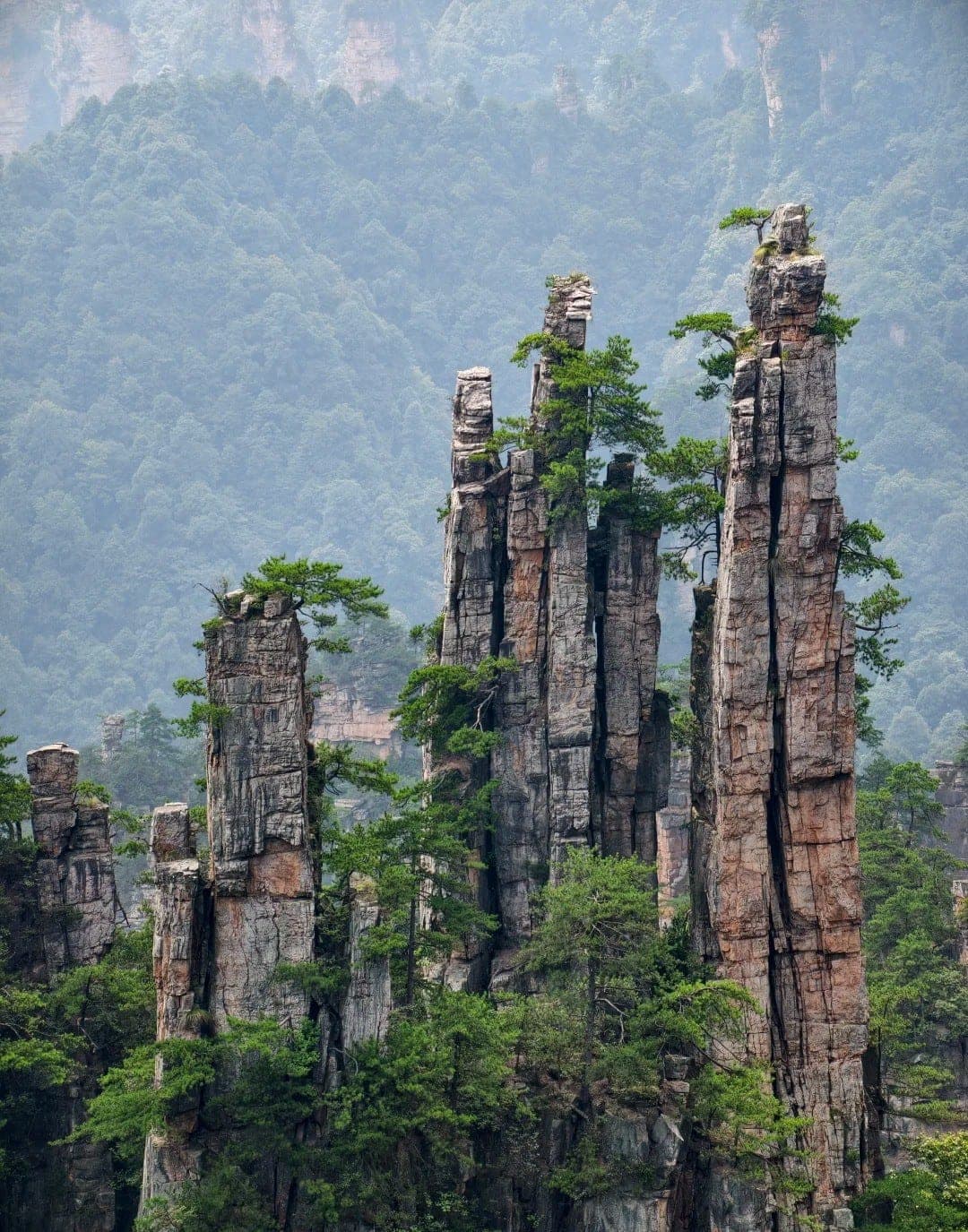
Zhangjiajie is northwest Hunan's mountain corner. The UNESCO Wulingyuan area holds three thousand sandstone pillars, many over two hundred metres tall. Tianmen Mountain stands south of the city, with a cable car and a natural arch.
Why people
come to Zhangjiajie.
What to see

Wulingyuan Scenic Area(UNESCO World Heritage, 1992)
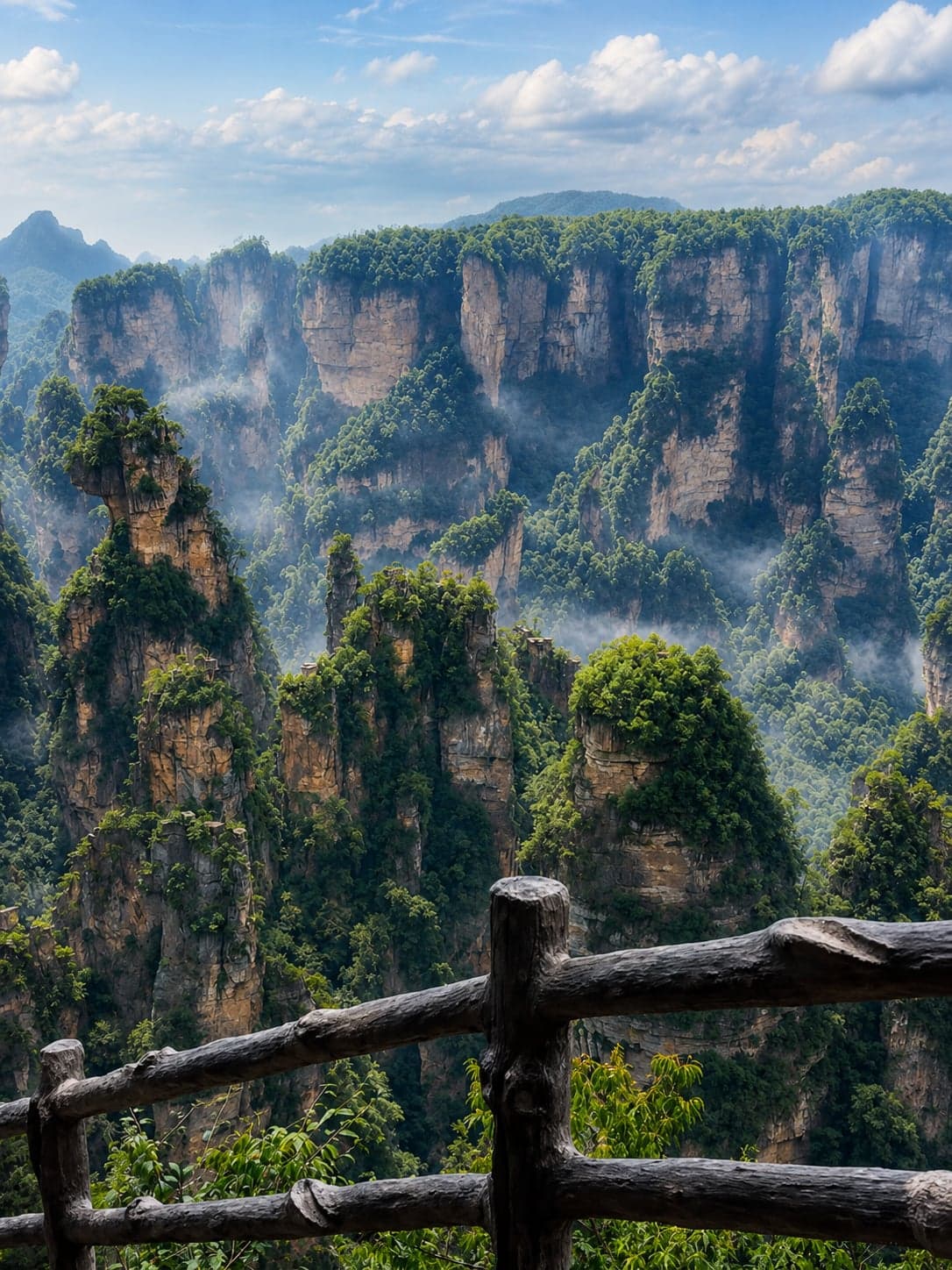
Wulingyuan sits at the centre of every Zhangjiajie trip, inscribed in 1992 for its quartz-sandstone pillars.
More than three thousand rise across the valleys, many over two hundred metres tall. Mist hangs in the upper formations on most mornings, and UNESCO names that mist as part of what makes the place. The Yuanjiajie plateau holds the photographed views: the No. 1 Bridge Under Heaven, Mihun Tai, and the column widely linked to Avatar's floating mountains. The Tianzi ridge to the north reads the wider composition. Yangjiajie sits quiet to the west with arches of its own. Down on the valley floor, the Golden Whip Stream path reads the pillars from below.
We pick the entrance after reading the day's mist, weather, and your appetite for stairs. The standard route runs the Bailong Elevator up and the bus down. We reverse it, in from the Tianzi cable car and out via Bailong on the descent, so the morning queue belongs to somebody else. The Yuanjiajie ridge walk lands at the No. 1 Bridge and Mihun Tai, not the bus-dump Hallelujah deck.

Tianmen Mountain(Heaven's Gate, the longest single-line cable car)
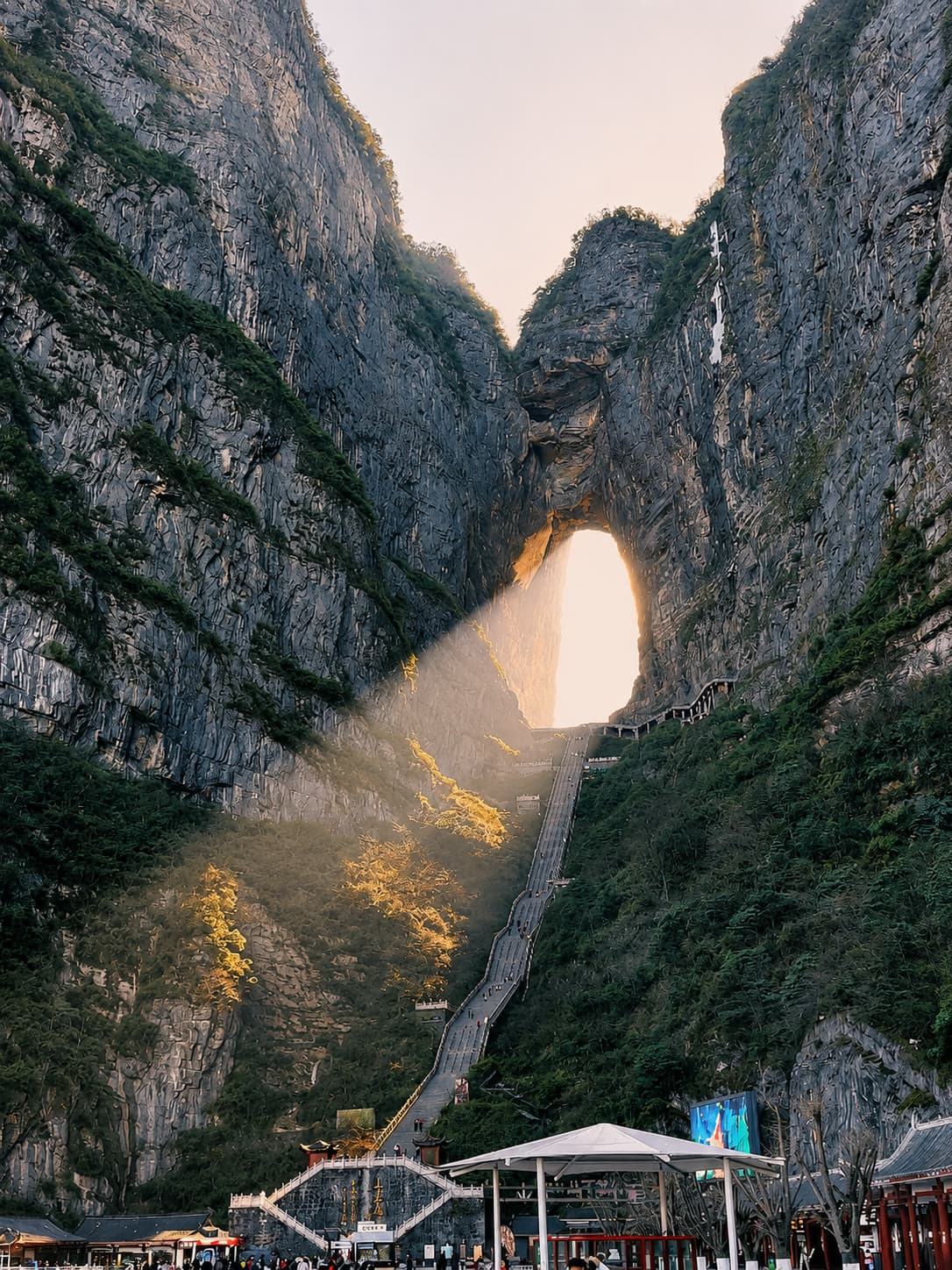
Tianmen is the second pillar of a Zhangjiajie trip, a single limestone mountain rising eight kilometres south of the city.
The Hunan provincial tourism source calls its cable car the longest single-line passenger cableway in the world. It climbs seven and a half kilometres up the south face, nearly thirteen hundred vertical metres. At the top, glass cliff walkways loop the summit and a Buddhist temple sits in the trees behind. The descent goes through Heaven's Gate, a natural limestone arch 131 metres high and 57 wide. A 999-step staircase climbs to it from the cave square. An escalator chain inside the mountain offers a step-free alternative. The shuttle road bends 99 times on the way down.
We run the cable car up and the road down, the order Chinese guides call straight-through, so the heaviest queue lands at the start of the day rather than the end. The 999 steps to Heaven's Gate are the one stretch we cannot avoid. The escalator chain inside the mountain stays open for travellers who would rather skip them.

Tianzi Mountain ridge(the wider Wulingyuan composition)
Tianzi is the ridgeline north of Yuanjiajie, named after a Tujia chieftain who took the imperial title in the 14th century.
The Tianzi cable car climbs from the Wulingyuan standard gate in around six minutes. The ridgewalk south reads the wider composition that Yuanjiajie frames in close-up. Snow in January and February brings the pillars to a different read, with ridges and gorges drawn in white.
We time the Tianzi cable car for the first hour of operation, when the standard-gate side is quiet. The ridgewalk south runs free of the late shuttle that lands at the same vantages an hour after the buses. Lunch is at a kitchen on the descent road, not the park canteen.

Bailong Elevator(the tallest outdoor elevator in the world)
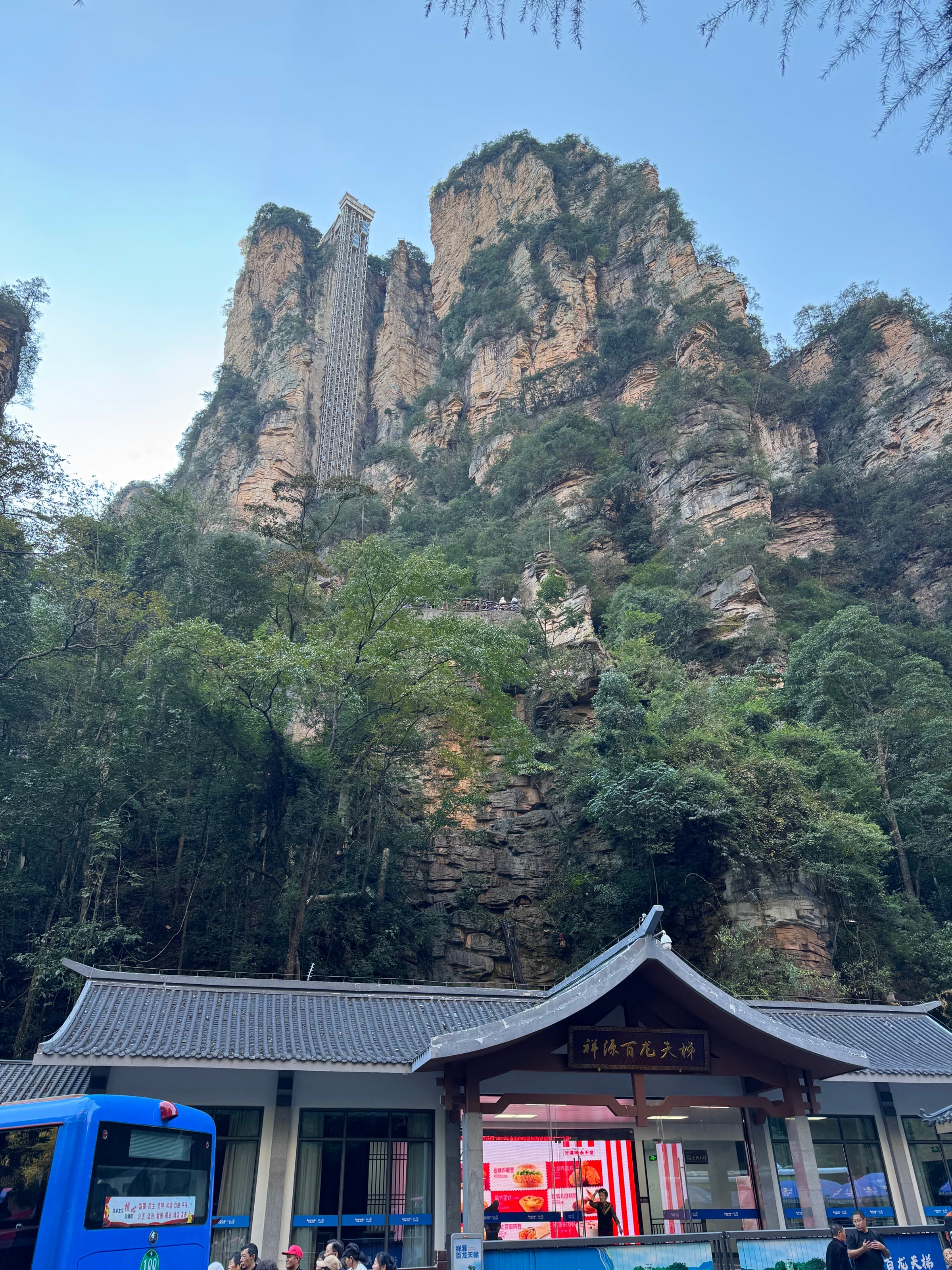
The Bailong Elevator is the cliff-face ride that climbs the inside of Wulingyuan.
It runs 326 metres of shaft, 171 of them cut bare against the rock face. Guinness World Records names it the tallest outdoor elevator. Three double-deck cars run the shaft, and the ascent takes a fraction under two minutes. The queue at the bottom station builds hard through mid-morning, which is why the counter-flow circuit runs Bailong on the descent.
We run the ride on the descent rather than the climb, so the queue at the top station is shorter than the queue at the bottom. Through the glass-walled cars the pillars read from the inside out, the valley floor falling away below your feet.

Zhangjiajie Grand Canyon Glass Bridge(430 metres long, 300 metres up)
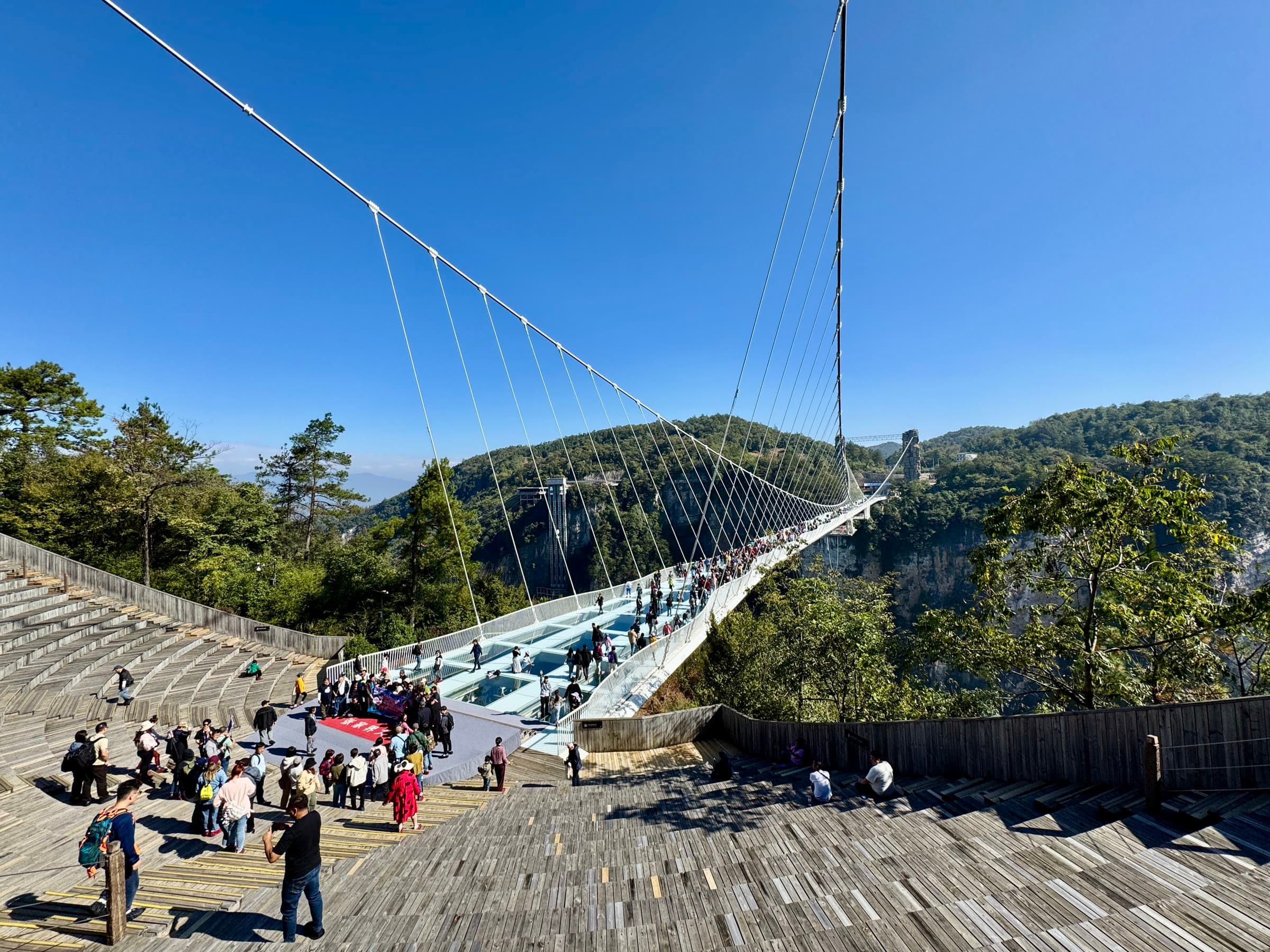
The glass bridge sits in the Zhangjiajie Grand Canyon scenic area, a separate ride east of the Wulingyuan property.
It runs 430 metres across the canyon, 300 metres above the floor. The deck is six metres wide and opened in August 2016. The feel is theme-park rather than landscape, and weekends queue hard. A Wulingyuan-plus-Tianmen trip can leave it off the route without losing what the trip came for.
We add it only when your companions ask for it. The trip without it loses nothing; Wulingyuan and Tianmen carry the landscape. With it, add a half day and a separate ticket. We book the early window on a weekday, not the weekend afternoon, so the queue is shorter and you can walk the deck slowly rather than shuffle.

Furong Town(the Tujia hilltop village, Yongshun County)
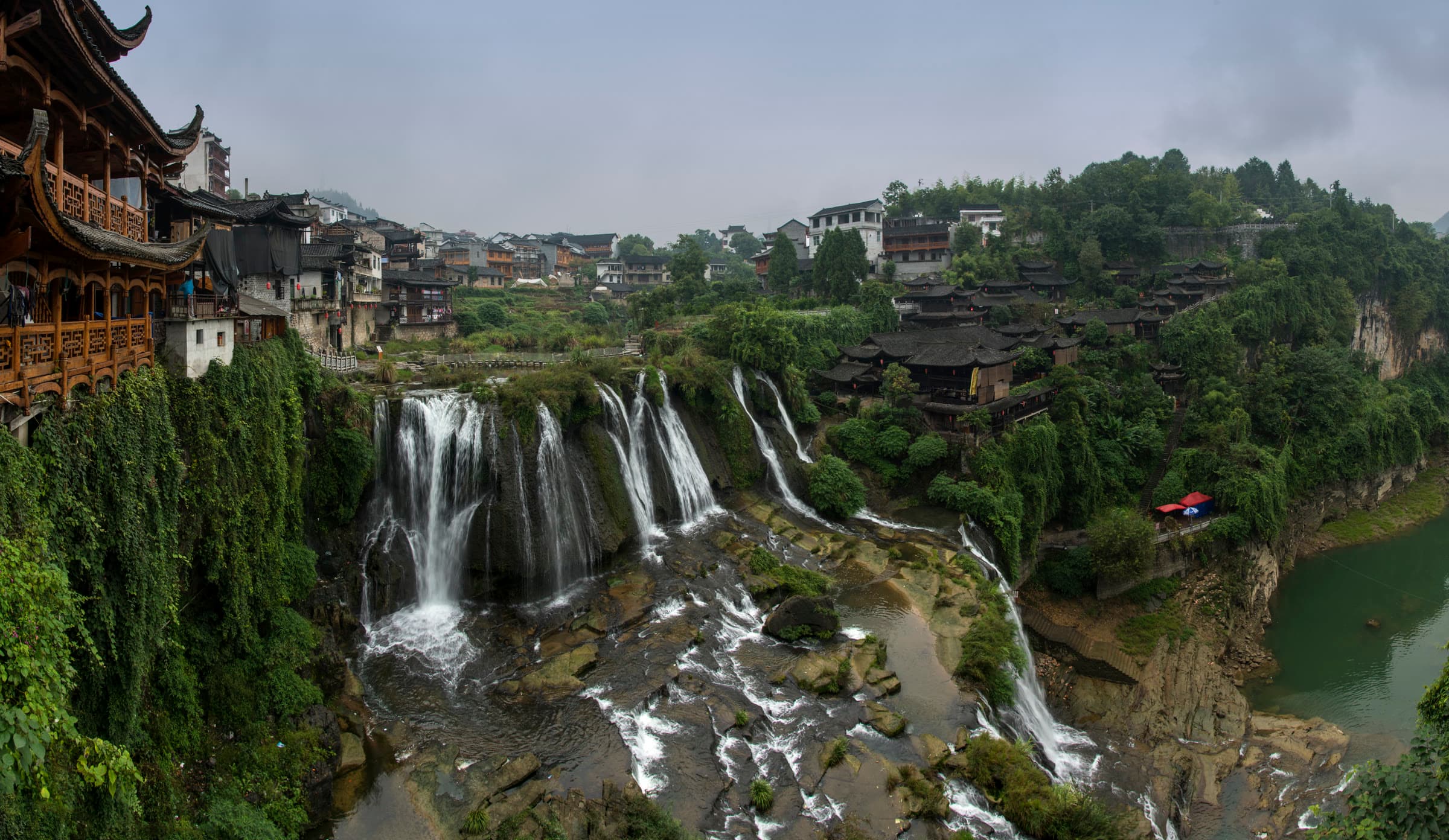
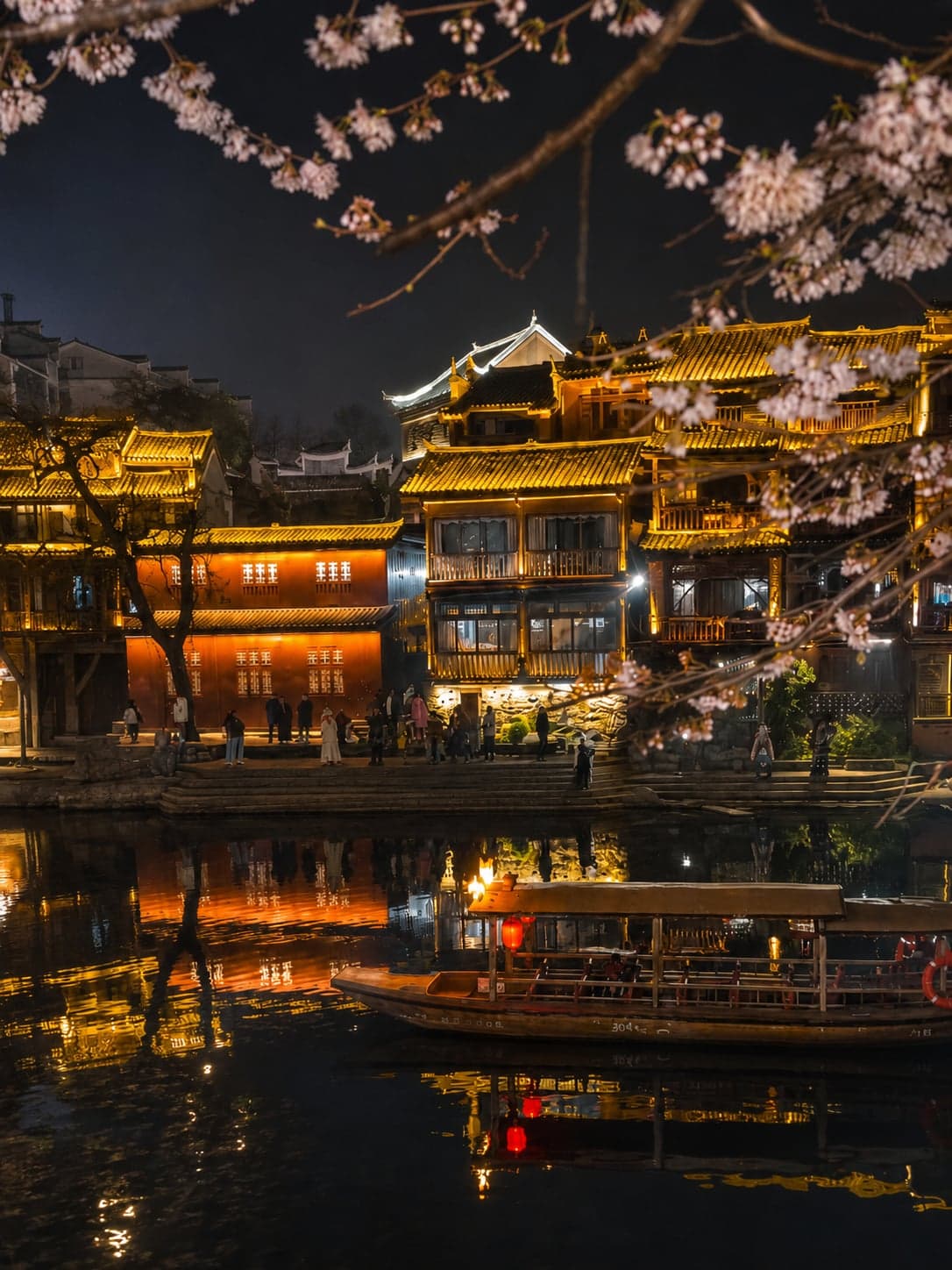
Furong Town is a Tujia village built on the hill above a waterfall, two hours by road northwest of Zhangjiajie city.
The old name was Wangcun. A 1986 film by Xie Jin renamed it Furong, and the village now signs itself that way. The river drops in white sheets over the cliff at the back of the lanes, and stilted Tujia houses lean out above the falls. An afternoon and an early dinner is the right shape. An overnight works for travellers who want the morning light on the river.
We pick the half-day side trip on the day, not at booking. The road is two hours each way, and the call is whether your companions have the appetite after Wulingyuan and Tianmen. The kitchen we book sits in the top village, not the riverside strip. The waterfall view runs from the table, not the queue.
What to eat

Chopped-chilli fish head(Duojiao Yutou, the Hunan signature)
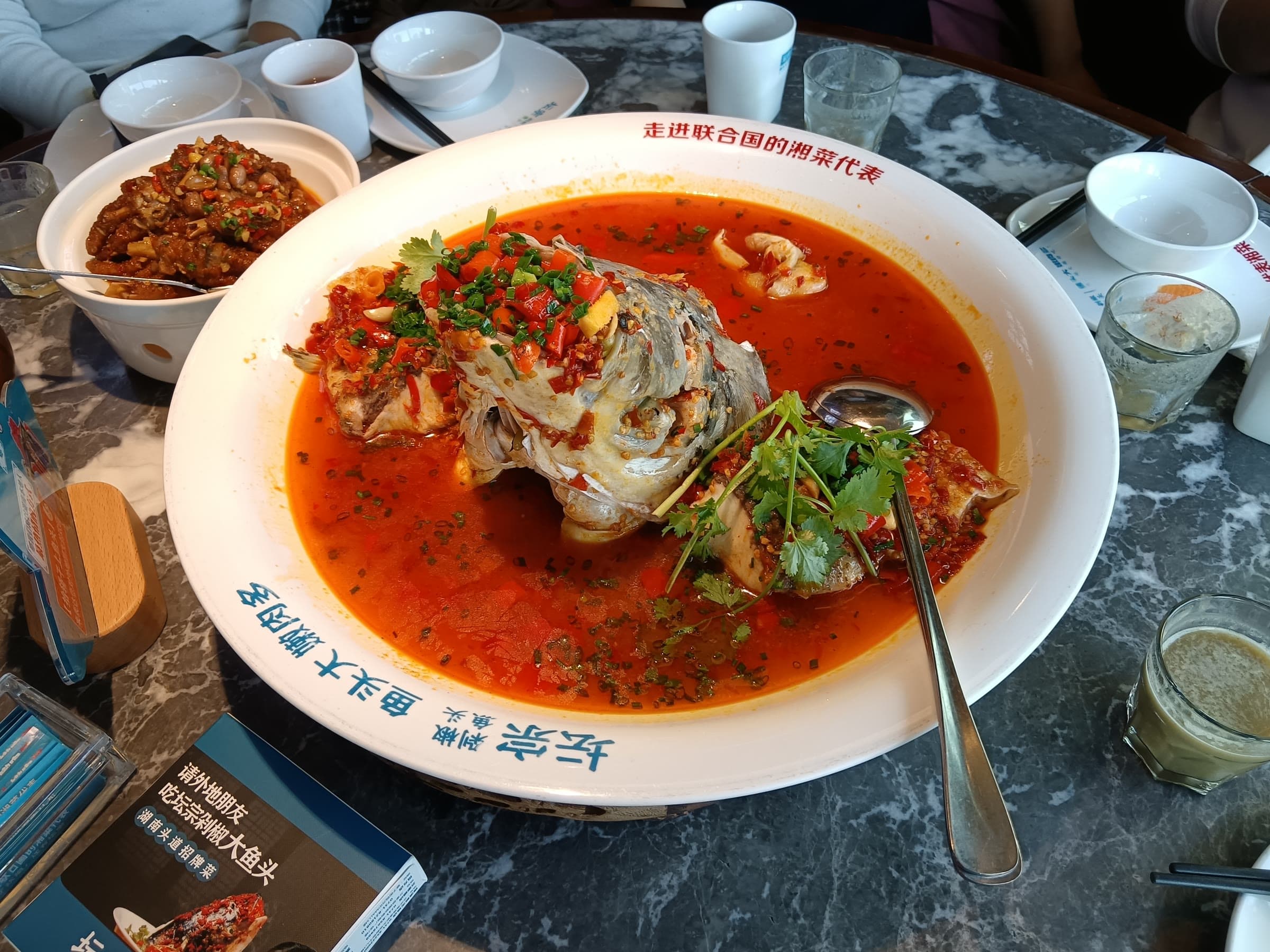
Chopped-chilli fish head is the dish Hunan is best known for.
A silver-carp head, split flat on a long platter, comes under a blanket of red fermented chilli, garlic and ginger. The fish steams under the chilli for ten minutes, the heat cooks into the cheek meat, and the broth runs back through the platter. The cheek and the soft collar at the gill plate are the bites to chase first, savoury and bright with the fermented kick.
We seat you at a kitchen that buys its head from the morning market. The chilli is chopped in the back kitchen, not spooned from a jar. The platter comes out the moment the steamer lid lifts, steam still on it. Your guide names the cheek-and-collar order, so the best parts never sit cold while the table hunts for them.

Chairman Mao's braised pork(Mao Shi Hongshao Rou, the Shaoshan icon)
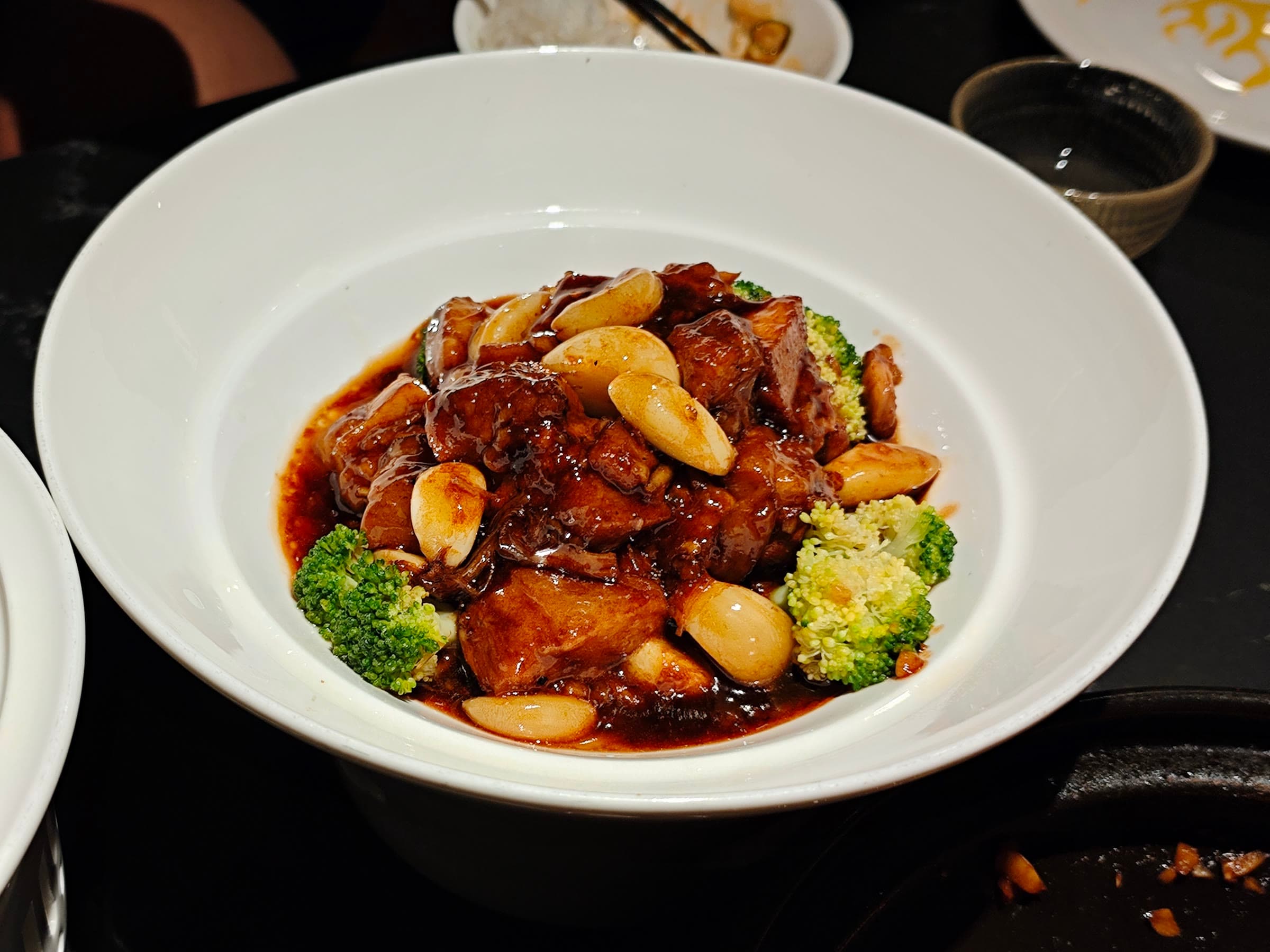
Chairman Mao's braised pork is the Hunan plate that travelled out of the province with him.
Pork belly, cut in thumb-sized cubes, is caramelised in rock sugar and dark soy. The cubes then slow-braise with dried red chilli, star anise and ginger until the fat melts into the lean and the sauce reduces to a black-glass glaze. Mao Zedong was from Shaoshan, a few hours south of Changsha. He kept the dish on his table in Beijing all his life.
We seat you at a kitchen that uses rock sugar rather than refined. That caramel is the difference between this and any other red-braise. The pot has been on the stove since lunch, so the sauce arrives reduced rather than thin. A bowl of plain rice rides alongside; the glaze is the second course.

Three-in-the-pot stew(Sanxiaguo, the Western Hunan signature)
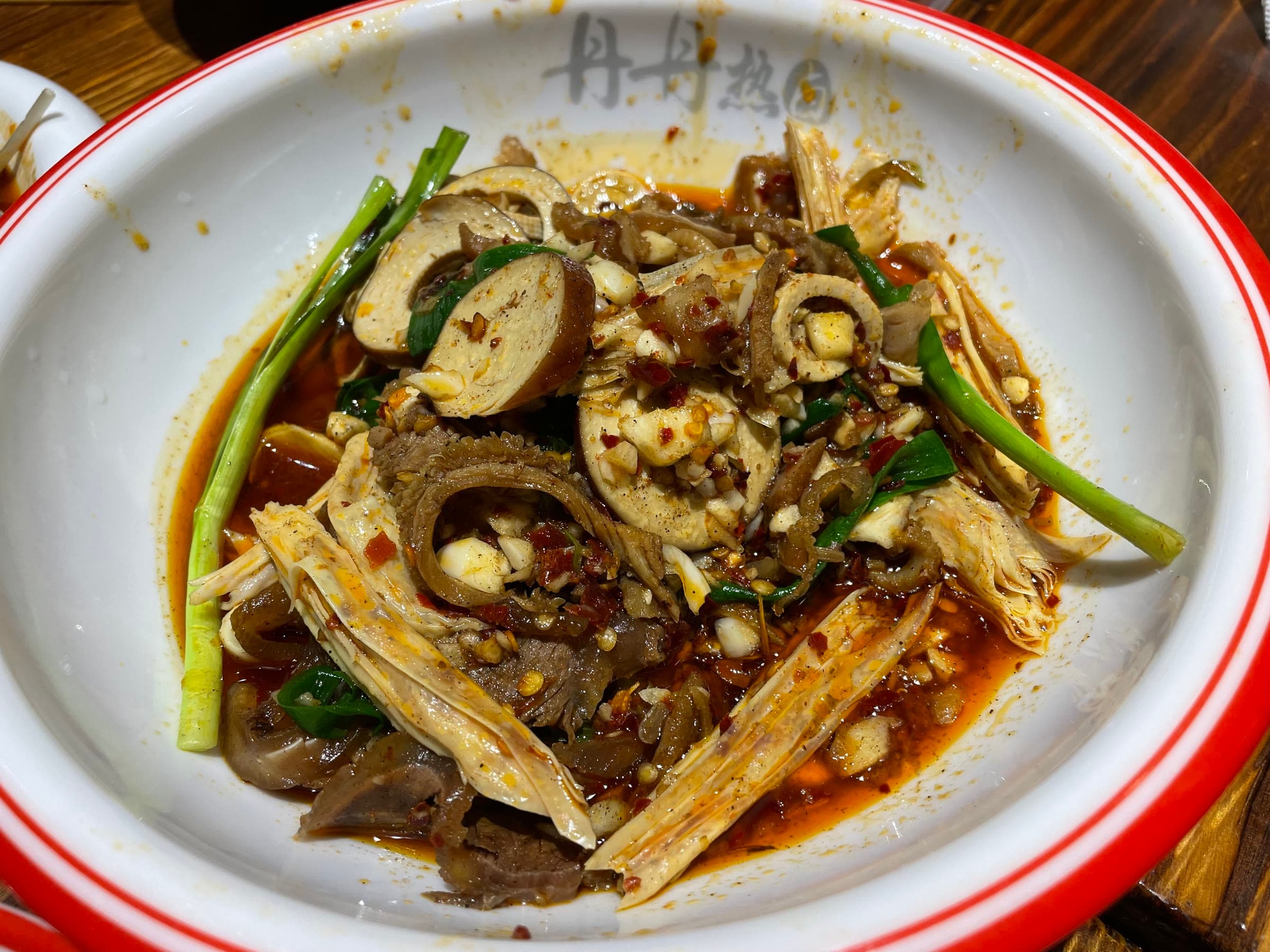
Three-in-the-pot stew is the dish Zhangjiajie kitchens are best known for, a Western Hunan signature wherever Tujia cooking is served.
A clay pot comes to the table with three braises in one broth: smoked pork belly that tastes faintly of woodsmoke, sour radish that pickles bright against the fat, and tofu that drinks up the spice. The story says it started as a Ming-dynasty stew. Soldiers on the move had no time for three courses, so three things went into one pot.
We seat you at a Tujia-run kitchen in the old quarter, not the bus-stop canteens on the road to the park. The pot comes from an all-day simmer, so the broth is already deep when it reaches the table. Your guide orders the version that suits the spice tolerance at the table, chilli oil on the side. The second bowl is the one that lands.
What three days
might look like.
- Day 01
Counter-flow pillars, unhurried ridgewalk.
An early start at the Wulingyuan standard gate puts you on the Tianzi Mountain cable car before the day-tour buses arrive. Wander south along the Yuanjiajie ridge to the No. 1 Bridge Under Heaven, with Mihun Tai and the Avatar-associated pillars unfolding through the morning. A pot of Tujia three-in-the-pot stew waits at a kitchen on the way down. As afternoon settles, the Bailong Elevator carries you back to the valley floor as the queue at the bottom station thins.
- Wulingyuan standard gate
- Tianzi Mountain cable car
- No. 1 Bridge Under Heaven
- Mihun Tai (Lost-Soul Platform)
- Three-in-the-pot stew lunch
- Bailong Elevator descent
- Day 02
Cable up, road down, the arch.
Spend the morning on the Tianmen cable car as it climbs the south face of the mountain across the city, the longest single-line passenger cableway in the world. The glass cliff walkways at the summit loop in under an hour. As afternoon settles, descend the 999 steps through Heaven's Gate to the shuttle road of ninety-nine bends. A Hunan dinner closes the day back in Zhangjiajie city, with Chairman Mao's braised pork on the table.
- Tianmen Mountain cable car
- Coiling Dragon Cliff walkway
- Tianmen Mountain Buddhist temple
- Heaven's Gate (999-step staircase)
- Tongtian Avenue (99 bends)
- Chairman Mao's braised pork supper
- Day 03
Valley floor, Tujia hilltop.
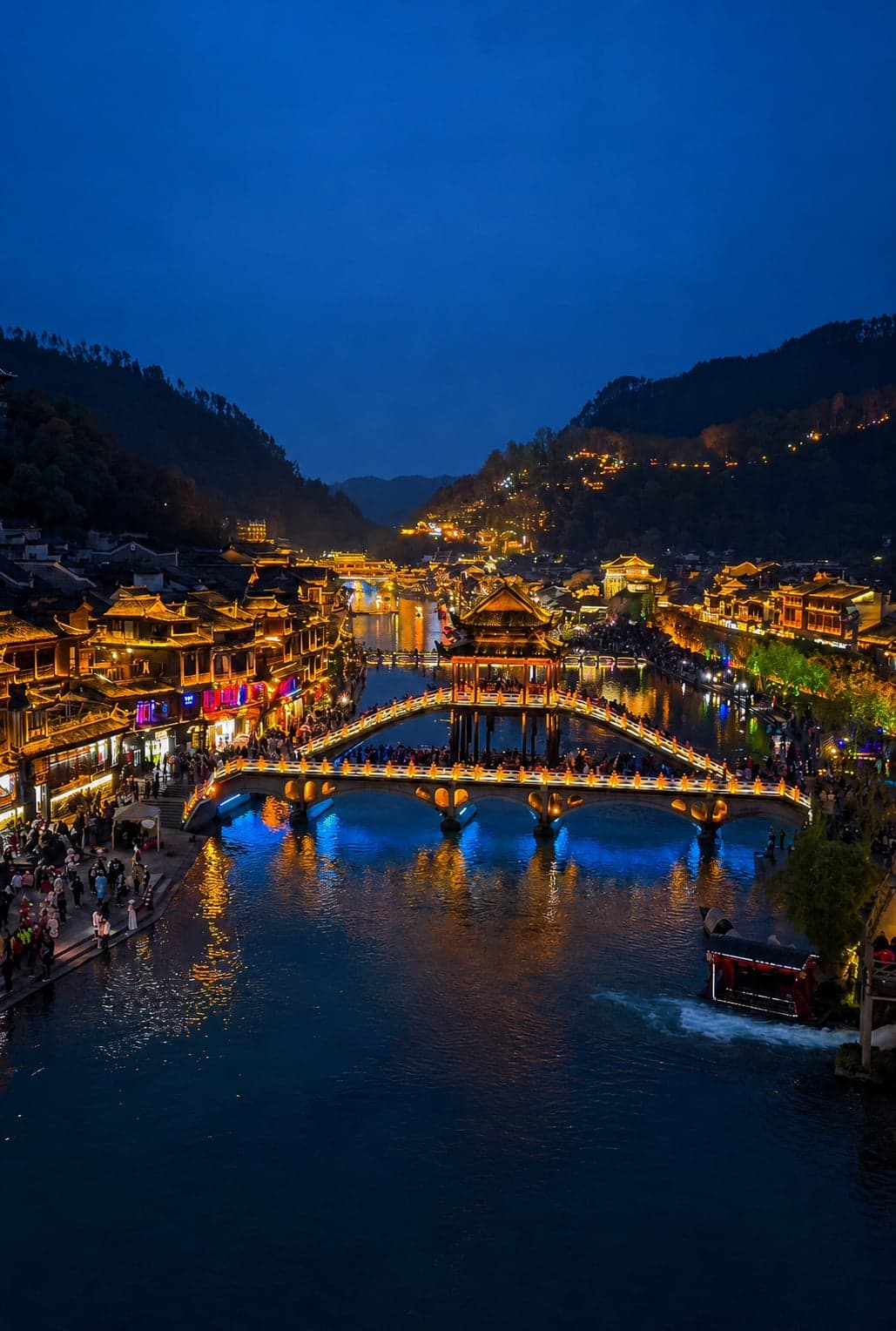
Begin the day at the Wulingyuan standard gate for a slower second-pass through the lower valley along the Golden Whip Stream, where the pillars read from below rather than above. After lunch, a road transfer brings you to Furong Town, the Tujia hilltop village built above the Wangcun waterfall. Stilted houses lean out from the cliff, and the river drops in white sheets behind the back lanes. An early Tujia dinner in the top village closes the trip, with the waterfall lit through the evening below.
- Golden Whip Stream walking path
- Wulingyuan valley floor
- Furong Town (Wangcun Waterfall)
- Stilted Tujia houses
- Chopped-chilli fish head (optional)
- Waterfall under evening lights
Best time
April to June · late September to October
Days needed
3 to 4 days
Where it sits
Under two hours by high-speed rail from Changsha · domestic flights from Beijing, Shanghai, Chengdu
Questions worth
answering early.
Three full days is the minimum I would plan for a first Zhangjiajie trip. Day one in Wulingyuan, on the Tianzi-to-Bailong counter-flow ridge route. Day two on Tianmen Mountain, the cable car up and the road down. Day three for a slower pass through Wulingyuan's valley floor and a Furong Town side trip. Add a fourth for the Zhangjiajie Grand Canyon Glass Bridge if your party wants it. The trip without the glass bridge loses nothing landscape-wise.
Hand us the dream,
We carry it through.
From your first enquiry to your last airport pickup, our specialists design your trip and stay in contact every step of the way. The guides, drivers and hotels you'll meet are part of our trusted network we've worked with for years, briefed to the same standards.
- Dedicated specialists, start to finish
- Guides briefed to our standards
- Fully transparent, no hidden costs
- No deposit until you confirm
Stretch the trip. Stitch in another.

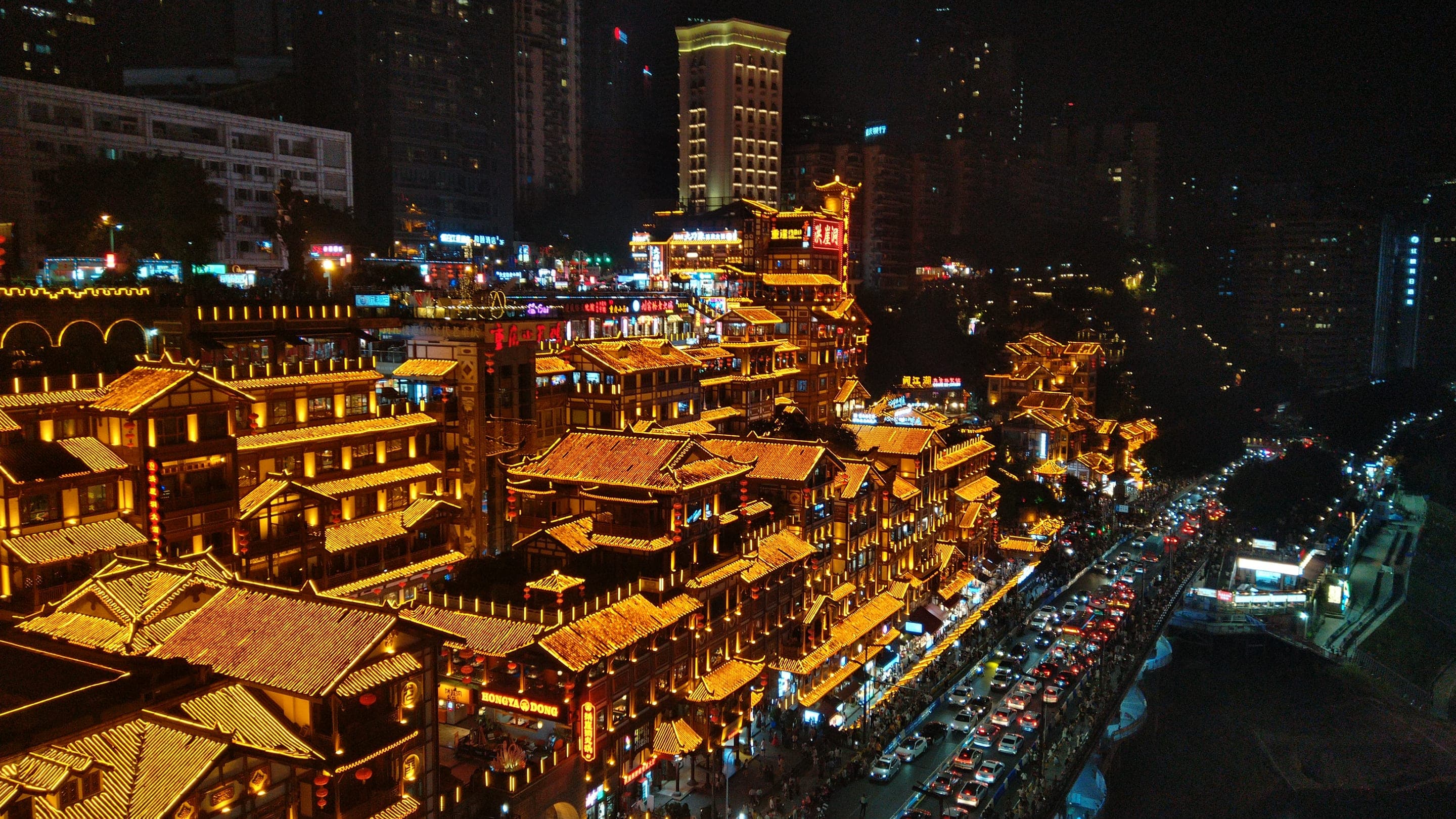
Chongqing
The vertical city as the urban counterpoint to the Zhangjiajie mountains, five hundred kilometres northwest.
Read this destination
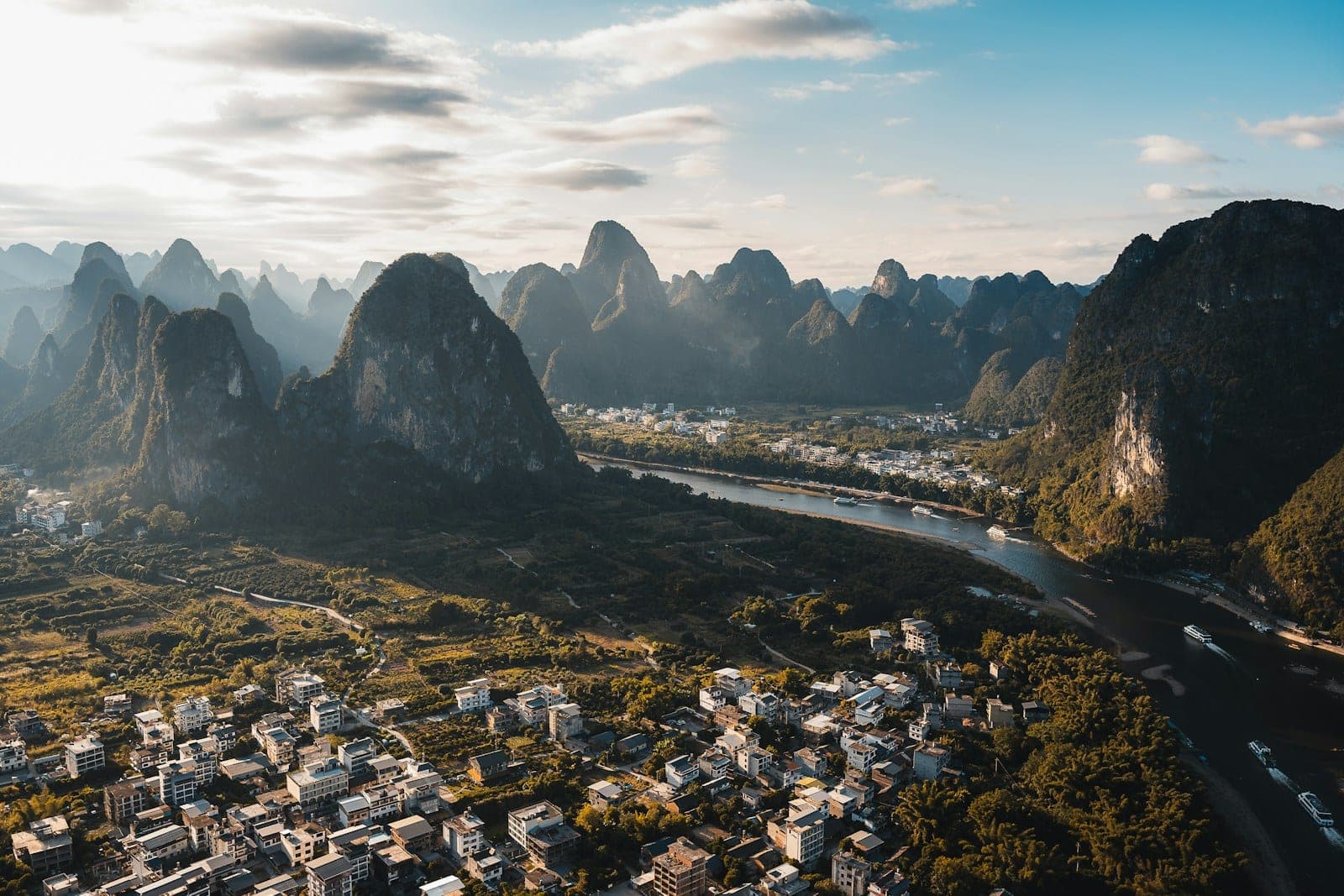
Guilin
The natural-scenery pair south. Sandstone pillars, then karst peaks and the quiet river.
Read this destination
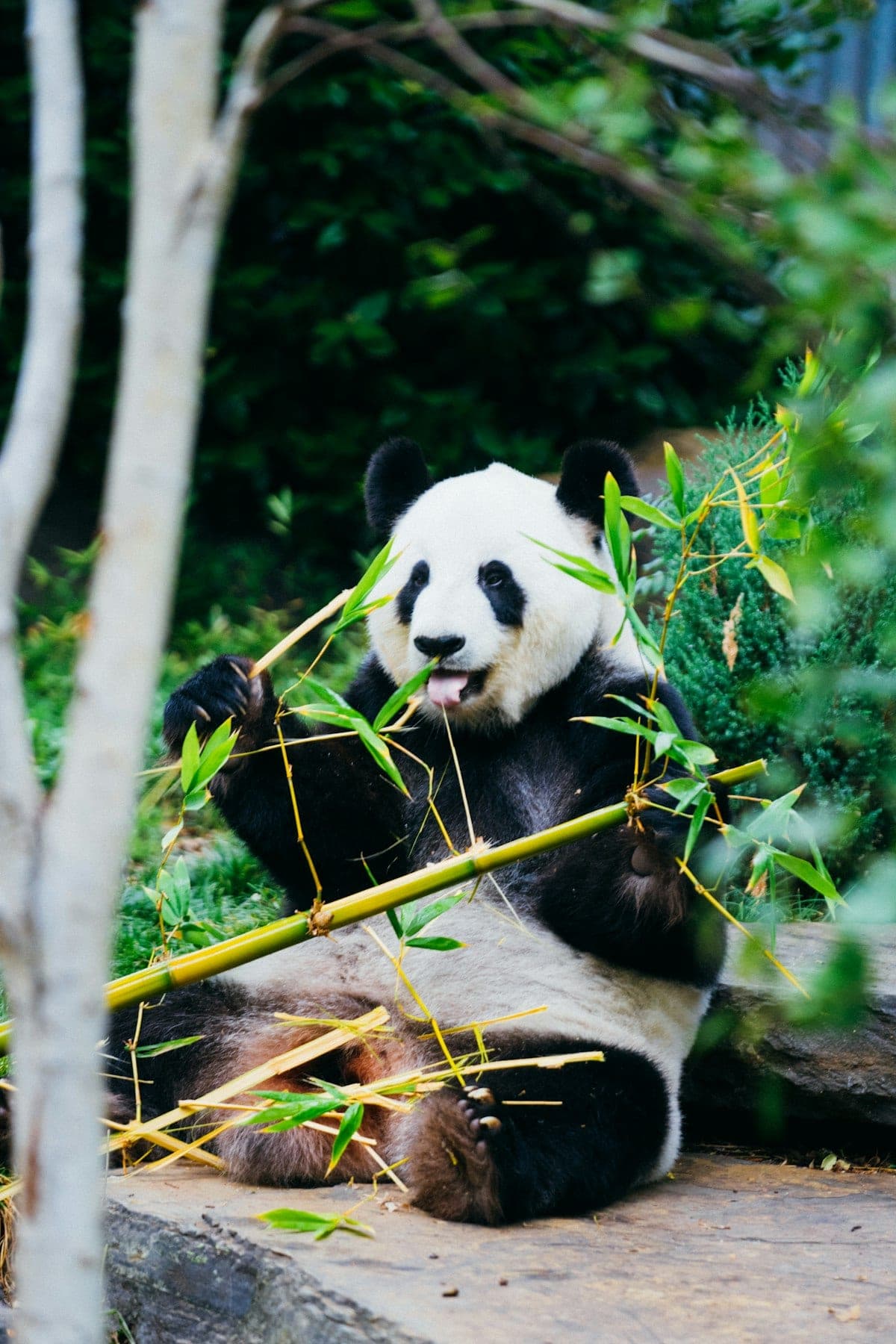
Chengdu
West across the southwest. Sandstone mountains, then tea houses, pandas and Sichuan mala.
Read this destination
Useful before
you enquire.

China tourist visa for US travellers
American passports still need a tourist visa for China under current rules. How the L-visa works, what we handle as part of your booking, and what is on you.
Read this guide
When to visit China, month by month
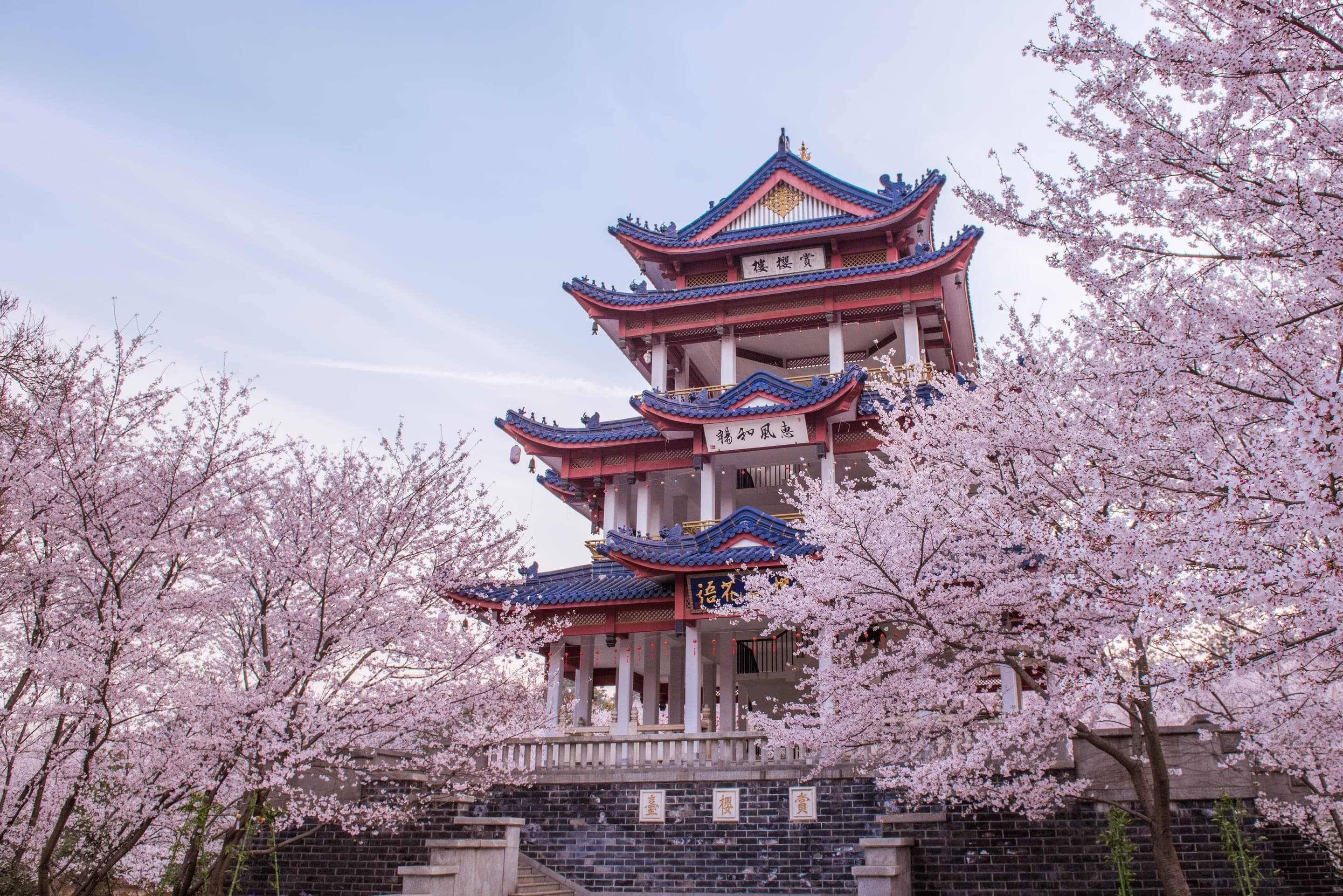
April through June and late September through October are the cleanest windows for Zhangjiajie. The whole year, read by climate and crowd.
Read this guide
Payments and connectivity in China
Set up Alipay or WeChat Pay before you fly. Cards work widely after binding, but limits and small merchants need planning.
Read this guide
How our pricing works
What sits inside the figure on your quote, and what sits outside it. The structure, written out.
Read this guide

Jack Guo
Senior Travel Specialist
Jack has spent ten years working with the guides, drivers and hoteliers across China. He'll be your contact from first enquiry to final airport pickup.
Tell us about your Zhangjiajie trip
Five quick questions. We'll send you a Zhangjiajie-anchored draft with the price within one business day. No deposit. No hard-sell.