
Zhengzhou
the centre of heaven and earth, on the Yellow River
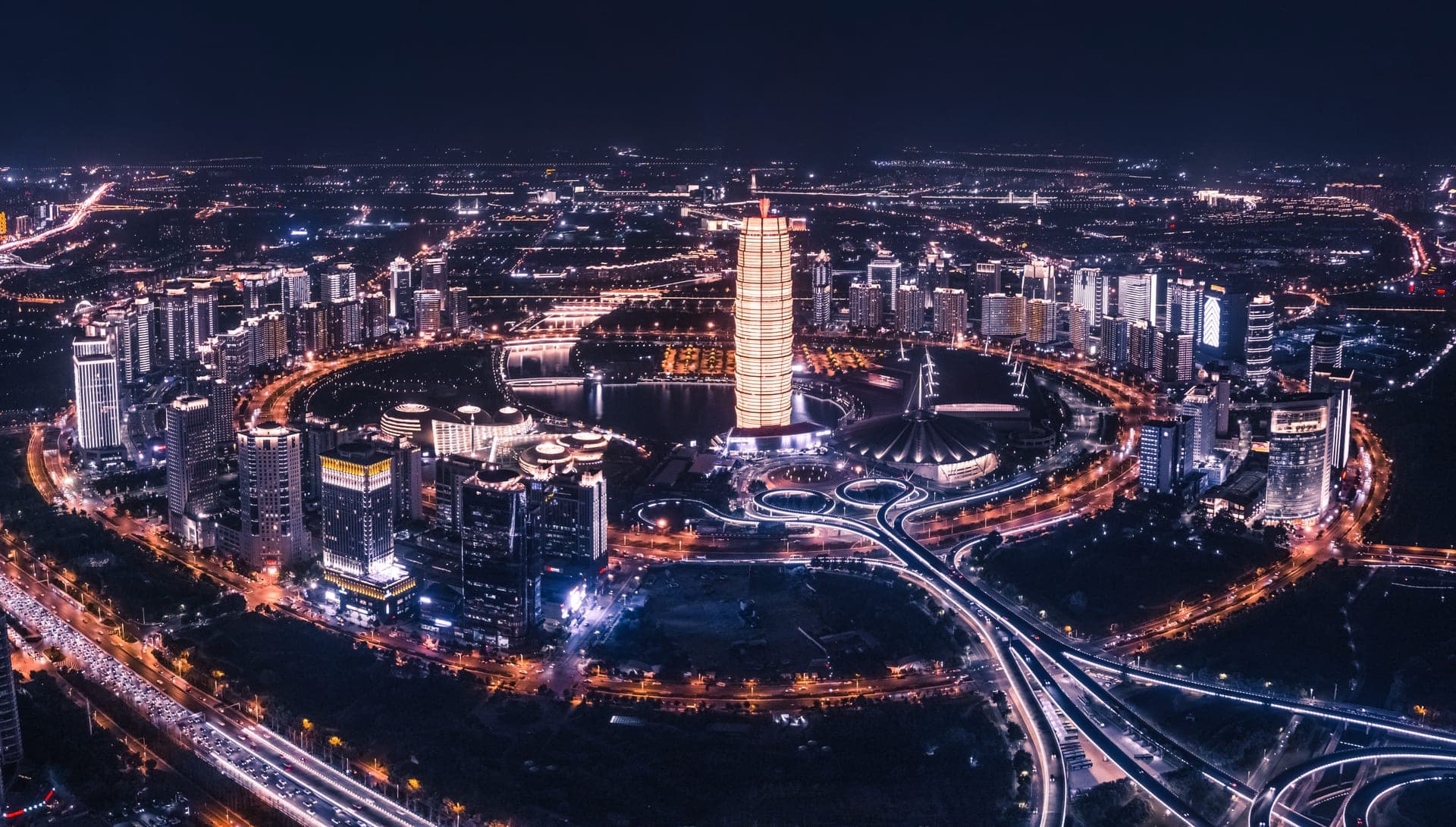
Zhengzhou sits at the centre the old Chinese world drew its compass from. Shang dynasty walls run inside the city, Shaolin Temple is an hour west, and the Yellow River turns onto the plain on the city's northern edge.
Why people
come to Zhengzhou.
What to see

Shaolin Temple(Dengfeng, UNESCO 2010)
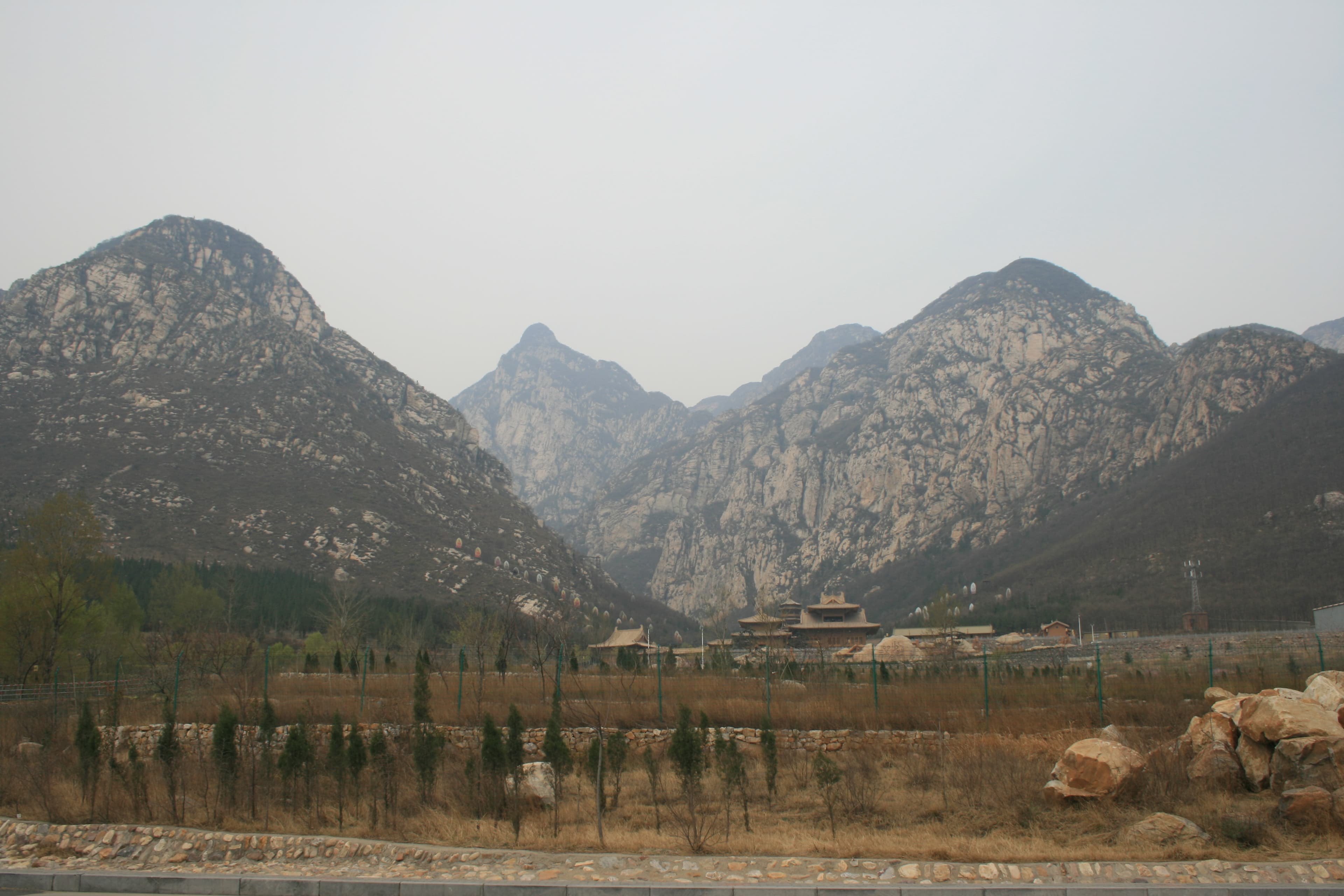
Shaolin Temple is the working Buddhist monastery at the foot of Mount Songshan, the place Chan Buddhism and Shaolin kung fu both name as their birth ground.
The temple was founded in 495 under the Northern Wei Emperor Xiaowen, with the central halls running between cypresses in the inner courts. Dengfeng is roughly 75 kilometres west of central Zhengzhou.
We open the gate window of the day so the courts belong to the early arrivals, with a Chan-Buddhism specialist briefing the layout before the first hall. The route walks the central axis, takes the training hall at its mid-morning kung fu demonstration, and leaves the Pagoda Forest for the early afternoon shade.

Pagoda Forest(Talin, the abbots' burial grove)
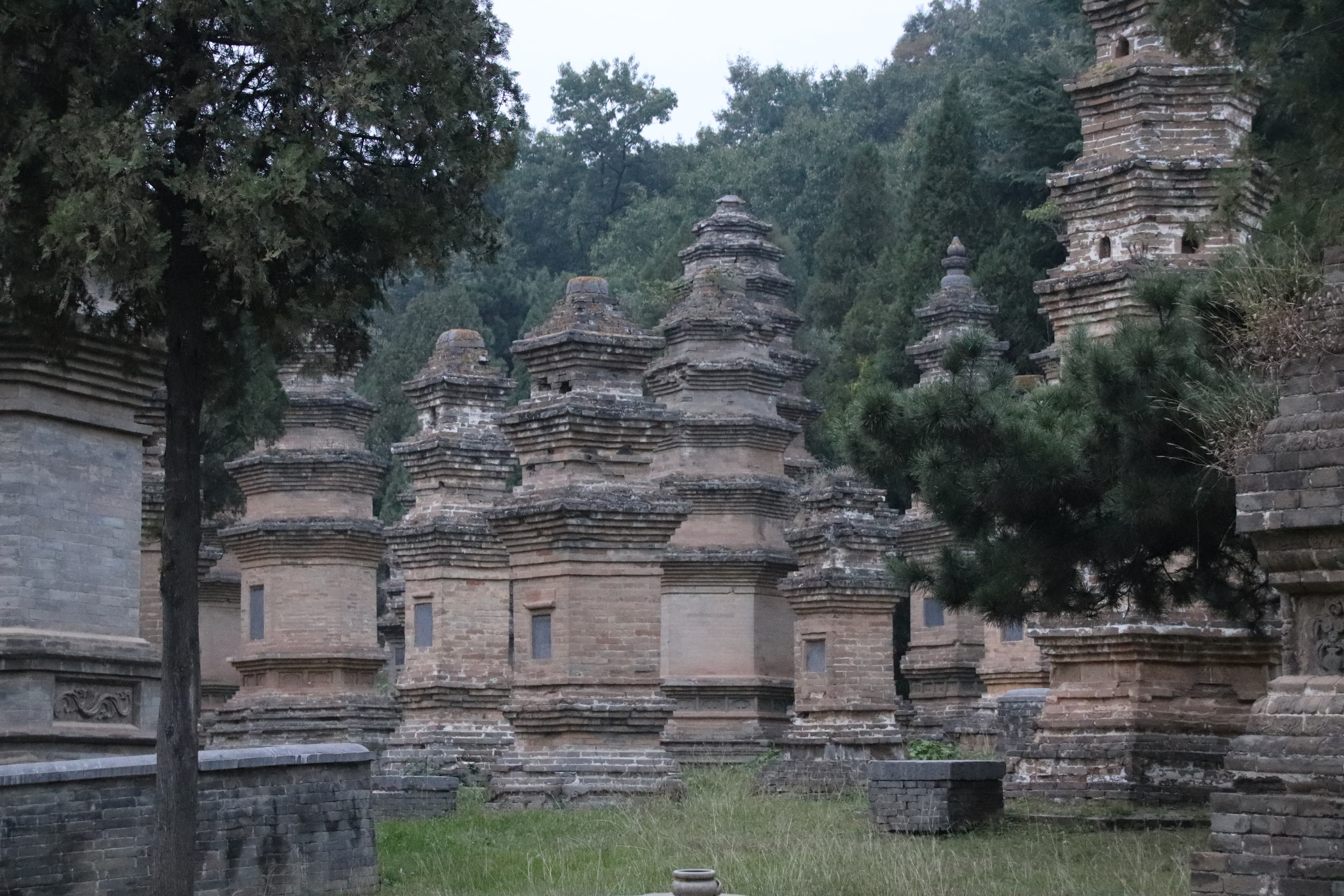
The Pagoda Forest stands a short walk west of Shaolin's main temple, a stone grove of 246 surviving burial stupas raised for generations of abbots and eminent monks.
The pagodas range from Tang and Song to Yuan, Ming and Qing, and reading the architectural changes through the centuries reads as a single open-air gallery. It is the largest pagoda cemetery in China at more than 14,000 square metres.
Your guide walks the dynastic changes from the Tang spires at the east edge to the more ornate Ming and Qing pagodas at the centre, so the difference between centuries lands as a sight rather than a label. The visit is timed for the early afternoon shade, when the brick warms and the cypresses cool the air between the stupas.

Mount Songshan(the central sacred peak)
Songshan is the central peak of the five sacred mountains of China and the literal centre the imperial system once measured its compass from.
The highest summit, Liantian, rises to 1,512 metres, and the slopes hold eight building clusters across a forty-square-kilometre cultural circle. The mountain is walked, not just visited, with the temple plinths and Daoist halls revealing themselves at the bends.
We choose the route against your appetite for steps, with the cable car arranged to set the day's hard climb at the start rather than the descent. A morning loop on Sansheng Peak runs for stronger walkers; a quieter circuit along the lower contour stays for those who want the views without the climb. Lunch is at a Songshan village kitchen, not the cable-car canteen.

Songyang Academy(one of the Four Great Academies)
Songyang Academy is the cypress-shaded Song-dynasty learning court on Songshan's southern slope.
Founded in 484, given its current name by Emperor Renzong in 1035, it was the lecture seat of Cheng Hao, Cheng Yi, Sima Guang and Zhu Xi. The General Cypress in the front court is widely held to be the oldest surviving cypress tree in China. The academy is the quiet counterweight to Shaolin's noise.
We pair the academy with the slower morning of the Songshan day so the cypress shade arrives in the warm hour. Your guide reads the four-master roll-call at the lecture hall, walks the General Cypress in the front court, and leaves the Daoist altar at the rear for an unhurried close. Tea is set on the slope outside on a clear day.

Henan Museum(the Central Plain's bronze and jade)
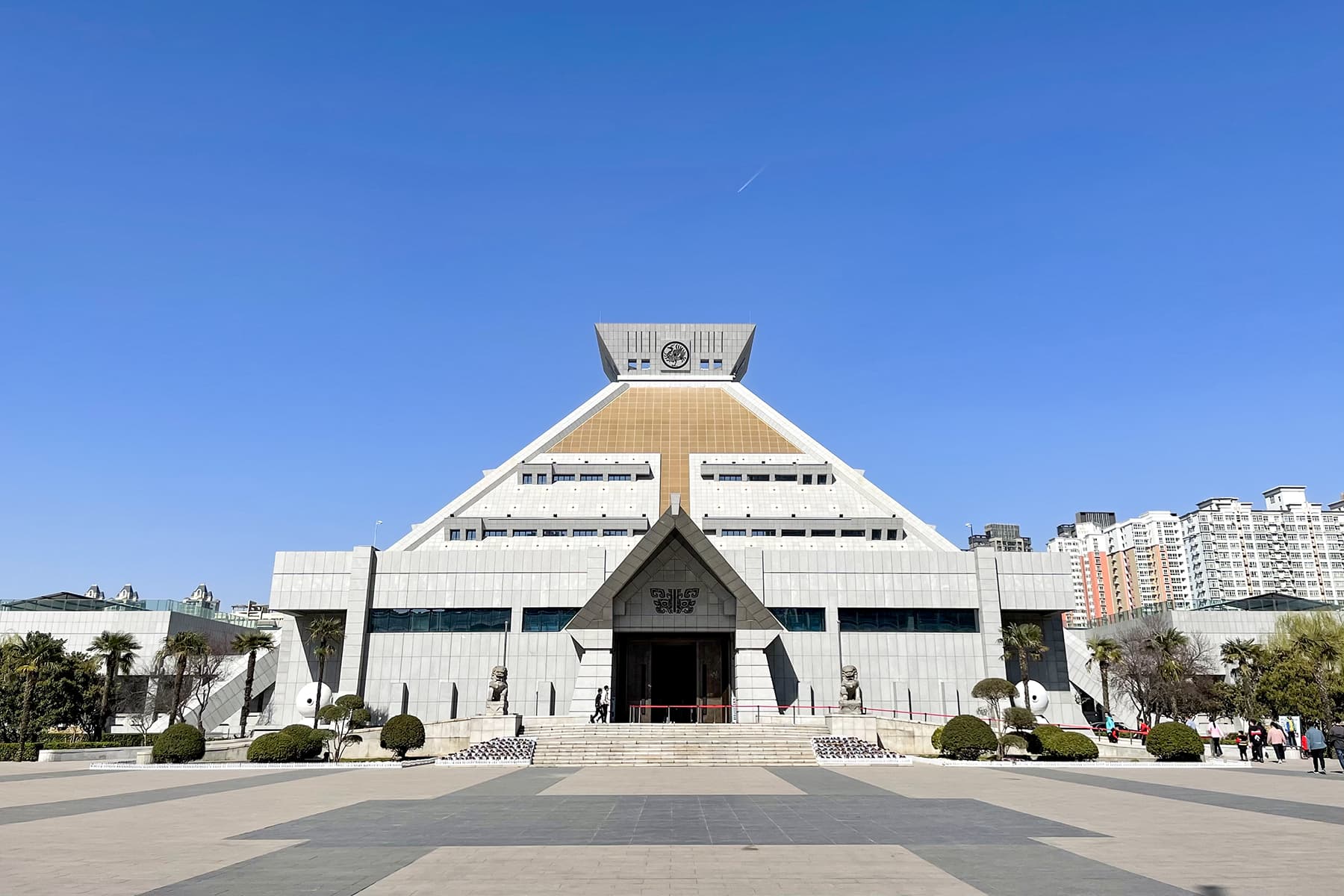
The Henan Museum holds the bronze, jade and ceramic heritage of the Central Plain cradle from the Erligang Shang on through the imperial dynasties.
The collection runs more than 170,000 artefacts, with the Nine Treasures of the Central Plain marking the main rooms, and the Shang bronzes carrying the deepest weight. The current building opened on 1 May 1998 across more than 100,000 square metres.
We book the reservation against your passport details ahead of the day, then sequence the route Shang bronze first, jade and ceramics second, the imperial dynasties last so the Central Plain reads as a single millennia-long thread. A Henan-history specialist is arranged for travellers who want extended commentary on the bronze halls.

Zhengzhou Shang City ruins(c. 1600 BCE, in the modern city)
The Shang City rampart runs through the centre of modern Zhengzhou, the rammed-earth walls of an early Shang capital still standing inside the downtown grid.
The walls are roughly 3,600 years old, dated to around 1600 BCE in the Erligang phase, and were built 36 metres wide at the base, enclosing a 3.2-square-kilometre fortified core. Many scholars identify the site as the Shang capital of Ao.
We walk the most readable surviving stretch with a Bronze Age specialist who reads the rammed-earth section in cross-section against the modern road grid, so the wall is a working ruin rather than a label on a fence. The visit is timed for late afternoon, when the brick warms and the city quietens, and pairs naturally with the Henan Museum the same day.

Yellow River Scenic Area(Yan-Huang on the southern bank)
The Yellow River opens onto the North China Plain at the northern edge of Zhengzhou.
The scenic area sits on the river's southern bank in the loess hills, with the giant twin-figure sculpture of Emperors Yan and Huang, the legendary co-ancestors of the Chinese nation, looking out across the silt-brown water. The sculpture stands 106 metres tall, inaugurated on 16 April 2007 after a build that began in 1987.
We come in the morning, when the loess slope catches a soft sidelight and the river still carries the night's stillness. The route runs the Yan-Huang sculpture first, then drops to the river path for the wider view back over the silt plain. A small hovercraft run is set on the river when the season allows.

Longmen Grottoes(Luoyang, as a day trip)
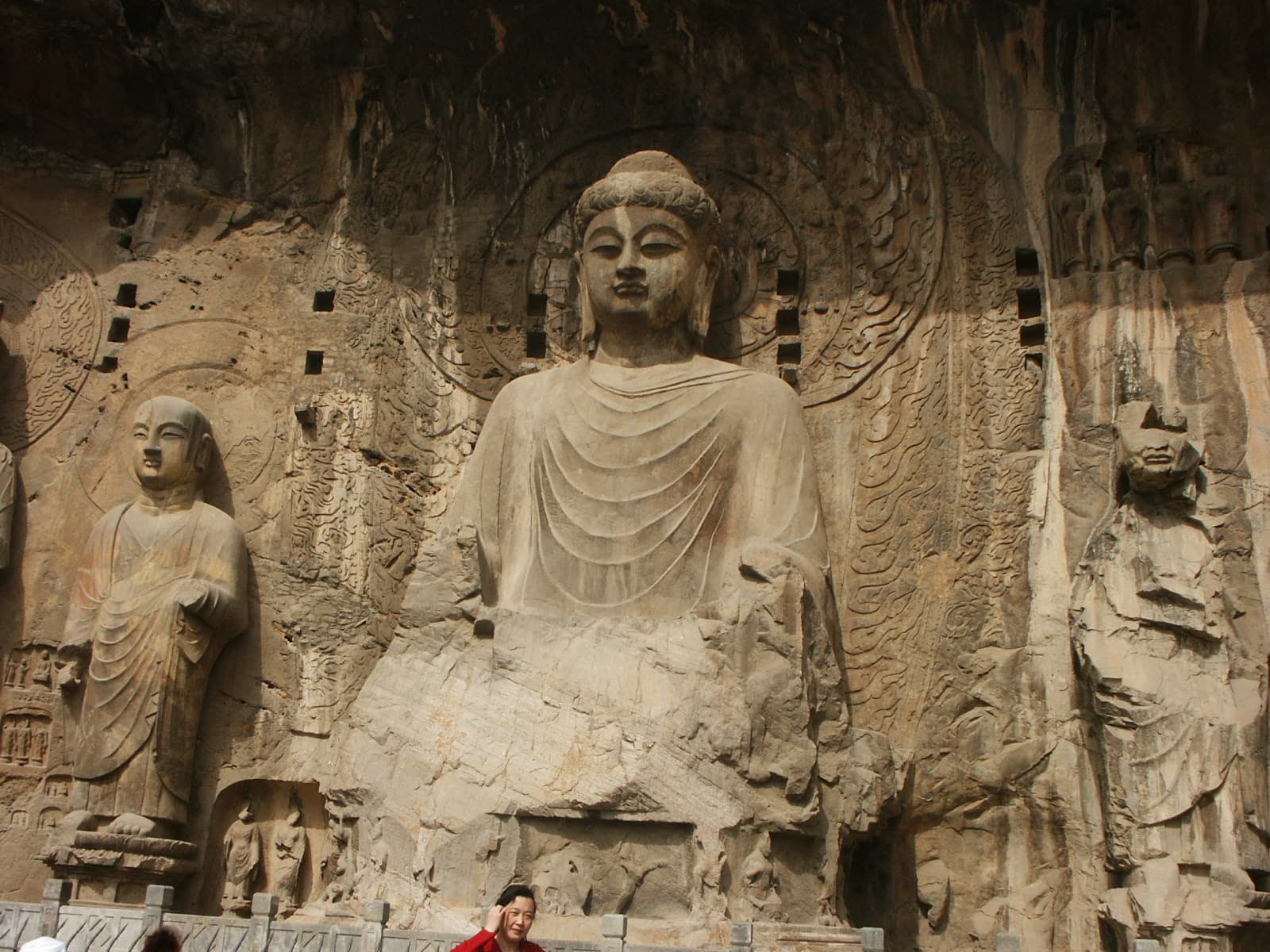
The Longmen Grottoes carry the peak of Northern Wei and Tang Buddhist stone carving along a mile of cliff face on the Yi River.
More than 2,300 caves and niches hold roughly 110,000 statues, cut between the late fifth and mid-eighth centuries. The 17.14-metre Vairocana at Fengxian Temple is the headline figure, said to carry the face of Empress Wu Zetian. Luoyang is comfortably a day from Zhengzhou by rail.
We take the morning high-speed rail to Luoyang Longmen, so the cliff face catches the first light from the west bank. The route walks the west bank first to the Vairocana at Fengxian, crosses the Yi River for the east-bank view at noon, and saves the Bai Garden temple for the late afternoon shade.

Kaifeng Millennium City Park(Qingming Riverside, the Song-dynasty park)
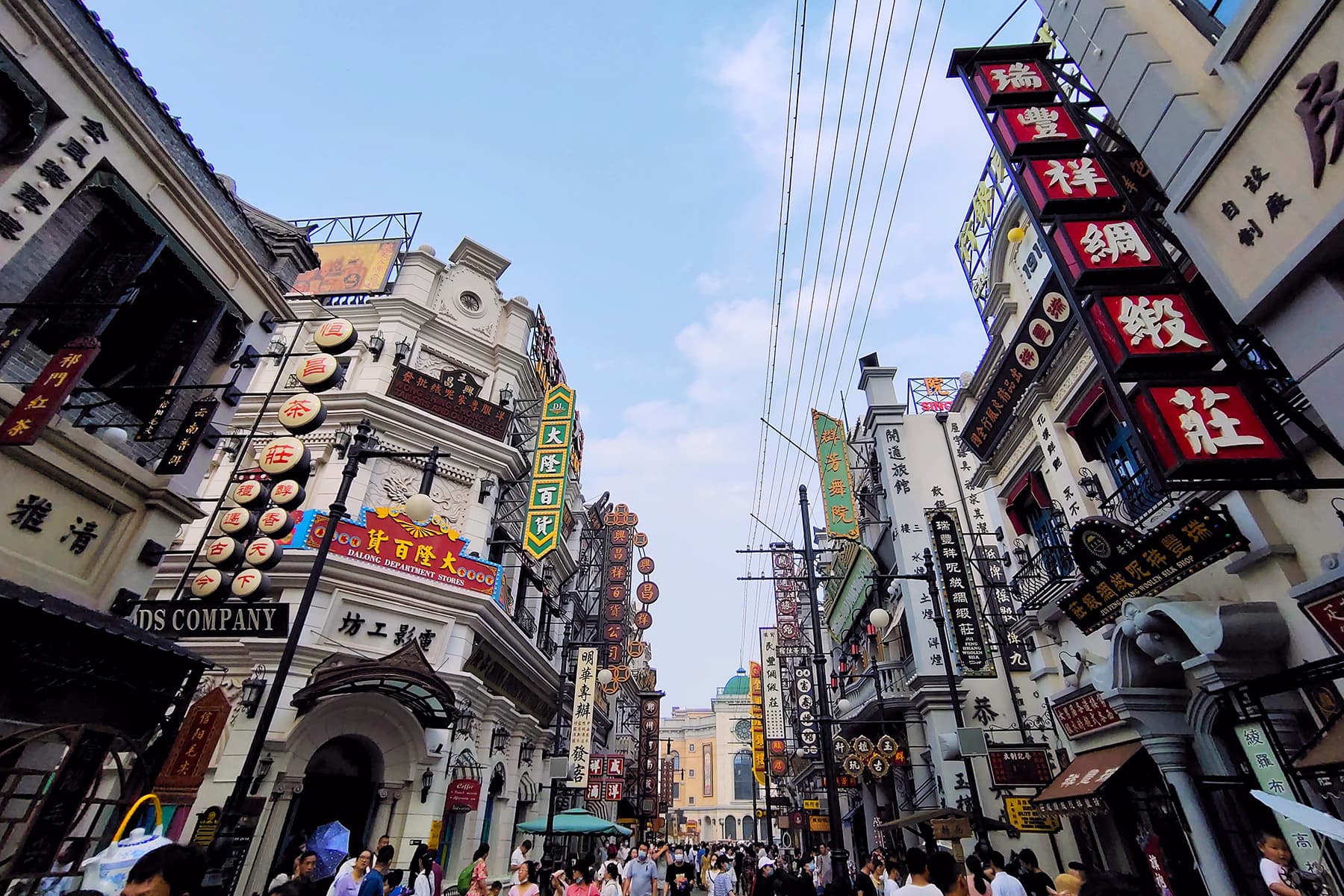
Kaifeng's Qingming Riverside is the open-air theme park built into the image of Zhang Zeduan's twelfth-century handscroll Along the River During Qingming Festival.
Wooden Rainbow Bridges, period storefronts, costumed performers and roughly seventy live Song-era scenes a day run across forty hectares, with twelve of them under water. The park opened in 1998 and Kaifeng sits about eighty kilometres east of Zhengzhou.
We sequence the day around two of the strongest scheduled performances rather than the standard loop, so the Rainbow Bridge sequence and the boat-poling routine on the inner canal land at full crowd-energy. A guided snack walk through the period market is set across the midday lull, with the costume-rental option offered ahead for travellers who want it.
What to eat

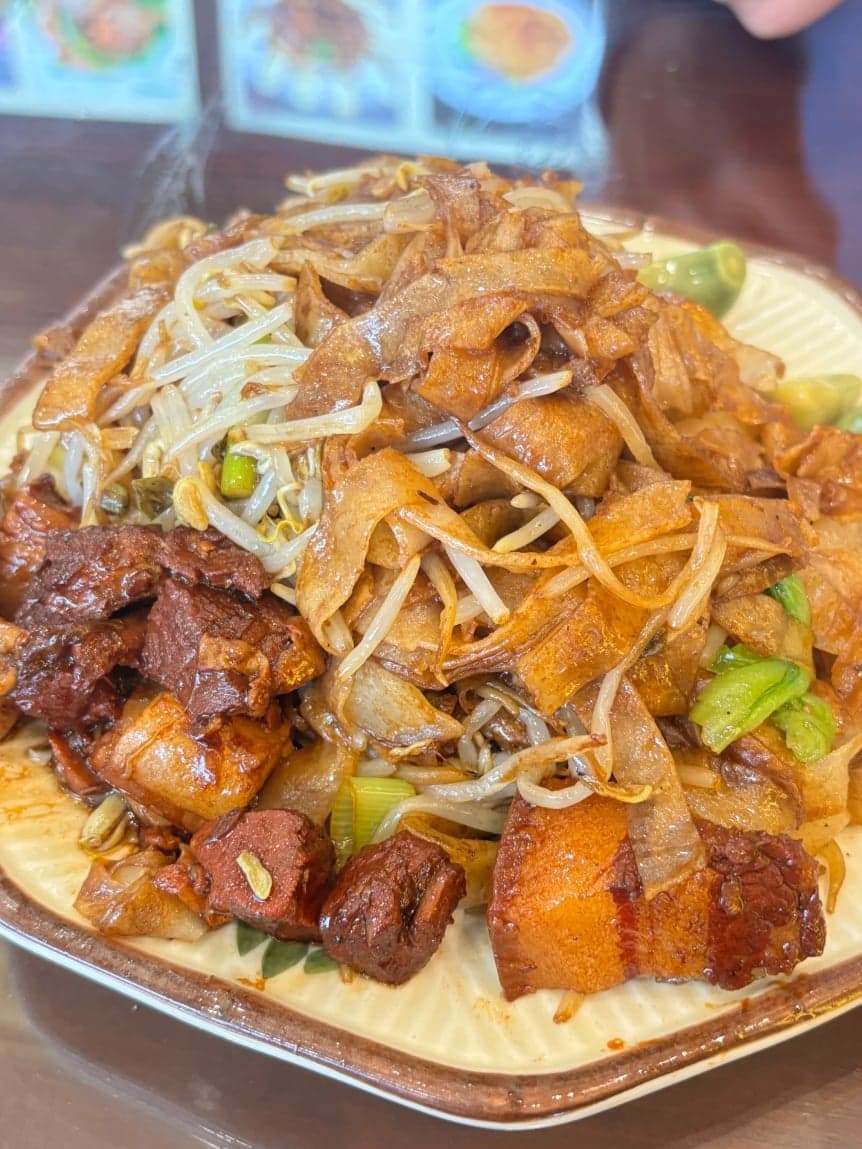
Henan braised noodles(Hui Mian, the lamb-broth bowl)
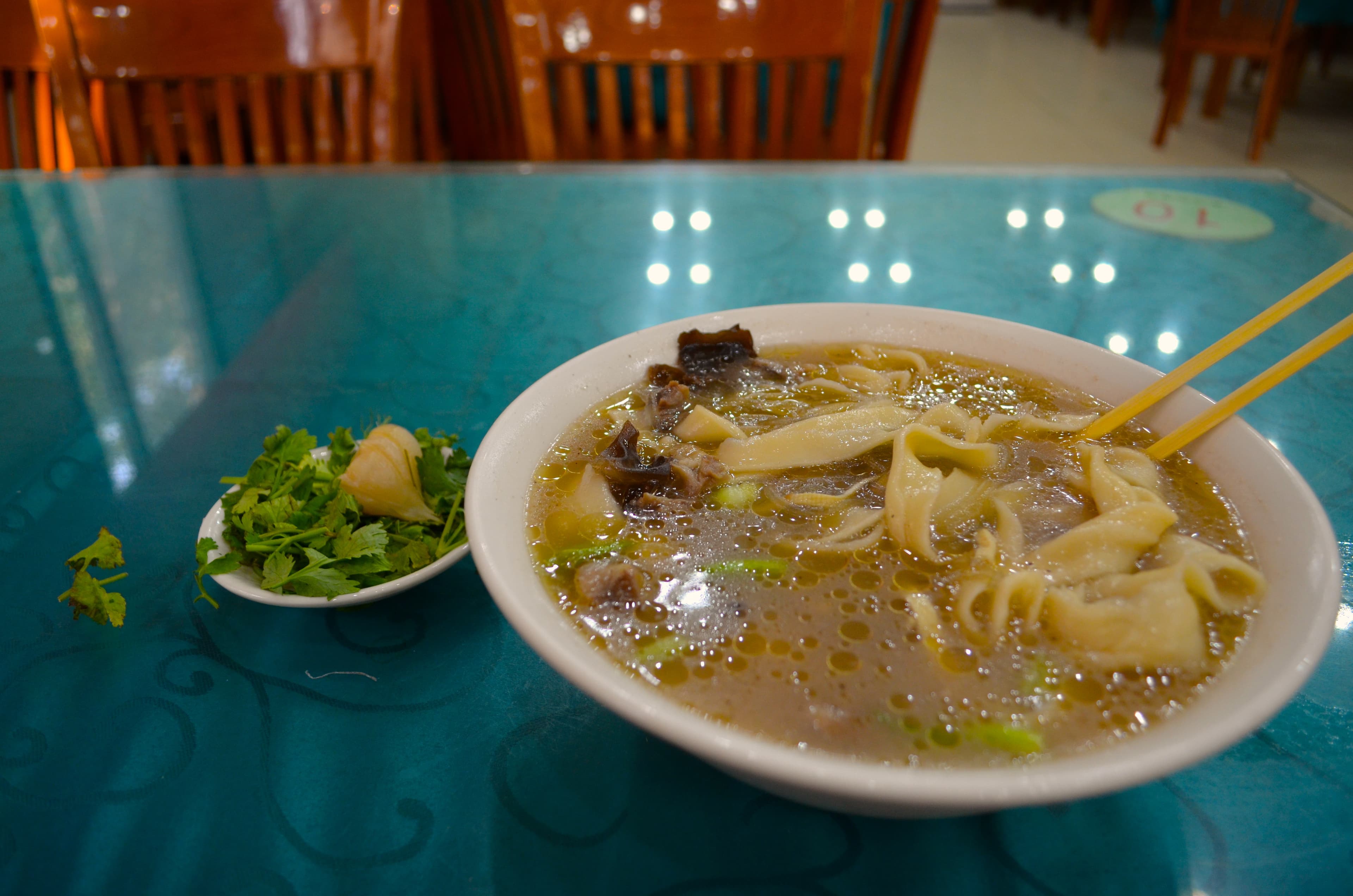
Henan braised noodles are the bowl Zhengzhou names as its own.
Wide hand-pulled noodles slip through a long-simmered lamb broth kept on a clean cardamom and dried-kelp note. Ribbons of lamb, lily buds, wood-ear and translucent bean threads weight the bowl. The broth reads rich and savoury, with the warm sweetness of well-cooked lamb under the spice, and the hand-pulled noodle carries the broth on every slip.
We take you to one of the city's older noodle houses in the busy lunch window, when the broth is at its deepest and the noodles are being pulled to order at the front pass. Your guide demonstrates the slip-and-lift the locals use to read the chew, and the side dish of pickled chilli is set for those who want the lift.

Henan pepper soup(Hu La Tang, the breakfast bowl)
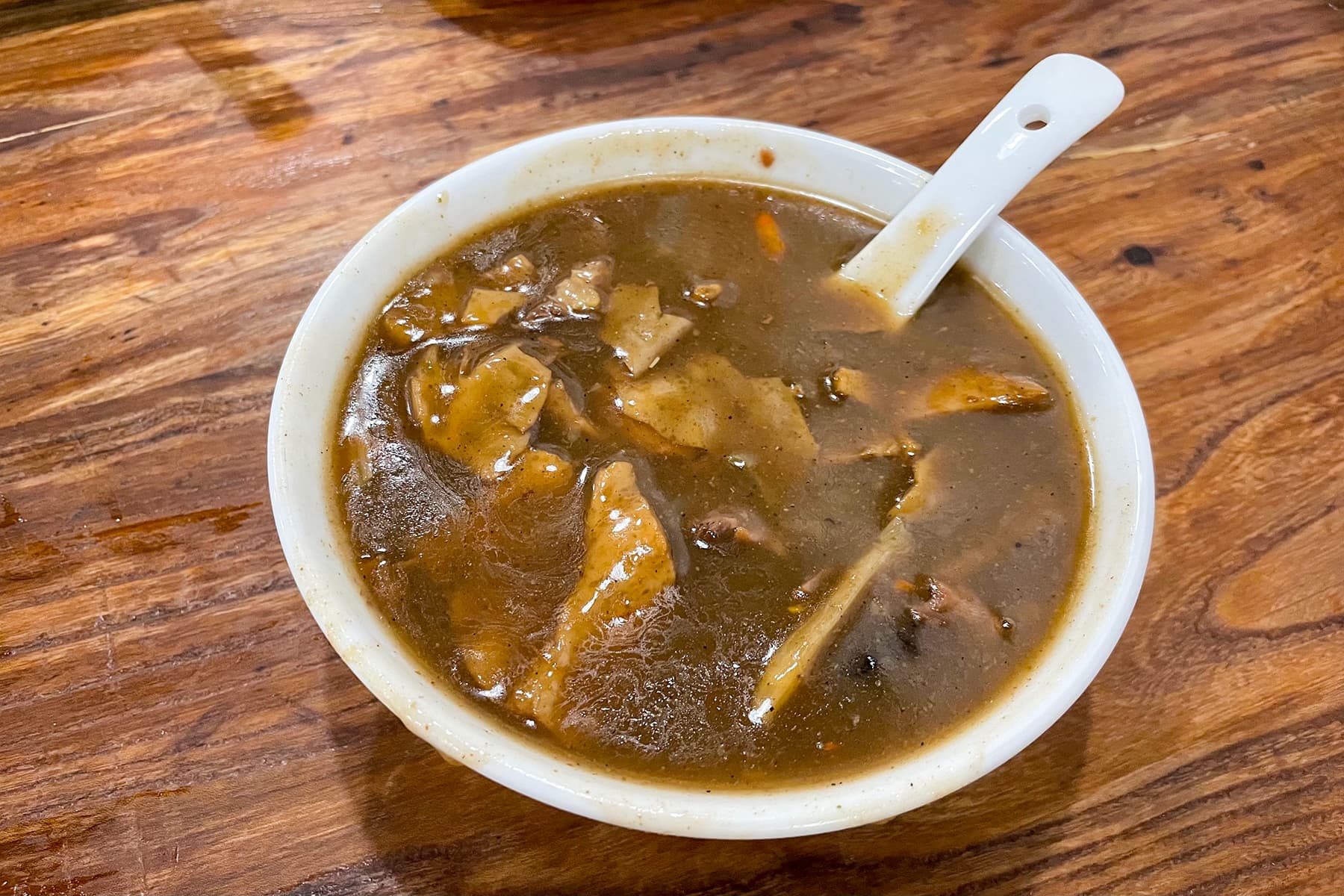
Henan pepper soup is the breakfast Zhengzhou wakes up to.
The bowl is built on a long-simmered bone broth thickened with starch until it sits in the spoon, then carried with beef or mutton strips, gluten, daylily, wood-ear and translucent vermicelli. White pepper sets the heat, vinegar lifts the tang, sesame oil rounds the finish. The flavour reads as warm pepper, sharp vinegar and savoury beef in turn, a slow-sipped bowl rather than a quick one.
We choose a respected old breakfast house and time the stop for the early window, when the broth is still in the deep simmer and the pepper has not flattened on the burner. Your guide orders both the classic version and the meatball variant so a first-timer reads the dish across two registers, with mantou bread set on the side for the sopping.

Kaifeng soup dumplings(Guan Tang Bao, the Song-capital snack)
Kaifeng soup dumplings are the delicate counterpoint to the lamb broth of Zhengzhou.
A pleated pouch of paper-thin dough holds a hot spoonful of pork broth around a meat filling, set down still rolling at the table. The technique is to bite the side, drink the broth before it cools, then eat the dumpling. The flavour reads as clean, gently savoury and broth-rich, with a dish of dark vinegar and shredded ginger for the lift.
We seat you at a respected Kaifeng house mid-meal-service, when the dough is being pinched to order and the dumplings reach the bamboo steamer within three minutes of going on. Your guide demonstrates the bite-and-sip sequence so the broth lands clean, with the dark-vinegar dish set within easy reach. A second round is paced for the second wave of steamers.
Shows and experiences

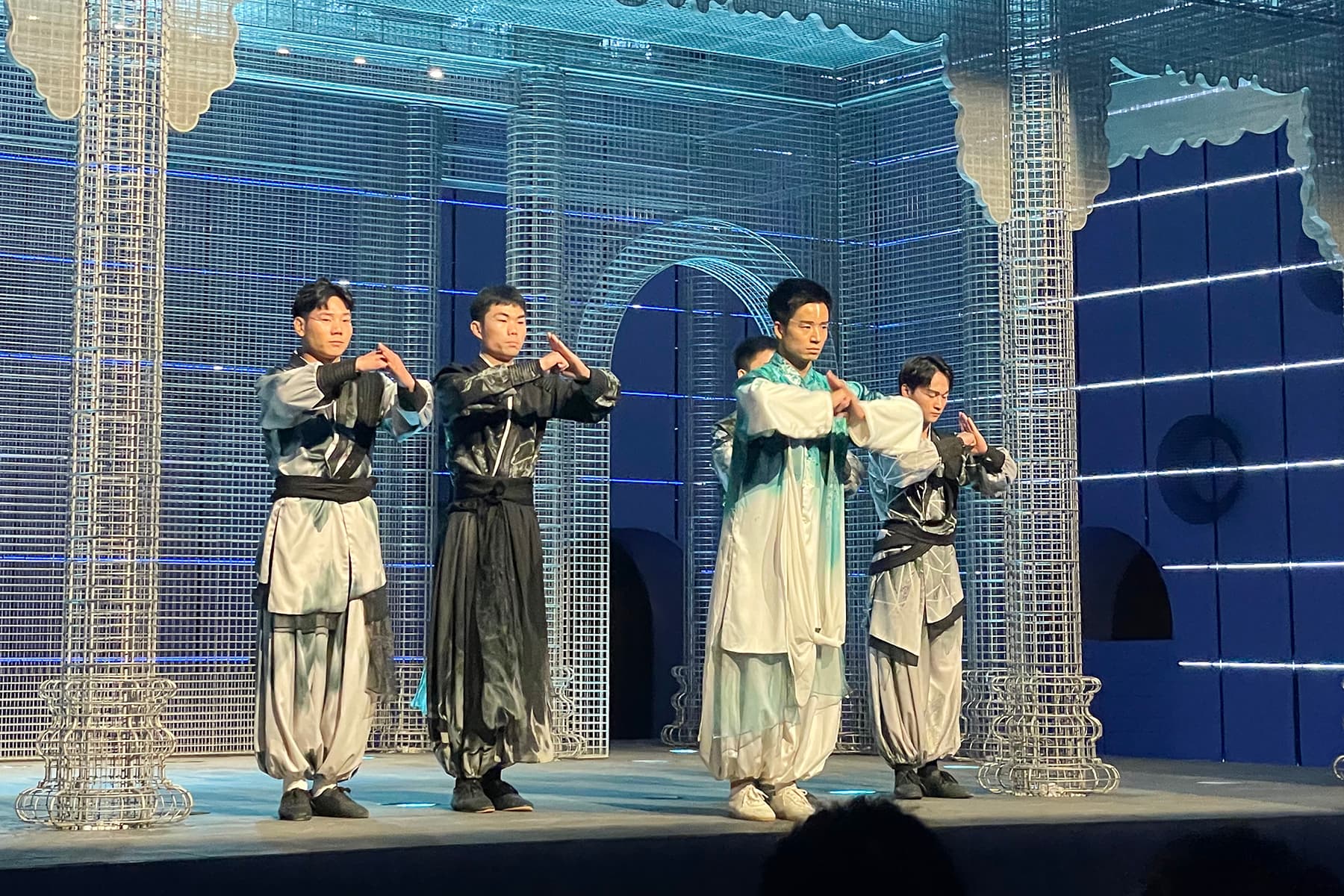
Shaolin kung fu demonstration(at the training hall, Shaolin Temple)
The Shaolin kung fu demonstration runs daily at the on-site training hall, performed by monk-trained students of the temple lineage.
The 30-minute programme moves through hard-qi feats, weapon routines and the classical empty-hand forms, with the spear set, the staff set and the single-broadsword set the headlines. The hall is timber-and-tile, the floor is hardwood, and the demonstration carries the same forms the temple has trained for centuries.
We book the second mid-morning slot rather than the headline window, when the hall is at working order but the crowd has thinned. Front-row centre seats are set so the timing of the weapon transitions is the trick, not the costume. Your guide briefs the sequence before entry so the routine reads in plan rather than as a blur.

Zen Music Shaolin(the open-air mountain ceremony)
Zen Music Shaolin is the seventy-minute open-air ceremony staged in the Daixiangou gorge seven kilometres east of Shaolin Temple.
The natural amphitheatre of cliffs, streams and ancient trees sits at 1,400 metres, with monks, musicians, dancers and projected scripture spread across nearly three square kilometres of staged country. The opening drum runs the gorge as a single body of sound.
We choose evenings the weather is set for the show, since the open-air staging is weather-dependent, and book seats in the central upper rows for the long sightlines across the gorge. A blanket and a flask are arranged before the cool sets in, and the car waits at the gorge exit for the quiet return down to the Songshan road.

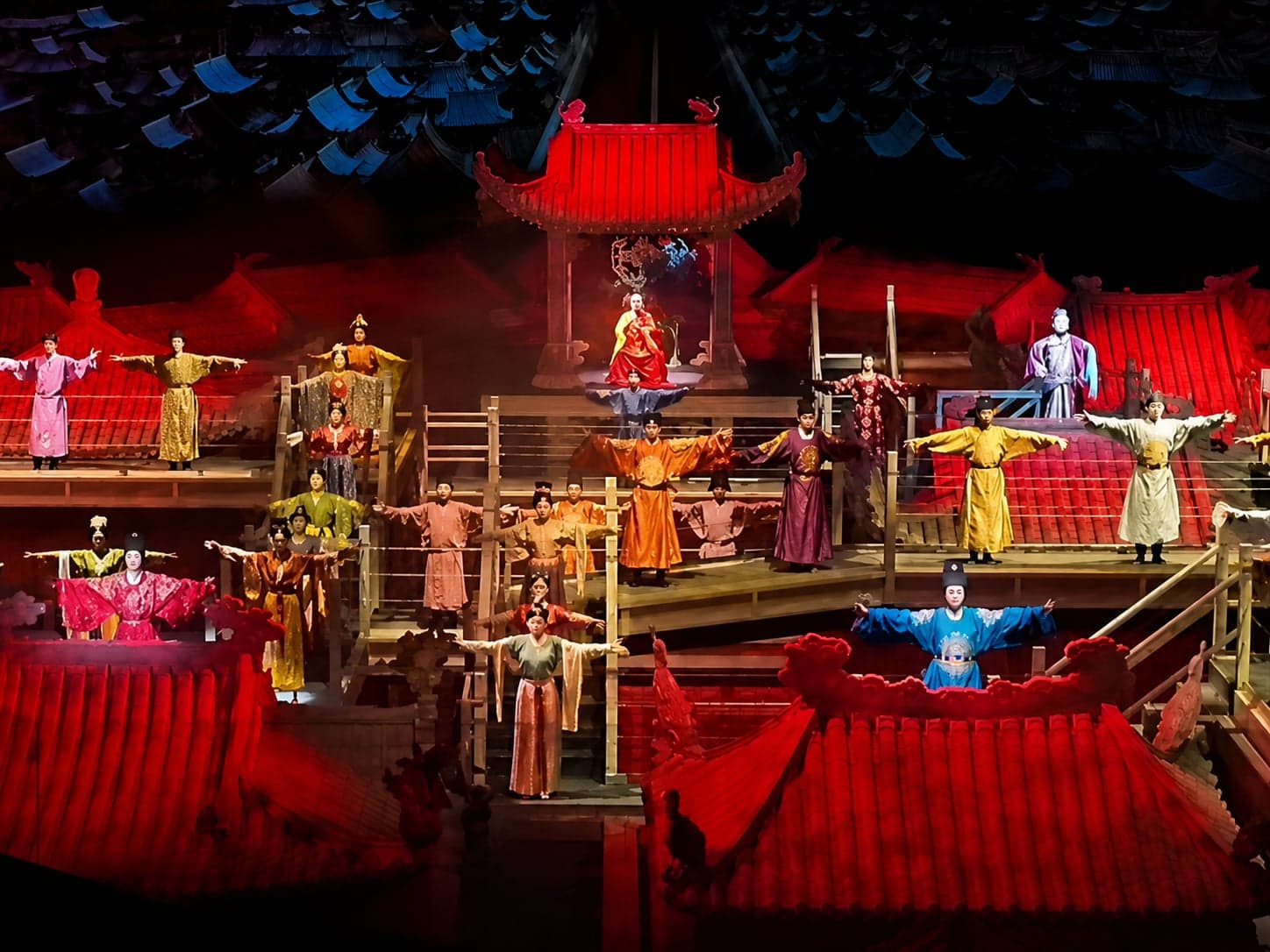
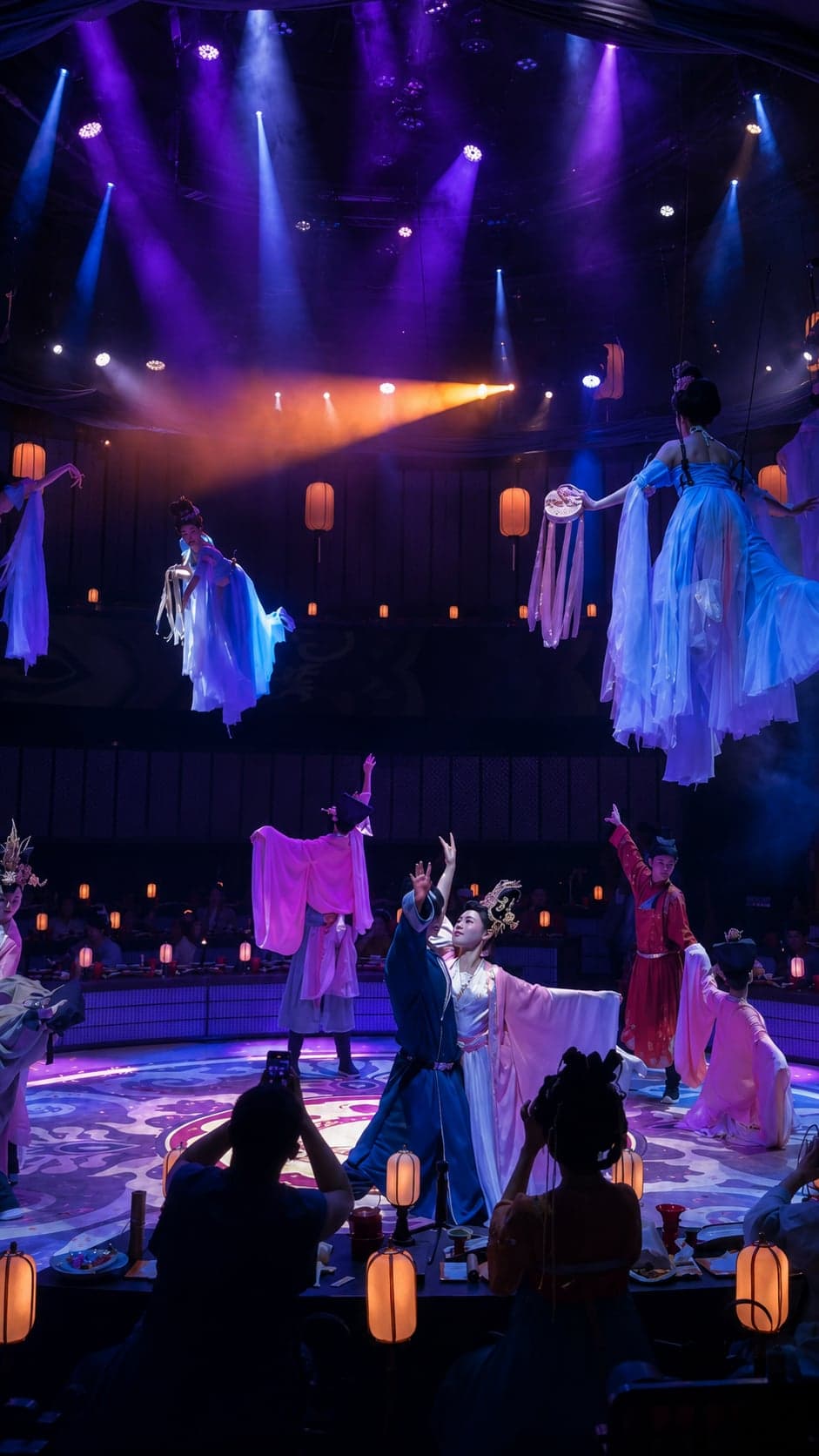
Only Henan Drama Fortress(Wang Chaoge's 21-theatre walk)
Only Henan is the walled drama fortress Wang Chaoge built in the suburbs of Zhengzhou.
Twenty-one theatres and fifty-six interlocking courtyards stage Henan history back to back across the day, with nearly 800 minutes of performance running on a rotating schedule: the great famine, the railway, the Yellow River break, the Song capital. The visitor moves through the courtyards rather than sits in one seat. Opened in 2021.
We arrive in the early afternoon so the first three theatres land in the warm hour and the headline evening sequences hit at full lighting cycle. Your guide briefs the running order against the day's schedule so the route picks the strongest five theatres rather than the standard loop, with a sit-down dinner set inside the fortress at the mid-point.
What three days
might look like.
- Day 01
Bronze in the morning, drama after dark.
Begin the morning at the Henan Museum, where the Shang bronzes and the Nine Treasures of the Central Plain run as a single thread back to the cradle. A relaxed Henan lunch follows, with the afternoon eased into the Shang City rampart in the centre of the modern city as the late light warms the rammed earth. As evening approaches, the day finishes inside the Only Henan Drama Fortress, with five of its twenty-one theatres set ahead and a sit-down dinner at the fortress mid-point.
- Henan Museum
- Shang bronze halls
- Zhengzhou Shang City ruins
- Only Henan Drama Fortress
- Five-theatre running order
- Day 02
Songshan, Shaolin, the gorge at dusk.
Drive west into Dengfeng for the gate window at Shaolin Temple, walking the central axis before the day's coaches arrive, and the kung fu demonstration at the on-site training hall. A leisurely Songshan-village lunch follows, with the afternoon held for the Pagoda Forest under the cypress shade and a slower run at Songyang Academy. As night falls in the gorge, the day finishes with the open-air Zen Music Shaolin ceremony at Daixiangou, with the car waiting for the quiet return down to the Songshan road.
- Shaolin Temple
- Kung fu demonstration
- Pagoda Forest
- Songyang Academy
- Zen Music Shaolin (Daixiangou)
- Day 03
Yellow River, Song capital, soup dumplings.
Begin the morning at the Yellow River Scenic Area, the loess slope still soft and the silt-brown plain wide open below the Yan and Huang sculpture. Continue east to Kaifeng for the Qingming Riverside Park, with two of the day's strongest Song-era scenes set ahead and a guided snack walk through the period market across the lull. A late-afternoon stop at a respected Kaifeng soup-dumpling house closes the day before the return to Zhengzhou. For those wishing to extend, the Longmen Grottoes are added as a fourth day, with a morning rail run west to Luoyang.
- Yellow River Scenic Area
- Yan-Huang Sculpture
- Kaifeng Millennium City Park
- Rainbow Bridge sequence
- Kaifeng soup-dumpling tasting
- Longmen Grottoes (optional fourth day)
Best time
April to May; September to October
Days needed
3 days; 4 with Longmen
Where it sits
Xi'an 1 hour 48 minutes by rail; Beijing 2 hours 30 minutes; Luoyang 35 minutes
Questions worth
answering early.
Three full days is the right shape, with four if Longmen is added. One day for the Henan Museum, the Shang City ruins and Only Henan. One day for Shaolin, Songshan and the Songyang Academy, with Zen Music Shaolin at dusk. One day for the Yellow River and a Kaifeng Qingming Park afternoon. A fourth day west for Longmen Grottoes if the route doesn't already pass through Xi'an.
Hand us the dream,
We carry it through.
From your first enquiry to your last airport pickup, our specialists design your trip and stay in contact every step of the way. The guides, drivers and hotels you'll meet are part of our trusted network we've worked with for years, briefed to the same standards.
- Dedicated specialists, start to finish
- Guides briefed to our standards
- Fully transparent, no hidden costs
- No deposit until you confirm
Stretch the trip. Stitch in another.
Useful before
you enquire.

China tourist visa for US travellers
American passports still need a tourist visa for China under current rules. How the L-visa works, what we handle as part of your booking, and what is on you.
Read this guide
When to visit China, month by month
April through May and September through October are the cleanest windows for Zhengzhou. The whole year, read by climate and crowd.
Read this guide
How many days do you need in China
Zhengzhou pairs with Xi'an as the Yellow River and Wei River corridor. What those days hold, and how the legs connect.
Read this guide
Payments and connectivity in China
Set up Alipay or WeChat Pay before you fly. Cards work widely after binding, but limits and small merchants need planning.
Read this guide
How our pricing works
What sits inside the figure on your quote, and what sits outside it. The structure, written out.
Read this guide

Jack Guo
Senior Travel Specialist
Jack has spent ten years working with the guides, drivers and hoteliers across China. He'll be your contact from first enquiry to final airport pickup.
Tell us about your Zhengzhou trip
Five quick questions. We'll send you a Zhengzhou-anchored draft with the price within one business day. No deposit. No hard-sell.