
Changsha
Mao's old school city, with Han mummies underfoot
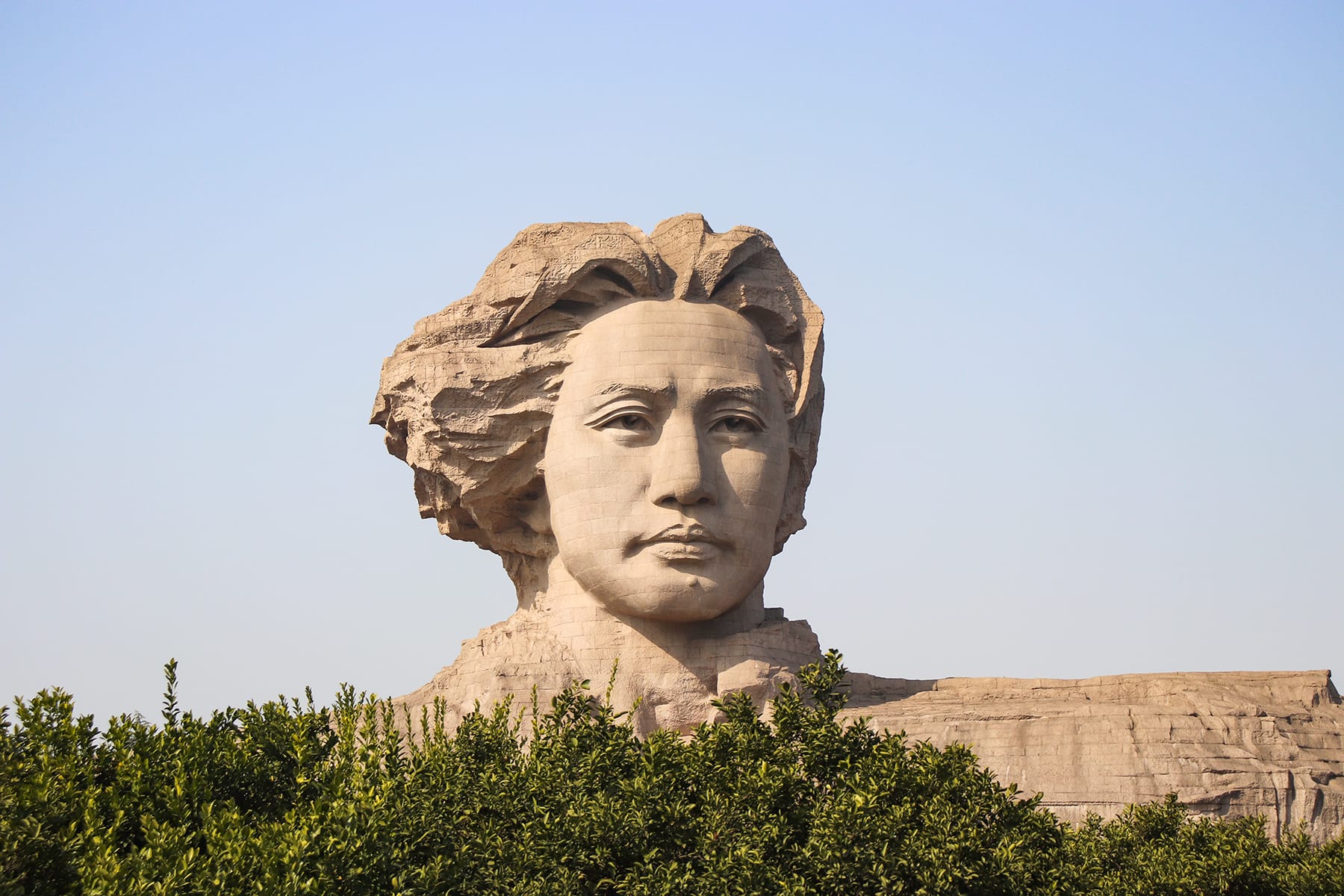
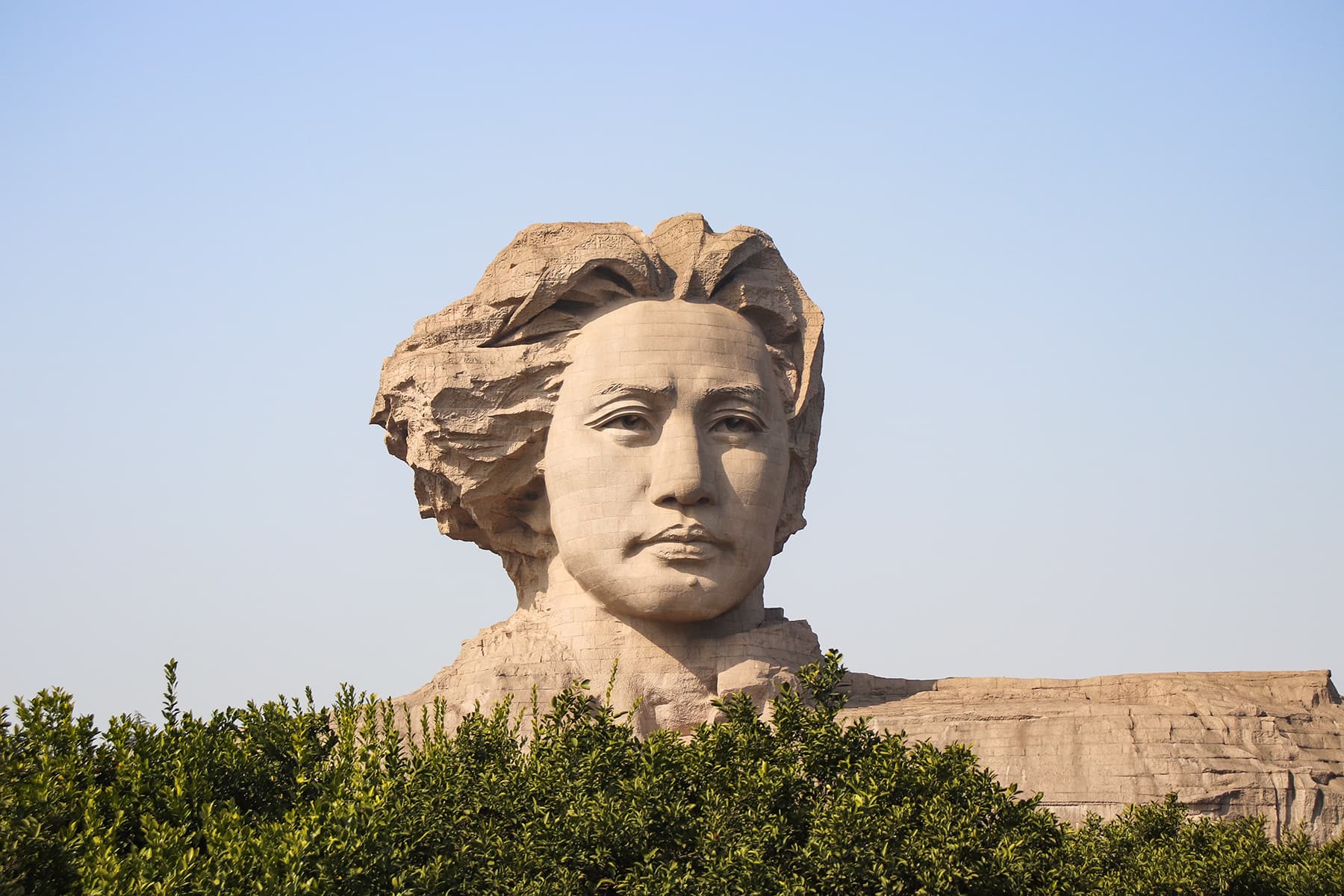
Changsha is Hunan at full volume. A 32-metre Mao watches over the Xiang River, Lady Dai's 2,100-year-old body lies in the city museum, and Wuyi Square fills with the smoke of charcoal-black stinky tofu after dark.
Why people
come to Changsha.
What to see

Hunan Museum(the Mawangdui Han tombs)
The Hunan Museum is the single reason most travellers fly into Changsha.
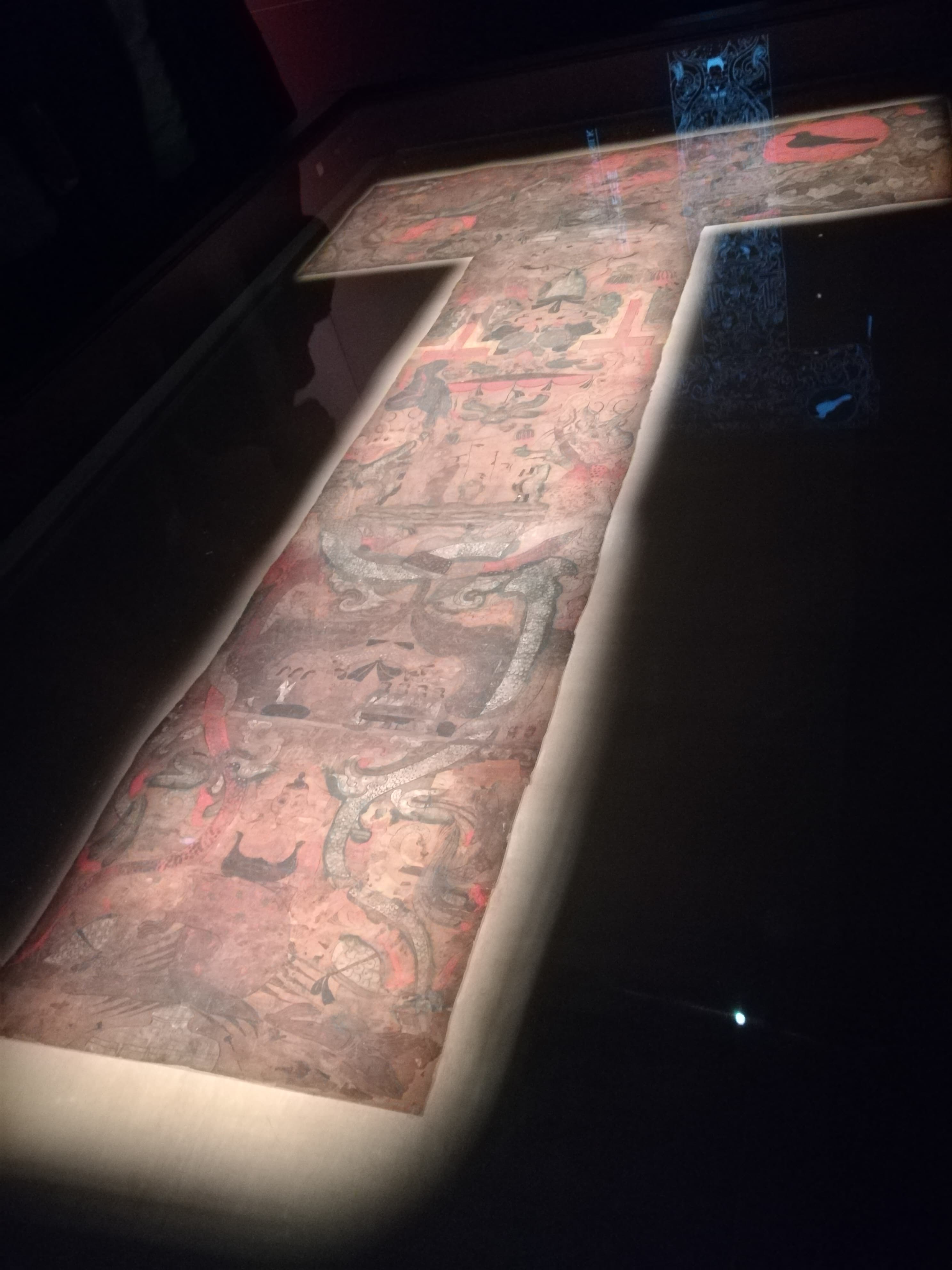
The Mawangdui collection holds Lady Dai, the most intact 2,100-year-old body ever recovered: skin still soft, joints still flexible, organs preserved. Her painted T-shaped funerary banner hangs in the next hall. The new building opened in late 2017 and runs more than 540,000 artefacts across the permanent floors.
We book the reservation against your passport details ahead of the day, then time the Mawangdui galleries for the quieter mid-morning window. Your guide takes the silk banner first, then Lady Dai, then the lacquerware, so the burial reads as a household rather than a museum case. A second pass through the bronzes is left for after the lunch break.

Yuelu Academy(one of the Four Great Academies)
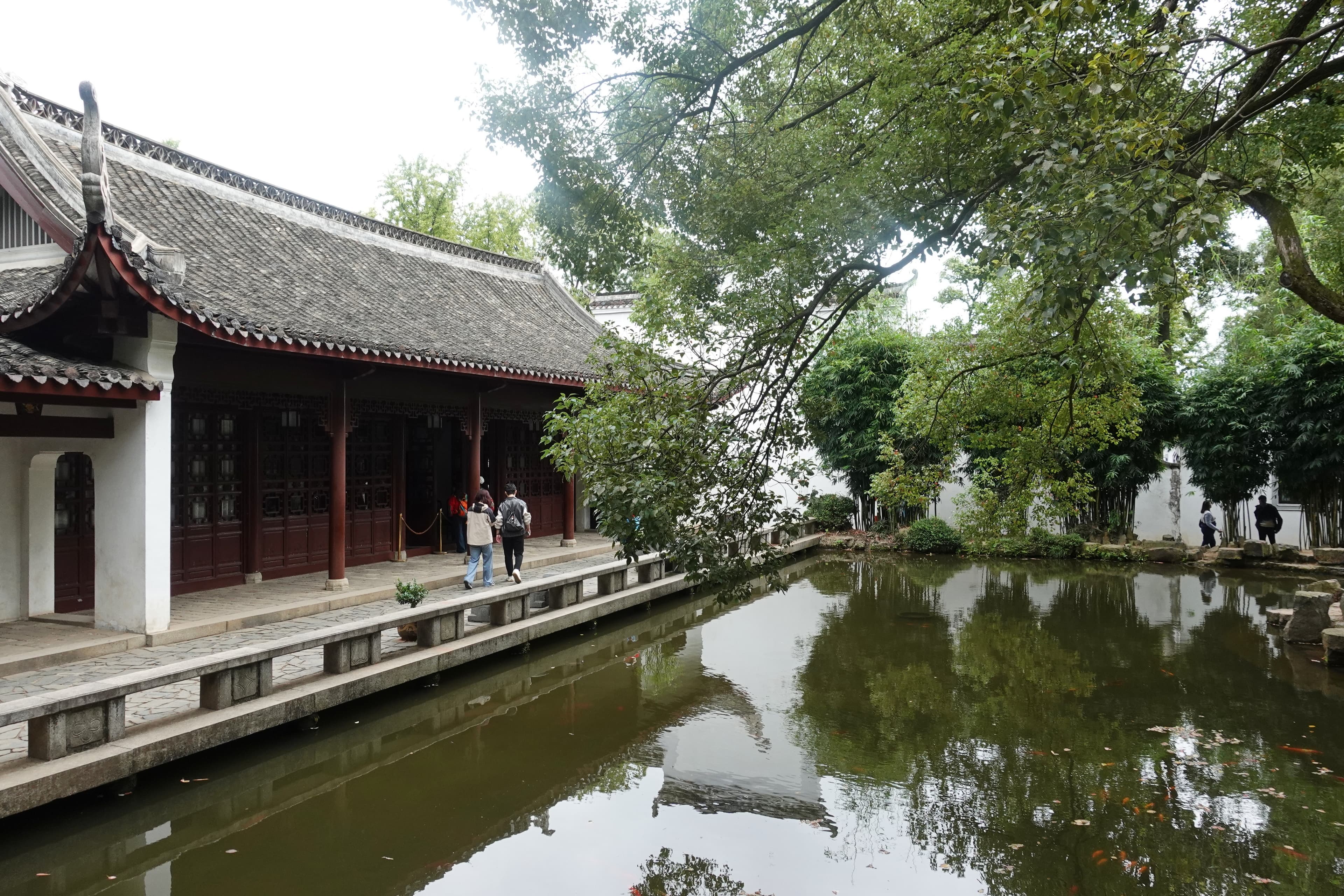
Yuelu Academy is the millennium-old classroom Changsha still uses.
Founded in 976 under the Northern Song, it has run almost without break to today as part of Hunan University. The same Song-Qing courtyards hold lectures during term, and the lecture hall is set with the desks left for the visiting Confucian masters who taught here.
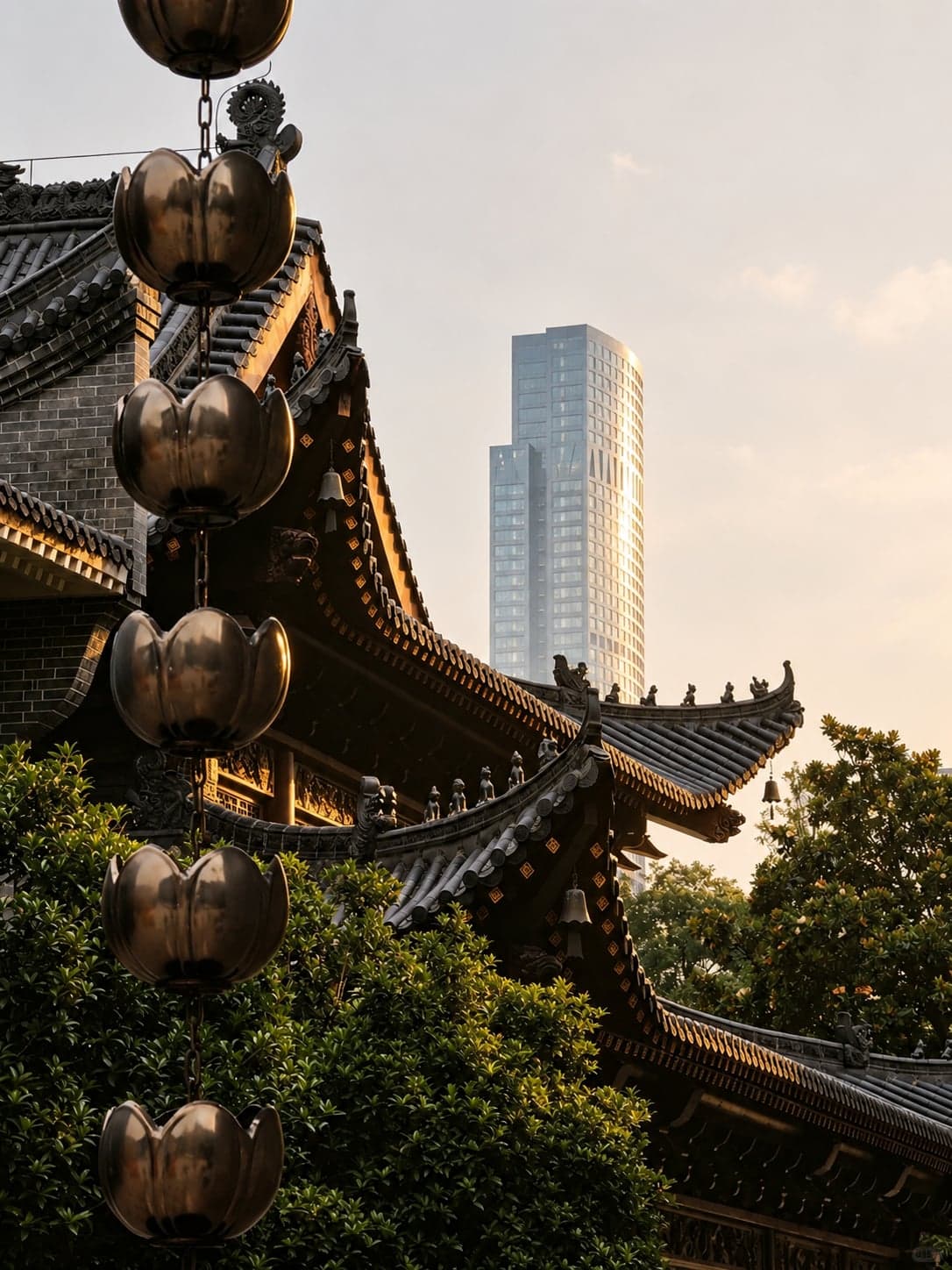
We come early on a weekday, when students are crossing between halls and the air carries the cedar from the slope behind. Your guide walks the four classical inscriptions out loud at the gate, then traces a path through the lecture hall, the Six Gentlemen Hall and the worship court so the campus reads as a place still working.

Yuelu Mountain(the autumn-maple ridge)
Yuelu Mountain runs along the west bank of the Xiang River, a forested ridge that belongs as much to the city as to the wild.
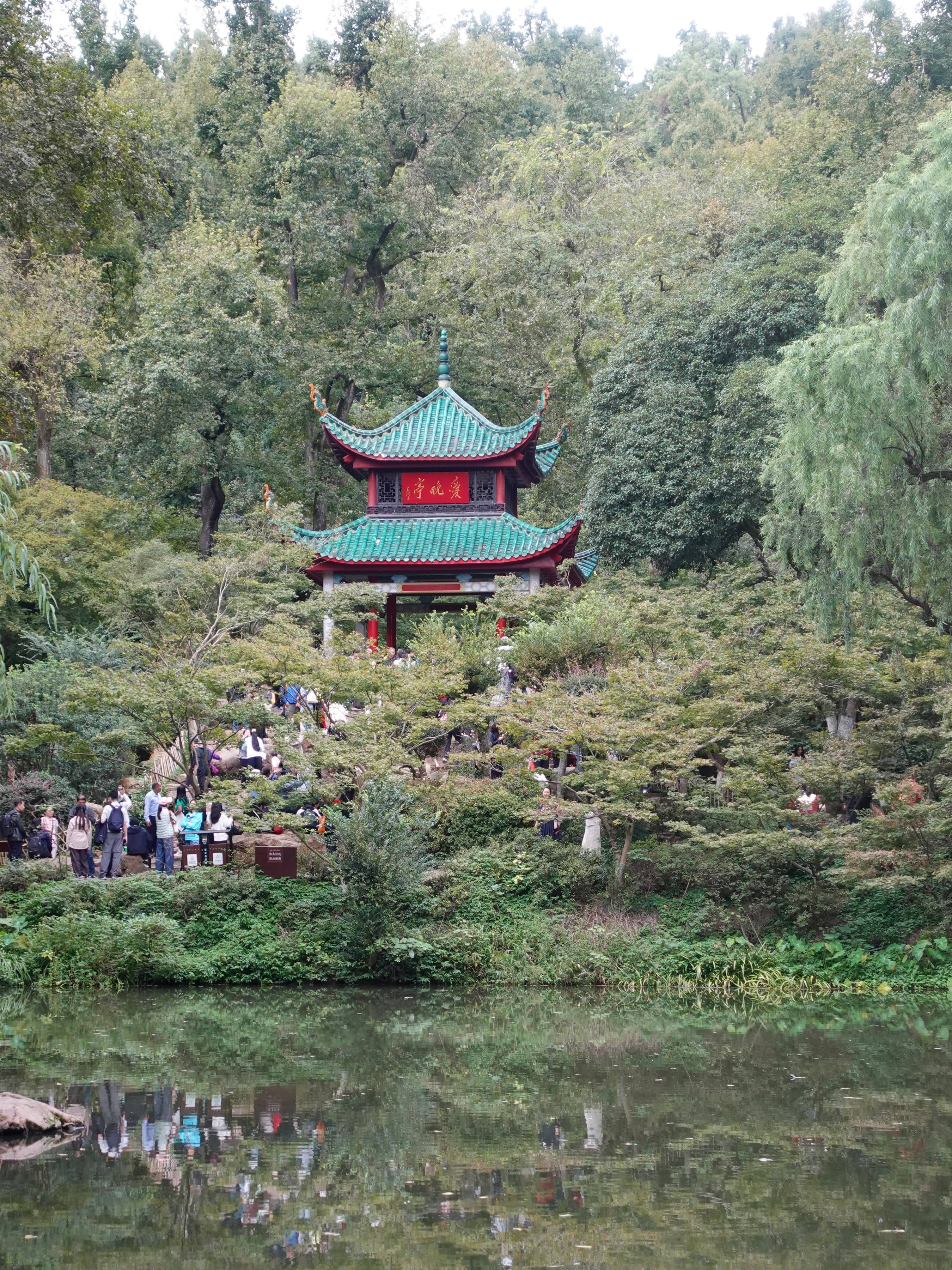
The path climbs past Lushan Temple and the Aiwan Pavilion, one of the four great pavilions of China, the small open hall where the young Mao came to read. From mid-November to early December, the slopes turn through a deep red maple-leaf window.
We choose the autumn weeks where the date allows, with the climb timed for late morning so the maple slope catches the high sun on the descent. The shuttle is arranged to drop you part-way up, so the academy and the temple come on foot from above, then the maple loop runs in the warm hour before the day softens.

Orange Isle(Juzizhou, the sandbar island)
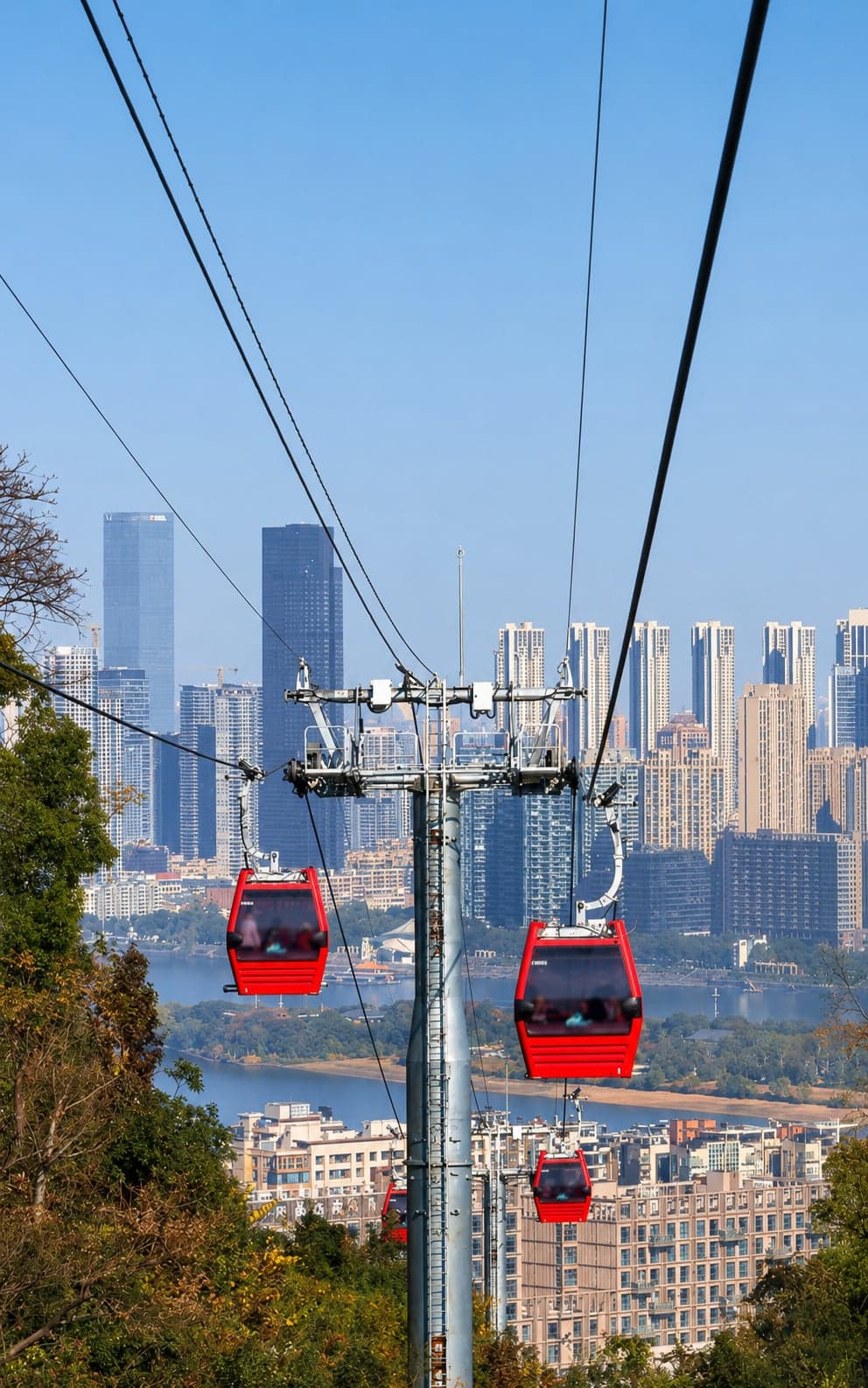
Orange Isle is the long sandbar that splits the Xiang River in two right beside the old city.
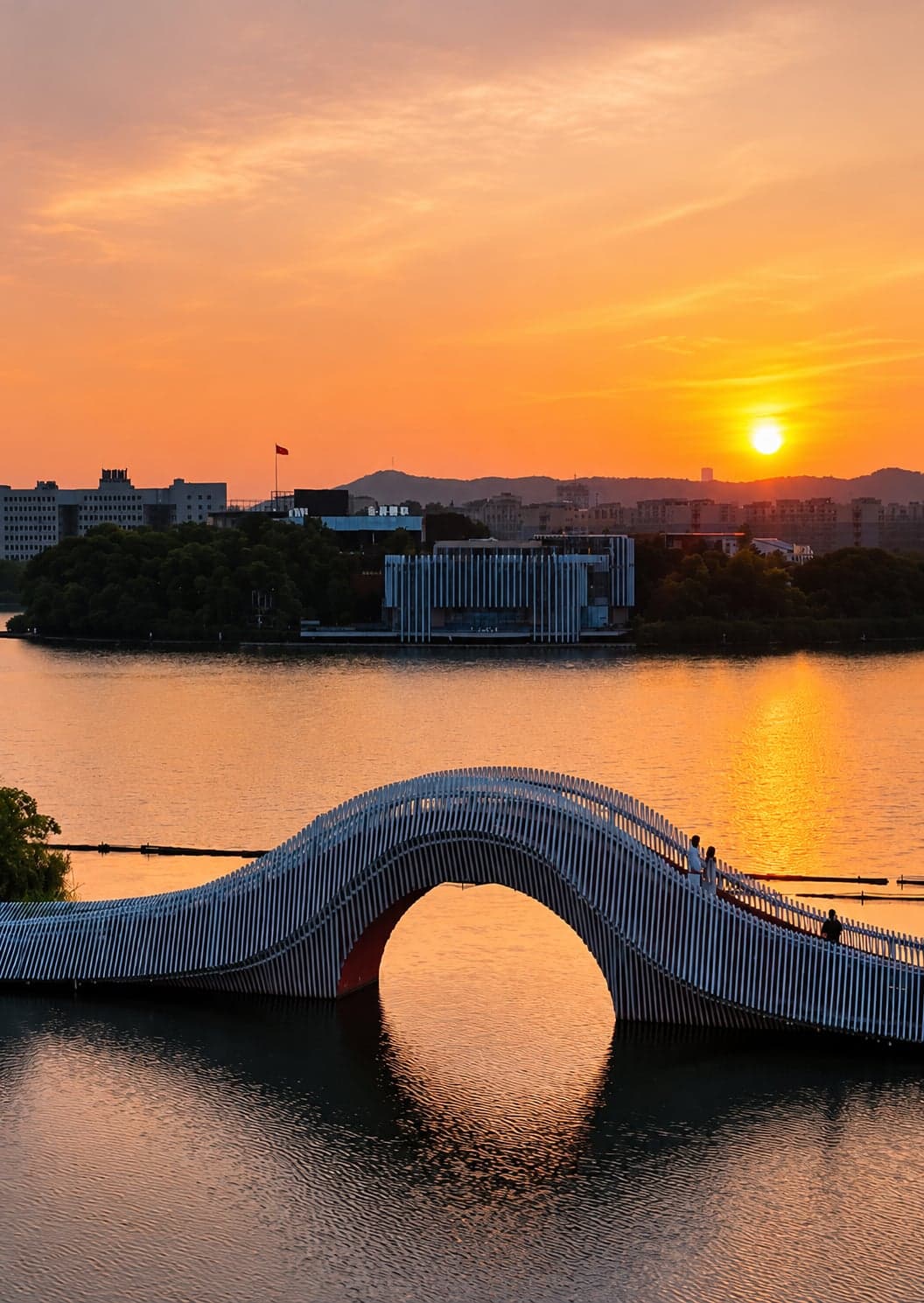
At its head stands the 32-metre granite bust of the young Mao Zedong, completed in 2007, looking out across the water Mao wrote his 1925 poem about. Tangerine groves still run the lower spine, and the island walks small under the city skyline on either bank.
We time the visit for the late afternoon, when the head of the island catches the lowering sun on the granite and the bridge-light strings switch on across the river. The shuttle is arranged from the north entrance so the route walks south to the statue rather than the standard north-loop, leaving the long view for the return.

Tianxin Pavilion(the surviving Han city wall)
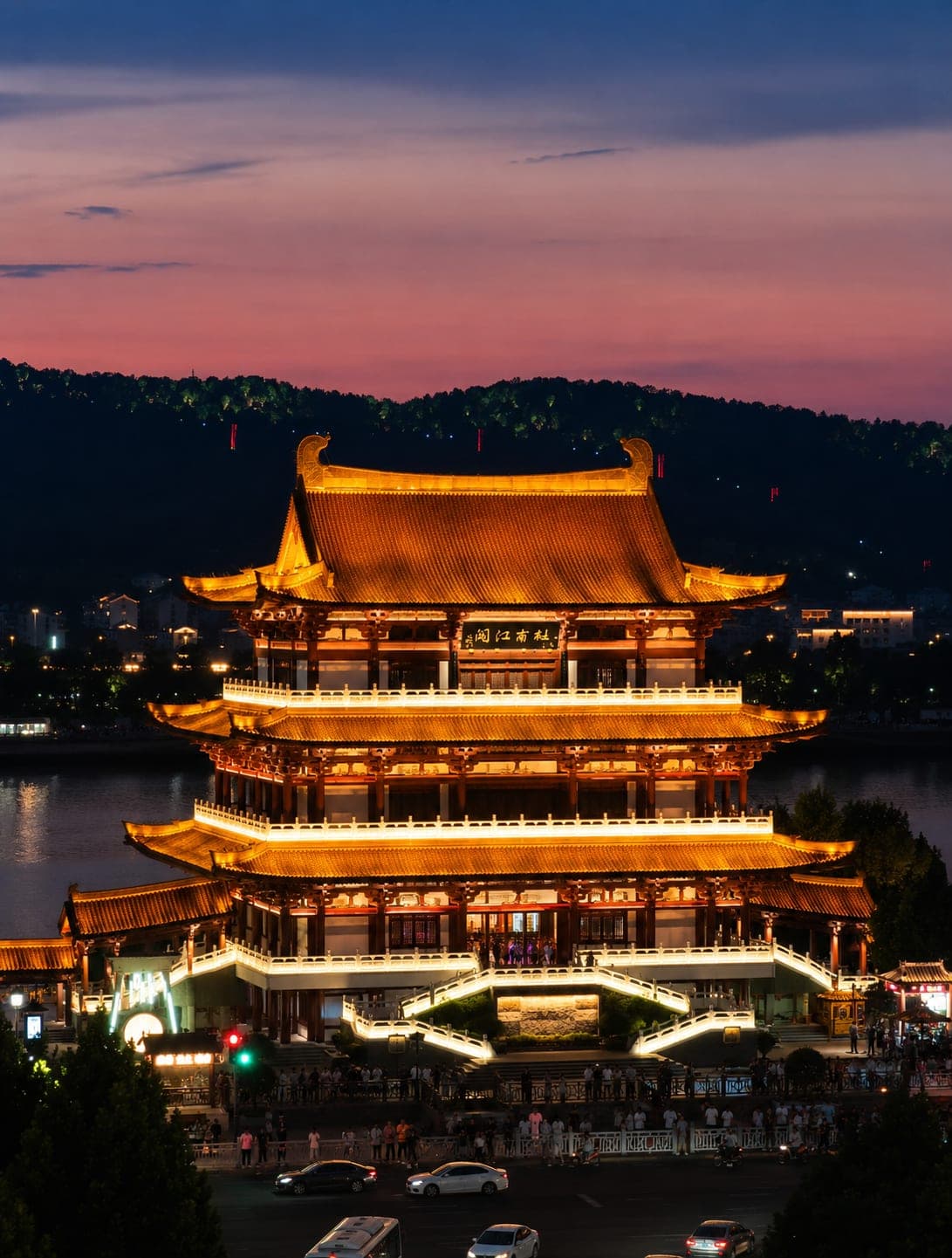
Tianxin Pavilion sits on the highest point of the last surviving stretch of Changsha's old city wall.
The wall itself traces to 202 BCE under Emperor Gaozu of the Western Han, with 251 metres of original rampart still standing under the three-storey pavilion above. The wall held in the 1852 Taiping Rebellion defence and is named on the 1938 Wenxi fire memorial.
We climb the wall in the late afternoon, when the warm light catches the brick and the air over the old town softens. Your guide reads the rampart history at the south corner first, then walks the three-storey pavilion floor by floor, with the rooftop view across the old city opening last.

Hunan First Normal School(where Mao went to study)
Hunan First Normal is the most concrete Mao site inside Changsha city proper.
The sandstone-arch teacher-training school carries its own classrooms, dormitories and Mao's own desk preserved as they were when he studied here from 1913 to 1918. The school traces deeper to Chengnan Academy under the Southern Song, but the early-twentieth-century block is the one to walk.
We come mid-morning, when school classes are in session and the rest of the building belongs to a thin set of visitors. Your guide stays close to the first-floor classrooms and the dormitory bunk Mao slept in, and a Hunan-history specialist is arranged for travellers who want the wider 1910s student context.

Kaifu Temple(the Five Dynasties monastery)
Kaifu Temple is the quiet Chan-Buddhist counterweight to the noise of Wuyi Square.
Founded between 907 and 960 during the Five Dynasties, it has stayed the seat of the Hunan and Changsha Buddhist Associations and still runs as a working monastery, with morning chanting in the main hall and the rear lotus pond keeping the city out.
We visit in the morning chanting window, when incense fills the main hall and the lay-Buddhists are quiet on the wooden benches at the back. The route walks the central axis from the mountain gate, takes the bell tower second, and finishes on the lotus pond with a tea-shop break that the regulars use.

Taiping Old Street(the Qing food lane)
Taiping Old Street is the 380-metre Qing-era food lane that runs off Wuyi Square.
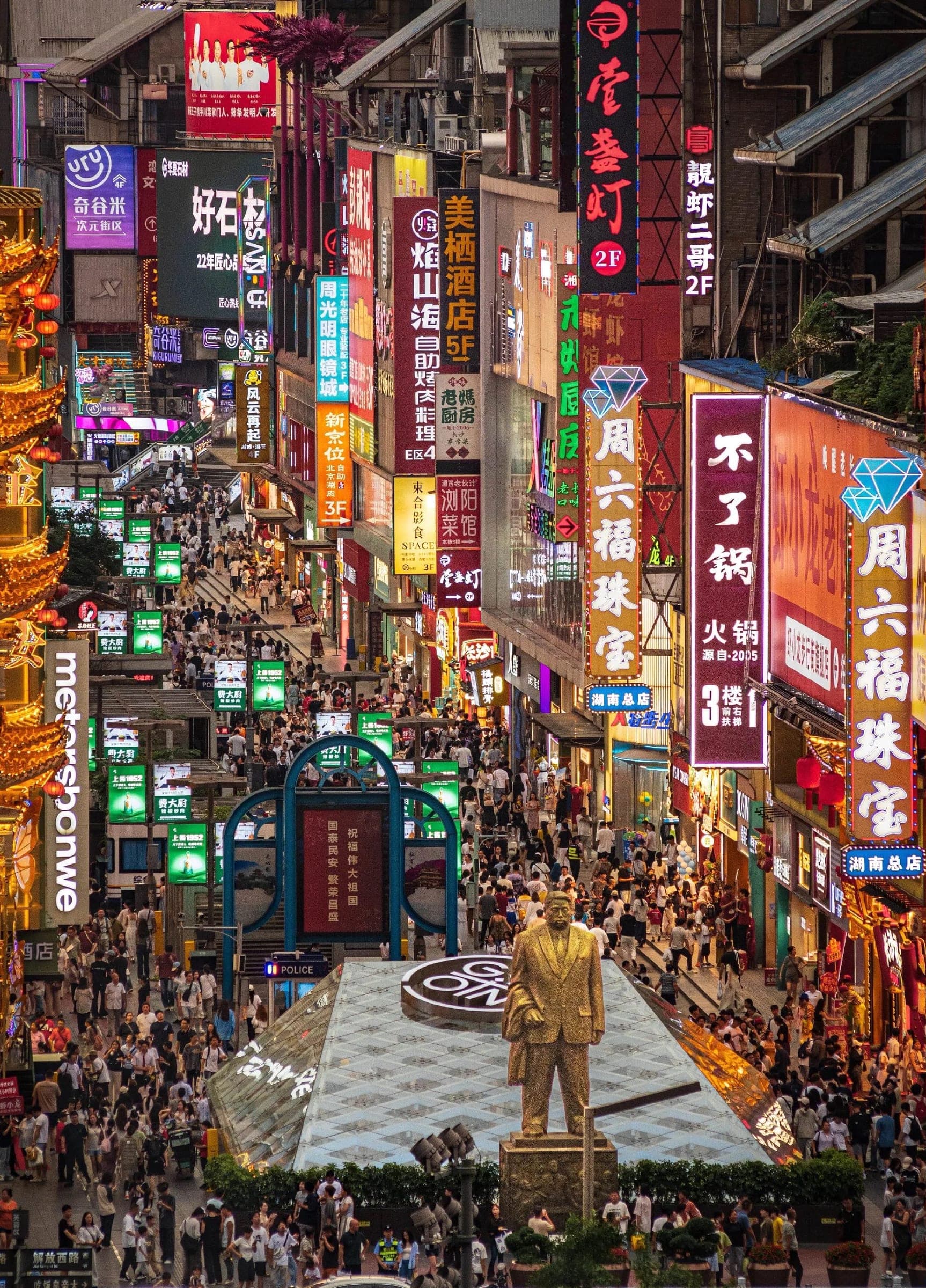
The stone-flagged main street and the alleys off it are still lined with Ming and Qing grey-tile, pitched-roof, timber-shop frontages, with food stalls and bars layered in around six protected immovable cultural relics. The street has been the commercial centre of Changsha since the Jiaqing reign of the early nineteenth century.
We pair Taiping with a guided six-stop food walk at dusk, when the charcoal grills are firing for the evening and the lights along the eaves have started to show. The route is timed to land at the city's most respected stinky-tofu stall during a busy cooking window, and a small dessert house at the lane end closes the walk.

Super Wenheyou(the 1980s Changsha streetscape)
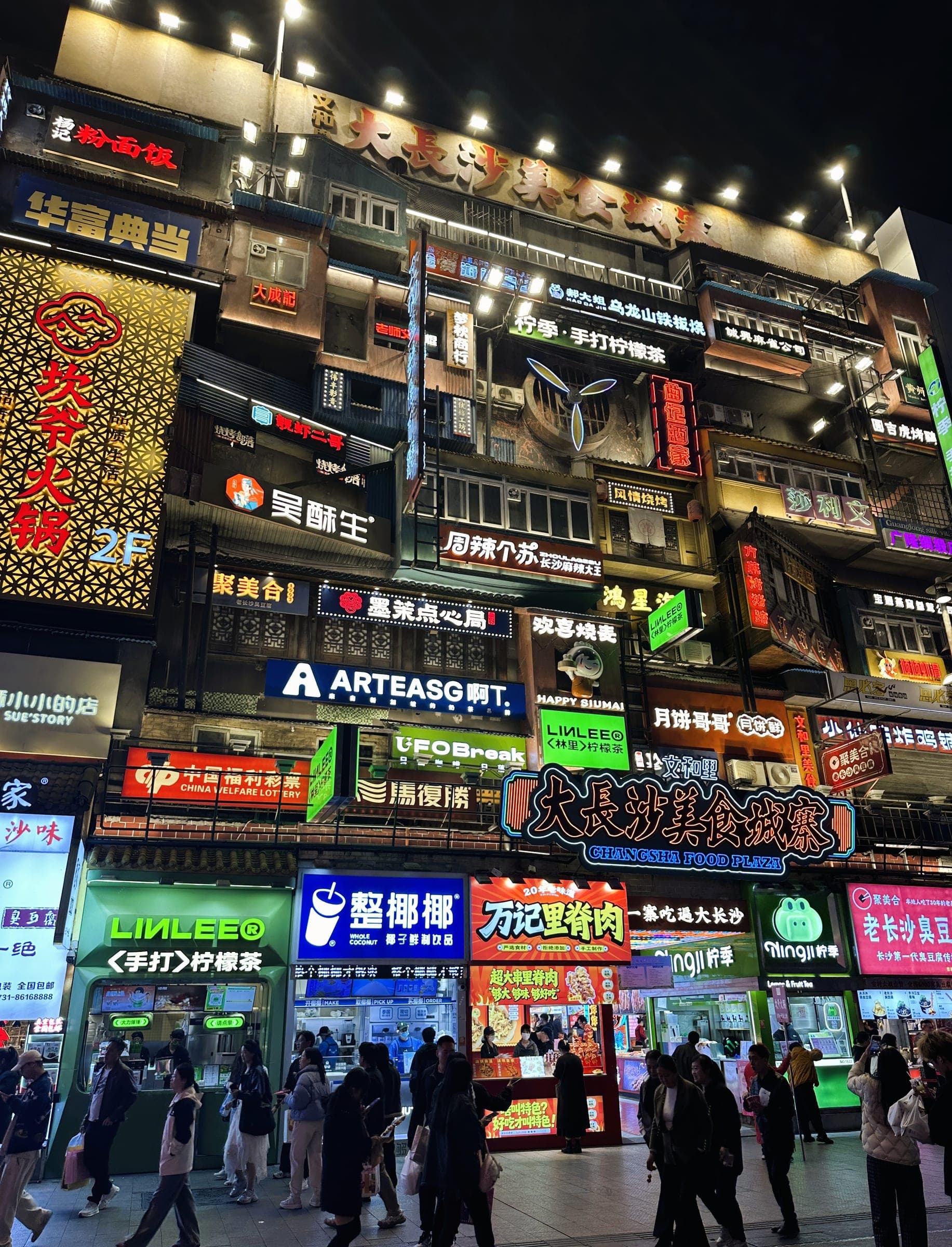
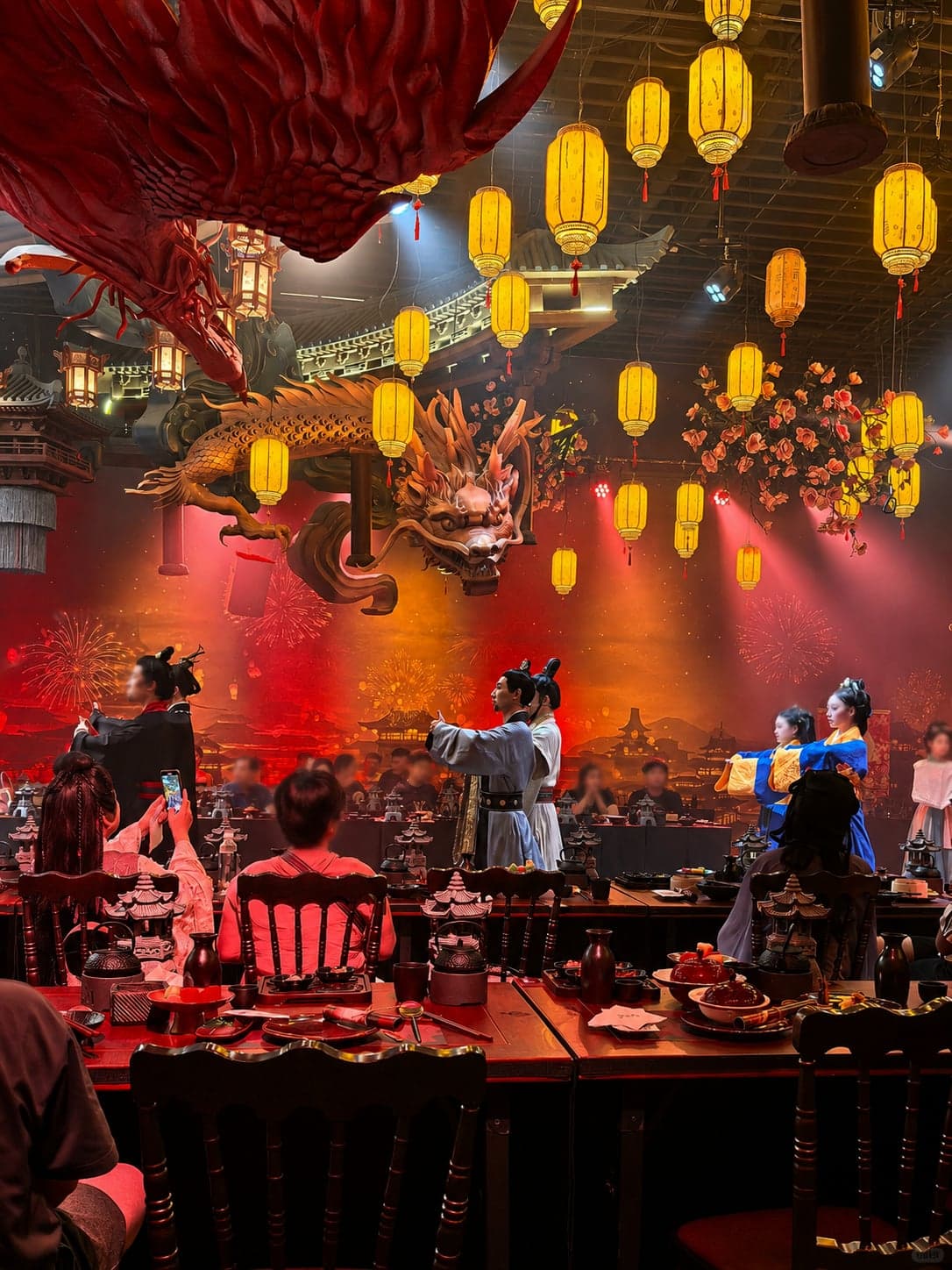
Super Wenheyou is the seven-storey theme-restaurant complex that builds a 1980s-90s Changsha streetscape inside a single Pingheng Square block.
Neon shopfronts, an outdoor cinema, a billiard hall, a one-yuan lottery counter, a long row of food stalls, and apartment blocks with washing strung between them: roughly 20,000 square metres of recreated street life with a working kitchen on every floor.
We book a table at a working hour, not the early-evening rush that fills the queue ticket book in fifteen minutes. The lift takes you to the upper streetscape first so the layout reads in plan, then drops to the cinema floor for dinner. The crayfish round is paced across two waves so the table never goes flat.
What to eat

Changsha stinky tofu(the charcoal-black version)
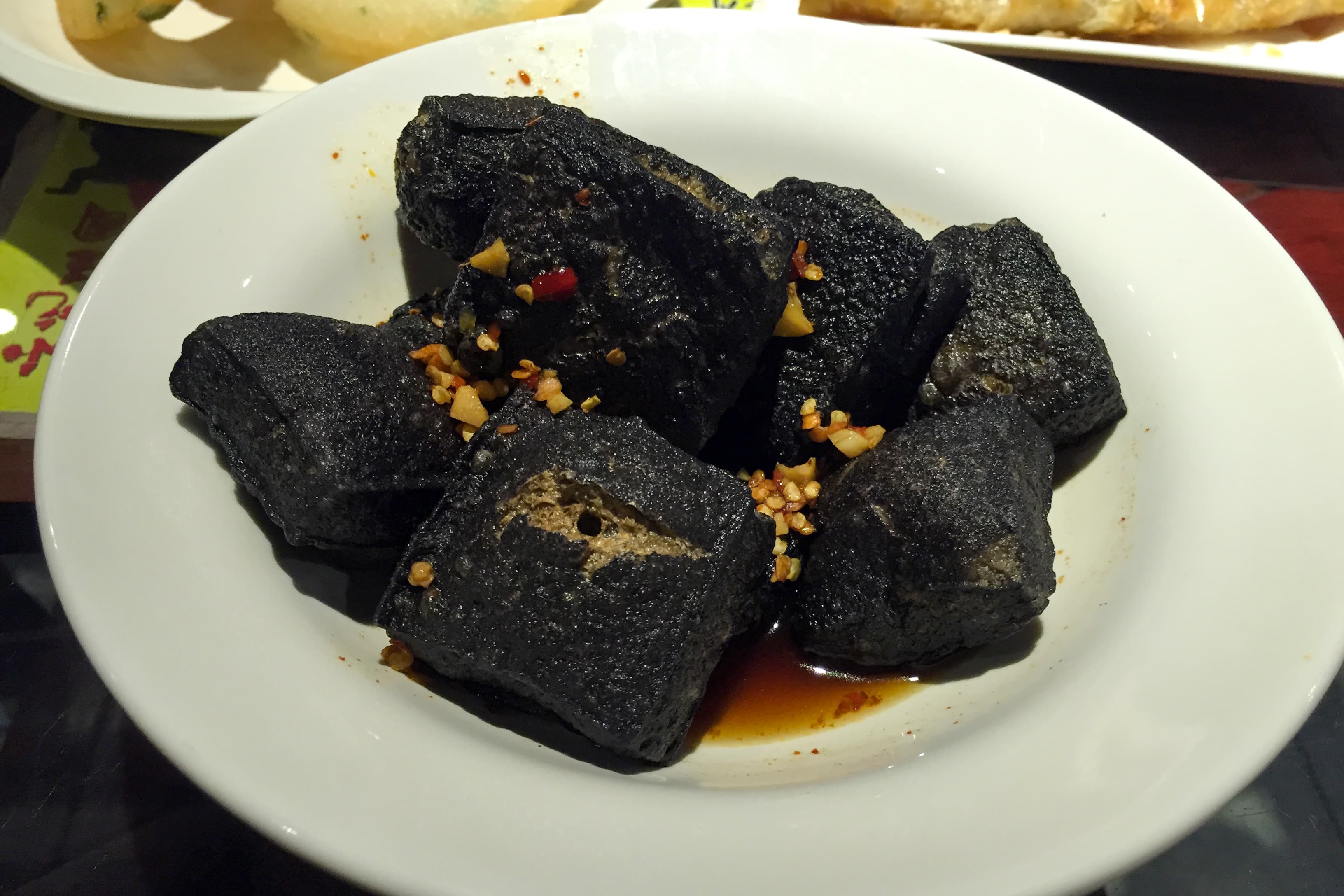
Changsha stinky tofu is the dish the city built a global reputation on.
Tofu cubes are brined for weeks in a fermented liquor of preserved vegetables, shiitake and dried shrimp until they turn the mahogany-black colour that sets the local style apart from Shaoxing's. The cubes deep-fry to a crisp shell with a custardy middle, then are finished with chilli oil, garlic-leek sauce and cilantro: pungent fermented funk on top, far less alarming on the tongue than at the nose.
We seat you at a respected old stall in the Wuyi Square lane network where the brine pot is still poured the old way. Your guide orders both the classic black version and the lighter sauce-on-the-side option so a first-timer reads the dish in two registers. Skewers come in small rounds so each one arrives fresh from the fryer.

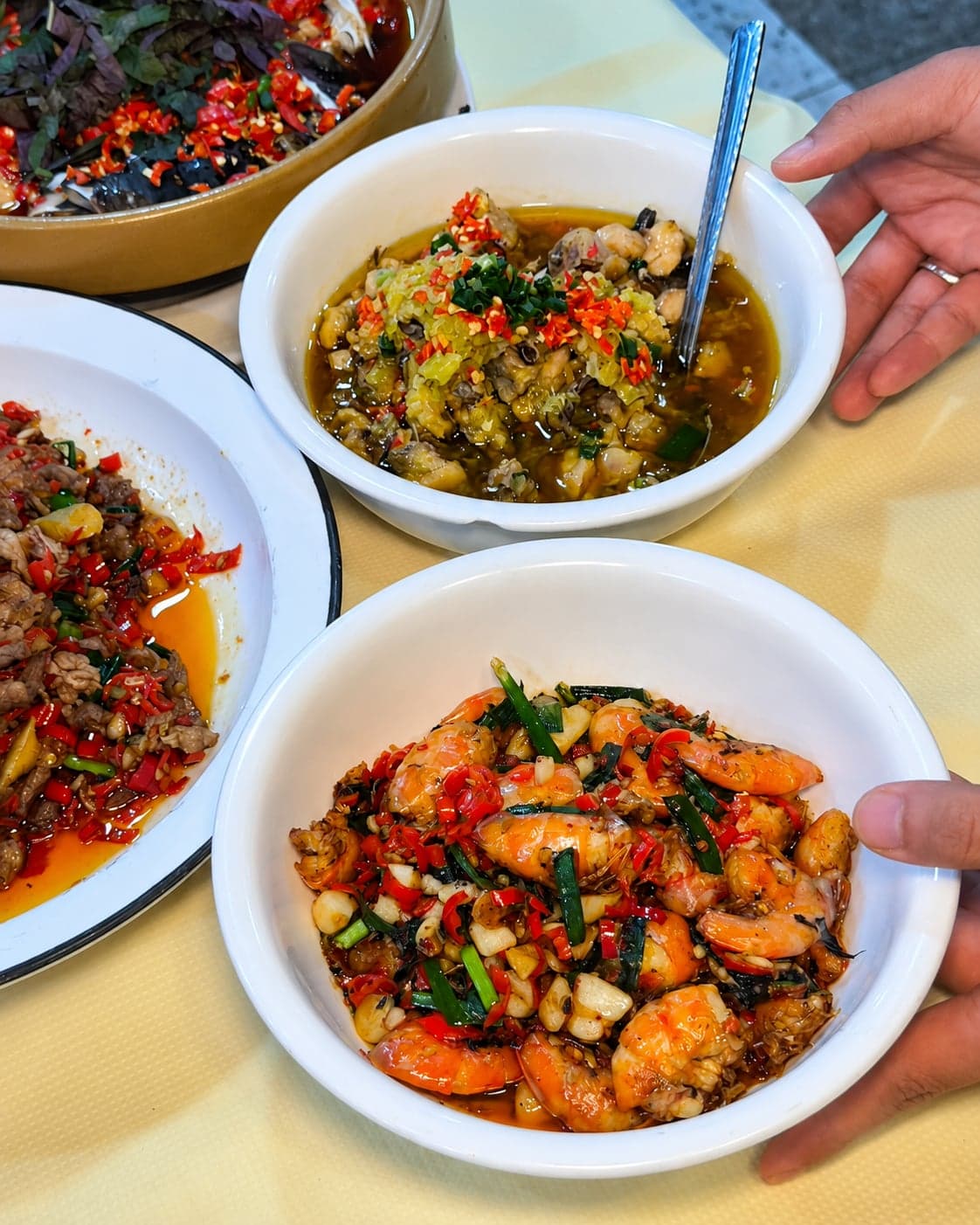
Kouwei xia(Hunan-style spicy crayfish)
Kouwei xia is the small river crayfish dish Changsha eats with both hands.
The crayfish are flash-boiled, then wok-tossed with red chillies, ginger, garlic, perilla leaf, fermented bean curd and beer until the shells take on the deep red lacquer of the sauce. Garlicky, fermented-funky and numbing-spicy under a beer-sweet finish, built for a summer night and a cold drink. Nanmenkou and Shahe Street are the two lanes the locals fight over.
We book a table at a long-established Nanmenkou crayfish house and arrange a private booth so the messiness of the meal stays your own. Plastic gloves and an apron come from the kitchen at the start. Your guide demonstrates the head-and-tail twist the locals use, so the meat slips out clean.

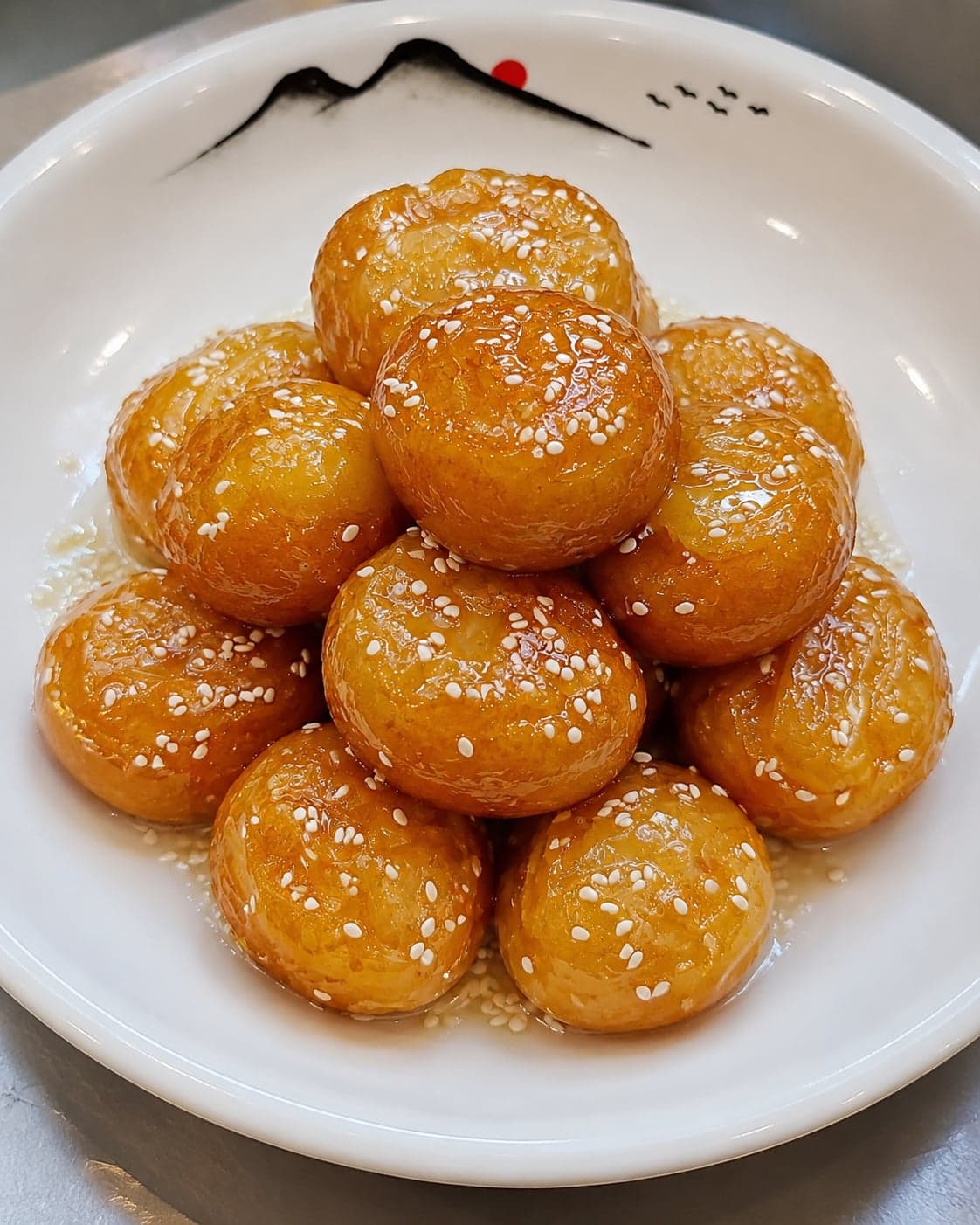
Sugar-oil rice cakes(Tang You Ba Ba)
Sugar-oil rice cakes are the small sweet Changsha sells from a wok at the side of the street.
Glutinous-rice balls are deep-fried, then turned in a wok of caramelised brown sugar until a glossy mahogany shell sets around the chewy centre. The crust crackles like crème brûlée, the centre stretches like good mochi, the caramel bittered just enough to stop the bite going cloying.
We time the stop for a working morning at one of the older Pozi Street stalls, when the wok is at the deepest caramel colour and the cakes are coming out two at a time. Two arrive in a paper twist with a small wooden skewer, since the caramel sets fast once it leaves the wok.
Shows and experiences

Orange Isle Saturday fireworks(the Xiang River display)
From May through October, the city fires a twenty-minute fireworks display from Orange Isle into the Xiang River every Saturday night.
The shells go up at 20:30, the river runs in colour underneath, and both banks of the city wake up to watch. Du Fu Pavilion on the east bank is the view the locals know, with the Xiangjiang riverfront walk taking the overflow.
We book a private table at a riverside terrace on the east bank for the dinner before, with the display window timed so the meal slows toward eight. A short walk to Du Fu Pavilion is set for the start, then the car waits for the quiet ride back once the crowds begin to move.

Hunan flower-drum opera(Huagu Xi, the local theatre)
Hunan flower-drum opera is the regional theatre Changsha grew up with, lighter and more melodic than Peking opera and often comic.
An evening at the Dingwangtai Intangible Cultural Heritage Centre carries a rotating programme of Xiang opera, flower-drum opera and Changsha tanci, all in close-table seating where the actors come within a few rows of the audience. The form was inscribed on the national intangible heritage list in 2008.
We book front-table seats at Dingwangtai on a night the flower-drum half of the programme runs longest, with a pre-show briefing on the plot since the surtitle support varies week to week. Tea is poured throughout. A quiet car waits at the venue exit so the return is unhurried.

Wenheyou Crayfish Restaurant tasting(the original 1980s street-life set)
The Wenheyou Crayfish Restaurant on Pingheng Square is where the brand began before it grew into the seven-storey streetscape.
Smaller, louder, closer to the kitchen, with the original photo studio and lottery counter still in place. The night runs as a Changsha tasting: crayfish, sweet-potato rice flour, milk tea and a charcoal-grill plate, with the streetscape as the backdrop rather than the headline.
We book the inner booth that looks across the open kitchen pass so the tasting reads as a working night, not a tourist set. The crayfish round is paced across two waves with the milk tea between, and your guide orders against your spice tolerance so the second platter lands at the heat you actually want.
What three days
might look like.
- Day 01
Han tombs, river island, charcoal at dusk.
Begin the morning at the Hunan Museum, where the Mawangdui silk banner, Lady Dai and the lacquerware run as a single household across the second floor. A relaxed lunch follows in the old downtown, with the afternoon eased into Orange Isle, the route timed so the granite Mao at the head of the island catches the lowering light. As evening falls, the walk continues into Taiping Old Street for a guided six-stop tasting with the charcoal grills firing for the night.
- Hunan Museum
- Mawangdui silk banner
- Orange Isle (head of the island)
- Granite bust of the young Mao
- Taiping Old Street (after dark)
- Day 02
Academy, ridge, the read on Mao.
Spend the morning across the river at Yuelu Academy, the millennium-old Song-Qing campus still in working use, then climb the maple slope on Yuelu Mountain to Aiwan Pavilion where the young Mao came to read. A leisurely Hunan lunch follows on a quiet lane below the academy. The afternoon returns to the east bank for Hunan First Normal, where Mao actually studied between 1913 and 1918. As evening approaches, the day finishes at Wenheyou for a guided crayfish round in the 1980s streetscape.
- Yuelu Academy
- Yuelu Mountain
- Aiwan Pavilion
- Hunan First Normal School
- Mao's classroom and dormitory
- Super Wenheyou (after dark)
- Day 03
Old walls, quieter temple, fireworks.
Begin the day at Tianxin Pavilion, climbing the surviving Han stretch of Changsha's old city wall in the soft morning light, then walking to Kaifu Temple as the morning chanting fills the main hall. A relaxed vegetarian lunch follows in the temple kitchen rather than the cafeteria lane. The afternoon is left for you to wander the Wuyi Square food lanes at your own pace. For those wishing to extend the day, a Saturday-night Orange Isle fireworks viewing is set with a private riverside terrace booking.
- Tianxin Pavilion
- Surviving Han city wall
- Kaifu Temple
- Wuyi Square food lanes
- Orange Isle Saturday fireworks (optional, May to October)
Best time
Late March to May; mid-September to November
Days needed
2 to 3 days
Where it sits
Two scheduled hours by air from Beijing or Shanghai; two and a half hours by rail to Zhangjiajie
Questions worth
answering early.
Two to three full days is the right shape. One day for the Hunan Museum, Orange Isle and Taiping Street. One day across the river for Yuelu Academy, Yuelu Mountain and First Normal. A third day for Tianxin Pavilion, Kaifu Temple and a Saturday Orange Isle fireworks viewing in the May to October window. Add further days if you continue on to Zhangjiajie by high-speed rail.
Hand us the dream,
We carry it through.
From your first enquiry to your last airport pickup, our specialists design your trip and stay in contact every step of the way. The guides, drivers and hotels you'll meet are part of our trusted network we've worked with for years, briefed to the same standards.
- Dedicated specialists, start to finish
- Guides briefed to our standards
- Fully transparent, no hidden costs
- No deposit until you confirm
Stretch the trip. Stitch in another.

Zhangjiajie
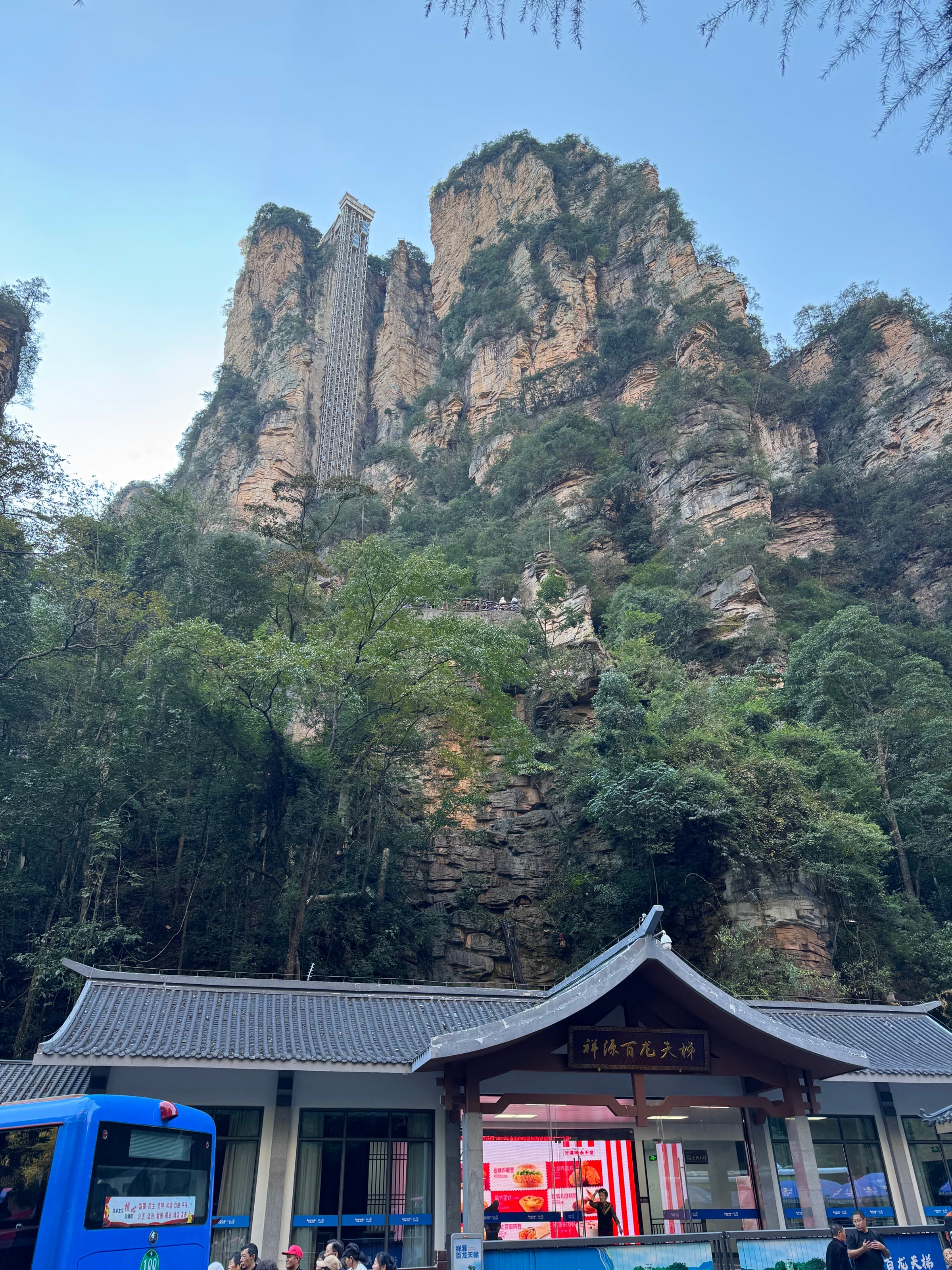
Standard pair. Hunan's capital city, then the sandstone-pillar country two and a half hours west by rail.
Read this destination
Guangzhou
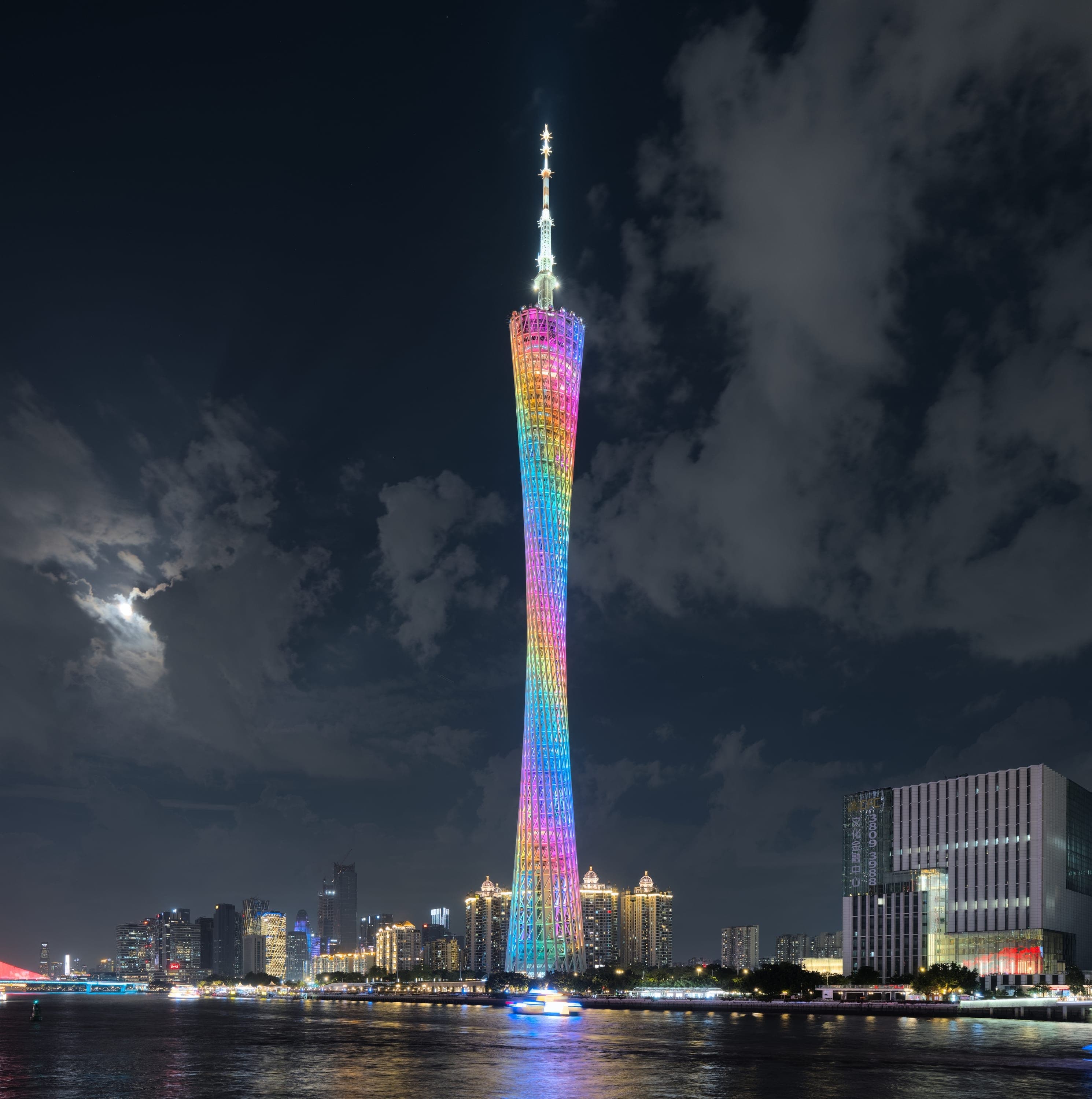
South just under two hours by rail. Cantonese kitchens and the Lingnan southern coast.
Read this destination
Shanghai
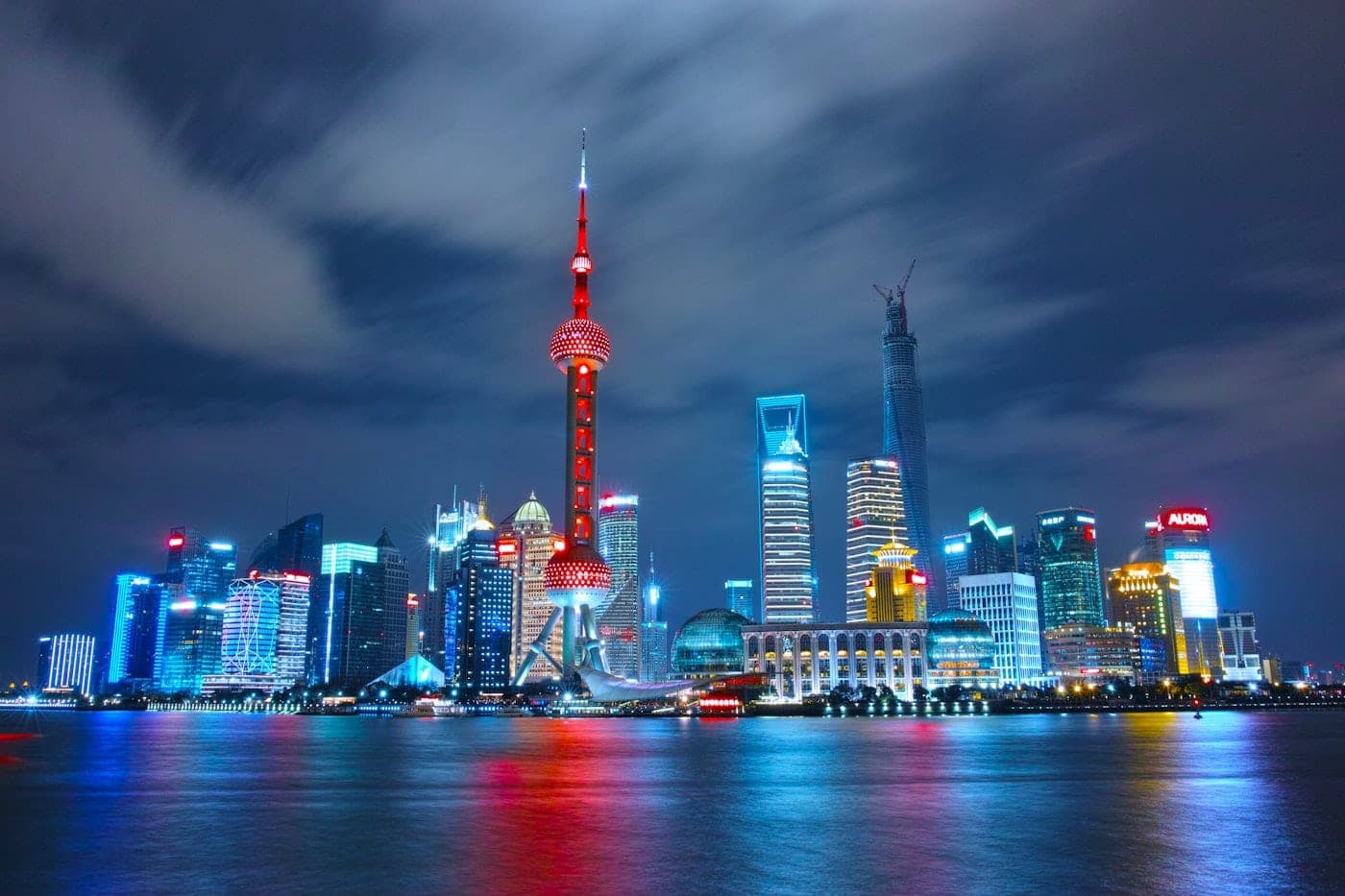
East five hours by rail. Concession-era streets and the Pudong skyline after the Hunan kitchens.
Read this destination
Useful before
you enquire.

China tourist visa for US travellers
American passports still need a tourist visa for China under current rules. How the L-visa works, what we handle as part of your booking, and what is on you.
Read this guide
When to visit China, month by month
Late March through May and mid-September through November are the cleanest windows for Changsha. The whole year, read by climate and crowd.
Read this guide
How many days do you need in China
Changsha pairs with Zhangjiajie on the Hunan loop. What those days hold, and how the legs connect.
Read this guide
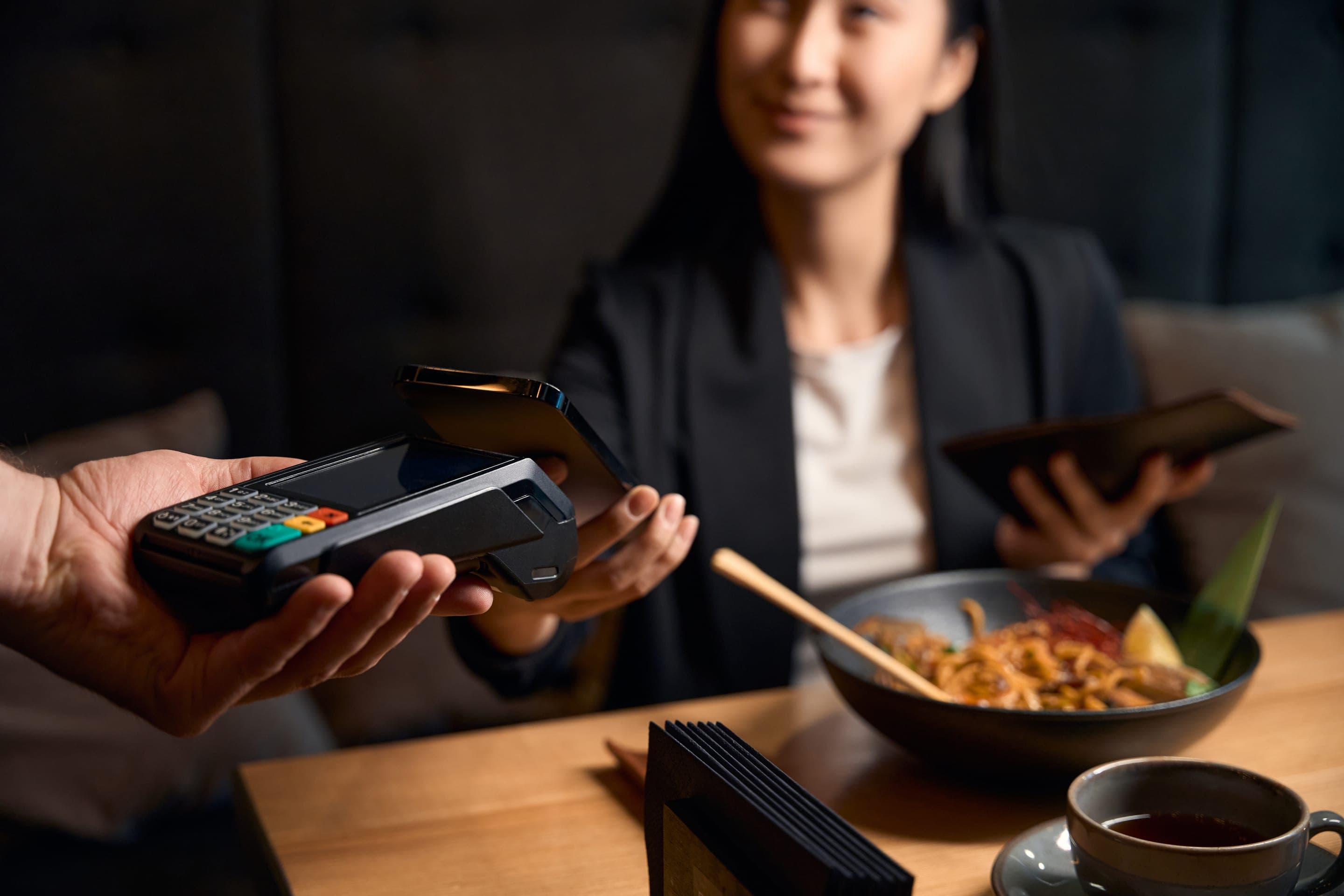
Payments and connectivity in China
Set up Alipay or WeChat Pay before you fly. Cards work widely after binding, but limits and small merchants need planning.
Read this guide
How our pricing works
What sits inside the figure on your quote, and what sits outside it. The structure, written out.
Read this guide

Jack Guo
Senior Travel Specialist
Jack has spent ten years working with the guides, drivers and hoteliers across China. He'll be your contact from first enquiry to final airport pickup.
Tell us about your Changsha trip
Five quick questions. We'll send you a Changsha-anchored draft with the price within one business day. No deposit. No hard-sell.