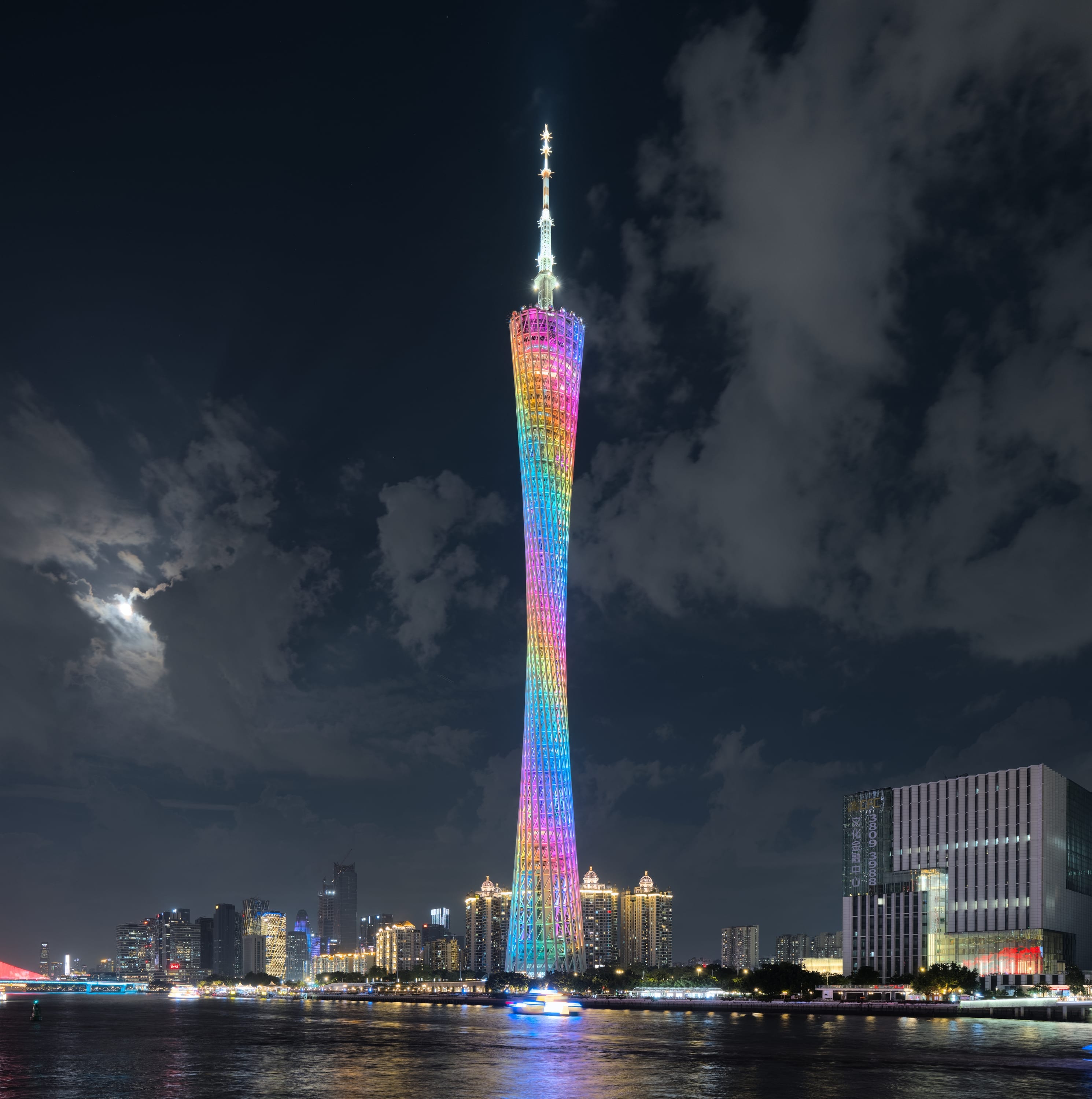

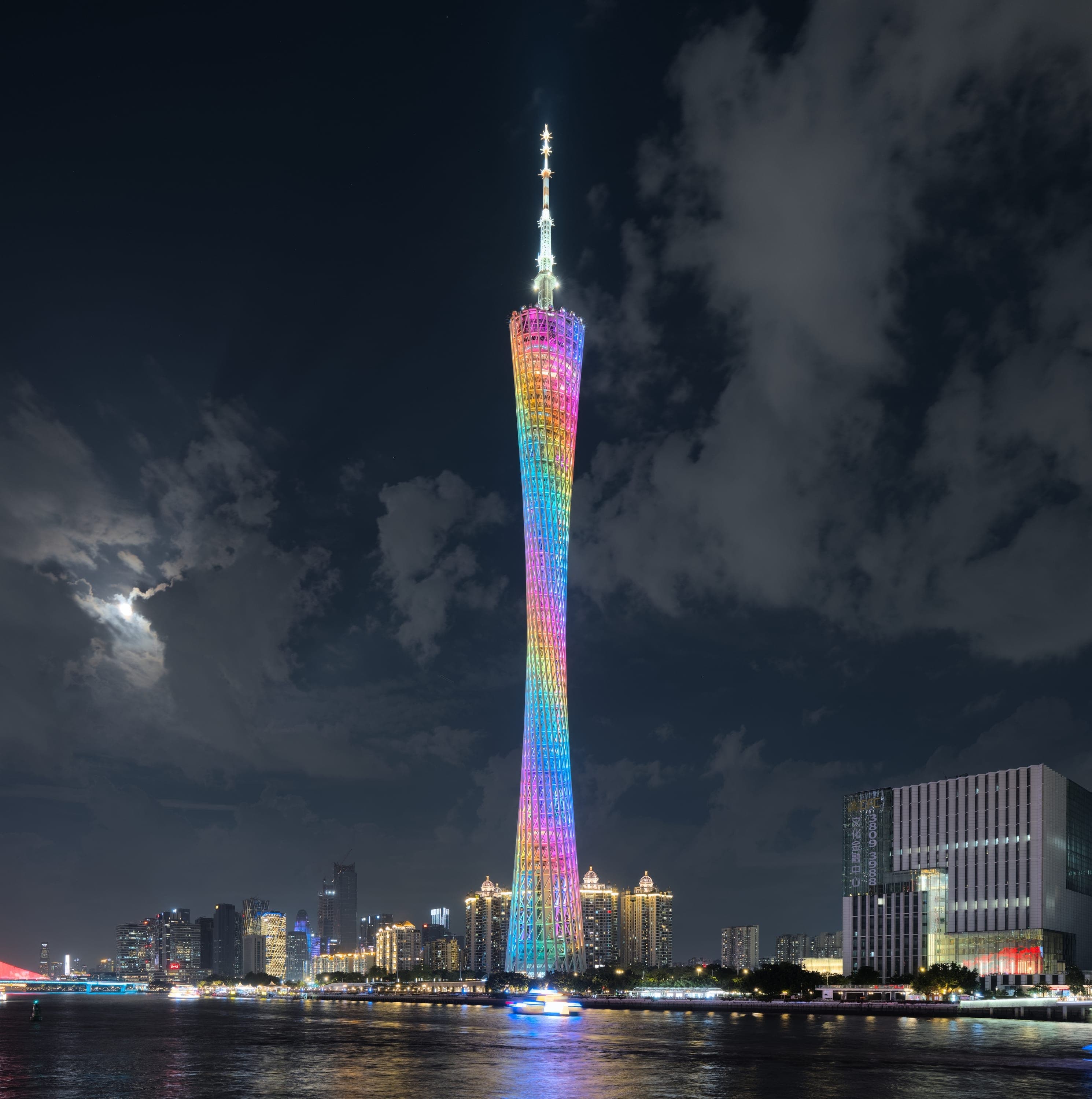
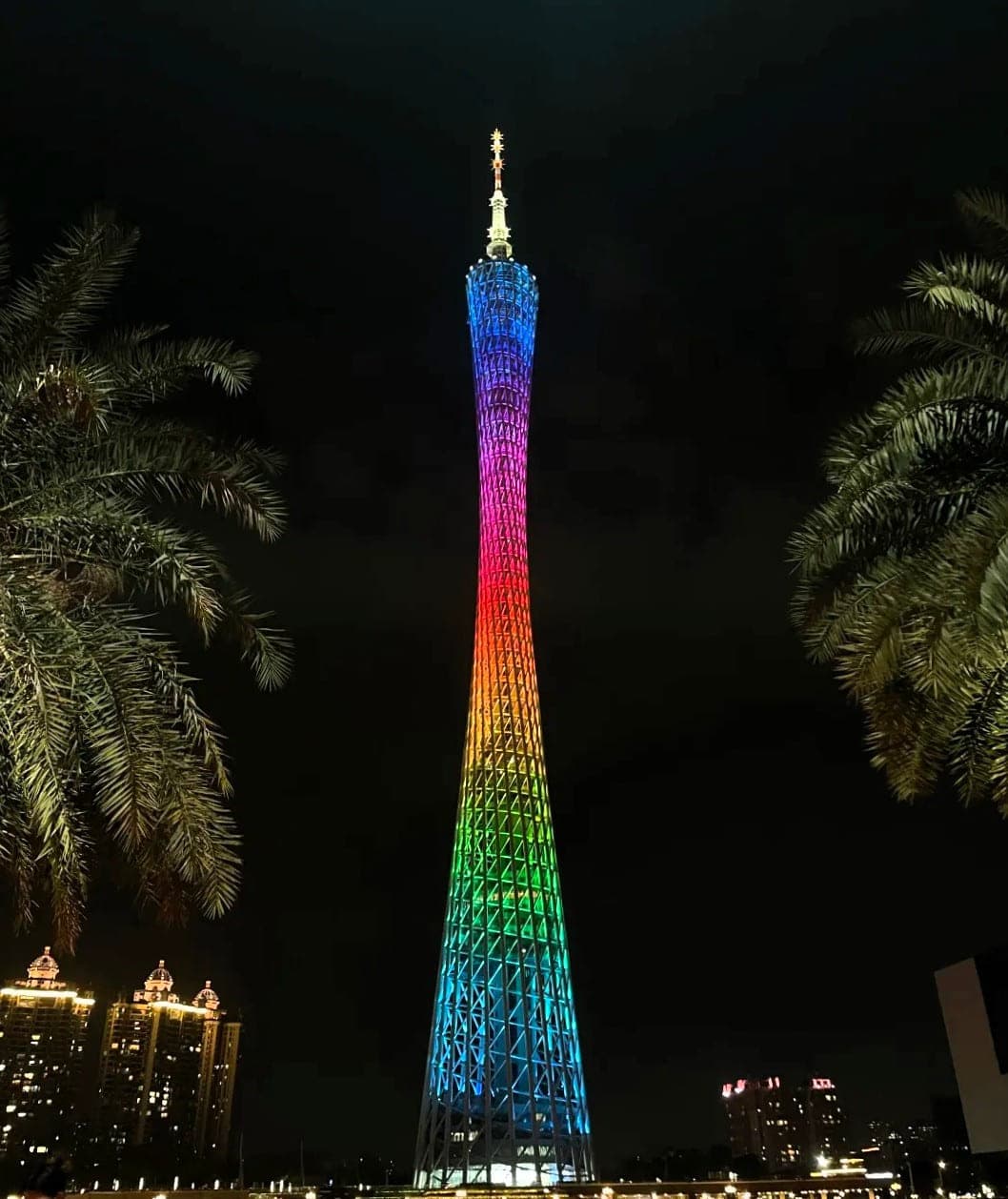
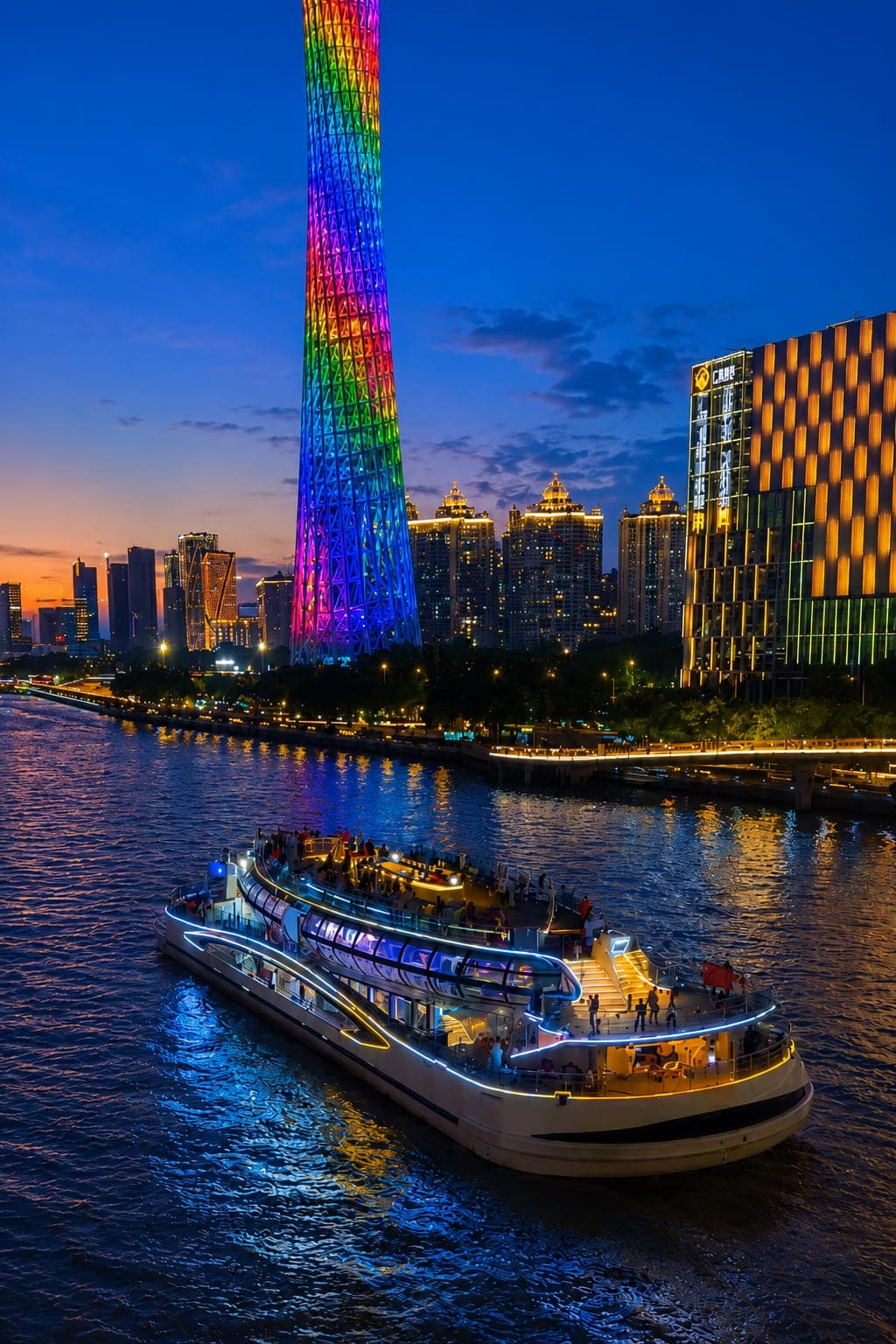
Canton Tower lit at twilight over the Pearl River, with the Zhujiang New Town skyline behind, Guangzhou
Destination · China

Guangzhou

Canton, the original treaty port

Guangzhou is China's original port and the home of Cantonese cooking. The West knew it as Canton for three centuries. Today the Pearl River separates the old western quarter from the new town across the water.

Signature moments

Why people
come to Guangzhou.

01

What to see

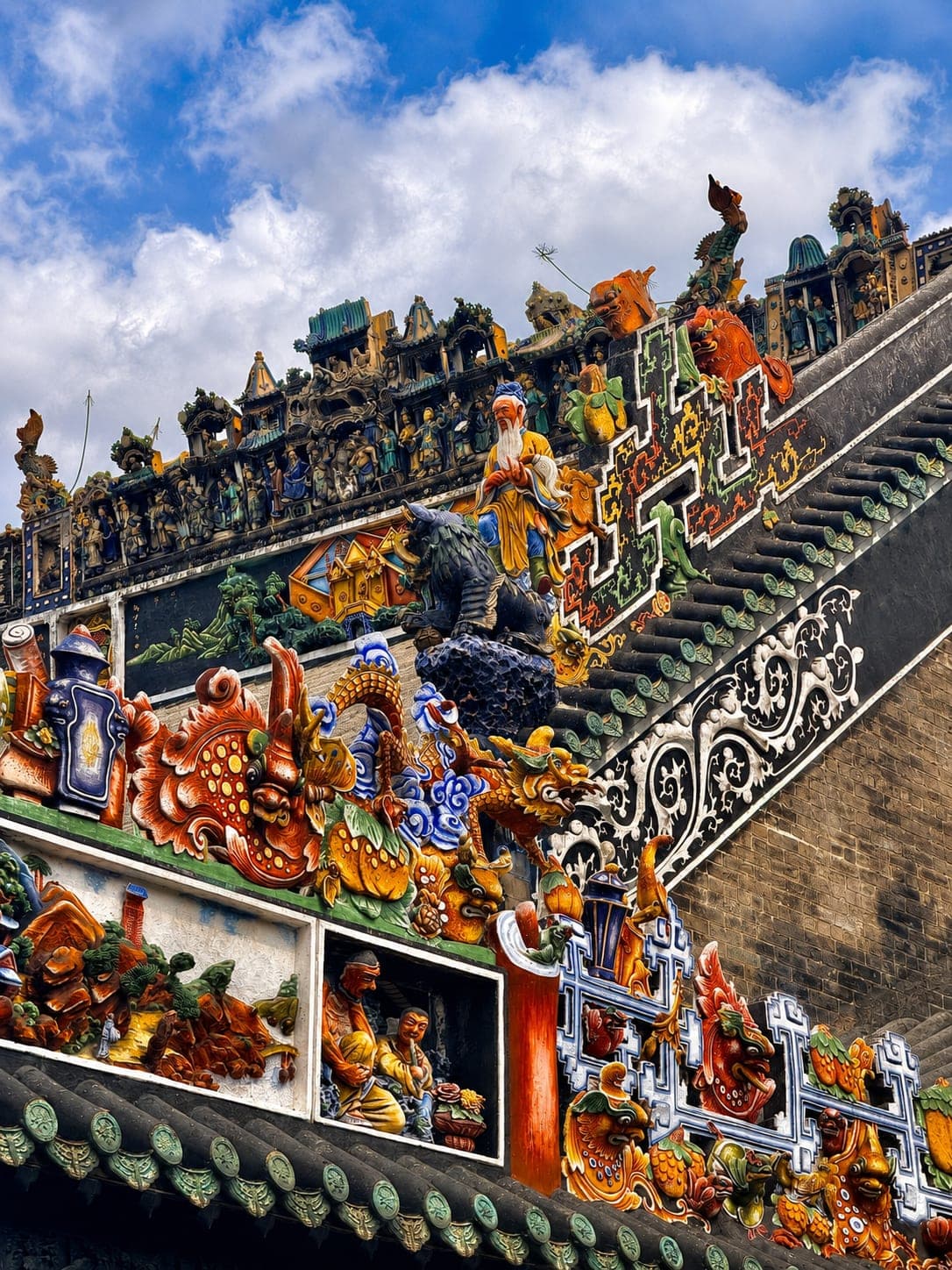
Carved eaves of the Chen Clan Ancestral Hall, a peak of Lingnan-style architecture in Guangzhou

Chen Clan Ancestral Hall(the 1894 Lingnan-craft academy)

The Chen Clan Ancestral Hall wears its decoration on the roof: painted ceramic figures and coiling dragons on the ridge in shiwan glaze, plum blossoms and bats on every screen below.

Built in 1894 as a clan academy, it now holds the Guangdong Folk Art Museum, the densest concentration of Lingnan craft in the city.

We arrange the visit for the quiet hour before the bus groups, with a specialist in Lingnan architecture who reads the eaves, the screens and the ridge sculpture. The route moves through the compound by craft rather than by hall, so you leave understanding why this single building anchors the Lingnan canon.

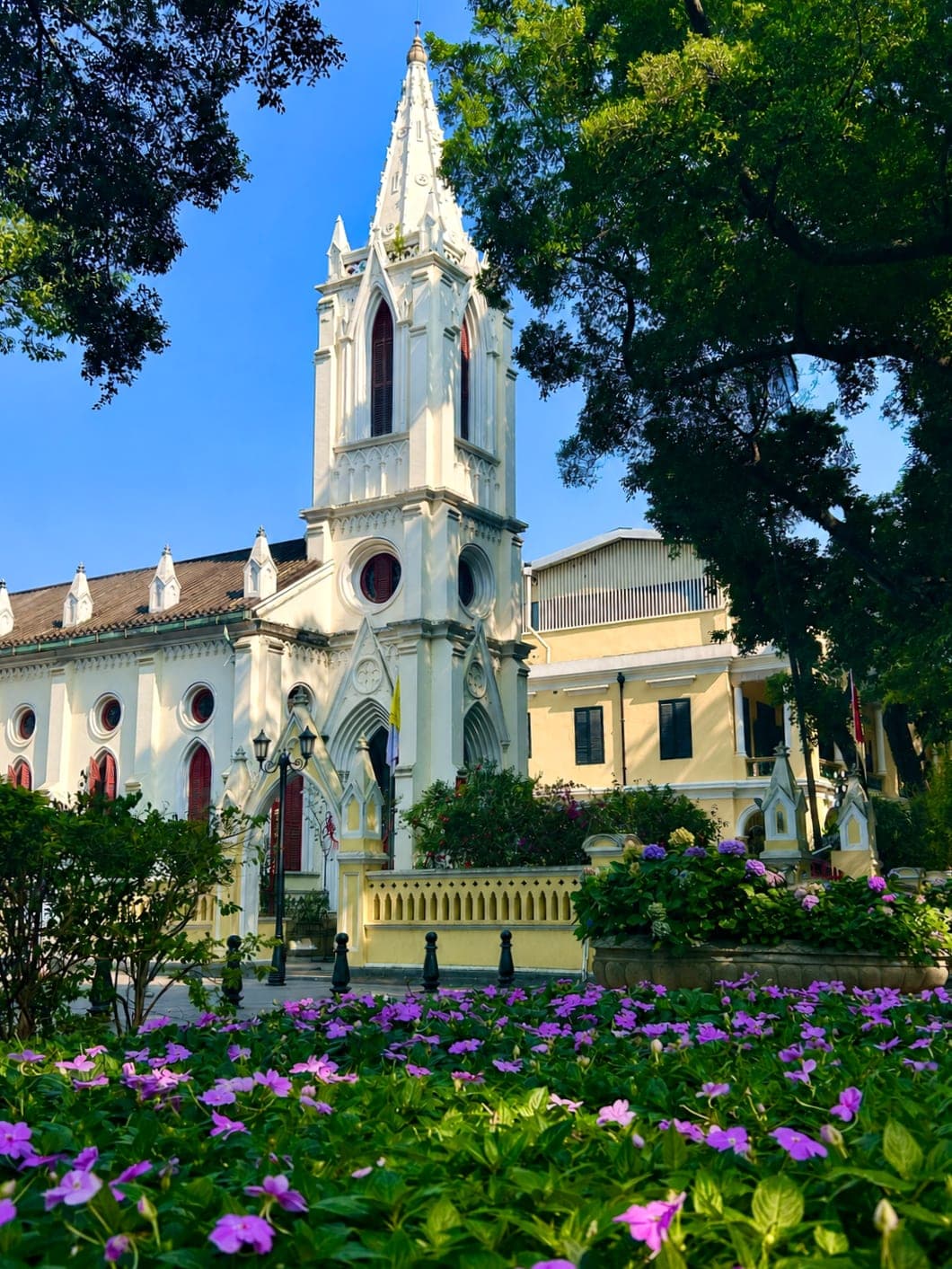
A surviving concession-era building on Shamian Island, banyan-shaded under a quiet morning, Guangzhou

Shamian Island(the Pearl River concession quarter)

Shamian is a kilometre-long sandbank on the Pearl River where Europe built its corner of Canton.

Around 150 consulates, banks, churches and merchant houses still stand under the banyans, the British concession on one side from 1859, the French on the other from 1861. The streets are quietest before the wedding parties arrive.

We walk Shamian in the morning hour before the wedding parties arrive, with a guide who reads the concession-era buildings alongside the Cantonese congregations that still use the two churches. From Shamian we cross into Qingping Market for a quick lesson in herbal medicine, then continue on foot to Xiguan.

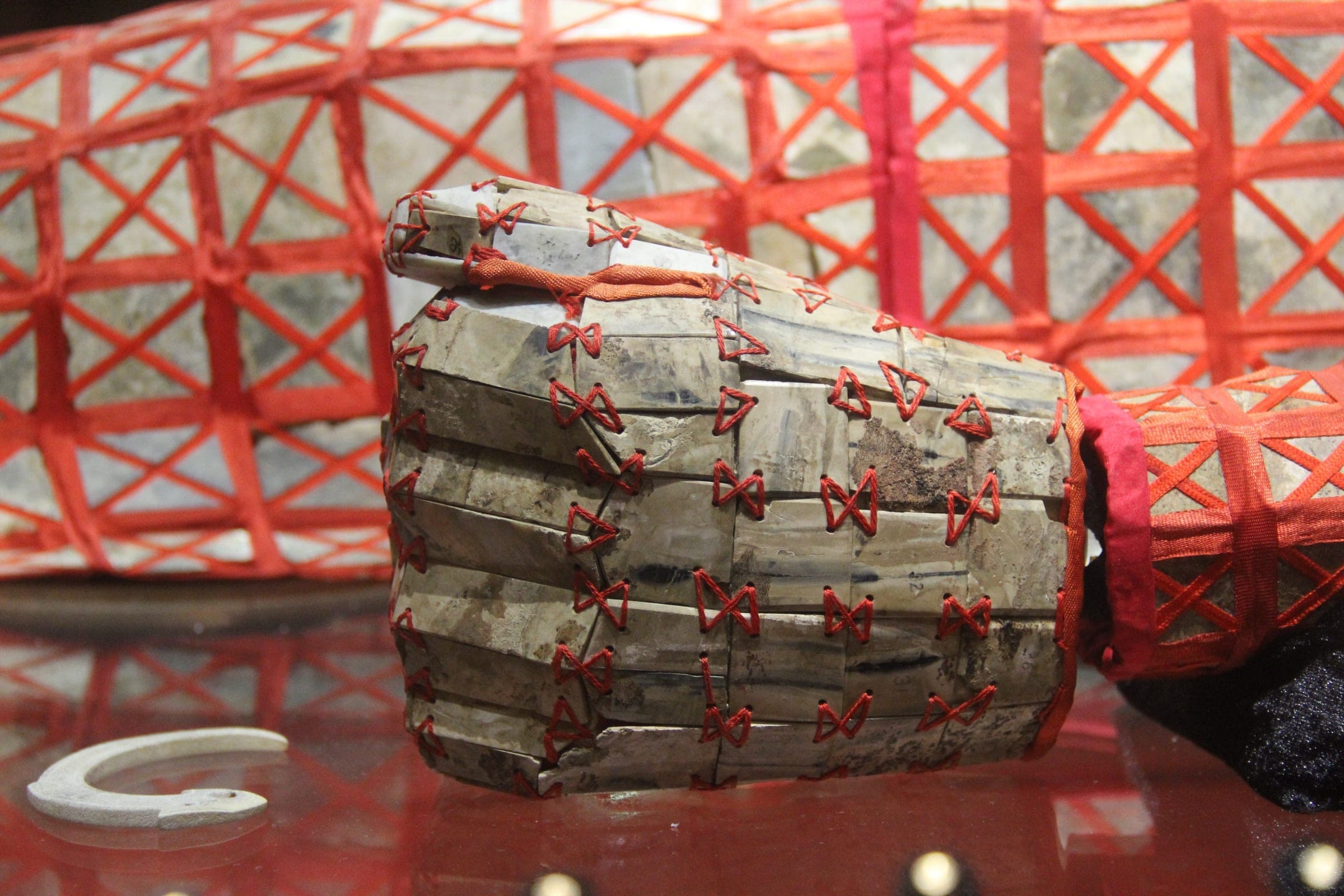
The jade burial suit of Zhao Mo, sewn from 2,291 jade plaques bound with silk thread, Nanyue King Museum, Guangzhou

Nanyue King Museum(the Western Han royal tomb)

In 1983 a construction crew on a Guangzhou hillside broke through the roof of a rock-cut tomb sealed for two thousand years.

Inside lay Zhao Mo, the second king of the Han-period Nanyue kingdom, dressed in 2,291 jade plaques bound with silk thread. The suit is the earliest of its kind ever found.

We arrange the reservation on a passport credential under your trip, since the official portal requires a Chinese phone number overseas travellers cannot use. With an early-Han archaeology specialist, the route moves from the tomb chamber up into the Wangmu galleries. The museum closes on Mondays; we substitute the Guangdong Provincial Museum when the day falls badly.

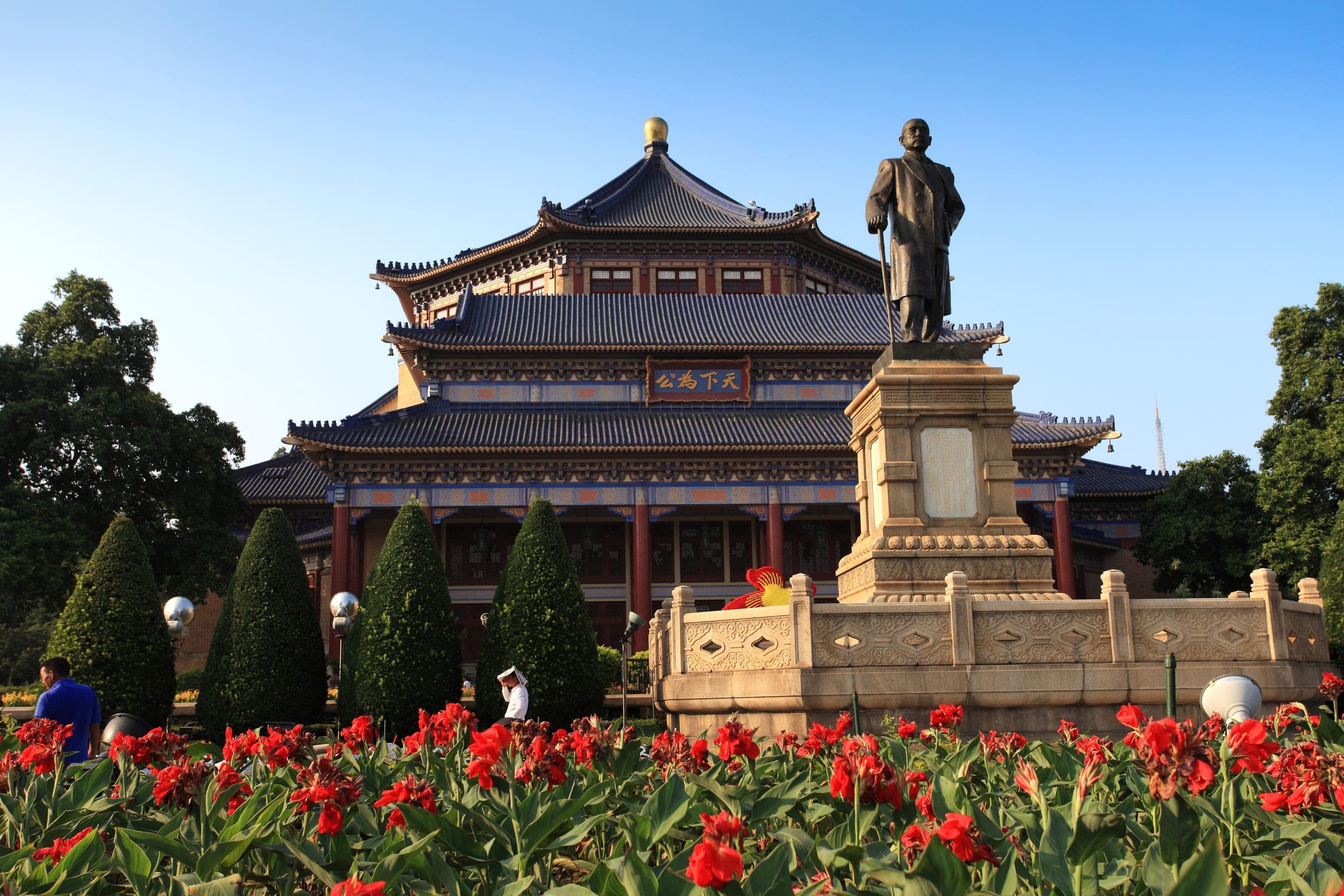
The bronze statue of Sun Yat-sen in front of the blue-tiled octagonal Memorial Hall, Guangzhou

Sun Yat-sen Memorial Hall(the republican-era civic monument)

The cobalt-blue glazed roof of the Sun Yat-sen Memorial Hall lifts above the gardens in eight tilted planes, the largest Chinese-revival civic building of its era.

Completed in 1931, it was designed by Lu Yanzhi, the architect behind Sun Yat-sen's mausoleum in Nanjing. The octagonal auditorium spans 71 metres without a pillar.

We pair the Memorial Hall with the short uphill walk to Yuexiu Park, so the republican-era civic monument and the older imperial capital sit on the same morning. Where the auditorium is open between events, you can step inside to see the unsupported interior span from below.

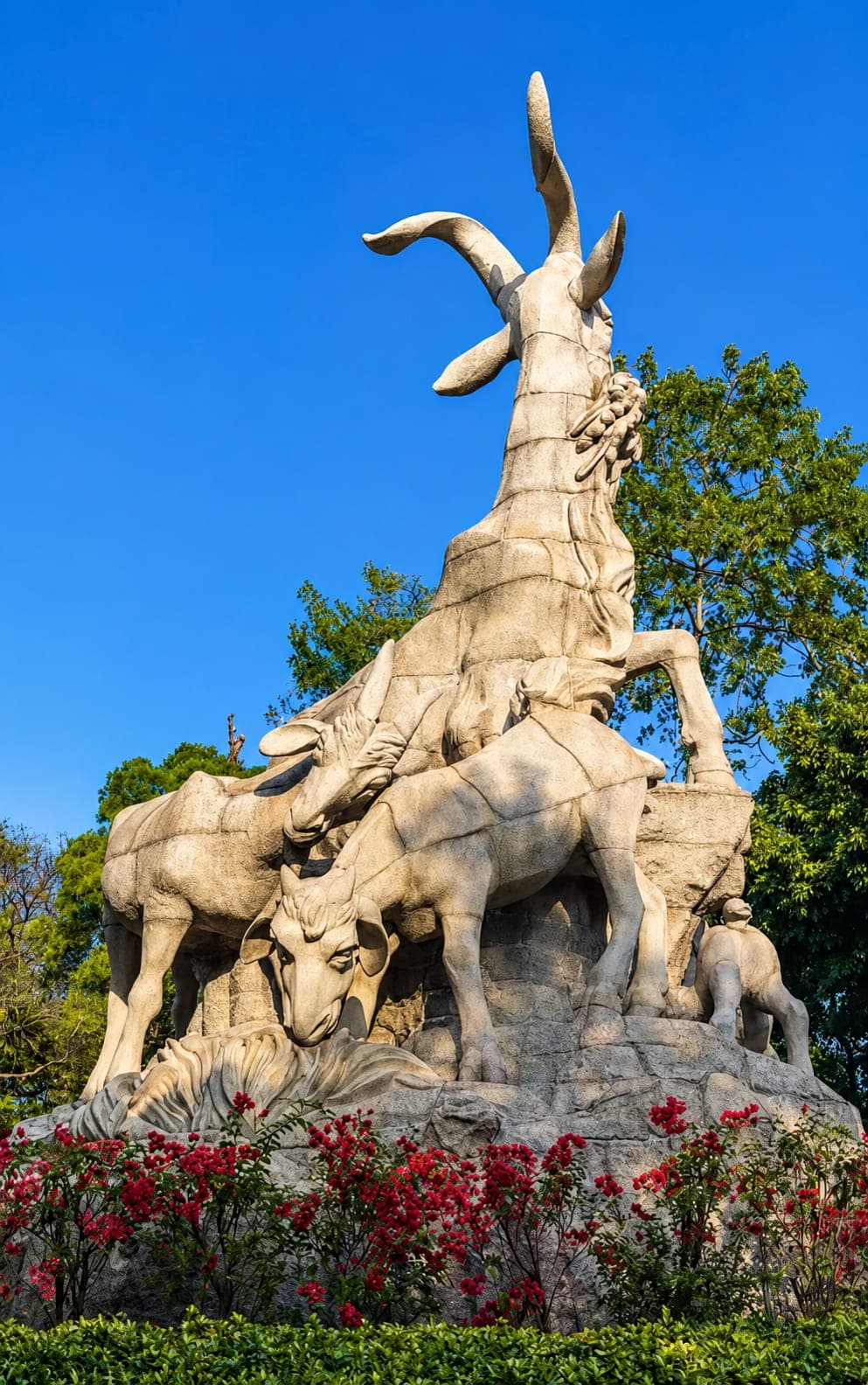
The Five Rams Statue at Yuexiu Park, bougainvillea at the plinth and the city emblem of Guangzhou

Yuexiu Park and the Five Rams Statue(the city's founding myth)

Yuexiu is the green hill at the heart of Guangzhou, and the keeper of its founding myth: five immortals rode down to Canton on five rams, bringing the rice stalks that fed the city.

Their bronze statue stands on the western rise, with a stretch of Ming city wall climbing the slope to the fourteenth-century Zhenhai Tower above.

We walk Yuexiu in the early morning, when the locals are doing tai chi by the lake and the queues at the Zhenhai Tower have yet to start. The route runs the Five Rams Statue first, then the Ming wall, then the watchtower's city-history galleries, which pull two thousand years together on a single hill.

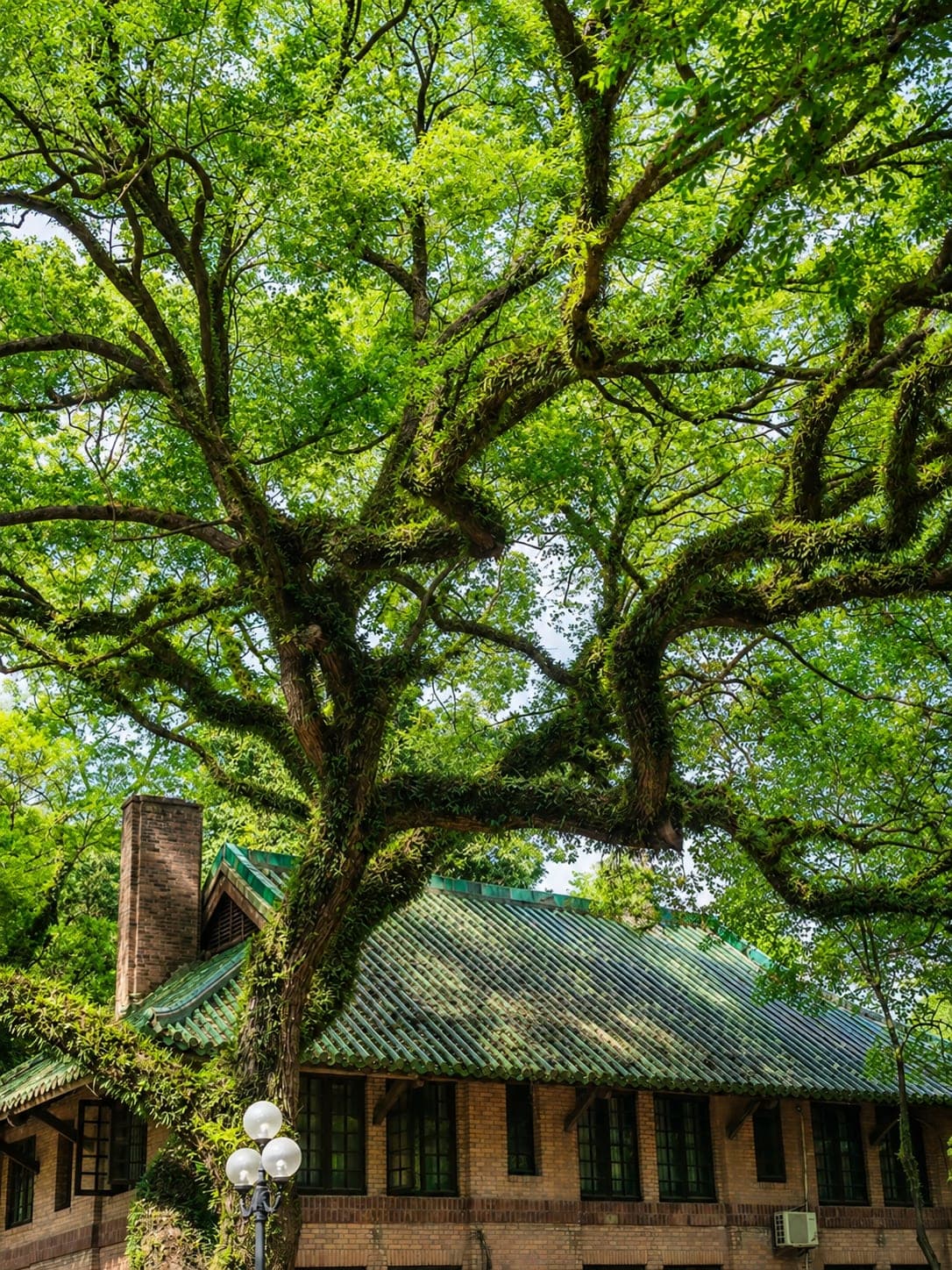
A red-brick collegiate hall with a green-glazed Chinese-revival roof under a century-old banyan canopy, South Campus of Sun Yat-sen University, Guangzhou

Sun Yat-sen University(Zhongda, the Kangle campus on Haizhu Island)

The Kangle campus on Haizhu Island runs between red-brick collegiate halls under green-glazed Chinese-revival roofs and a canopy of century-old banyans.

Sun Yat-sen founded the university here in 1924 on the 1888 grounds of Lingnan University, an American Presbyterian mission college. The central avenue ends at the bell tower of Huaishi Tang.

We walk the campus on a weekday morning, when the bell-tower courtyard is quiet and the first lectures are filling the lower halls. A campus historian reads the early-Republican architecture and the mission-school layer underneath, then routes the visit out through the southern banyan grove to the river.

Canton Tower at blue hour, the hyperboloid steel lattice lit against the Pearl River, Guangzhou

Canton Tower(the south-bank centrepiece)

Canton Tower stands 600 metres above the south bank of the Pearl River, twisting at the waist so the silhouette reads differently from every angle.

The hyperboloid steel lattice opened in 2010 for the Asian Games. The indoor observation deck sits at 433 metres, with an open-air sky platform at 488 metres above.

We time the visit for blue hour, when the skyline lights come up and the river still carries the western sun. The 488-metre open-air platform is the better booking than the indoor 433; on a still evening, the air at the top reads cleaner than anything down at street level.

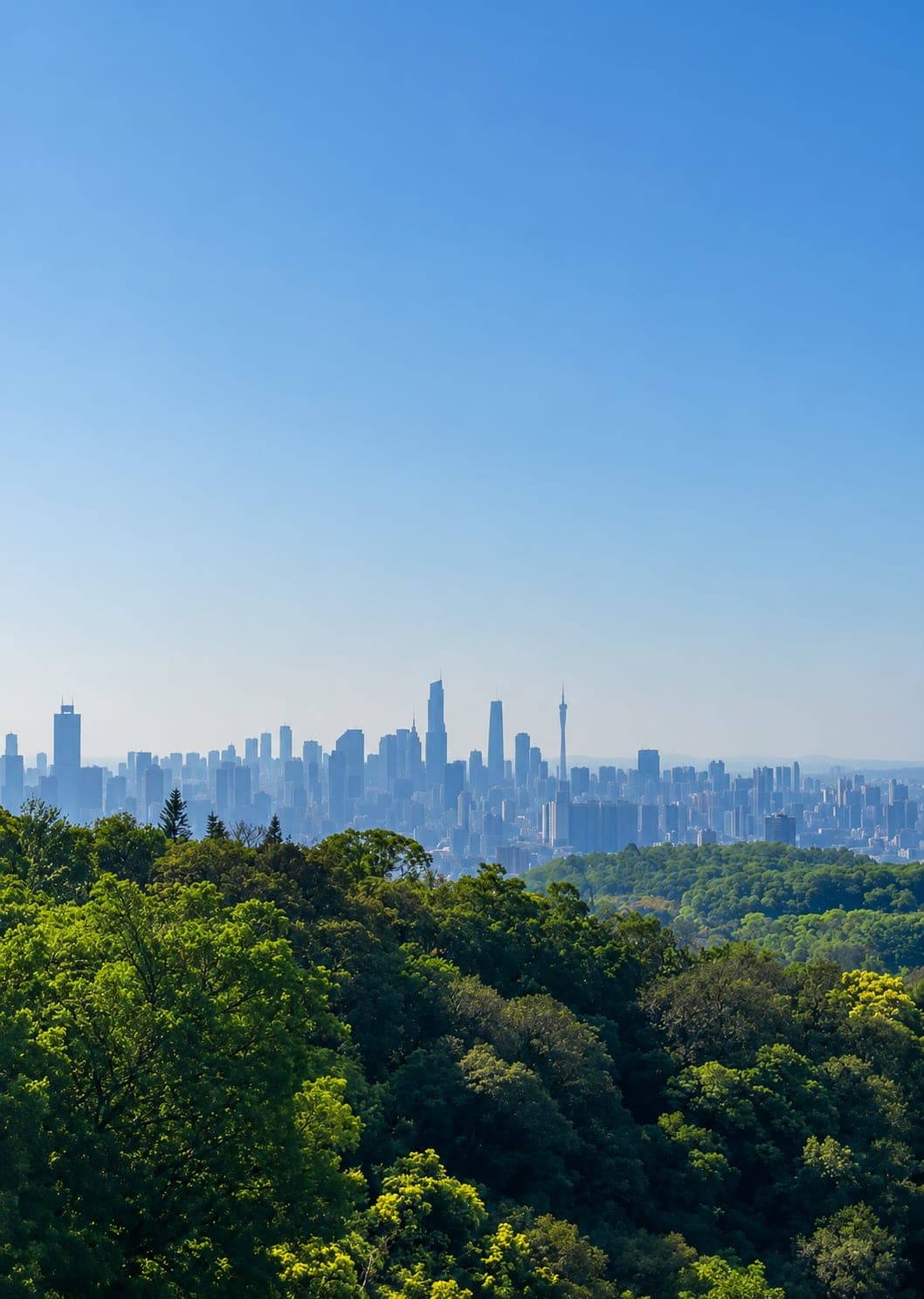
View from Baiyun Mountain over the Guangzhou skyline, Canton Tower on the horizon under cloud cover

Bai Yun Shan(the city's central highland)

Baiyun Mountain rises 382 metres directly north of the old city, a chain of thirty green peaks locals call the lung of Guangzhou.

Tea pavilions sit on the slopes of Mingchun Valley, magnolia gardens at the foot. From Moxing Ridge on a clear morning, the whole Pearl River delta opens below.

We take the cable car up on a clear-forecast morning and walk down through Mingchun Valley on the gentle eastern path, with a stop at the summit tea house for cooled tea and double-skin milk dessert. On a hazy day, the Yuntai magnolia garden at the foot takes its place.

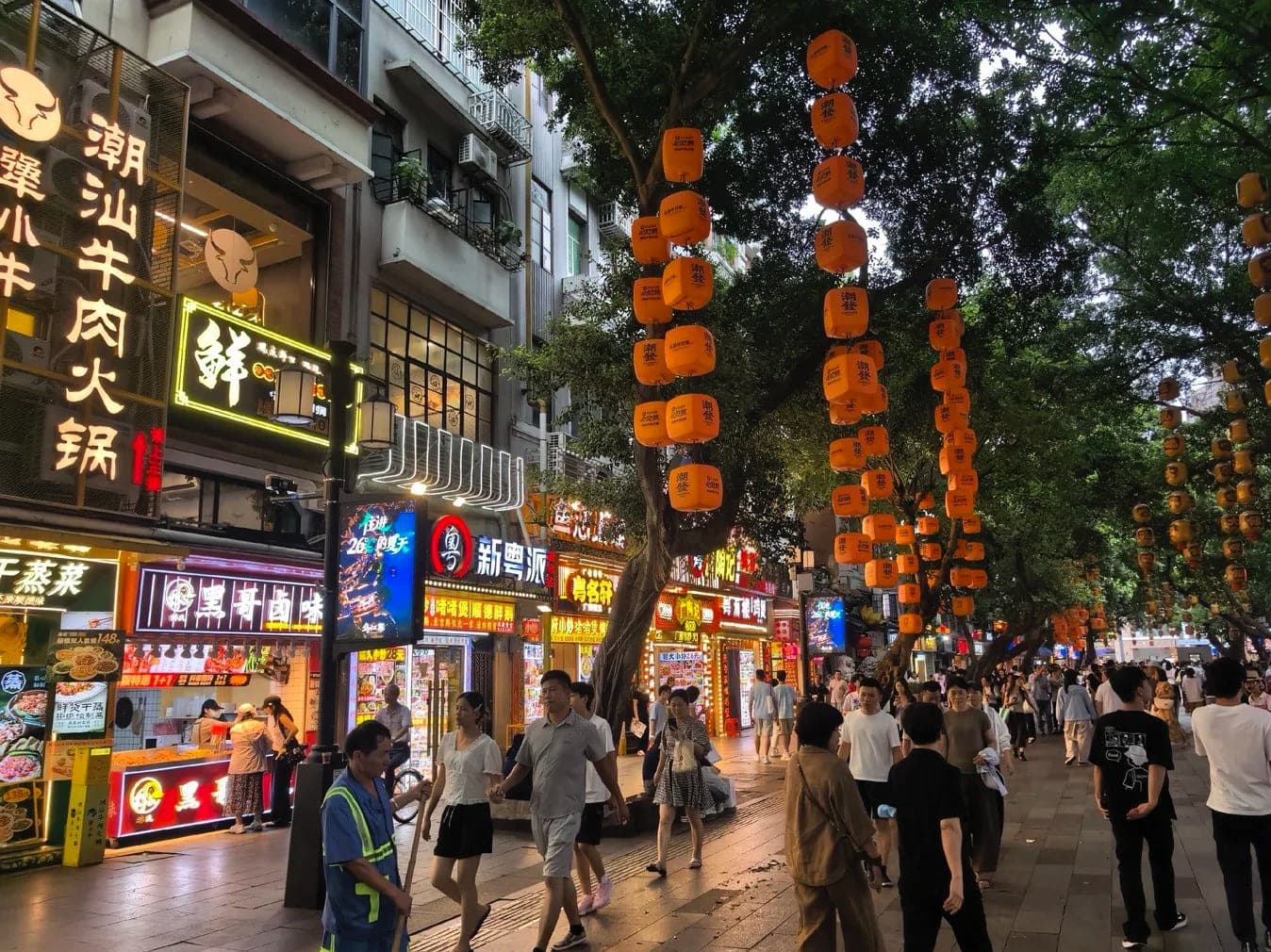
Beijing Road pedestrian street under hanging red lanterns and afternoon crowds, Guangzhou

Beijing Road(the city's oldest commercial spine)

Beijing Road has been Guangzhou's main shopping street since the Tang dynasty.

A glass panel on the central block exposes eleven layers of road paving from the Tang, Song, Ming, Qing and Republican periods, all stacked on the original alignment. Late-Qing arcades and early-twentieth-century shopfronts run 1.5 kilometres south.

We walk the spine in the late afternoon, when the heat lifts and the shopfronts start to light, turning into the side lanes for ginger-milk dessert, beef-offal soup and salted-egg-yolk pastries from the counters locals keep coming back to. Your guide reads the small differences between stalls as you go. The glass-floor archaeology panel is read in passing rather than queued for.

02

What to eat

Honey-glazed Cantonese roast goose at a heritage Guangzhou restaurant

Cantonese roast goose and char siu(siu mei, the roast canon)

Cantonese roast meats, siu mei, fill the shopfront windows at noon.

Roast goose is the headline: a small dark Chaozhou bird, glazed with maltose and vinegar over charcoal, lacquered to a mahogany skin that cracks under the cleaver. Char siu, the second pillar, runs honeyed and smoky.

We book the kitchens Cantonese locals book, not the harbour-view rooms on the package menus. The table is set at the house that has kept its rota the longest, with the roast meats cut from the daily birds, the char siu, the goose and the soy-poached chicken arriving at their proper warmth.

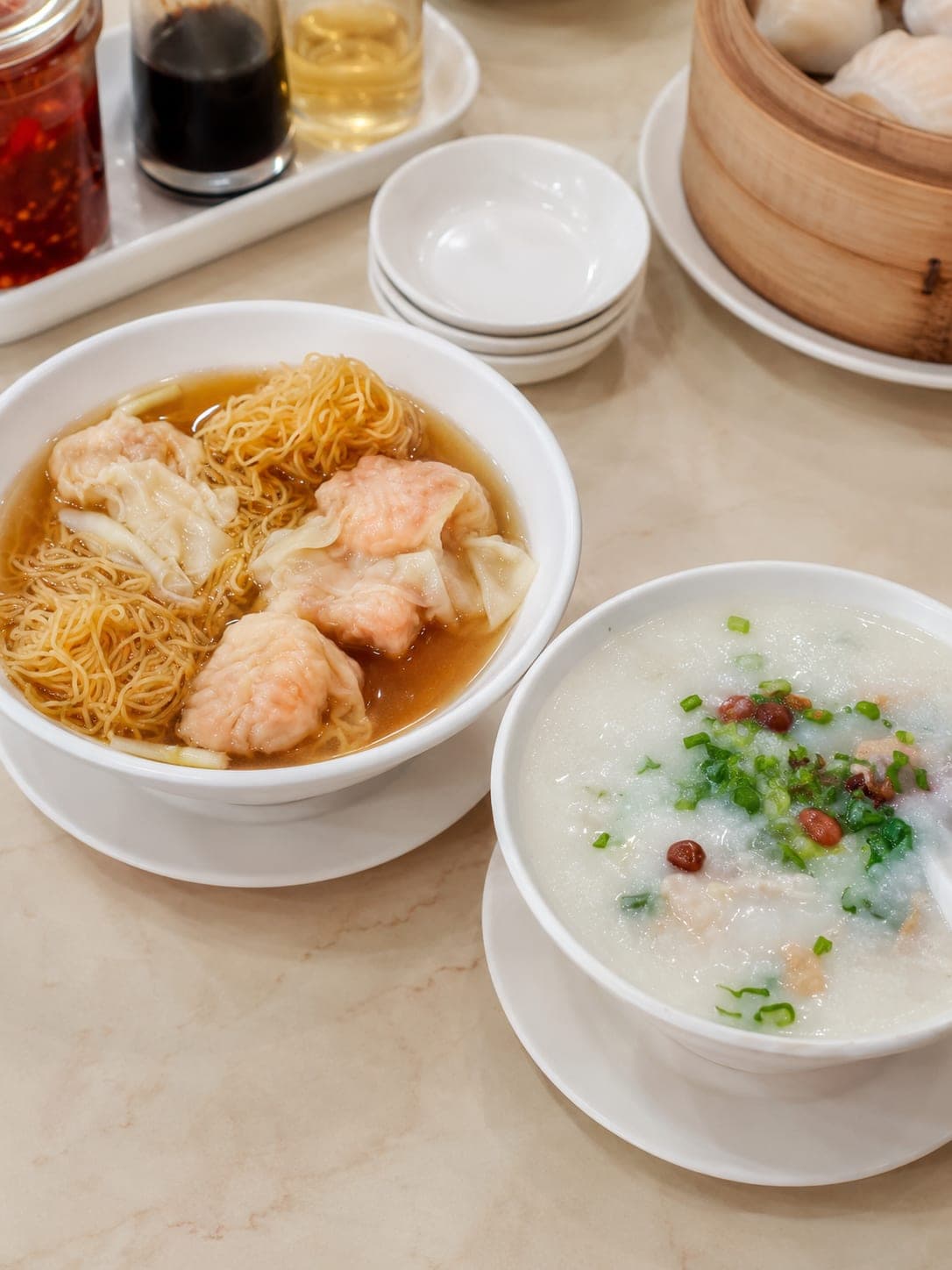
A bowl of Cantonese wonton noodles, thin lye-water noodles over prawn-and-pork wontons in clear broth, Guangzhou

Wonton noodles and sampan congee(the Cantonese back-lane bowl)

The Cantonese back-lane bowl has two pillars.

Wonton noodles, yuntun mian, lay thin lye-water noodles over prawn-and-pork wontons in a clear simmered-bone broth. Sampan congee, the Pearl River boat people's dish, cooks rice to a silken porridge dressed with peanut, fried noodles, squid, pork skin and river shrimp.

We walk a short stretch through Enning Road and Shangxiajiu, first to the wonton-noodle counter that still hand-presses its noodles with a bamboo pole, then on to the congee counter that descends from the boat-people tradition. Your guide explains the bamboo-pole press and what to watch for in how the congee finishes.

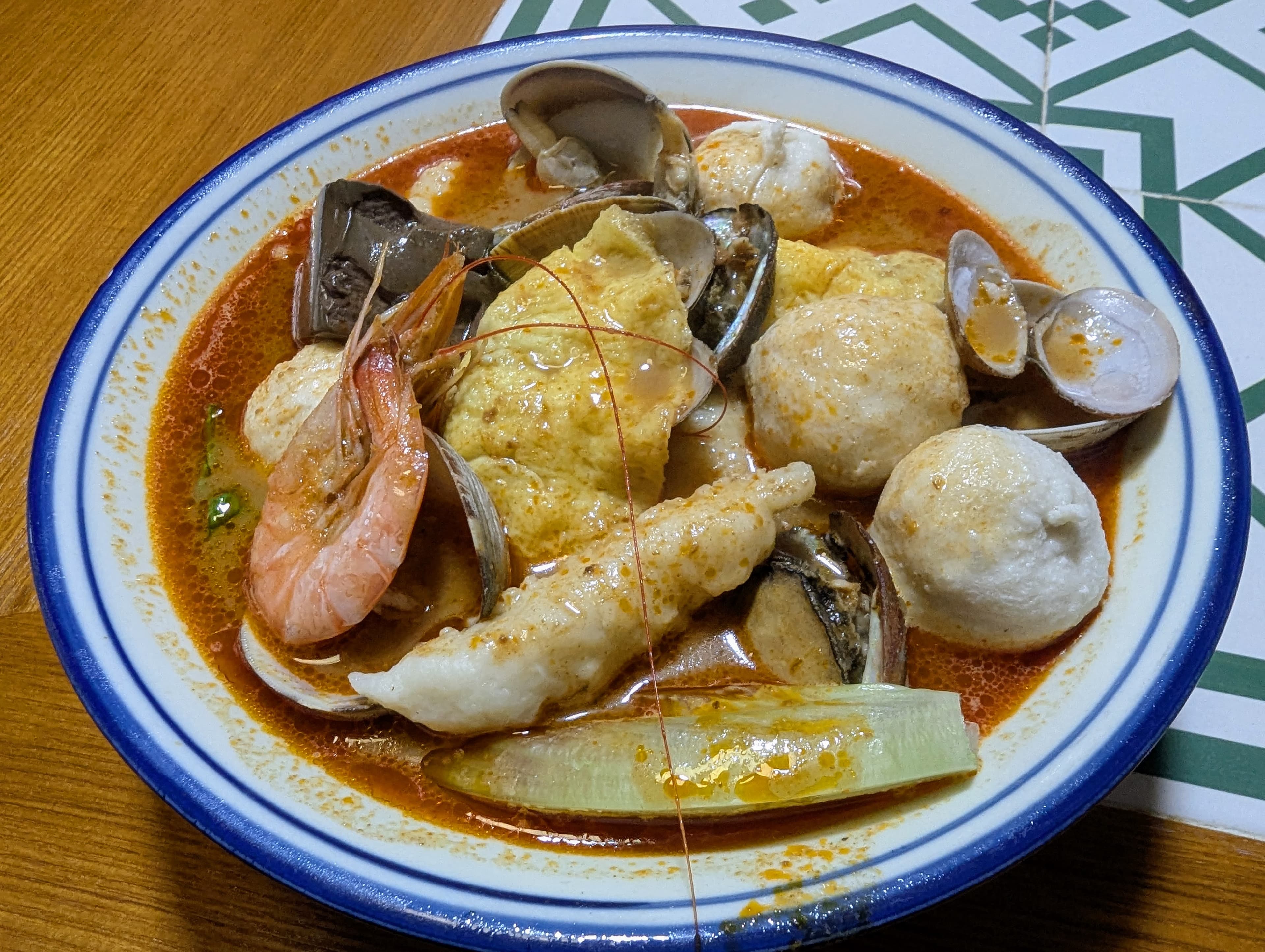
A bowl of Guangzhou shacha noodles, wheat noodles in a peanut and shrimp-rich broth topped with squid and fish balls

Shacha noodles(the Chaoshan and Min bowl in Guangzhou)

Shacha noodles arrived in Guangzhou with the Chaoshan and Min diaspora and have settled into the city's bowl rotation.

The broth is thickened with shacha sauce, a Teochew paste of dried shrimp, brill fish, peanut, garlic, chilli and lemongrass that came east through Xiamen. Nutty and salty up front, with a slow heat that builds across the bowl.

We take the table at a Chaoshan-run counter we keep for off-route mornings, where the shacha is still ground fresh on a heavy stone mortar each week. The toppings are ordered separately and assembled at your bowl rather than ladled from a holding pot.

03

Shows and experiences

A neon-lit Pearl River sightseeing boat at night, Guangzhou

Pearl River at dusk(the river that built the city)

The Pearl River runs east to west through Guangzhou, the old western quarter on one bank, the glass towers of Zhujiang New Town on the other.

As the sun drops, the lights come up on both sides, Canton Tower lit against the dark water.

We book the evening departure for the cleanest light, with seats arranged on the upper deck where the river reads well in both directions. Where the route and the boat schedule allow, we upgrade to a small private river-boat charter with a Cantonese-speaking captain, briefed to run the old western quarter first and turn to Zhujiang New Town as the lights come up.

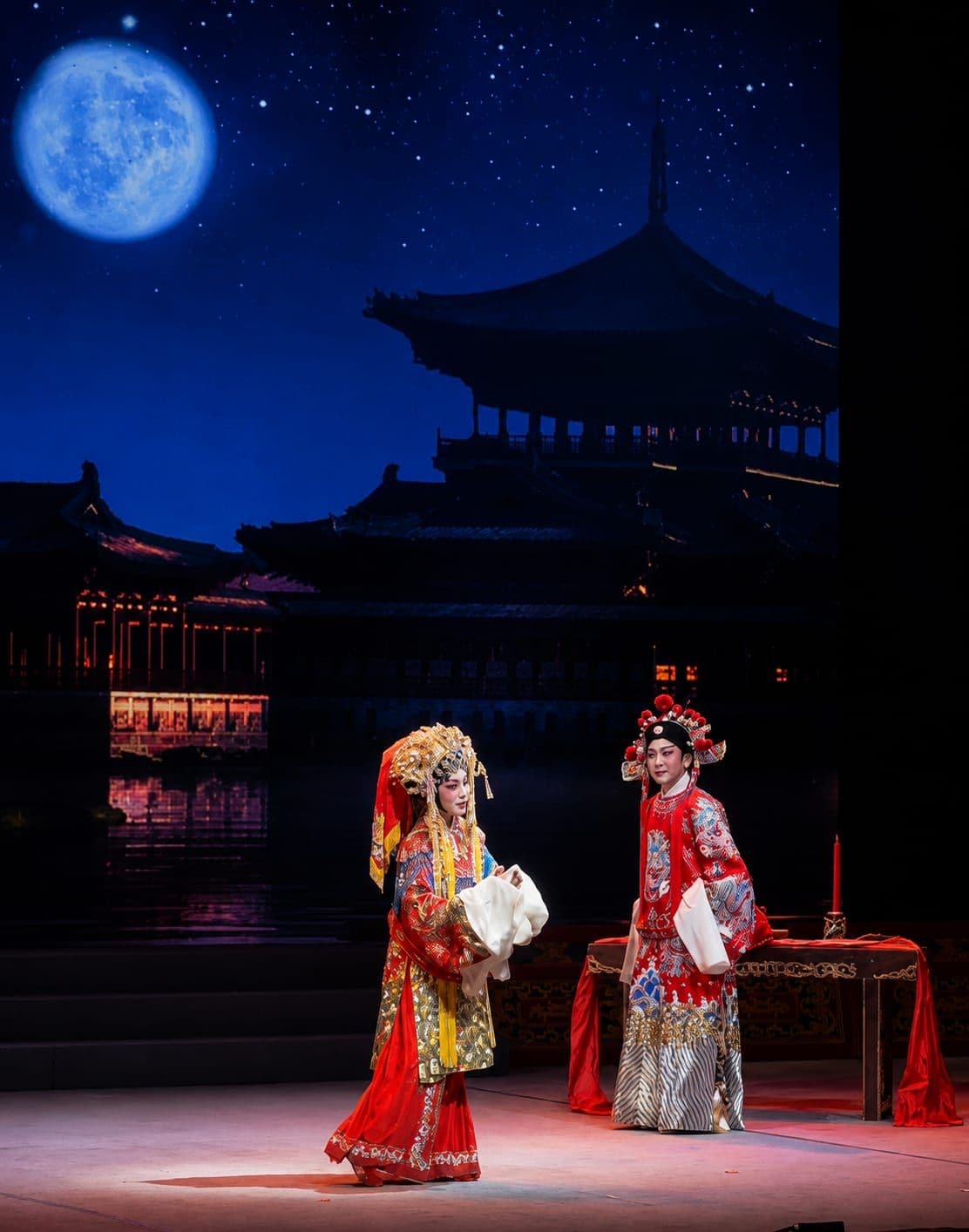
An ornate Cantonese opera costume on display, embroidered robe with shoulder flags, Guangzhou

A night of Cantonese opera(yueju, the Lingnan opera tradition)

Cantonese opera, yueju, is a four-hundred-year tradition built around a high female lead and sung-spoken Cantonese libretto.

Bright face paint, long swirling sleeves, music carried by erhu and clapper. The performance hall sits in a restored Lingnan arcade block in the old western quarter, surrounded by shophouses and small craft halls.

We check the programme against your evening, with a specialist briefing the libretto and the main arias before the curtain so the language barrier never closes the meaning of the piece. Seats are arranged in the front blocks where the costume work reads in detail.

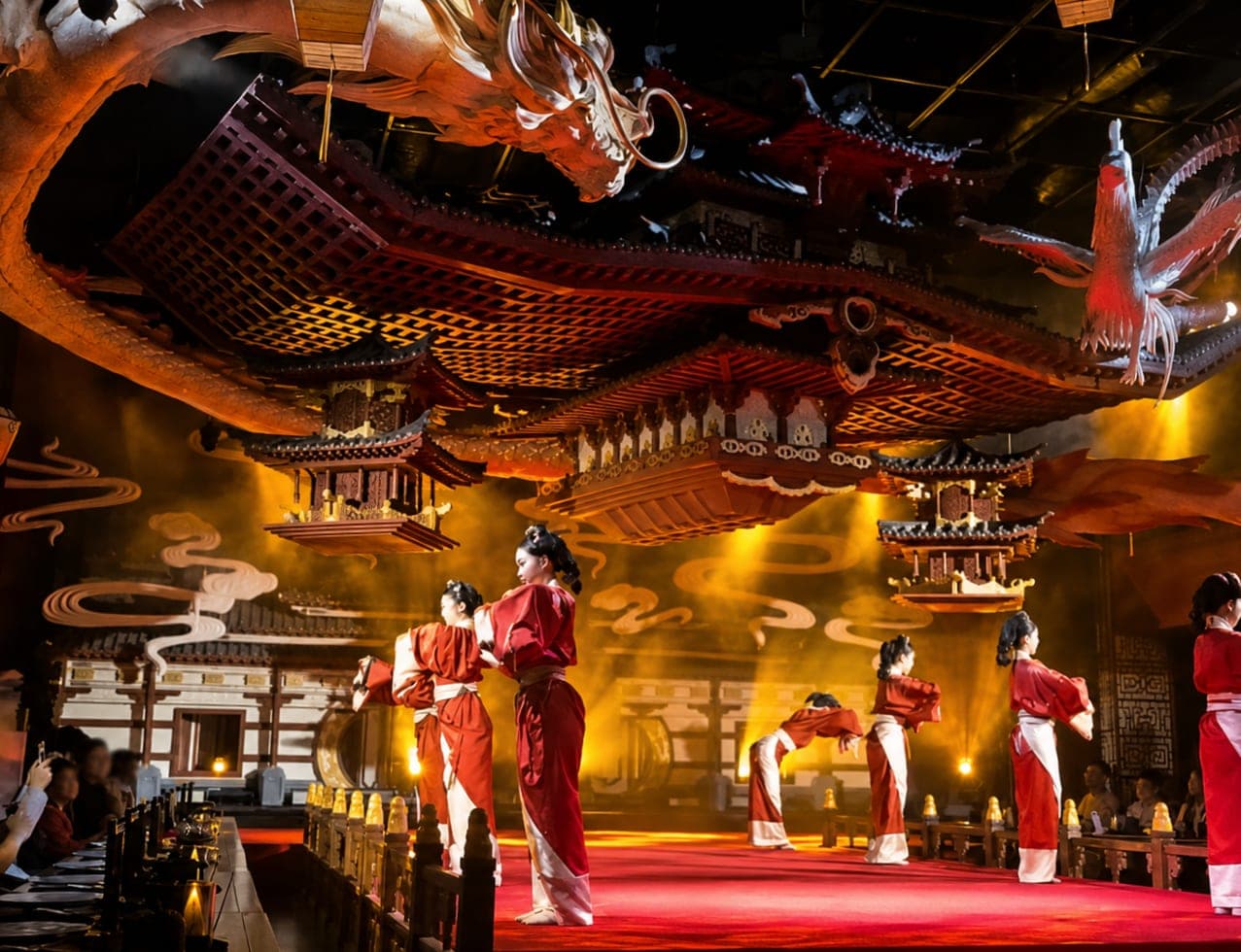
Dancers in red robes on a Cantonese banquet stage under an ornate Chinese-revival roof, Yueyan, Guangzhou

Yueyan at Xinhe(contemporary Cantonese banquet with performance)

Yueyan stages a contemporary Cantonese banquet inside a Chinese-revival hall in Xinhe, dancers in red robes carrying the evening between the courses.

The kitchen builds eight to twelve courses around the season, seafood from the closest Pearl River delta market that morning. The pace is set by the performance, not the clock.

We book the room three days ahead and brief the kitchen on the table's dietary preferences before the menu is set, with seats arranged where the stage reads in detail. The tea or wine pairing is agreed with you, not pushed.

How a few days unfold

What three days
might look like.

  1. Day 01

    Morning tea, Lingnan craft, an evening at Yueyan.

    Begin slowly with three hours of heritage yum cha at a Xiguan tea house, where dim sum carts, jasmine tea and the morning newspaper are still the city's defining ritual. Continue mid-morning to the Chen Clan Ancestral Hall once the school groups have moved on, with a Lingnan-architecture specialist reading the eaves, the screens and the shiwan ridge sculpture. Walk Shamian Island under the banyans into Qingping Market for a quick lesson in herbal medicine, then on through the Xiguan mansions back to the river. As evening approaches, dinner waits at Yueyan in the Xinhe district, a contemporary Cantonese banquet served at your own table inside a theatrical Chinese-revival hall.

    • Heritage yum cha in Xiguan
    • Chen Clan Ancestral Hall
    • Shamian Island and Qingping Market
    • Xiguan mansions walk
    • Yueyan at Xinhe (banquet and stage)
  2. Day 02

    Han tomb chambers, opera under lanterns.

    Spend the morning at the Nanyue King Museum, working down into Zhao Mo's tomb chamber and up through the Wangmu galleries with an early-Han archaeology specialist. A light Cantonese lunch follows in Liwan, wonton noodles or sampan congee from the Enning Road counters. The afternoon walks a restored Lingnan arcade block in the old western quarter, with time inside for the history of Cantonese costume and stagecraft; the evening returns to the same block for an opera performance. When the opera schedule does not align, the Pearl River at dusk takes its place, with the boat option upgraded to a private charter where the route and schedule allow.

    • Nanyue King Museum (the jade burial suit)
    • Enning Road wonton noodles
    • Lingnan opera history and costume
    • Cantonese opera performance
    • Pearl River at dusk (alternative)
  3. Day 03

    Green peaks, civic spine, modern Cantonese kitchen.

    On a clear-forecast morning, take the cable car up Baiyun Mountain to Moxing Ridge for the long view across the Pearl River delta, then descend through Mingchun Valley with a stop at the summit tea house. The Sun Yat-sen Memorial Hall and the uphill walk into Yuexiu Park follow mid-morning, reading the Five Rams Statue, the surviving Ming wall and the Zhenhai Tower's city-history galleries. After a light lunch, walk Beijing Road for the eleven-layer archaeology panel and the late-Qing arcades, with a side-lane food stop. As evening falls, cross the river to Canton Tower for the 488-metre open-air platform at blue hour. Dinner closes the trip at a modern Cantonese kitchen in Zhujiang New Town.

    • Baiyun Mountain (cable car up, walk down)
    • Sun Yat-sen Memorial Hall + Yuexiu Park
    • Beijing Road (eleven-layer panel)
    • Canton Tower (488m platform, blue hour)
    • Modern Cantonese kitchen, Zhujiang New Town

Best time

October to April (avoid July to September heat and the Canton Fair weeks of April-May and October-November)

Days needed

2 days minimum; 3 days lets it breathe

Where it sits

Around 30 minutes by high-speed rail from Shenzhen Futian; around an hour from Hong Kong West Kowloon

Before you enquire

Questions worth
answering early.

  • Two days is the minimum that respects the city; three days lets it breathe. Two days covers the Chen Clan Ancestral Hall, Shamian Island, Beijing Road's archaeology panel, and the Nanyue King Museum. A third day adds Baiyun Mountain or the Sun Yat-sen University campus in the morning, the Sun Yat-sen Memorial Hall and Yuexiu Park in the afternoon, and Canton Tower at blue hour with a Cantonese opera performance or a Yueyan banquet at Xinhe to close.

One team behind your trip

You enjoy the trip,
we do the rest.

From your first enquiry to your last airport pickup, our specialists design your trip and stay in contact every step of the way. The guides, drivers and hotels you'll meet are part of our trusted network we've worked with for years, briefed to the same standards.

  • Dedicated specialists, start to finish
  • Guides briefed to our standards
  • Fully transparent, no hidden costs
  • No deposit until you confirm

Design your Guangzhou trip

Start with your preferences. We'll craft a private itinerary in Guangzhou that fits how you like to travel.

Enquiring about

Guangzhou

Step 1 of 5 · Where

Where in China is calling you?

Pick as many as you'd like, or 'not sure yet' and we'll suggest.

Portrait of Jack Guo

Jack Guo

Your travel specialist

Jack has spent ten years working with the guides, drivers and hoteliers across China. He'll be your contact from first enquiry to final airport pickup.

Private Guangzhou tours, designed around your companions | Everonia